

Hemolytic Uremic Syndrome (HUS): When a Gut Infection Attacks the Kidneys

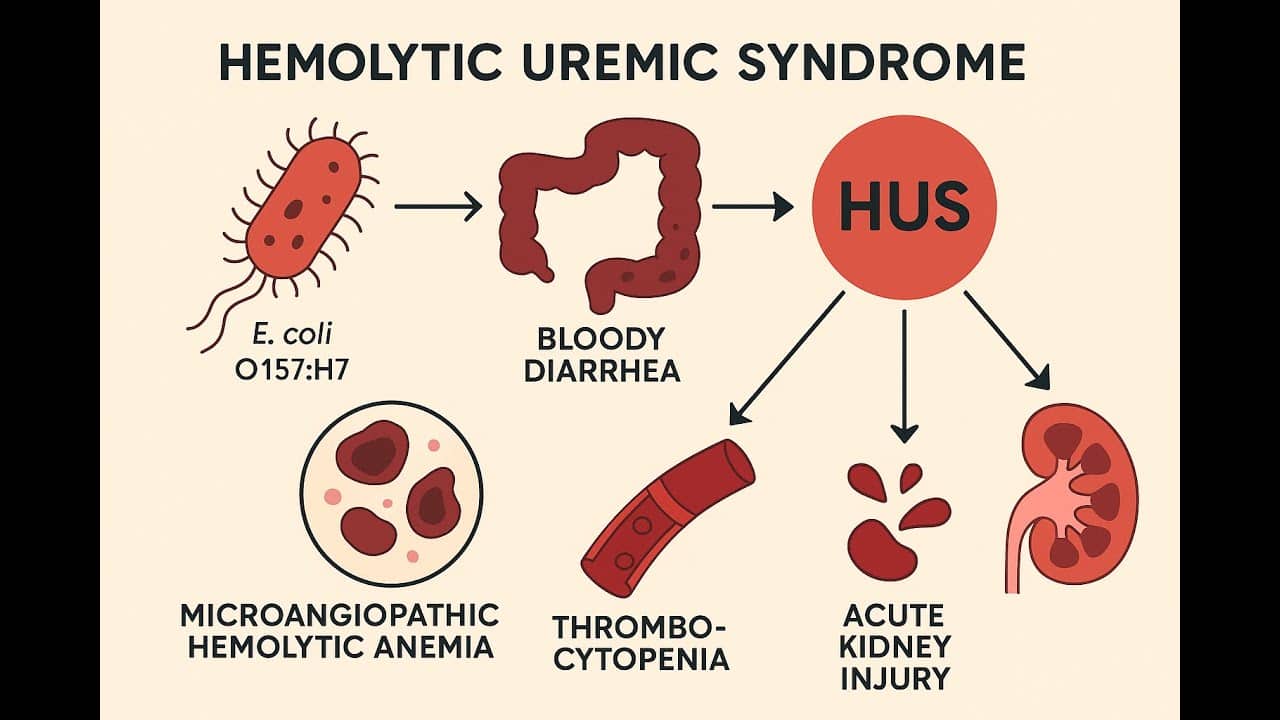
Hemolytic uremic syndrome, often called HUS, is a serious condition affecting the kidneys and blood. It frequently develops after a specific type of gut infection. This connection makes HUS particularly alarming, since it starts as something seemingly less severe.
This syndrome involves three interconnected problems happening simultaneously. Red blood cells get destroyed, blood clotting becomes abnormal, and kidneys suffer damage. Understanding this progression helps explain why HUS requires urgent medical attention.
Why HUS Surprises So Many Families
Most cases begin with ordinary-seeming stomach symptoms, like diarrhea. Parents often don’t expect a gut infection to threaten kidney health. This unexpected connection makes recognizing warning signs especially important.
How a Gut Infection Triggers HUS
Most HUS cases stem from infection with a specific E. coli bacteria strain. This bacteria produces a toxin that enters the bloodstream after intestinal infection. Once circulating, this toxin specifically targets blood vessels within the kidneys.
The toxin damages the lining of these tiny blood vessels directly. This damage triggers abnormal blood clotting and red blood cell destruction. Together, these effects overwhelm normal kidney function rapidly.
Why E. Coli Specifically Causes This Damage
Not all E. coli strains cause HUS; only toxin-producing varieties do. This specific toxin travels through the bloodstream after initial gut infection. Its effect on blood vessels explains why kidneys become the primary target.
Common Sources of This Infection
Contaminated food, particularly undercooked beef, frequently causes this E. coli infection. Unpasteurized dairy products and contaminated water can also transmit it. Practicing careful food safety significantly reduces this infection risk.
Recognizing the Symptoms
HUS typically begins with diarrhea, often containing visible blood. This diarrhea usually precedes other symptoms by several days. Abdominal pain and vomiting frequently accompany this initial gastrointestinal phase.
As HUS progresses, symptoms shift toward kidney and blood-related problems. Reduced urination often signals worsening kidney function. Pale skin, fatigue, and unusual bruising can indicate blood cell destruction occurring simultaneously.
Why the Symptom Pattern Matters
The shift from gut symptoms toward kidney symptoms represents a critical warning pattern. Parents noticing decreased urination after recent bloody diarrhea should seek care immediately. This specific progression helps distinguish HUS from simple stomach illness.
When Symptoms Indicate a True Emergency
Significantly decreased urination, severe paleness, or confusion require emergency evaluation. These signs suggest serious kidney involvement or worsening complications. Quick action during this phase significantly improves treatment outcomes.
How Doctors Diagnose HUS
Diagnosis typically involves blood tests checking for anemia and abnormal clotting markers. These tests reveal characteristic patterns associated with HUS specifically. Urine tests also help assess current kidney function accurately.
Stool tests can confirm the presence of toxin-producing E. coli bacteria. Doctors often order these tests promptly when HUS seems likely. Combining all these results helps confirm diagnosis and guide immediate treatment decisions.
Why Rapid Testing Matters So Much
HUS can progress quickly once kidney involvement begins. Rapid blood and urine testing allows for immediate treatment planning. This urgency significantly influences how quickly doctors pursue diagnostic confirmation.
Treatment Options for HUS
Treatment focuses primarily on supporting kidney function during the acute illness phase. Many children require hospitalization for close monitoring and supportive care. Fluid management becomes particularly important throughout this treatment period.
In severe cases, dialysis temporarily replaces kidney function until recovery occurs. Blood transfusions sometimes become necessary to address severe anemia. Importantly, antibiotics aren’t typically recommended, since they may worsen toxin release.
Why Antibiotics Aren’t Always Helpful Here
Unlike many bacterial infections, antibiotics can actually worsen HUS in some cases. Killing bacteria too quickly may release additional toxin into the bloodstream. This is why doctors approach antibiotic use cautiously with suspected HUS.
The Role of Dialysis During Recovery
Dialysis temporarily performs the kidney’s filtering function during acute illness. This support allows damaged kidneys time to heal naturally. Most children eventually recover kidney function without needing permanent dialysis.
Recovery and Long-Term Outlook
Most children recover well from HUS with prompt, appropriate treatment. Kidney function typically improves significantly within several weeks. However, some children experience lasting kidney effects requiring ongoing monitoring.
Regular follow-up appointments help track kidney health after recovery. Blood pressure monitoring also remains important during this recovery period. Most children eventually return to normal activities and overall health.
Final Thoughts on Hemolytic Uremic Syndrome
Hemolytic uremic syndrome demonstrates how a seemingly simple gut infection can threaten serious organ damage. Recognizing the connection between bloody diarrhea and potential kidney involvement saves valuable time. Prompt medical attention significantly improves outcomes for affected children.
If your child develops bloody diarrhea followed by decreased urination, seek care immediately. Don’t dismiss this symptom progression as ordinary stomach illness. With prompt diagnosis and treatment, most children recover successfully from HUS.
Frequently Asked Questions
Is hemolytic uremic syndrome contagious?
HUS itself isn’t directly contagious between people. However, the E. coli infection triggering it can spread through contaminated food or close contact. Practicing good hygiene helps prevent this underlying infection from spreading.
Can adults develop HUS too?
While HUS primarily affects young children, adults can occasionally develop this condition too. Adult cases sometimes stem from different underlying causes beyond typical E. coli infection. Treatment approaches remain similar regardless of age.
How long does recovery from HUS typically take?
Most children show significant improvement within two to three weeks of treatment. Complete kidney function recovery sometimes takes longer in more severe cases. Regular follow-up testing helps track this recovery progress accurately.
Can HUS cause permanent kidney damage?
Some children experience lasting kidney effects, even after the acute illness resolves. This risk increases with more severe initial kidney involvement. Ongoing monitoring helps catch and manage any lasting effects early.
How can I help prevent HUS in my child?
Cooking meat thoroughly and avoiding unpasteurized dairy products significantly reduces infection risk. Practicing careful handwashing, especially around food preparation, also helps prevent transmission. These simple steps offer meaningful protection against the underlying infection.
Disclaimer:
This article is for informational purposes only and does not replace professional medical advice. Please consult a qualified healthcare provider for diagnosis and treatment.
References:
- On World Kidney Day, health experts are sounding the alarm about the dangers of processed foods and obesity on kidney health.
- Red blood cells perform one of the body’s most essential tasks. They carry oxygen from the lungs to every organ, tissue, and cell that needs it to function.
- The PFRDA has highlighted several advantages that the merger will bring to NPS subscribers.
Observer Voice is the one stop site for National, International news, Sports, Editor’s Choice, Art/culture contents, Quotes and much more. We also cover historical contents. Historical contents includes World History, Indian History, and what happened today. The website also covers Entertainment across the India and World.

