

Prion Diseases (CJD and vCJD): The Incurable Brain Diseases Caused by Misfolded Proteins

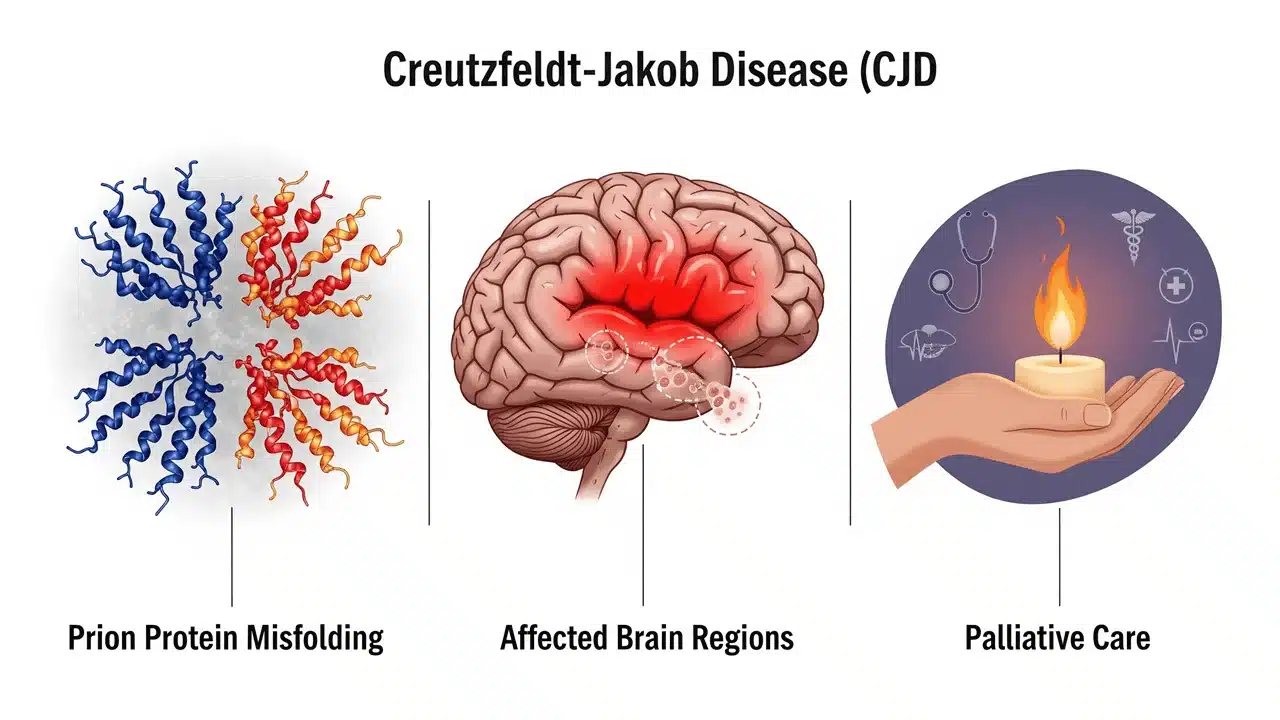
Prion diseases represent a rare, devastating group of brain disorders. Unlike typical infections caused by bacteria or viruses, prions are simply misfolded proteins. These abnormal proteins cause healthy proteins nearby to misfold too.
This chain reaction gradually destroys brain tissue, creating characteristic sponge-like holes. Creutzfeldt-Jakob disease, known as CJD, represents the most common human prion disease. Variant CJD, a related but distinct form, gained widespread attention through its connection to contaminated beef.
Why Prions Behave So Differently From Other Pathogens
Bacteria and viruses contain genetic material that allows them to multiply independently. Prions, however, lack genetic material entirely, relying solely on protein misfolding instead. This fundamental difference explains why prions resist typical treatments effectively.
What Causes Prion Diseases
Most CJD cases occur sporadically, without any identifiable specific cause. In these cases, a normal protein simply misfolds randomly within the brain. This sporadic form represents the vast majority of CJD diagnoses worldwide.
Some cases result from inherited genetic mutations affecting prion protein structure directly. Variant CJD, conversely, links specifically to consuming beef contaminated with mad cow disease. This connection caused significant public health concern decades ago.
Why Variant CJD Differs From Classic CJD
Variant CJD primarily affects younger people, unlike typical sporadic CJD cases. It also progresses somewhat differently, with prominent early psychiatric symptoms. This distinction reflects its different origin through contaminated food consumption.
The Rare Genetic Form
Familial CJD results from inherited mutations in the prion protein gene specifically. This form runs through families, appearing in multiple generations. Genetic testing can identify this hereditary form definitively.
Recognizing the Symptoms
CJD typically causes rapidly progressing dementia, unlike most other forms of cognitive decline. Memory problems and confusion often develop alarmingly quickly. Personality changes and difficulty concentrating frequently accompany this cognitive decline.
Coordination problems and muscle twitching often develop as the disease progresses further. Many patients eventually experience significant difficulty speaking or swallowing. This rapid, severe progression distinguishes CJD from more gradual dementia types.
Why Speed of Progression Matters So Much
Unlike Alzheimer’s disease, which progresses over years, CJD often worsens within months. This dramatically faster timeline represents one of CJD’s most distinguishing clinical features. Recognizing this rapid pattern helps doctors consider prion disease specifically.
Symptoms Specific to Variant CJD
Variant CJD often begins with psychiatric symptoms, like depression or anxiety. Sensory disturbances, including unusual skin sensations, also commonly occur early. These distinctive initial symptoms help differentiate variant CJD from classic sporadic forms.
How Doctors Diagnose Prion Diseases
Diagnosis typically involves detailed neurological examination alongside specialized testing. Brain imaging, particularly MRI, often reveals characteristic patterns suggesting prion disease. Spinal fluid testing can also detect specific markers associated with these conditions.
Definitive diagnosis, unfortunately, often requires brain tissue examination after death. This limitation makes confident diagnosis during life genuinely challenging. Doctors typically rely on strong clinical suspicion combined with supportive testing instead.
Why Definitive Diagnosis Remains So Difficult
No single reliable test confirms prion disease with absolute certainty during life currently. This diagnostic limitation reflects prion diseases’ rare, complex nature. Researchers continue working toward developing more accurate, accessible diagnostic methods.
Why Prion Diseases Remain Incurable
Currently, no treatment can stop or reverse the misfolding process causing prion diseases. This incurability stems from the fundamental nature of how prions damage brain tissue. Once significant brain damage occurs, recovery simply isn’t possible with current medical knowledge.
Researchers continue studying potential treatments, though progress remains genuinely difficult. The unique biology of prions creates significant treatment development challenges. This ongoing research offers hope, even though current options remain extremely limited.
Why Treatment Development Faces Such Significant Challenges
Prions don’t respond to traditional antiviral or antibacterial medications at all. Their protein-based nature requires entirely different therapeutic approaches than typical infections. This fundamental challenge explains decades of limited treatment progress despite dedicated research efforts.
Managing Symptoms and Supporting Patients
While no cure exists, supportive care helps manage symptoms and maintain comfort. Medications can help control muscle twitching or agitation somewhat effectively. Physical therapy may help maintain mobility for as long as possible too.
Family support becomes especially important given this disease’s devastating, rapid progression. Connecting with specialized care teams helps families navigate this incredibly difficult diagnosis. Hospice care often becomes appropriate as the disease reaches its final stages.
Final Thoughts on Prion Diseases
Prion diseases represent some of medicine’s most challenging and devastating conditions. Understanding their unique biology helps explain why no cure currently exists. Continued research offers genuine hope for future treatment breakthroughs.
If you notice rapidly progressing cognitive or neurological symptoms in a loved one, seek evaluation promptly. Early diagnosis, while not changing the outcome currently, helps guide appropriate supportive care. Connecting with specialized neurological teams provides the best possible support during this difficult journey.
Frequently Asked Questions
Are prion diseases contagious like typical infections?
Prion diseases generally aren’t contagious through casual contact like typical infections. However, transmission can occur through specific medical procedures or contaminated tissue exposure. Variant CJD specifically links to consuming contaminated beef products.
How long do people typically live after a CJD diagnosis?
Most people with sporadic CJD survive less than one year after diagnosis. This rapid progression represents one of the disease’s most devastating characteristics. Variant CJD sometimes progresses somewhat more slowly, though still without available cure.
Can prion diseases be prevented?
Sporadic CJD, occurring randomly, currently can’t be prevented through any known method. Variant CJD risk decreased significantly following improved food safety regulations regarding beef. Familial CJD risk can be identified through genetic testing for at-risk families.
Is there any treatment currently in development for prion diseases?
Researchers continue actively studying potential treatments, though none have proven effective yet. Some experimental approaches target preventing protein misfolding directly. This ongoing research offers hope, even though practical treatments remain unavailable currently.
Can someone test positive for prion disease without symptoms?
Genetic testing can identify inherited mutations associated with familial CJD before symptoms develop. However, this doesn’t guarantee when or if symptoms will eventually appear. This genetic information helps families make informed decisions regarding monitoring and planning.
Disclaimer:
This article is for informational purposes only and does not replace professional medical advice. Please consult a qualified healthcare provider for diagnosis and treatment.
References:
- Frontotemporal dementia is a progressive neurodegenerative disorder characterized by selective degeneration of the frontal and temporal lobes.
- Lewy body dementia has distinctive symptoms that differentiate it from Alzheimer’s disease and Parkinson’s disease.
- The size and shape of our brains also play a crucial role in cognitive functions and mental health.
Observer Voice is the one stop site for National, International news, Sports, Editor’s Choice, Art/culture contents, Quotes and much more. We also cover historical contents. Historical contents includes World History, Indian History, and what happened today. The website also covers Entertainment across the India and World.

