

Rosacea: Beyond Flushing — What’s Actually Happening in the Skin

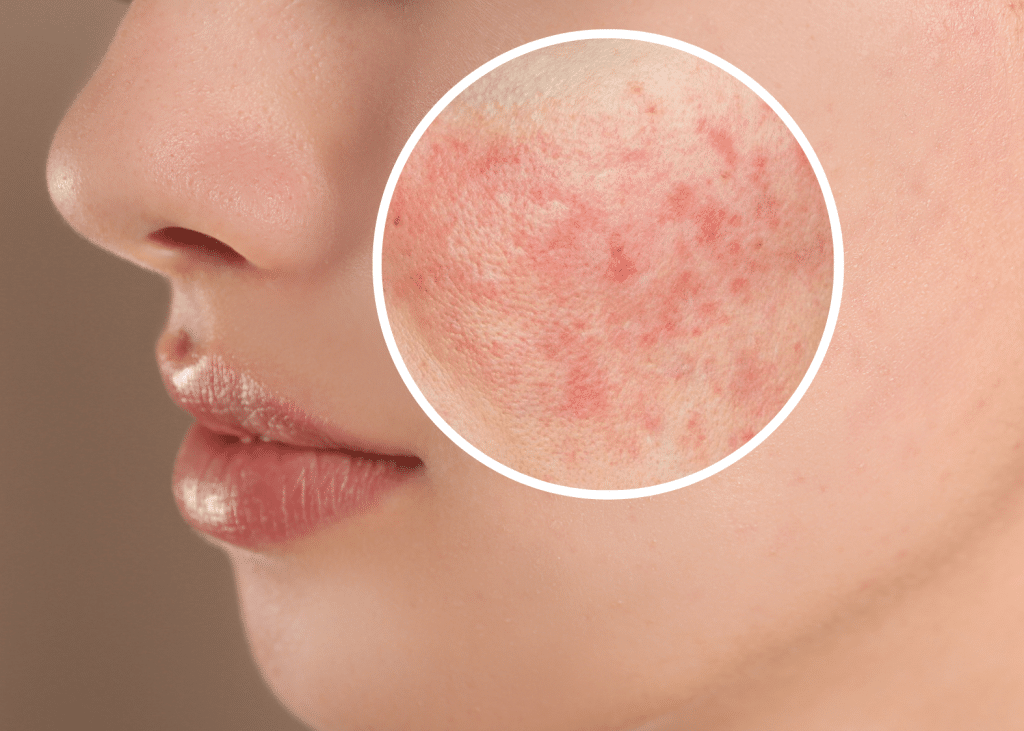
Most people assume rosacea is simply a tendency to blush easily or have sensitive skin. The reality is considerably more complex and biologically fascinating.
Rosacea is a chronic inflammatory skin condition involving neurovascular dysregulation, immune system activation, and skin barrier dysfunction working together to produce its characteristic symptoms. Far beyond flushing, rosacea causes persistent redness, visible blood vessels, inflammatory papules, and in advanced cases, permanent structural skin changes.
Understanding rosacea causes and what is actually happening within the skin empowers affected people to seek appropriate treatment and manage triggers effectively. The right knowledge transforms a frustrating and often misunderstood condition into one that specialist care can meaningfully control.
What Is Rosacea?
Rosacea is a common chronic inflammatory skin disease predominantly affecting the central face, including the cheeks, nose, forehead, and chin. It follows a relapsing and remitting course, with periods of relative calm interrupted by flares triggered by specific internal and external stimuli.
The condition affects approximately 5% of the global population, though prevalence varies considerably across ethnic groups. People with lighter skin tones historically receive rosacea diagnoses most frequently, but rosacea affects people of all ethnicities, often presenting differently and remaining underdiagnosed in people with darker skin.
The Four Subtypes of Rosacea
Dermatologists classify rosacea into four recognised subtypes based on the predominant clinical features. Erythematotelangiectatic rosacea (ETR) involves persistent central facial redness, frequent flushing, and visible dilated blood vessels called telangiectasia.
Papulopustular rosacea causes central facial redness accompanied by inflammatory papules and pustules resembling acne, though blackheads are absent. Phymatous rosacea produces skin thickening and irregular surface changes most commonly affecting the nose, while ocular rosacea targets the eyes and eyelids independently of skin involvement.
Why Rosacea Is Frequently Misdiagnosed
Rosacea is commonly misidentified as acne, seborrhoeic dermatitis, contact dermatitis, or simply sensitive skin. This diagnostic confusion delays appropriate treatment and allows progressive skin damage to accumulate unnecessarily.
The key clinical distinctions from acne include the absence of comedones, the presence of persistent background redness, the central facial distribution, and the clear relationship between specific triggers and symptom flares. Correct diagnosis at the earliest opportunity leads directly to more effective and targeted management.
Rosacea Causes: What Is Actually Happening in the Skin?
Rosacea develops through the interaction of genetic predisposition, neurovascular dysfunction, immune system dysregulation, and microbial factors. No single cause explains all cases, and the relative contribution of each mechanism varies between individuals and subtypes.
Understanding these mechanisms helps explain why different rosacea subtypes respond to different treatments and why a multi-pronged management approach consistently outperforms single-strategy treatment.
Neurovascular Dysregulation
The nervous system and blood vessels of rosacea-affected skin behave abnormally compared to healthy skin. Sensory nerve fibres in affected skin release neuropeptides, including substance P and calcitonin gene-related peptide, at excessive levels in response to stimuli.
These neuropeptides cause blood vessels to dilate rapidly and persistently, producing the characteristic flushing and persistent erythema of erythematotelangiectatic rosacea. Repeated cycles of vascular dilation and the sustained presence of inflammatory neuropeptides gradually damage vessel walls, contributing to permanent telangiectasia formation over time.
Innate Immune System Activation
The innate immune system, the body’s first-line defence against threats, plays a central role in rosacea pathogenesis. Toll-like receptor 2 (TLR2), expressed abundantly on rosacea-affected keratinocytes, responds excessively to microbial signals and environmental stressors.
TLR2 activation triggers the release of cathelicidins, particularly the antimicrobial peptide LL-37, in rosacea skin. Abnormal processing of cathelicidins in rosacea produces forms that are more inflammatory than those found in healthy skin, driving chronic cutaneous inflammation and promoting angiogenesis, meaning new blood vessel growth.
The Role of Demodex Mites
Demodex folliculorum are microscopic mites that normally inhabit human facial hair follicles in low numbers. People with rosacea harbour significantly higher Demodex densities than the general population, suggesting an important pathological role for these organisms.
Demodex mites activate TLR2 and carry a bacterium called Bacillus oleronius that independently stimulates immune responses in rosacea skin. This combined microbial burden contributes to the chronic inflammatory state that characterises all rosacea subtypes, explaining why anti-parasitic agents targeting Demodex produce clinical improvement.
Skin Barrier Dysfunction
Rosacea skin demonstrates measurable abnormalities in barrier function compared to healthy skin. Elevated transepidermal water loss, reduced ceramide content, and increased skin permeability make rosacea-affected skin more reactive to external triggers including temperature changes, skincare products, and environmental pollutants.
This compromised barrier perpetuates the inflammatory cycle by allowing irritants and microbial products to penetrate more deeply. Restoring skin barrier function through gentle skincare and appropriate emollient use forms an important supportive component of comprehensive rosacea management.
Genetic Predisposition to Rosacea
Twin studies and genome-wide association analyses confirm a significant hereditary component in rosacea susceptibility. Genes involved in immune regulation, vascular tone, and the HLA immune recognition system all contribute to individual genetic risk.
A family history of rosacea substantially raises an individual’s likelihood of developing the condition. This genetic background interacts with environmental exposures throughout life to determine when and how severely rosacea eventually manifests.
Recognising the Symptoms of Rosacea
Rosacea symptoms span a wide clinical spectrum from mild intermittent flushing to severe disfiguring skin changes that profoundly affect quality of life and self-esteem. Recognising the full range of symptoms prevents both under-diagnosis in mild cases and misidentification of advanced presentations.
Flushing, meaning transient episodes of intense facial redness and warmth, is typically the earliest and most consistently reported symptom across all rosacea subtypes. These flushing episodes are often the first indication that something beyond normal skin sensitivity is occurring.
Persistent Facial Redness and Telangiectasia
Persistent central facial erythema, meaning redness that does not fully resolve between flushing episodes, distinguishes rosacea from normal blushing responses. This background redness represents ongoing low-grade vascular dilation and inflammatory activity within the dermis.
Telangiectasia, visible dilated blood vessels appearing as fine red or purple lines across the nose and cheeks, develop after repeated cycles of vascular dilation damage the vessel walls permanently. These dilated vessels contribute substantially to the cosmetic burden of rosacea and do not resolve with anti-inflammatory treatments alone.
Inflammatory Papules and Pustules
Papulopustular rosacea produces acne-like inflammatory bumps across the central face, including the cheeks, nose, and chin. Unlike acne, these papules and pustules develop without the blackheads and whiteheads that characterise true acne vulgaris.
The inflammatory lesions of rosacea reflect the innate immune activation occurring within the dermis rather than the follicular obstruction driving acne. This mechanistic difference explains why standard acne treatments such as comedolytic retinoids produce less benefit in rosacea compared to anti-inflammatory and antimicrobial approaches.
Rhinophyma and Phymatous Changes
Rhinophyma is the most visually dramatic manifestation of phymatous rosacea, causing progressive thickening, nodularity, and irregular surface changes of the nasal skin. The underlying process involves sebaceous gland hypertrophy and fibrous tissue deposition driven by chronic inflammation.
Rhinophyma predominantly affects men and develops slowly over years to decades of inadequately controlled rosacea. Early and consistent treatment of the preceding inflammatory subtypes reduces but does not eliminate the risk of eventual rhinophyma development.
Ocular Rosacea Symptoms
Ocular rosacea affects the eyes and eyelids, causing symptoms including gritty, burning, or stinging sensations, chronic redness of the conjunctiva, recurrent styes, and sensitivity to light. The eyelid margins often show telangiectasia and crusting characteristic of meibomian gland dysfunction.
Approximately 50 to 58% of people with cutaneous rosacea develop ocular involvement at some point during their disease course. Ocular symptoms sometimes precede skin manifestations, meaning an unexplained chronic red eye in a patient with a flushing tendency should prompt rosacea assessment.
Identifying Rosacea Triggers
Identifying and consistently avoiding personal rosacea triggers reduces flare frequency, prevents progressive vascular damage, and significantly improves daily symptom burden. Triggers vary considerably between individuals, making personalised trigger identification more valuable than applying generic trigger lists.
Keeping a daily symptom diary for four to six weeks reliably identifies the most significant personal triggers by correlating symptom flares with preceding dietary, environmental, and lifestyle exposures. This simple tool guides targeted avoidance strategies more effectively than memory alone.
Dietary and Beverage Triggers
Hot drinks, alcohol particularly red wine, spicy foods, and cinnamaldehyde-containing foods such as tomatoes, citrus fruits, and chocolate commonly provoke rosacea flares. The thermal stimulus from hot beverages rather than caffeine content often drives hot drink-related flushing.
Alcohol causes vasodilation through multiple mechanisms, and red wine’s histamine and tannin content adds to its potent triggering effect in rosacea. Switching from hot to cold beverages and moderating alcohol intake consistently reduces flushing episodes in affected individuals.
Environmental and Physical Triggers
Sun exposure is one of the most universally significant rosacea triggers, with ultraviolet radiation activating TLR2 and promoting inflammatory mediator release in rosacea skin. Daily broad-spectrum SPF 50 sunscreen represents perhaps the most impactful single preventive intervention available.
Temperature extremes, including both hot and cold environments, exercise-induced heat, saunas, and hot baths all trigger flushing through thermoregulatory vasodilation. Choosing cooler exercise environments, using fans during workouts, and avoiding steam rooms helps manage exercise-related symptom provocation.
Emotional and Psychological Triggers
Stress and emotional arousal reliably trigger rosacea flushing through sympathetic nervous system activation of facial vasculature. Many people identify anxiety, embarrassment, and anger as consistent precursors to flushing episodes.
Stress management techniques including mindfulness, regular aerobic exercise, adequate sleep, and psychological support reduce the frequency of stress-triggered flares. Addressing the psychological dimensions of rosacea, including the anxiety generated by the condition itself, creates a beneficial cycle of reduced stress and reduced skin reactivity.
Skincare Products and Topical Triggers
Many conventional skincare products provoke rosacea through the inclusion of irritating ingredients including alcohol, fragrances, menthol, witch hazel, and harsh exfoliants. These ingredients penetrate the compromised rosacea barrier and trigger neurogenic inflammation directly.
Selecting fragrance-free, alcohol-free, and hypoallergenic skincare formulations minimises irritant exposure. Patients benefit from patch testing any new product on the inner arm before facial application and introducing one new product at a time to identify any reactive formulations.
Diagnosing Rosacea
Rosacea is primarily a clinical diagnosis based on characteristic symptoms, their distribution, and the history of trigger-related flares. No laboratory test or imaging study confirms rosacea, making careful clinical assessment the cornerstone of accurate diagnosis.
The National Rosacea Society expert committee established diagnostic criteria identifying two phenotypic categories sufficient for diagnosis. The presence of fixed central facial erythema in a characteristic distribution or phymatous changes alone is sufficient for diagnosis.
Diagnosis in People With Darker Skin Tones
Rosacea in people with darker skin tones is significantly underdiagnosed because the erythema and flushing characteristic of lighter-skin presentations are less visually apparent against a darker baseline skin tone. Patients with darker skin more commonly present with papulopustular or granulomatous variants where redness may be subtler.
Careful dermoscopic assessment, thorough symptom history including burning, stinging, flushing, and ocular symptoms, and awareness of the condition’s existence across all skin tones improves diagnostic rates in historically underserved populations. Granulomatous rosacea, which produces flesh-coloured papules rather than redness-dominant features, requires particular attention in diverse patient populations.
Distinguishing Rosacea From Mimicking Conditions
Seborrhoeic dermatitis, acne vulgaris, perioral dermatitis, systemic lupus erythematosus, and carcinoid syndrome all produce facial features that can superficially resemble rosacea. Careful distinction prevents incorrect treatment and missed diagnoses of underlying systemic conditions.
Lupus facial rash affects the malar region symmetrically but spares the nasolabial folds, while rosacea commonly involves the nasolabial folds. The butterfly rash of lupus is also typically non-papular and non-pustular, helping distinguish it from papulopustular rosacea in most cases.
Treating Rosacea: A Subtype-Directed Approach
Effective rosacea treatment requires a subtype-directed approach that matches specific therapeutic interventions to the dominant clinical features of each individual’s disease. No single treatment addresses all rosacea subtypes equally effectively.
Combining targeted pharmacological therapy with consistent trigger avoidance, gentle skincare, and appropriate sun protection achieves superior outcomes compared to medication alone. Long-term management rather than episodic acute treatment delivers the most meaningful and sustained improvements in rosacea.
Topical Treatments for Papulopustular Rosacea
Topical metronidazole 0.75% or 1% cream or gel is a first-line treatment for mild to moderate papulopustular rosacea. Its anti-inflammatory and mild antimicrobial effects reduce papule and pustule counts effectively with twice-daily application over eight to twelve weeks.
Topical azelaic acid 15% gel or 20% cream provides equivalent or superior efficacy to metronidazole for papulopustular rosacea and additionally helps reduce background erythema. Azelaic acid inhibits reactive oxygen species production and reduces the abnormal cathelicidin processing that amplifies rosacea inflammation.
Ivermectin Cream for Demodex-Driven Rosacea
Topical ivermectin 1% cream targets Demodex mites directly while also exerting independent anti-inflammatory effects through TLR2 pathway modulation. Multiple clinical trials demonstrate superiority of ivermectin cream over metronidazole for papulopustular rosacea at twelve and sixteen weeks.
The combination of antiparasitic activity against Demodex and direct anti-inflammatory properties makes ivermectin particularly effective for patients with high Demodex density, which a trained clinician can estimate clinically from the pattern and distribution of papulopustular lesions.
Addressing Persistent Redness and Telangiectasia
Persistent erythema responds to topical alpha-adrenergic agonists including brimonidine 0.33% gel and oxymetazoline 1% cream, which constrict facial blood vessels and reduce visible redness within thirty minutes of application. These agents provide rapid cosmetic improvement but do not alter the underlying disease process.
Vascular laser treatments, particularly pulsed dye laser and intense pulsed light, target the oxyhemoglobin in dilated blood vessels, causing selective vascular damage and subsequent elimination of telangiectasia. Multiple sessions produce cumulative improvements in persistent erythema and visible vessels that topical treatments cannot achieve independently.
Oral Treatments for Moderate to Severe Rosacea
Low-dose doxycycline 40 mg modified-release, approved specifically for rosacea in many countries, exerts anti-inflammatory effects at this subtherapeutic dose without contributing to antibiotic resistance. It reduces inflammatory lesion counts and erythema significantly without the gastrointestinal side effects associated with conventional antibiotic doses.
Oral isotretinoin at low doses provides an effective option for refractory papulopustular rosacea and early phymatous changes. Its sebosuppressive and anti-inflammatory effects reduce disease activity substantially, though the teratogenic risk requires mandatory pregnancy prevention in people of childbearing potential.
Managing Ocular Rosacea
Ocular rosacea requires dedicated ophthalmological or optometric assessment alongside dermatological management of skin disease. The two components of the condition do not always parallel each other in activity, and severe ocular rosacea can exist alongside mild cutaneous disease.
Warm compresses applied to closed eyelids for five to ten minutes twice daily improve meibomian gland function and reduce eyelid inflammation. Regular gentle eyelid hygiene using dilute baby shampoo or proprietary lid scrub preparations removes debris and reduces bacterial colonisation along the lash line.
Systemic Treatment for Eye Involvement
Oral doxycycline effectively treats ocular rosacea alongside cutaneous disease by reducing the abnormal meibomian lipid composition that impairs tear film stability. Extended treatment courses of three to six months produce meaningful and durable improvements in ocular symptoms.
Topical cyclosporine 0.05% ophthalmic emulsion reduces ocular surface inflammation in rosacea-associated dry eye disease. It represents an important adjunctive treatment for persistent ocular symptoms that inadequately respond to eyelid hygiene and systemic doxycycline alone.
Rosacea and Psychological Wellbeing
The psychological burden of rosacea is profound and consistently underappreciated in clinical settings. Visible facial redness, flushing, and papules significantly affect self-confidence, social participation, and professional functioning for many affected individuals.
Studies demonstrate elevated rates of depression, anxiety, and social phobia among people with rosacea compared to the general population. The unpredictability of flushing episodes, the visibility of the condition on the face, and the chronic nature of the disease all contribute to this psychological burden.
Addressing the Emotional Dimension of Rosacea
Psychological support, including cognitive behavioural therapy and stress management training, improves both quality of life and symptom burden in rosacea. Addressing the anxiety that flushing itself provokes creates a positive cycle, as reduced anxiety reduces stress-triggered flushing frequency.
Patient organisations including the National Rosacea Society provide educational resources, community support, and advocacy that help affected individuals feel less isolated and more informed. Peer connection with others managing the same condition provides practical coping strategies that clinical consultations cannot always deliver.
Frequently Asked Questions About Rosacea
What causes rosacea to develop?
Rosacea develops through a combination of genetic predisposition, neurovascular dysfunction, innate immune overactivation, elevated Demodex mite density, and skin barrier impairment. These interconnected mechanisms collectively produce chronic facial inflammation and abnormal vascular reactivity. No single cause explains all cases, and the relative contribution of each mechanism varies between individuals, explaining why different treatments work better for different people with the same diagnosis.
Can rosacea be cured permanently?
Currently, there is no permanent cure for rosacea, as it reflects an underlying genetic and immunological predisposition that persists throughout life. However, consistent treatment and trigger avoidance achieve excellent long-term disease control for most affected individuals. Modern therapies including targeted topical agents, vascular lasers, and low-dose oral treatments allow many people to maintain near-symptom-free skin when used consistently and combined with appropriate preventive skincare.
Does rosacea only affect people with fair skin?
Rosacea affects people of all skin tones, though it has historically been underdiagnosed in people with darker skin because the characteristic redness is less visually apparent. People with darker skin more commonly present with papulopustular, granulomatous, or ocular variants where redness may be subtle. Improved clinical awareness and dermoscopic assessment are helping reduce the diagnostic disparity that has left many people of colour with rosacea undiagnosed and untreated for years.
What is the best daily skincare routine for rosacea?
The best daily rosacea skincare routine involves a gentle, fragrance-free cleanser, a barrier-repairing moisturiser containing ceramides or hyaluronic acid, and a broad-spectrum SPF 50 mineral sunscreen as the absolute minimum. Avoiding products containing alcohol, fragrances, menthol, witch hazel, and harsh exfoliants prevents further barrier disruption and irritant-triggered inflammation. Introducing new products one at a time and patch testing on the inner arm before facial use reduces the risk of reactive flares from incompatible formulations.
Does rosacea get worse over time without treatment?
Untreated rosacea tends to progress slowly in many cases, with persistent erythema becoming more fixed, telangiectasia becoming more prominent, and inflammatory lesions becoming more frequent. A proportion of patients eventually develop phymatous changes including rhinophyma without consistent treatment of the preceding inflammatory stages. Regular specialist treatment, consistent trigger avoidance, and daily sun protection effectively slow or prevent this progression in most affected individuals.
Taking Rosacea Seriously Leads to Better Skin and Better Quality of Life
Rosacea is far more than an inconvenient tendency to flush. It is a complex chronic inflammatory condition with neurovascular, immunological, and microbial components that drive progressive skin changes without appropriate management.
The remarkable expansion of targeted treatments over the past decade, from Demodex-targeting ivermectin to vascular-specific laser technologies and alpha-adrenergic topical vasoconstrictors, has transformed what modern dermatology can achieve for people with all rosacea subtypes.
Most importantly, understanding rosacea causes, identifying personal triggers, building a gentle and evidence-based skincare routine, and accessing specialist dermatological care together give every affected person the tools to achieve meaningful and sustained control of a condition that, left unmanaged, would otherwise claim a disproportionate share of daily comfort, confidence, and quality of life.
Disclaimer:
This article is intended for general informational purposes only. It does not constitute medical advice, diagnosis, or treatment. Always consult a qualified healthcare professional for any medical concerns.
References:
- Cluster Headache causes intense unilateral orbital pain with characteristic autonomic symptoms and attack patterns.
- The exploration of space has always fascinated humanity. However, as astronauts spend extended periods aboard the International Space Station
- In myasthenia gravis, autoantibodies (antibodies directed against one’s own tissues) attack components of the neuromuscular junction
Observer Voice is the one stop site for National, International news, Sports, Editor’s Choice, Art/culture contents, Quotes and much more. We also cover historical contents. Historical contents includes World History, Indian History, and what happened today. The website also covers Entertainment across the India and World.

