

Uveitis: The Eye Inflammation That Can Silently Destroy Vision

Most people have never heard of uveitis until it affects them personally. Yet this inflammatory eye condition is responsible for approximately 10% to 15% of all cases of blindness in developed countries — a striking figure for a condition that receives far less public attention than glaucoma or macular degeneration. What makes uveitis particularly dangerous is its capacity to cause profound damage with symptoms that are easily overlooked or mistaken for something minor.
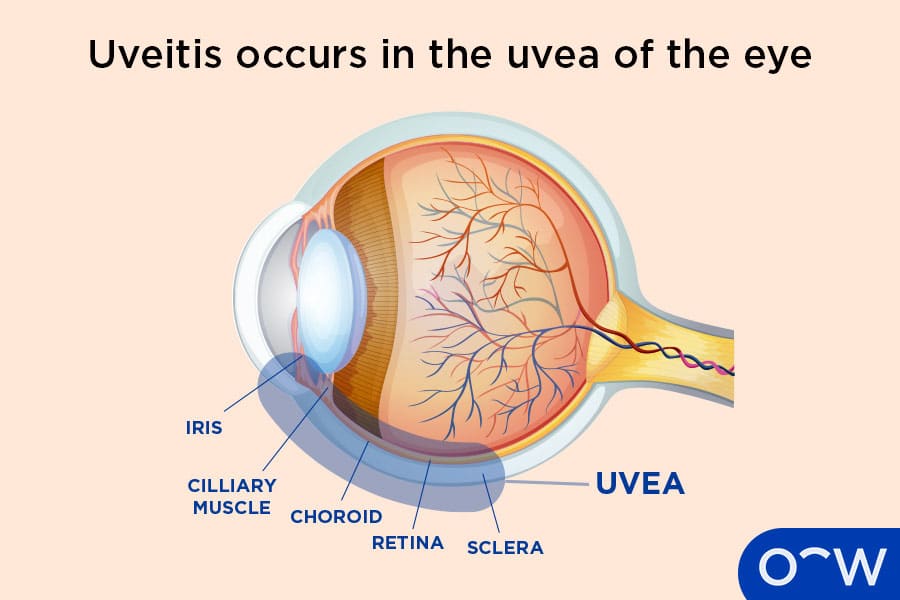
Uveitis involves inflammation of the uvea — the middle layer of the eye containing the iris, ciliary body, and choroid. This inflammation can damage structures throughout the eye, threaten the retina, raise eye pressure, and cause complications that permanently compromise vision. Understanding what uveitis is, why it occurs, and how it is treated is essential for anyone facing this diagnosis or supporting someone who is.
What Is Uveitis?
Uveitis is inflammation affecting the uveal tract — the pigmented, vascular middle layer of the eye. The uvea consists of three interconnected structures: the iris at the front, the ciliary body just behind it, and the choroid at the back of the eye. Inflammation can affect any or all of these structures, as well as adjacent retinal and vitreous tissues.
The Uvea and Its Functions
The uvea performs several critical functions. The iris controls the amount of light entering the eye by regulating pupil size. The ciliary body produces aqueous humour — the fluid that maintains eye pressure — and controls the shape of the lens for focusing. The choroid supplies the outer retina with oxygen and nutrients through its dense network of blood vessels.
When inflammation disrupts these functions, the consequences extend throughout the eye. Inflammatory cells and proteins enter the aqueous humour and vitreous, clouding normally clear media. Inflammatory mediators damage blood vessel walls, disrupt fluid dynamics, and threaten the structural integrity of retinal tissue.
Why Uveitis Demands Serious Attention
Uveitis is not merely a nuisance condition. Untreated or inadequately treated uveitis causes vision-threatening complications including cataract, glaucoma, macular oedema, retinal detachment, and optic nerve damage. The National Eye Institute identifies uveitis as one of the leading causes of preventable blindness in working-age adults in the United States and other developed nations.
Early, accurate diagnosis and appropriate treatment are therefore not optional — they are essential for preserving vision and preventing the cascade of complications that inadequately controlled inflammation produces.
Types of Uveitis
Uveitis is classified by the primary anatomical location of inflammation within the eye. This classification system guides treatment decisions and helps clinicians assess complication risk.
Anterior Uveitis
Anterior uveitis affects the front of the eye — primarily the iris, producing iritis, or the iris and ciliary body together, producing iridocyclitis. It is the most common form, accounting for approximately 50% to 60% of all uveitis cases. Anterior uveitis typically causes the most immediately noticeable symptoms: red eye, pain, photophobia — sensitivity to light — and blurred vision.
The characteristic clinical finding in anterior uveitis is the presence of inflammatory cells and flare — protein-rich aqueous humour — in the anterior chamber of the eye, visible on slit-lamp examination. Keratic precipitates — clusters of inflammatory cells depositing on the inner surface of the cornea — are another hallmark finding that helps determine the underlying cause.
Intermediate Uveitis
Intermediate uveitis affects the vitreous cavity and the peripheral retina — the area called the pars plana. This type is less common, accounting for approximately 15% of uveitis cases. It causes fewer external symptoms than anterior uveitis, often presenting with floaters and mild blurring rather than significant pain or redness.
The relative subtlety of intermediate uveitis symptoms means people often delay seeking assessment. Yet this form can cause significant macular oedema and cataract formation if untreated. Pars planitis — a specific form of intermediate uveitis without an identifiable systemic cause — is the most common variant in this category.
Posterior Uveitis
Posterior uveitis involves inflammation of the choroid, retina, or both. Choroiditis affects the choroid alone. Chorioretinitis involves both choroid and retina. Retinitis primarily affects the retinal tissue itself. Posterior uveitis is frequently associated with infectious causes and carries the highest risk of severe, permanent vision loss.
Because posterior uveitis directly involves or threatens retinal tissue, damage to photoreceptors and the retinal pigment epithelium can be rapid and irreversible. Identifying and treating the cause urgently is critical in posterior uveitis presentations.
Panuveitis
Panuveitis involves inflammation affecting all three uveal segments simultaneously — anterior, intermediate, and posterior. It represents the most extensive and severe anatomical pattern of uveitis and carries the highest overall risk of vision-threatening complications.
Conditions associated with panuveitis include sarcoidosis, Behçet disease, Vogt-Koyanagi-Harada disease, and sympathetic ophthalmia — a rare bilateral inflammatory condition that can follow penetrating eye trauma or surgery. Panuveitis almost always requires systemic immunosuppressive treatment rather than local eye treatment alone.
Causes of Uveitis
Uveitis arises from a diverse range of underlying causes, which broadly divide into non-infectious and infectious categories. Identifying the cause is one of the most important — and often challenging — aspects of uveitis management.
Non-Infectious Causes
Non-infectious uveitis is the most common category in developed countries, accounting for the majority of cases in ophthalmology clinics. Autoimmune and inflammatory systemic conditions drive most non-infectious uveitis. The immune system incorrectly targets uveal tissue, generating a self-sustaining inflammatory response that continues even in the absence of any infection.
Ankylosing spondylitis — a form of inflammatory arthritis affecting the spine — is the condition most frequently associated with anterior uveitis. Approximately 25% to 40% of people with ankylosing spondylitis develop uveitis at some point. Other associated rheumatological conditions include reactive arthritis, psoriatic arthritis, juvenile idiopathic arthritis, and inflammatory bowel disease including Crohn’s disease and ulcerative colitis.
HLA-B27 and Uveitis
The HLA-B27 genetic marker is strongly associated with anterior uveitis, particularly the acute, recurrent form that most typically presents with sudden onset of unilateral redness, pain, and photophobia. Testing for HLA-B27 forms a standard part of the initial uveitis investigation in many clinical protocols.
People who carry the HLA-B27 marker and develop uveitis are more likely to have an associated seronegative spondyloarthropathy — the family of inflammatory joint conditions that includes ankylosing spondylitis — whether or not joint symptoms have been identified. This finding can prompt rheumatological assessment that identifies systemic disease requiring treatment in its own right.
Infectious Causes
Infectious uveitis encompasses a wide range of viral, bacterial, fungal, and parasitic causes. Herpes viruses — including herpes simplex virus and varicella zoster virus — cause anterior uveitis that can be recurrent and destructive. Cytomegalovirus causes retinitis particularly in people with compromised immune systems.
Toxoplasma gondii — a parasite acquired through undercooked meat or cat faecal contact — is the most common infectious cause of posterior uveitis globally, producing characteristic focal chorioretinal scars. Tuberculosis, syphilis, and Lyme disease also cause uveitis through distinct inflammatory mechanisms. Correctly identifying infectious uveitis is critical because treatment with immunosuppressive agents alone — without targeting the infection — can cause catastrophic worsening.
Sarcoidosis and Uveitis
Sarcoidosis — a systemic inflammatory condition characterised by the formation of granulomas in multiple organs — is one of the most important systemic causes of uveitis. It can cause any anatomical type of uveitis, from anterior iritis to panuveitis, and often presents with bilateral involvement.
Ocular sarcoidosis accounts for approximately 20% to 30% of uveitis referrals at specialist centres. Recognising sarcoidosis requires systemic investigation including chest imaging, serum ACE and calcium levels, and sometimes tissue biopsy. Untreated sarcoid uveitis causes extensive damage through granulomatous inflammation of uveal structures and the retina.
Idiopathic Uveitis
Despite thorough investigation, no identifiable cause is found in approximately 30% to 50% of uveitis cases. These cases are classified as idiopathic — meaning the cause is unknown. Idiopathic uveitis may reflect undetected systemic disease, genetic immune dysregulation, or subclinical autoimmune processes that current diagnostic tools cannot identify.
Managing idiopathic uveitis requires the same commitment to inflammation control as uveitis with a known cause. The absence of an identified systemic association does not reduce the risk of vision-threatening complications from ongoing inflammation.
Symptoms of Uveitis
Uveitis symptoms vary considerably depending on the anatomical location of inflammation and whether the condition is acute or chronic. Recognising the range of possible presentations helps ensure timely assessment.
Acute Anterior Uveitis Symptoms
Acute anterior uveitis typically presents with a clear triad of symptoms: red eye, eye pain, and photophobia. The onset is often sudden, occurring over hours to days. Vision may blur, and the eye may water excessively. The redness in anterior uveitis is typically most pronounced around the limbus — the junction between the cornea and the white of the eye — a pattern called ciliary flush or perilimbal injection.
These symptoms distinguish acute anterior uveitis from simpler causes of red eye such as conjunctivitis, in which redness is more diffuse and typically painless. Any person presenting with painful red eye and photophobia — particularly without discharge — should receive urgent slit-lamp examination to exclude uveitis.
Chronic and Posterior Uveitis Symptoms
Chronic uveitis, intermediate uveitis, and posterior uveitis often cause subtler symptoms that develop insidiously. Floaters — shadows cast by inflammatory cells and debris in the vitreous — are a prominent symptom. Blurring of vision that cannot be corrected with glasses, reduced colour perception, and difficulty with central vision arise when macular oedema or retinal inflammation develops.
Posterior uveitis may cause no pain or redness at all. People may delay seeking assessment for weeks or months, attributing symptoms to fatigue, screen exposure, or minor prescription changes. This delay allows inflammation to accumulate and cause structural damage that timely treatment could have prevented.
Warning Symptoms Requiring Urgent Assessment
Several specific symptoms require same-day ophthalmological assessment. Sudden onset of eye pain, marked photophobia, significant vision loss, or a dense shower of new floaters — particularly when accompanied by flashing lights — all demand urgent evaluation.
People with known systemic conditions associated with uveitis — including ankylosing spondylitis, sarcoidosis, and inflammatory bowel disease — should maintain particularly low thresholds for seeking eye assessment when any new visual symptom develops.
Diagnosing Uveitis
Accurate uveitis diagnosis requires both confirming the presence of intraocular inflammation and identifying its underlying cause. Both elements are essential for treatment planning.
Slit-Lamp Examination
The slit-lamp is the cornerstone of uveitis diagnosis. This specialised microscope illuminates the eye with a narrow beam of intense light, allowing detailed examination of the anterior chamber, vitreous, and posterior segment structures. The examining clinician grades the intensity of anterior chamber cells and flare using standardised systems — most commonly the Standardisation of Uveitis Nomenclature, or SUN, grading scale.
Keratic precipitates, posterior synechiae — adhesions between the iris and lens — and iris nodules all provide diagnostic clues about uveitis type and cause. Granulomatous uveitis — characterised by large mutton-fat keratic precipitates and Koeppe or Busacca nodules — suggests causes such as sarcoidosis, tuberculosis, or sympathetic ophthalmia.
Posterior Segment Assessment
Assessing the posterior segment — vitreous, retina, choroid, and optic nerve — is essential in all uveitis presentations. Indirect ophthalmoscopy and slit-lamp biomicroscopy with fundus lenses reveal vitreous haze, retinal lesions, optic disc swelling, and macular oedema.
OCT is invaluable for detecting and quantifying macular oedema in uveitis — the most common cause of permanent vision loss in this condition. Fluorescein angiography reveals vascular leakage, retinal ischaemia, and choroidal involvement that clinical examination alone may not fully characterise.
Systemic Investigations
The systemic investigation of uveitis aims to identify underlying causes and associated conditions. A standard investigation panel typically includes blood tests for HLA-B27, complete blood count, inflammatory markers, syphilis serology, and — depending on clinical context — tests for tuberculosis, sarcoidosis, viral causes, and rheumatological conditions.
Chest X-ray or CT imaging helps identify pulmonary sarcoidosis and tuberculosis. Collaboration between ophthalmologists and rheumatologists, infectious disease specialists, or other relevant specialists ensures that systemic causes are identified and treated appropriately alongside ocular management.
Treating Uveitis
Uveitis treatment targets both the inflammatory process causing immediate damage and the underlying cause driving that inflammation. Treatment must be prompt, appropriate to the severity and cause, and monitored carefully for both efficacy and complications.
Corticosteroids: The Cornerstone of Treatment
Corticosteroids remain the primary anti-inflammatory treatment for most forms of non-infectious uveitis. They rapidly reduce intraocular inflammation and prevent structural damage when deployed promptly and at adequate doses. The route of administration depends on the location and severity of inflammation.
Anterior uveitis typically responds to topical corticosteroid eye drops — prednisolone acetate or dexamethasone — given frequently in the acute phase and tapered as inflammation resolves. Periocular corticosteroid injections — delivered adjacent to the eye — provide sustained local anti-inflammatory effect for intermediate and posterior uveitis. Systemic oral corticosteroids are necessary for severe, bilateral, or posteriorly located uveitis.
Mydriatic Eye Drops
Cycloplegic and mydriatic eye drops — medications that dilate the pupil and paralyse the ciliary muscle — are a standard component of anterior uveitis treatment. Atropine, cyclopentolate, and tropicamide all reduce pain from ciliary spasm, prevent the formation of posterior synechiae — iris-lens adhesions — and allow the eye to rest during the acute inflammatory episode.
Posterior synechiae, if allowed to form extensively, can permanently distort the pupil, obstruct aqueous drainage, and contribute to secondary glaucoma. Preventing their formation with adequate dilation during the acute phase is therefore an important structural protective measure.
Immunosuppressive Therapy
When uveitis is severe, bilateral, corticosteroid-dependent, or associated with systemic autoimmune disease requiring systemic treatment, immunosuppressive agents become necessary. These medications reduce immune system activity to control inflammation that corticosteroids alone cannot adequately manage, or that requires chronic suppression at doses making long-term corticosteroid use unacceptable.
Methotrexate, mycophenolate mofetil, and azathioprine are the most widely used first-line immunosuppressive agents in uveitis. They require regular blood monitoring for toxicity and take weeks to months to achieve full effect. Cyclosporine is used in specific presentations, particularly Behçet disease and Vogt-Koyanagi-Harada disease.
Biologic Agents
Biologic therapies — medications targeting specific components of the immune system — have transformed the management of severe, refractory non-infectious uveitis. Adalimumab, a tumour necrosis factor inhibitor, received FDA approval for non-infectious intermediate, posterior, and panuveitis in 2016, becoming the first biologic specifically approved for uveitis.
Clinical trials including VISUAL I and VISUAL II demonstrated that adalimumab significantly reduced uveitis flares, corticosteroid requirements, and vision-threatening complications compared to placebo. Other biologics — including infliximab, secukinumab, and abatacept — are used off-label in uveitis refractory to standard approaches, guided by the underlying systemic disease associations.
Treating Infectious Uveitis
Infectious uveitis requires targeted treatment of the causative organism alongside or preceding anti-inflammatory therapy. Herpetic uveitis requires antiviral treatment — typically oral valaciclovir or intravenous aciclovir in severe cases — before or alongside corticosteroid use. Toxoplasma chorioretinitis requires antimicrobial therapy with pyrimethamine, sulfadiazine, and folinic acid.
Syphilitic uveitis requires high-dose intravenous penicillin. Tuberculous uveitis requires full anti-tuberculosis chemotherapy. Using corticosteroids without appropriate antimicrobial cover in infectious uveitis can cause rapid, devastating worsening — a risk that makes correct cause identification a genuine clinical priority.
Sustained-Release Implants
Fluocinolone acetonide sustained-release implants — including the Retisert and Yutiq devices — deliver continuous low-dose corticosteroid directly to the posterior segment for two to three years. These implants significantly reduce uveitis recurrence and systemic immunosuppression requirements in people with chronic posterior or panuveitis.
The implants avoid the systemic side effects of oral corticosteroids but carry local risks including elevated intraocular pressure, cataract acceleration, and rarely endophthalmitis. They are most appropriate for people with severe, chronic, corticosteroid-responsive uveitis in whom systemic immunosuppression is contraindicated or inadequately effective.
Complications of Uveitis
Untreated or inadequately controlled uveitis generates vision-threatening complications that accumulate with each episode of inadequate inflammation control. Understanding these complications motivates consistent treatment adherence.
Cataract
Cataract — clouding of the crystalline lens — is the most common complication of uveitis. Both the inflammatory process itself and the corticosteroid treatments used to control it independently accelerate lens clouding. Posterior subcapsular cataracts, which form directly behind the lens capsule, are the characteristic pattern in uveitis-associated cataract and affect vision particularly in bright light conditions.
Cataract surgery in uveitis-affected eyes carries higher risk than in uncomplicated cataracts. Surgeons must carefully control inflammation before, during, and after surgery to prevent intraoperative complications and post-operative inflammation flares. Ideally, surgery is performed during a period of inflammation quiescence lasting at least three months.
Glaucoma
Elevated intraocular pressure complicates uveitis through multiple mechanisms. Inflammatory cells and debris can block aqueous drainage. Posterior synechiae can cause pupil block, preventing aqueous from reaching the drainage angle. Long-term topical or systemic corticosteroid use independently raises intraocular pressure in steroid responders.
Uveitic glaucoma requires careful management balancing inflammation control — which may require corticosteroids — against pressure control. Prostaglandin analogue eye drops, other pressure-lowering medications, and sometimes glaucoma surgery become necessary to protect the optic nerve from pressure-related damage that compounds the direct inflammatory damage already occurring.
Macular Oedema
Macular oedema — fluid accumulation within the macular layers of the retina — is the most common cause of significant, chronic visual impairment in uveitis. Inflammatory mediators increase vascular permeability, causing fluid to leak from retinal capillaries into the macula and disrupt central vision.
OCT allows precise detection and quantification of macular oedema. Treatment involves intensifying anti-inflammatory therapy — through periocular injections, systemic steroids, or immunosuppression — and sometimes anti-VEGF injections to address the vascular component of macular fluid accumulation.
Living with Uveitis
Uveitis is often a chronic, relapsing condition requiring long-term management, regular monitoring, and sustained engagement with a specialist eye care team. Understanding what this involves helps people navigate the condition proactively.
Long-Term Monitoring
People with uveitis require regular ophthalmological follow-up to detect recurrence, monitor for complications, and adjust treatment. During active disease and the early post-treatment period, monthly or more frequent assessments are appropriate. Stable, treated disease may allow extension to three-monthly or six-monthly monitoring.
Monitoring must always include intraocular pressure measurement, assessment for cataract progression, and OCT imaging to detect macular oedema — the complication most easily missed without objective imaging even when vision appears subjectively unchanged.
Medication Adherence and Side Effect Management
Long-term uveitis treatment — whether with topical corticosteroids, systemic immunosuppressives, or biologics — requires consistent adherence to achieve and maintain inflammation control. People must understand that stopping treatment during apparent remission risks triggering recurrence that may cause more damage than the original episode.
Managing treatment side effects proactively improves adherence. Bone protection with calcium, vitamin D, and bisphosphonates is important during long-term oral corticosteroid use. Regular blood monitoring during immunosuppressive therapy detects toxicity early. Open communication with the treating clinician about side effects prevents people from stopping treatment without medical guidance.
Systemic Health Management
For people with uveitis associated with systemic conditions — ankylosing spondylitis, sarcoidosis, inflammatory bowel disease — optimal management of the systemic condition often improves uveitis control. Coordinated care between ophthalmologist and relevant specialist reduces the overall inflammatory burden and may allow lower doses of uveitis-specific treatment.
People whose uveitis has no identified systemic cause also benefit from general inflammatory risk reduction — including physical activity, a balanced diet, and avoiding smoking, which has independently been associated with worse uveitis outcomes in some research.
Frequently Asked Questions
Is uveitis contagious?
Non-infectious uveitis — the most common form — is not contagious. It reflects autoimmune or inflammatory processes within the individual rather than a transmissible pathogen. Infectious causes of uveitis — such as herpesviruses or toxoplasma — involve organisms that can spread between people through standard transmission routes, but the uveitis itself is not transmitted by eye contact or proximity. People with uveitis do not pose any infectious risk to those around them through their eye condition.
Can uveitis come back after treatment?
Yes, uveitis frequently recurs, particularly in people with associated systemic conditions, HLA-B27 positivity, or idiopathic disease. Acute anterior uveitis has a particularly high recurrence rate — studies report recurrence in 30% to 50% of affected individuals within two years. Each recurrence requires prompt treatment to prevent cumulative damage. People with recurrent uveitis benefit from having a clear management plan, rapid access to their ophthalmologist, and understanding of their own early warning signs that signal a flare beginning.
Can uveitis affect children?
Yes, uveitis affects children and can be particularly challenging to detect in young people because they often cannot articulate subtle visual symptoms. Juvenile idiopathic arthritis — the most common chronic childhood inflammatory arthritis condition — is frequently associated with a particularly dangerous form of chronic anterior uveitis that causes no redness or pain, making regular screening examinations by an ophthalmologist essential for all children with this diagnosis. Uveitis in children can cause significant amblyopia — reduced vision development — in addition to the structural complications seen in adults.
Does stress trigger uveitis flares?
Some people with uveitis report that periods of physical or emotional stress precede flares. While the scientific evidence for stress as a direct uveitis trigger is limited, stress-related immune dysregulation is biologically plausible. Stress influences inflammatory cytokine levels and immune cell behaviour in ways that could influence uveitis activity. Practical stress management, adequate sleep, and general wellbeing support are reasonable components of a holistic uveitis management approach, even while the direct evidence base remains limited.
Is uveitis associated with any systemic diseases?
Yes, uveitis associates with numerous systemic conditions. The most common include ankylosing spondylitis, reactive arthritis, psoriatic arthritis, juvenile idiopathic arthritis, inflammatory bowel disease, sarcoidosis, Behçet disease, multiple sclerosis, and Vogt-Koyanagi-Harada disease. Infectious causes include tuberculosis, syphilis, herpes viruses, toxoplasmosis, and HIV-associated conditions. The investigation of new uveitis always includes assessment for associated systemic conditions, as identifying these improves overall disease management and may reduce uveitis recurrence.
Can uveitis lead to permanent blindness?
Without adequate treatment, uveitis can lead to permanent, severe vision loss. Complications including macular oedema, cataract, glaucoma, retinal detachment, and optic nerve damage all contribute to visual impairment that cannot be reversed once established. However, with early diagnosis, appropriate treatment, and consistent monitoring, most people with uveitis maintain functional vision throughout their lives. The key is timely recognition of the condition, adherence to treatment, and proactive management of complications before they cause irreversible structural damage.
Conclusion
Uveitis occupies a unique and serious position among eye conditions. It can present loudly — with painful, red, light-sensitive eyes demanding immediate attention — or silently, with subtle floating shadows and mild blurring that seem easily dismissed. In both presentations, the underlying inflammatory process carries the same potential to cause permanent, irreversible vision loss when inadequately treated.
Modern uveitis management has significantly improved outcomes. Rapid-access ophthalmology services catch anterior uveitis early. OCT detects macular oedema before significant central vision loss occurs. Biologic therapies control inflammation that once resisted all available treatments. Coordinated care with rheumatologists and other specialists addresses the systemic conditions driving recurrent disease.
The foundation of good outcomes remains unchanged: recognising uveitis early, investigating its cause thoroughly, treating it adequately, and monitoring it consistently over the long term. People who understand their condition — its warning signs, its complications, and the importance of treatment adherence — navigate it far more effectively than those who encounter each flare unprepared. Uveitis demands vigilance. With that vigilance, most people who live with it can protect the vision that this condition has the capacity, but not the inevitability, to destroy.
References
- Frontotemporal Dementia causes behavioral, personality, language, and cognitive changes that develop progressively.
- Thymoma management requires complete surgical resection as primary treatment with adjuvant chemotherapy and radiation based on WHO type and Masaoka-Koga stage.
- Panhypopituitarism is complete or near-complete failure of anterior pituitary hormone production resulting in deficiencies of multiple pituitary hormones.
- Cluster headache is a primary headache disorder characterized by recurrent attacks of unilateral orbital pain accompanied by autonomic symptoms.
- Ankylosing Spondylitis causes progressive symptoms affecting the spine and other joints. The symptoms develop insidiously over time.
Disclaimer:
This article is for informational purposes only and does not constitute medical advice. Always consult a qualified healthcare professional for diagnosis, treatment, or any eye health concerns.
Observer Voice is the one stop site for National, International news, Sports, Editor’s Choice, Art/culture contents, Quotes and much more. We also cover historical contents. Historical contents includes World History, Indian History, and what happened today. The website also covers Entertainment across the India and World.

