

Congenital disorders: Why 295,000 newborns die yearly from birth defects we know how to prevent and treat
Congenital disorders: 6% of babies born with defects, but 94% are in poor countries

Sarah, 26 weeks pregnant, watched the screen showing her baby. The technician excused herself to get the doctor. Within minutes, a specialist confirmed what the scan suggested: her son had a heart defect—a congenital disorder that developed while he was forming in the womb.
“Can it be fixed?” Sarah asked immediately.
“Yes,” the doctor explained. “He’ll need surgery after birth, but this particular heart defect is very treatable. In a good hospital with pediatric cardiac surgeons, the success rate exceeds 95%. Your son will likely live a completely normal life.”
Sarah was fortunate. She had access to prenatal screening, specialist care, and a hospital equipped to perform complex infant heart surgery.
Thousands of miles away in rural sub-Saharan Africa, another mother gave birth to a baby with the identical heart defect. No ultrasound had detected it during pregnancy. No specialists were available. No surgery center existed within hundreds of miles. That baby died before his first birthday.
Same condition. Vastly different outcomes. This is the brutal inequality of congenital disorders.
The Hidden Epidemic
Congenital disorders—also called birth defects, congenital anomalies, or congenital malformations—are structural or functional abnormalities that occur during development before birth.
The numbers are staggering: approximately 6% of babies worldwide are born with a congenital disorder. That’s roughly one in every 17 births.
Each year, an estimated 295,000 newborns die before reaching 4 weeks of age due to congenital disorders and associated complications.
But here’s what shocked me when researching this topic: the true number is likely far higher. These statistics don’t include terminated pregnancies after prenatal diagnosis or stillbirths. We’re only counting the cases that make it to live birth and get recorded.
The conditions range enormously in severity. Some, like cleft lip and palate or clubfoot, are easily treatable. Others, including certain heart defects, neural tube defects, and chromosomal abnormalities like Down syndrome, require complex lifelong care or cause permanent disability.
The Geographic Lottery
Here’s the statistic that reveals everything wrong with global health inequality: 94% of congenital disorders occur in low- and middle-income countries.
Not because genetics or biology work differently in poor countries. Because poverty, malnutrition, lack of healthcare, environmental exposures, and absent prevention programs create conditions where birth defects flourish.
Dr. Okonkwo works at a pediatric hospital in Nigeria. He sees the consequences daily.
“We get babies with clubfoot—100,000 are born worldwide with this condition annually,” he explained. “It’s easily corrected with simple treatments started early. But families living in rural areas have no access to care. By the time they reach us, the child is 5 or 6 years old. The deformity has become severe and permanent. That child will face a lifetime of disability and discrimination, all from a condition that could have been fixed in the first few months of life.”
Low- and middle-income countries face a double burden: higher rates of congenital disorders plus fewer facilities to treat reversible conditions. The result is more pronounced and longer-lasting disability, higher mortality, and greater economic impact on already struggling families.
What Causes Birth Defects
Here’s a frustrating truth: approximately 50% of congenital disorders cannot be linked to a specific cause.
But for the other half, we know exactly what’s happening.
Genetic causes include single gene defects and chromosomal disorders. Some are inherited from parents. Others result from random mutations during cell division. Advanced maternal age increases the risk of chromosomal abnormalities, particularly Down syndrome.
Consanguinity—when parents are related by blood—increases congenital anomaly risk and nearly doubles the risk of neonatal death, intellectual disability, and other health conditions. This is why genetic counseling matters for couples who are blood relatives.
Environmental teratogens are substances that damage developing embryos and fetuses. These include infections like Zika virus, syphilis, and rubella during pregnancy. They include alcohol, tobacco, and certain medications. They include exposure to environmental contaminants and industrial chemicals.
Micronutrient deficiencies play enormous roles. Lack of folic acid during early pregnancy causes neural tube defects—devastating conditions where the brain or spinal cord doesn’t develop properly. Iodine deficiency causes intellectual disability and developmental problems.
Some ethnic communities have higher rates of specific disorders. Cystic fibrosis and certain forms of hemophilia appear more frequently in particular populations due to genetic variations.
The Preventable Tragedy
What makes the 295,000 annual deaths particularly tragic is that many congenital disorders are entirely preventable.
Folic acid fortification of staple foods prevents neural tube defects. It’s cheap, effective, and has been proven worldwide. Yet many countries don’t implement it.
Rubella vaccination before pregnancy prevents congenital rubella syndrome, which causes heart defects, deafness, blindness, and intellectual disability. The vaccine costs pennies. Millions of women still don’t receive it.
Screening for and treating syphilis during pregnancy prevents devastating congenital syphilis. Basic prenatal care catches this. Many pregnant women never see a healthcare provider.
Dr. Martinez works on maternal health programs in Latin America. She showed me the data: “When we implement comprehensive prenatal care—screening, vaccination, nutritional supplementation, infection treatment—we reduce congenital disorder rates dramatically. But these programs require sustained investment and political will.”
Adequate antenatal care provides opportunities to identify risk factors, provide supplements, treat infections, screen for anomalies, and prepare families for needed interventions. Without it, preventable conditions go unchecked.
The Treatment Gap
Even more devastating than preventable cases are the treatable conditions that don’t get treated.
Over 50% of disability-adjusted life years lost annually due to congenital disorders could be prevented with prompt surgery or other treatment.
Consider clubfoot: 100,000 babies born each year with this condition. With early intervention using the Ponseti method—gentle manipulation and casting—the foot can be corrected completely. The treatment is low-tech and inexpensive.
But in areas without trained providers or access to care, children with clubfoot grow up with severe permanent disability, facing stigma, discrimination, reduced education and employment opportunities, and chronic pain.
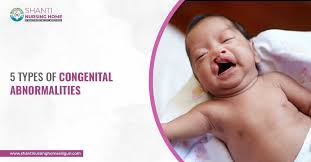
Cleft lip and palate surgery transforms lives. A single operation in the first year corrects the defect. Without it, children face feeding difficulties, speech problems, hearing issues, dental problems, and profound social stigma.
Heart defects vary enormously, but many are surgically correctable. In wealthy countries, pediatric cardiac surgery saves thousands of lives annually. In poor countries, children with the same conditions die because the surgical capacity doesn’t exist.
The Social and Economic Burden
Congenital disorders create ripple effects extending far beyond the affected individual.
Many conditions result in social stigma and discrimination. Children with visible anomalies face embarrassment, isolation, and exclusion from community activities. Families hide affected children, compounding their isolation.
The economic costs are staggering. Long-term disability creates significant impacts on individuals, families, health care systems, and entire societies.
Families often face catastrophic health expenditures trying to obtain care. Parents leave jobs to provide constant care. Siblings’ education suffers as resources get diverted. The family’s economic trajectory fundamentally changes.
These effects amplify in low- and middle-income countries where lack of accessibility and availability of support services makes living with impairment even more difficult.
I met a mother in rural India whose son was born with Down syndrome. “The village treats him like a curse,” she explained. “Nobody will play with him. People tell me his condition is my fault, punishment for something I did wrong. The isolation is crushing.”
What Actually Works
Countries that have reduced congenital disorder burden share common approaches.
They implement mandatory folic acid and iodine fortification of staple foods. They provide comprehensive prenatal care with screening and treatment. They run vaccination programs ensuring women reach childbearing age protected against rubella and other infections.
They build surgical capacity to treat correctable conditions. They create surveillance systems tracking congenital disorders to identify problems and measure progress. They fight stigma through education campaigns.
Costa Rica provides a model. They implemented comprehensive prevention programs, trained healthcare workers, built treatment capacity, and created support systems for affected families. Their congenital disorder mortality rates dropped dramatically.
The interventions aren’t expensive compared to other health programs. But they require consistent implementation and political commitment.
The Path Forward
Every baby deserves to be born healthy. When congenital disorders occur, every child deserves access to treatment that can restore normal life.
The current situation—where geography determines whether a treatable condition gets treated or becomes lifelong disability—is unjust and unnecessary.
We have the knowledge. We have the interventions. We have the treatments.
What’s missing is ensuring every pregnant woman receives prenatal care, every country fortifies staple foods with essential nutrients, every community has access to basic surgical services, and every family receives support instead of stigma.
Back to Sarah and her son. The heart surgery happened when he was 3 months old. Today he’s a healthy toddler. His heart defect is fully corrected. He’ll live a completely normal life.
That outcome should be available to every child, regardless of where they’re born.
For more information:
- WHO Congenital Disorders Information
- Congenital Disorders Fact Sheet
- Birth Defects Surveillance Manual
- Folic Acid Guidelines
Disclaimer: This article is an adaptation of publicly available information from WHO’s Congenital disorders
health topic page (WHO, Geneva. Licence: CC BYNC-SA 3.0 IGO). WHO is not responsible for the
content or accuracy of this adaptation. This content is for informational and educational purposes
only and does not constitute medical advice. ObserverVoice.com is a news and information platform
— not a healthcare provider.
Observer Voice is the one stop site for National, International news, Sports, Editor’s Choice, Art/culture contents, Quotes and much more. We also cover historical contents. Historical contents includes World History, Indian History, and what happened today. The website also covers Entertainment across the India and World.

