

India’s First Undersea Rail Tunnel: A Groundbreaking Development in Transportation

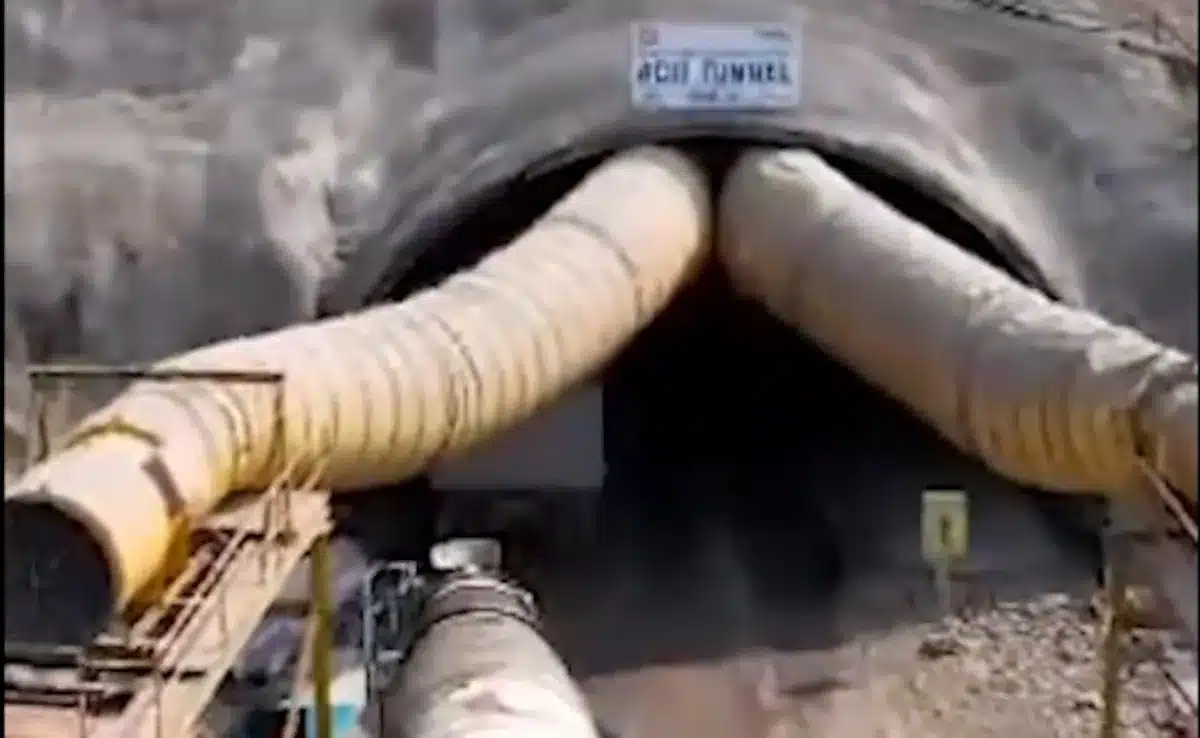
India’s first undersea rail tunnel is progressing with the launch of a Tunnel Boring Machine (TBM) that began its excavation beneath Thane Creek for the Mumbai–Ahmedabad Bullet Train Project. This marks a significant milestone as the second TBM starts tunneling from Sawli (Ghansoli) towards Vikhroli in Maharashtra. The undersea section is part of a 10-km tunnel drive, with 7 km located underwater, making it the first of its kind for any rail corridor in India.
Details of the Project
The Mumbai–Ahmedabad Bullet Train Project includes a 21-km underground tunnel, with 16 km between Sawli (Ghansoli) and Bandra Kurla Complex (BKC) to be excavated using TBMs. Work is already in progress on another stretch, where the first TBM commenced its 6-km drive from Vikhroli towards BKC on July 5, 2026. The remaining 5 km of the underground section has been completed using the New Austrian Tunnelling Method (NATM).
Specifications of the TBM
The newly deployed TBM is one of the largest ever used for rail tunnel construction in India. Its cutterhead spans 13.6 meters, roughly the height of a four-storey building, and the machine weighs 3,200 tonnes, equivalent to about 500 Asian elephants. At 96 meters in length, it is nearly as long as a football pitch. The TBM features a Mixshield-type, semi-automatic, slurry-based design, which stabilizes the tunnel face during excavation and minimizes surface disruption.
Launch Shaft and Construction Challenges
To launch the TBM, a 39-meter-deep shaft was constructed at Sawli, comparable to the depth of a 12-storey building. Due to space constraints, the TBM was lowered in sections, starting with the gantries, followed by the main shield and cutterhead. Behind the machine, four double-storey backup gantries, each measuring 18 to 20 meters, carry essential systems for tunneling operations.
Safety Features and Monitoring Systems
The TBM is equipped with a multi-gas monitoring system to detect hazardous gases and includes fire safety measures such as automatic detection and extinguishing systems. The launch shaft is supported by various infrastructure, including a water treatment plant and a dedicated power substation. Real-time monitoring systems are in place to track ground movement and protect nearby structures, utilizing instruments like Surface Settlement Points and strain gauges. The tunnel is designed to be fully waterproof, employing double-layer EPDM gaskets to ensure long-term durability.
Observer Voice is the one stop site for National, International news, Sports, Editor’s Choice, Art/culture contents, Quotes and much more. We also cover historical contents. Historical contents includes World History, Indian History, and what happened today. The website also covers Entertainment across the India and World.
Follow Us on Twitter, Instagram, Facebook, & LinkedIn

