

Halogen Heater vs. Infrared Heater: Rethinking Winter Heating Comfort

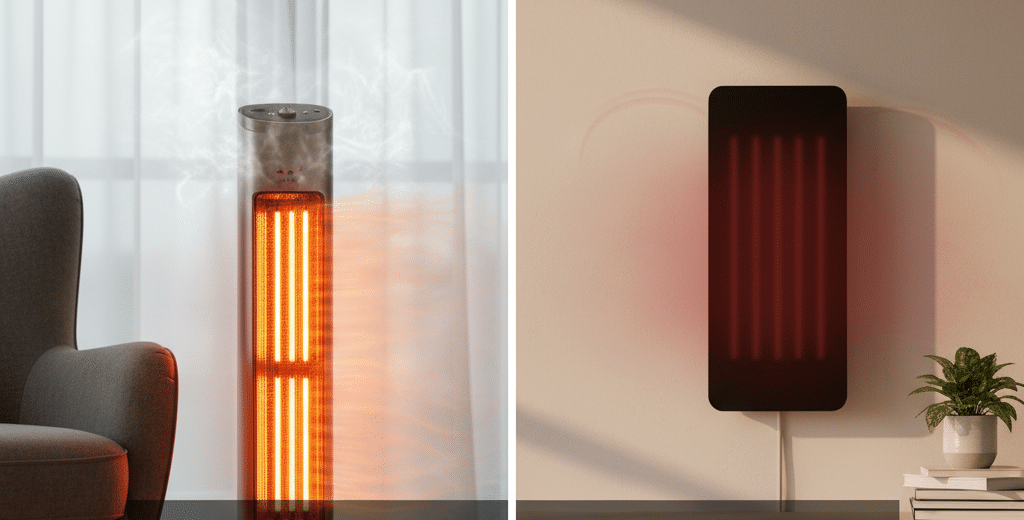
Winter heating needs can vary significantly from one household to another, with some requiring quick warmth for short durations and others needing consistent heat over extended periods. Halogen and infrared heaters are two popular options that utilize radiant heating, offering instant comfort and quiet operation. However, their methods of delivering warmth differ, which can impact user experience and satisfaction in daily use.
Understanding Halogen Heaters
Halogen heaters generate warmth through halogen-filled quartz tubes that emit a bright glow when activated. This glow signifies immediate radiant heat directed towards the user. One of the primary advantages of halogen heaters is their speed; warmth can be felt almost instantly upon switching the device on. These heaters excel in providing focused heating, making them ideal for small spaces such as bedrooms or personal seating areas.
The design of halogen heaters allows for straightforward operation, often featuring simple controls that let users turn individual heating elements on or off. This simplicity, combined with their lightweight construction, makes them easy to move from room to room. However, caution is necessary due to their high surface temperatures, which can pose risks if placed near fabrics or furniture. Additionally, the bright light emitted can be harsh in dimly lit rooms, particularly at night. Over prolonged use, the direct heat may become uncomfortable, making it essential for users to consider their specific heating needs before opting for this type of heater.
The Benefits of Infrared Heaters
Infrared heaters operate on a different principle, emitting infrared waves that heat objects, walls, and people without generating strong visible light. This results in a more gradual and evenly distributed warmth throughout the room. Users often find that infrared heaters provide a calmer heating experience, as the warmth builds steadily rather than hitting instantly in one direction. This characteristic makes them suitable for longer usage periods, as they create a stable temperature by allowing furniture and surfaces to absorb and slowly release heat.
Infrared heaters are particularly beneficial in shared spaces like living rooms and work areas, where consistent comfort is essential. They often come equipped with thermostats, allowing for precise temperature control. From a safety standpoint, infrared heaters typically have lower surface temperatures, reducing the risk of burns, which is especially important for households with children or pets. Their quiet operation further enhances comfort, making them an excellent choice for environments where noise could be disruptive.
Comparing Heating Experiences
Both halogen and infrared heaters provide efficient radiant heating, yet they cater to different needs. Halogen heaters are best suited for quick, direct warmth in compact spaces, making them ideal for situations where immediate heat is necessary. In contrast, infrared heaters focus on delivering sustained comfort, with their ability to warm surfaces and maintain stable temperatures making them more appropriate for extended daily use.
When choosing between the two, factors such as safety, room coverage, and long-term comfort should be considered. Halogen heaters may be preferable for short-term use in smaller areas, while infrared heaters are likely to be more effective for larger spaces requiring consistent warmth over time. Understanding these differences can help consumers make informed decisions based on their specific heating requirements.
Observer Voice is the one stop site for National, International news, Sports, Editor’s Choice, Art/culture contents, Quotes and much more. We also cover historical contents. Historical contents includes World History, Indian History, and what happened today. The website also covers Entertainment across the India and World.

