

Understanding Faceless Assessment: How to Respond to an Income Tax Notice Under Section 143 (3)

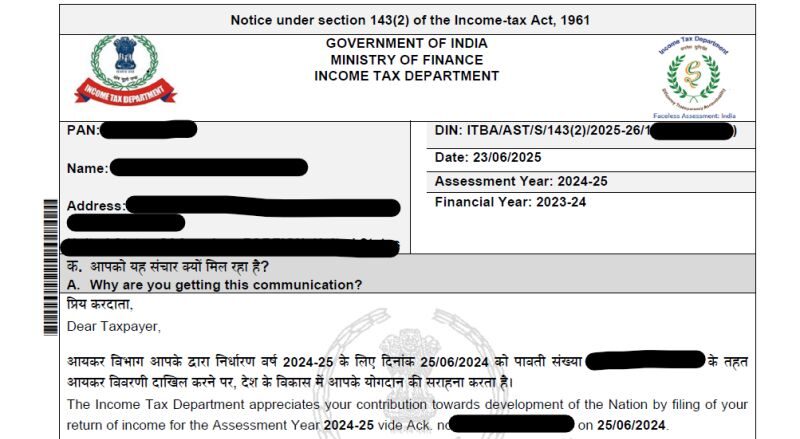
India’s faceless assessment regime is transforming tax administration by shifting from manual, officer-led scrutiny to a technology-driven, standardized process. This system, established under Section 144B of the Income-tax Act, 1961, minimizes the need for in-person meetings and enhances accountability through digital records. The National Faceless Assessment Centre (NaFAC) now oversees these assessments, supported by various specialized units.
Understanding Faceless Assessments
Faceless assessments are characterized as both “faceless” and “jurisdiction-less.” This means that taxpayers do not interact directly with the assessing officer, reducing personal bias. The process is akin to a standardized examination where neither party knows the other, ensuring impartiality. All communications, including notices and supporting documents, occur electronically through the e-Proceedings facility, which aims to streamline interactions and improve consistency.
The jurisdiction-less aspect indicates that assessments are not tied to local officers but are managed centrally through NaFAC. This includes scrutiny assessments under Section 143(3), reassessments under Section 147, and best judgment assessments under Section 144, with certain exclusions.
How Faceless Assessments Operate
The NaFAC allocates cases to assessment units, which then issue electronic notices for taxpayers to upload their responses and documents via the e-filing portal. If further information is needed, the assessment unit can request it or involve verification and technical units.
A scrutiny assessment under Section 143(3) involves a thorough examination of tax returns to verify reported income, deductions, and liabilities. This process begins with a notice under Section 143(2) and includes requests for additional information, culminating in an assessment order. Receiving a scrutiny notice does not imply additional tax is owed; it simply indicates that the return has been selected for further verification.
Triggers for Scrutiny Notices
While only a small percentage of tax returns are selected for scrutiny, the selection process increasingly relies on risk parameters and discrepancies identified through third-party data. Common triggers include mismatches between tax returns and the Annual Information Statement (AIS), high-value transactions, and foreign income or assets.
The initial notice may not reveal the full scope of the assessment, often requiring extensive information. Follow-up questionnaires typically clarify specific issues, such as discrepancies in tax deducted at source (TDS) or capital gains. Scrutiny can be limited to identified issues, with any expansion of scope requiring adherence to prescribed procedures.
Practical Challenges and Timelines
The faceless assessment process replaces in-person meetings with electronic submissions, necessitating well-crafted responses that effectively communicate the taxpayer’s position. Taxpayers must quickly gather relevant records and respond within tight deadlines.
Key timelines include the need to raise any concerns about the notice’s service early in the process. Taxpayers should ensure they have access to the e-filing portal and that their registered email and mobile details are up to date. Delays in accessing the portal or submitting responses can jeopardize compliance with deadlines.
Decoding the Notice
Understanding the notice is crucial for taxpayers. They should check the assessment year, notice date, response deadline, and the specific information requested. A practical approach involves creating a tracker that maps each query to the corresponding disclosure in the tax return.
Most queries relate to disclosures in the tax return, third-party information, and supporting evidence. Taxpayers should verify whether previous responses or revised returns address the issues raised to maintain a consistent position.
Building a Strong Response
A robust response should directly address each query, clarify the facts, and link supporting documents to the relevant points. Reconciliations must be clear, and annexures should be organized and cross-referenced. When legal interpretation is involved, the response should cite relevant provisions or judicial precedents, ensuring a clear connection to the facts.
For example, when claiming a foreign tax credit, the response should detail the income on which foreign tax was paid and how it correlates with the income reported in India. Each document should be clearly linked as an annexure.
Addressing Third-Party Data Mismatches
Discrepancies between tax returns and third-party reports often trigger scrutiny. Such differences may arise from various factors, including timing issues or incorrect reporting. A mismatch does not automatically imply that the entire amount is taxable.
Taxpayers should investigate the source of the mismatch, reconcile it with their records, and clarify the correct tax treatment. If a third-party report is incorrect, the response should indicate this and provide evidence of any correction requests.
Requesting Extensions
Taxpayers can request an extension if they need more time to gather information. This request must be made through e-Proceedings before the deadline and should clearly state the reason for the extension. However, extensions are not guaranteed, and the original deadline remains in effect unless approved.
Monitoring Post-Submission
After submitting a response, taxpayers should remain vigilant. The tax department may accept the explanation, seek further clarification, or propose adjustments. Monitoring the portal and preserving all submissions and acknowledgments is essential.
If adjustments are proposed, the taxpayer should directly address the disagreement with factual evidence. Eligible taxpayers receiving a draft order under Section 144C can either accept the variations or file objections within the specified timeframe.
Applicability of Previous Statutes
For Assessment Year 2026–27 and earlier, scrutiny and reassessment proceedings will continue under the Income-tax Act, 1961, including its procedural safeguards. The new Income-tax Act, 2025, will apply only from 1 April 2026 for tax years beginning on or after that date.
Observer Voice is the one stop site for National, International news, Sports, Editor’s Choice, Art/culture contents, Quotes and much more. We also cover historical contents. Historical contents includes World History, Indian History, and what happened today. The website also covers Entertainment across the India and World.
Follow Us on Twitter, Instagram, Facebook, & LinkedIn

