

Trump Administration Alleges Over 40 Countries, Including India, Assist China in Tariff Evasion

A recent report from the White House has implicated India as one of over 40 countries allegedly facilitating China’s evasion of U.S. tariffs through a shadow transshipment network. Released on August 13, 2026, the 25-page document titled “The Great Transshipment Scam: Rise, Scope, and Costs” claims that Chinese exporters are rerouting goods through various nations to bypass higher tariffs imposed by the U.S.
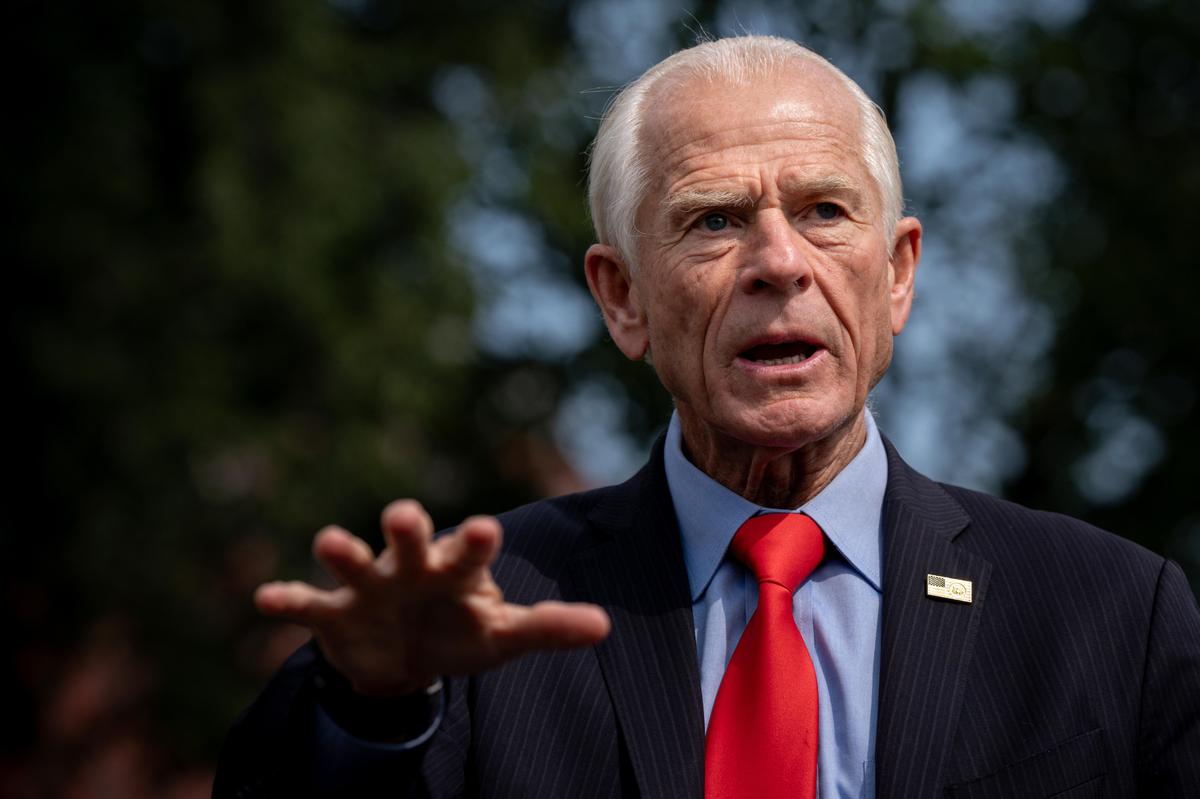
The report, prepared by the Office of Trade and Manufacturing Policy under Peter Navarro, argues that while tariffs introduced in 2018 reduced direct Chinese exports to the U.S., they also led to the emergence of a global transshipment network. Chinese products are reportedly being relabeled, repackaged, or subjected to limited processing in countries with lower tariff rates before being exported to the U.S. under a different country of origin.
India named
India has been classified in Tier 1 of the report, labeled “Diversified Scale Leaders,” alongside countries like Canada, the EU, and Japan. This classification suggests that India has a significant industrial manufacturing base where transshipment risks may overlap with legitimate trade. Tier 2 includes countries with significant economic ties to China, while Tier 3 consists of smaller nations viewed as opportunistic targets.
During a media briefing, Navarro specifically mentioned India, warning that countries could attempt to circumvent U.S. tariffs through transshipment as Washington expands its tariff measures. The report estimates that goods worth $67 billion were transshipped through India, Mexico, and Vietnam in 2025, resulting in tariff losses of $28 billion. However, it does not specify India’s share of this estimate or identify any specific fraudulent shipments.
Trump tariff failure?
The Global Trade Research Initiative (GTRI) argues that the report serves to shift focus away from the effectiveness of tariffs imposed during the Trump administration. While U.S. imports from China fell from $525.8 billion in 2017 to $327.5 billion in 2025, overall U.S. imports rose from $2.41 trillion to $3.50 trillion in the same period. GTRI founder Ajay Srivastava noted that the U.S. replaced many Chinese goods with imports from other countries rather than increasing domestic production.
China has reportedly adapted its export strategy by supplying components and intermediate products to manufacturers in various countries, including India. These inputs are then processed and exported to the U.S., complicating the narrative of transshipment. GTRI emphasizes that such processing should not be classified as transshipment simply because the products contain Chinese components.
GTRI identifies 4 key shortcomings
GTRI has identified four major weaknesses in the report. First, it broadens the definition of transshipment to include activities like assembly and testing, which could conflate legitimate manufacturing with origin fraud. Second, it relies on trade correlations as evidence, which does not definitively prove that goods were merely relabeled and rerouted.
Third, GTRI argues that the U.S. tariff structure itself creates incentives for evasion. Lastly, while the U.S. applies non-preferential rules of origin based on substantial transformation, these rules are complex and inconsistent, making them susceptible to misuse.
What India should do
GTRI recommends that India seek evidence and conduct its own verification regarding the allegations. It suggests that India request detailed data from the U.S. on the basis of its claims, including country-specific and product-level information. Additionally, India should independently analyze its exports of pumps and compressors to verify domestic value addition and identify any potential misuse.
Observer Voice is the one stop site for National, International news, Sports, Editor’s Choice, Art/culture contents, Quotes and much more. We also cover historical contents. Historical contents includes World History, Indian History, and what happened today. The website also covers Entertainment across the India and World.
Follow Us on Twitter, Instagram, Facebook, & LinkedIn

