

Thymoma and Thymic Carcinoma: The Cancers of the Thymus Gland

When 52-year-old Meena started experiencing unusual muscle weakness—her eyelids drooping by evening, difficulty chewing food during dinner, and arms feeling heavy when brushing her hair—her neurologist diagnosed myasthenia gravis, an autoimmune disease where antibodies attack the connection between nerves and muscles. During routine workup, a chest CT scan revealed an unexpected finding: a 6-centimeter mass in her anterior mediastinum (the space behind the breastbone). This turned out to be a thymoma, a tumor of the thymus gland. Remarkably, 30-50% of thymoma patients develop myasthenia gravis, and conversely, 10-15% of myasthenia gravis patients have an underlying thymoma. These rare tumors affect only 1.5 people per million annually, but understanding them is crucial because they’re the most common tumors of the anterior chest, they’re closely linked to autoimmune diseases, and early surgical removal can cure the majority of patients.
The Thymus Gland: Your Immune System’s Training School
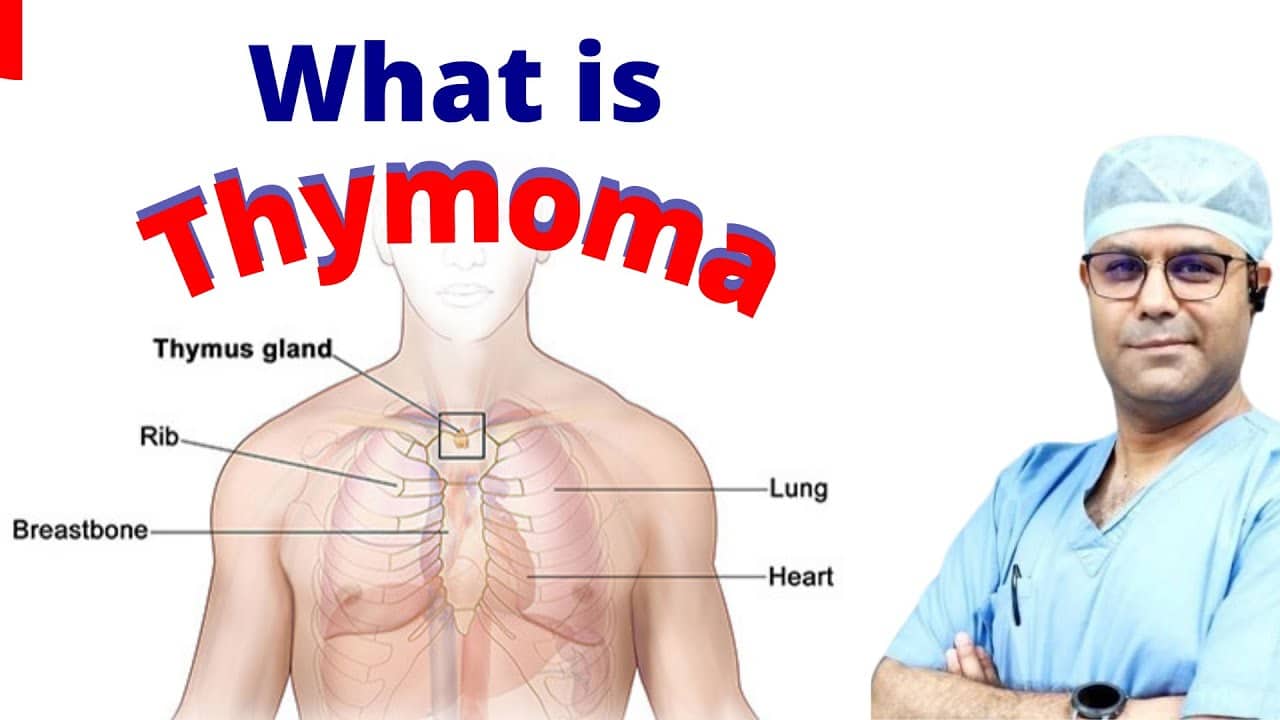
Your thymus gland is a small, butterfly-shaped organ sitting right behind your breastbone in the upper chest, in front of your heart and the major blood vessels entering it. Despite its small size—about the size of a strawberry in adults—the thymus plays a crucial role in your immune system, especially during childhood and adolescence. The thymus is essentially a school for T-cells, a type of white blood cell critical for fighting infections and cancer. Immature T-cells travel from your bone marrow to the thymus, where they undergo rigorous “education” learning to recognize and attack foreign invaders (bacteria, viruses, cancer cells) while ignoring your own healthy tissues.
The thymus is most active during childhood when your immune system is developing. It reaches maximum size at puberty (weighing about 40 grams) then gradually shrinks throughout adulthood in a process called thymic involution. By age 60-70, the thymus is mostly replaced by fatty tissue, weighing only 10-15 grams and barely functioning. This is why thymic tumors occur almost exclusively in adults aged 40-70—the thymus is still present but beginning its involution process. Children rarely develop thymomas, though they can get other types of thymic tumors.
Thymoma and thymic carcinoma are the two main types of thymic epithelial tumors—cancers arising from the epithelial cells lining the thymus. Thymomas are slow-growing tumors that rarely spread beyond the chest and are considered “low-grade” cancers. They account for 90% of thymic epithelial tumors. Thymic carcinomas are aggressive, fast-growing cancers that frequently spread to lymph nodes, lungs, liver, and bones. They account for 10% of thymic epithelial tumors and have worse prognosis. Both tumors occur in similar locations and ages but behave very differently, requiring different treatments.
The World Health Organization classifies thymomas into types A, AB, B1, B2, and B3 based on how the tumor cells look under the microscope and how many lymphocytes (T-cells) are mixed with tumor cells. Type A thymomas have spindle-shaped cells, few lymphocytes, and the best prognosis. Type B3 thymomas have more abnormal-appearing cells and border on thymic carcinoma behavior. This classification helps predict how aggressive the tumor will be and guides treatment decisions.
Symptoms: From No Symptoms to Chest Pain and Autoimmune Diseases
About 30-40% of thymoma patients have no symptoms—the tumor is discovered incidentally on chest X-rays or CT scans performed for other reasons like trauma evaluation, pneumonia workup, or heart disease screening. These asymptomatic tumors are often smaller and caught at earlier stages when cure rates are highest. The remaining 60-70% develop symptoms from two causes: the tumor pressing on surrounding structures in the chest, or autoimmune diseases triggered by the tumor.
Local symptoms from tumor mass effect include chest pain (dull, aching discomfort behind the breastbone—not the sharp crushing pain of heart attacks), persistent cough that doesn’t go away with cold medicines, shortness of breath especially when lying flat (the tumor presses on airways or lungs), difficulty swallowing if the tumor pushes against the esophagus, hoarseness from pressure on the nerve controlling the voice box, and superior vena cava syndrome causing face and neck swelling, prominent veins in the chest and neck, and difficulty breathing. This occurs when the tumor compresses the superior vena cava—the large vein returning blood from your upper body to your heart.
The hallmark of thymoma is its strong association with autoimmune diseases—conditions where your immune system mistakenly attacks your own body. Myasthenia gravis is the most common, affecting 30-50% of thymoma patients. Symptoms include drooping eyelids (ptosis) especially in evening or after prolonged eye use, double vision from weak eye movement muscles, difficulty chewing, swallowing, or talking as meal progresses, weakness in arms and legs improving with rest, difficulty breathing in severe cases. The weakness characteristically worsens with activity and improves with rest—this fluctuating pattern is diagnostic.
Other autoimmune diseases associated with thymoma include pure red cell aplasia (bone marrow stops making red blood cells causing severe anemia), hypogammaglobulinemia (low antibody levels causing frequent infections), polymyositis (muscle inflammation causing weakness and pain), systemic lupus erythematosus, thyroid disease, and various autoantibody syndromes. About 50% of thymoma patients develop at least one autoimmune condition during their lifetime—before, during, or even after tumor removal. This occurs because the abnormal thymus produces improperly educated T-cells that attack the body’s own tissues.
Thymic carcinoma symptoms are similar but often more severe because these tumors grow faster and are more likely to have spread at diagnosis. Patients may have pronounced chest pain, significant breathing difficulty, coughing up blood, weight loss, fever, and night sweats—symptoms suggesting aggressive disease requiring urgent evaluation.
Diagnosis: Imaging Shows the Mass, Biopsy Confirms the Type
Diagnosing thymic tumors begins with imaging when symptoms prompt a chest X-ray or CT scan. Chest CT with intravenous contrast is the gold standard initial imaging showing the tumor’s size, location, relationship to surrounding structures, and whether it appears invasive into nearby tissues. Thymomas typically appear as smooth, round or oval masses in the anterior mediastinum (front part of chest cavity). They may contain calcifications (calcium deposits visible on CT) in 25-30% of cases. The tumor usually pushes against rather than invading the heart, blood vessels, and lungs, though advanced tumors can directly invade these structures.
MRI provides better detail of tumor invasion into heart, great vessels, and chest wall—crucial information for surgical planning. PET/CT scan using radioactive glucose tracer helps distinguish thymoma (usually mild uptake) from thymic carcinoma (intense uptake) and detects distant metastases. However, imaging alone cannot definitively distinguish thymoma from thymic carcinoma or other anterior mediastinal masses like lymphoma, germ cell tumors, or thyroid masses extending into the chest.
Biopsy is required for definitive diagnosis before treatment. For small tumors that appear completely resectable (removable), many surgeons proceed directly to surgical removal without preoperative biopsy—the surgery itself provides tissue for diagnosis and achieves treatment simultaneously. For large tumors where complete removal seems impossible or when metastases are present, core needle biopsy or mediastinoscopy (inserting a scope into the chest through a small neck incision) obtains tissue samples. The pathologist examines the cells determining whether it’s thymoma (and which WHO type) or thymic carcinoma.
Additional tests include blood tests for autoimmune diseases checking acetylcholine receptor antibodies (elevated in 85% of myasthenia gravis patients with thymoma), complete blood count (checking for pure red cell aplasia), immunoglobulin levels (checking for antibody deficiency), and thyroid function tests. Pulmonary function tests measure breathing capacity before surgery ensuring patients can tolerate tumor removal. If myasthenia gravis is diagnosed, neurologists start treatment with anticholinesterase medications (pyridostigmine) improving muscle strength before surgery.
Staging uses the Masaoka-Koga system classifying extent of disease. Stage I tumors are completely encapsulated with no invasion—best prognosis. Stage II tumors invade through the capsule into surrounding fat or pleura (lung lining). Stage III tumors invade into neighboring organs like lung, pericardium (heart sac), or great vessels. Stage IVA tumors have spread to the pleura or pericardium as separate nodules. Stage IVB tumors have spread to distant organs like lymph nodes, liver, bones, or brain. Most thymomas are diagnosed at stage I or II (60-70%) while thymic carcinomas are often stage III or IV at diagnosis (60-70%).
Treatment: Surgery First, Then Radiation or Chemotherapy
Surgery is the cornerstone of treatment for all resectable thymic tumors. The standard operation is complete thymectomy—removing the entire thymus gland along with surrounding fatty tissue where microscopic tumor cells might hide. The procedure can be performed through several approaches. Median sternotomy (splitting the breastbone down the middle) provides excellent exposure for large tumors or those invading surrounding structures. Video-assisted thoracoscopic surgery (VATS) or robotic-assisted surgery uses small incisions and cameras for smaller, non-invasive tumors—faster recovery with less pain. Transcervical approach through a small neck incision is used for very small, easily accessible tumors.
During surgery, the goal is complete resection—removing the tumor with negative margins (no cancer cells at the edge of removed tissue). For stage I thymomas completely encapsulated within the thymus, surgery alone achieves cure in 90-95% of patients with no additional treatment needed. For stage II-III tumors invading surrounding tissues, surgeons remove as much tumor as possible, sometimes including portions of lung, pericardium, or chest wall that the tumor has invaded. Complete resection dramatically improves survival even in advanced stages.
Postoperative radiation therapy is recommended for stage II-III thymomas to kill any microscopic tumor cells left behind, reducing recurrence risk. The typical dose is 45-54 Gy delivered over 5-6 weeks to the tumor bed (the area where the tumor was removed) and immediately surrounding tissues. Stage I thymomas with complete resection don’t need radiation—surgery alone is curative. For thymic carcinomas, radiation is recommended for almost all stages because of higher recurrence risk.
Chemotherapy is used for advanced thymic carcinomas, incompletely resected tumors, or recurrent disease. The most effective regimens combine cisplatin or carboplatin with doxorubicin and cyclophosphamide, achieving 50-70% response rates in thymic carcinoma. Newer regimens using cisplatin and etoposide are also active. For thymomas, chemotherapy is reserved for stage IVB disease or recurrence—most localized thymomas respond so well to surgery and radiation that chemotherapy isn’t needed upfront.
Targeted therapies and immunotherapy are being studied. Sunitinib (a drug blocking tumor blood vessel growth) showed activity in advanced thymic carcinoma in clinical trials. Checkpoint inhibitors like pembrolizumab (drugs removing brakes from the immune system) have shown responses in some refractory cases, though results are mixed. Ongoing clinical trials are testing new combinations hoping to improve outcomes for advanced disease.
For patients with myasthenia gravis, thymectomy often improves symptoms even if the thymus appears normal—removing the source of abnormal T-cell education helps. About 50% of myasthenia patients improve after thymectomy, 30% achieve complete remission, and 20% remain stable. Improvement may take months to years as abnormal T-cells gradually disappear.
Prognosis and Living After Treatment
Overall survival for thymoma is excellent—the 5-year survival rate is 90-95% for stage I, 80-90% for stage II, 70-80% for stage III, and 50-60% for stage IVA. Even stage IVB has 30-40% 5-year survival. These are 10-year survival rates that remain high—75-85% overall. Thymoma is one of the most curable cancers when caught early. Thymic carcinoma has worse prognosis—5-year survival 60-70% for stage I-II, 30-50% for stage III, and 20-30% for stage IV. The aggressive nature and tendency to spread make cure more difficult.
Factors predicting better outcomes include complete surgical resection (most important factor), early stage at diagnosis, thymoma WHO type A or AB (better than B3), younger age at diagnosis, and absence of symptoms at presentation. Long-term surveillance is essential because thymoma can recur 10-20 years after initial treatment—longer than almost any other cancer. Surveillance includes chest CT or MRI every 6 months for 5 years, then annually for life. Even patients “cured” 15 years ago can develop late recurrences requiring treatment.
Recurrent thymoma is treated with repeat surgery if the recurrence is localized and resectable, achieving second cure in many patients. If surgery isn’t possible, radiation or chemotherapy controls disease. Many patients live 10-20+ years with recurrent disease through multiple treatments. Quality of life after thymectomy is generally excellent. Most patients return to normal activities within 6-8 weeks after surgery. Those with myasthenia gravis may need continued medications managing symptoms even after thymectomy.
Long-term survivors face potential late effects including radiation-induced heart disease or lung fibrosis if high radiation doses were used, secondary cancers (lung cancer, breast cancer, other sarcomas) 10-30 years after treatment, and persistent autoimmune diseases requiring ongoing management. Regular follow-up with oncologists, attention to heart health, cancer screening, and management of autoimmune conditions ensure the best long-term outcomes.
Frequently Asked Questions
Q1: My doctor found a thymoma on a CT scan but I have no symptoms. Do I really need treatment or can I just watch it?
Even though you feel fine, treatment is strongly recommended for confirmed thymoma. Here’s why: thymomas inevitably continue growing. Unlike some tumors that can remain stable, thymomas never spontaneously shrink or stop growing—they just grow very slowly. Your currently small, asymptomatic tumor will eventually enlarge causing symptoms or invading surrounding structures, making surgery more difficult and dangerous. Tumors caught early at stage I when they’re small and completely encapsulated have 90-95% cure rates with surgery alone—no radiation or chemotherapy needed, minimal recovery time, and you’re done. If you wait until symptoms develop, the tumor is often larger (stage II-III), requiring more extensive surgery, postoperative radiation, longer recovery, and lower cure rates (70-80% instead of 95%). Additionally, thymomas carry lifelong risk of developing autoimmune diseases like myasthenia gravis—removing the tumor earlier reduces this risk. Surgery for small thymomas is relatively safe in experienced hands with mortality rates under 1% and most patients discharged within 3-5 days. The risks of watching and waiting—tumor growth, symptom development, autoimmune disease development, and more difficult surgery later—far outweigh the risks of proceeding with surgery now. The exception would be if you have serious medical conditions making any surgery extremely dangerous—then observation with frequent imaging might be reasonable. But for otherwise healthy patients, treatment shouldn’t be delayed.
Q2: I was diagnosed with myasthenia gravis and my doctor wants a chest CT to check for thymoma. Why, and what if they find one?
Excellent question showing you understand the thymoma-myasthenia gravis connection. All myasthenia gravis patients should undergo chest CT screening for thymoma because 10-15% have an underlying tumor. The thymus in myasthenia gravis patients is often abnormal even without tumor—showing hyperplasia (enlarged with active lymphoid follicles). Both thymic hyperplasia and thymoma contribute to the autoimmune process causing myasthenia. If CT finds a thymoma, thymectomy (surgical removal) is recommended regardless of tumor size because removing the tumor improves myasthenia outcomes. Studies show 50% of myasthenia patients improve after thymectomy, 30% achieve complete remission (off all medications), and 20% stabilize. Even if no tumor is found but you have generalized myasthenia (affecting multiple body areas, not just eyes), thymectomy of the hyperplastic thymus is still often recommended for patients under age 60. The procedure removes the source of abnormal T-cell education improving autoimmune disease. However, improvement takes time—often 1-3 years—as the existing abnormal antibodies gradually disappear and your immune system rebalances. Meanwhile, you’ll continue medications managing symptoms: anticholinesterase drugs like pyridostigmine, immunosuppressants like prednisone or azathioprine if needed, and possibly plasma exchange or IVIg for severe cases. If thymoma is found, the surgery serves dual purposes—treating the tumor and treating your myasthenia. You’ll need lifelong follow-up for both conditions—chest imaging monitoring for tumor recurrence and neurology visits managing myasthenia symptoms.
Q3: Can children or young adults get thymoma, or is it only in older people?
Thymoma is extremely rare in children and young adults under age 20—only 2-3% of cases occur before age 20. When thymic tumors do occur in children, they’re more likely to be thymic carcinomas, lymphomas, or germ cell tumors rather than thymomas. The peak age for thymoma is 40-60 years. However, young adults in their twenties and thirties can develop thymomas, especially in association with genetic syndromes. Multiple endocrine neoplasia type 1 (MEN1) is a hereditary syndrome causing thymoma along with parathyroid, pituitary, and pancreatic tumors. Thymomas in MEN1 patients occur at younger ages (twenties-thirties) and have higher malignancy rates than sporadic thymomas. Anyone diagnosed with thymoma under age 40 should undergo genetic counseling and possibly testing for MEN1, especially if they have a family history of endocrine tumors or personal history of kidney stones, high calcium, or pituitary problems. Treatment for young patients is identical to older patients—surgical removal, possibly radiation for advanced stages. The prognosis is actually slightly better in younger patients because they tolerate treatment better and have fewer medical comorbidities. One unique consideration is fertility preservation—discussing sperm banking or egg freezing before radiation or chemotherapy if future children are desired. Young survivors face 40-60 years of follow-up monitoring for late recurrence and treatment-related complications, so establishing care with experienced thymic tumor specialists and maintaining regular surveillance is crucial for lifelong health.
Q4: What is the difference between thymoma and thymic carcinoma? Does it matter which one I have?
The difference is enormous—these are completely different diseases requiring different treatments with different outcomes despite both arising from thymus tissue. Thymomas are slow-growing tumors composed of relatively normal-appearing epithelial cells mixed with many lymphocytes (T-cells). They grow slowly over years, rarely spread outside the chest, and respond excellently to surgery and radiation. Five-year survival for stage I-II thymoma is 85-95%. Even recurrent thymoma can be controlled for years with repeat treatments. Thymic carcinomas are aggressive cancers with abnormal-appearing cells showing features of malignancy under the microscope—loss of normal cell structure, high division rates, and marked abnormalities. They grow rapidly, frequently invade surrounding structures, and often metastasize to lymph nodes, lungs, liver, and bones. Five-year survival for localized thymic carcinoma is 60-70%, dropping to 20-30% for metastatic disease. Treatment differs significantly. Thymomas stages I-II may be cured with surgery alone. Thymic carcinomas almost always need multi-modality treatment—surgery plus radiation plus chemotherapy even for early stages. Chemotherapy regimens differ—thymomas respond to different drugs than thymic carcinomas require. Follow-up intensity differs—thymic carcinoma patients need more frequent imaging first 3-5 years given higher recurrence risk. How do doctors tell them apart? Pathology examination under the microscope is definitive. Sometimes imaging gives clues—thymic carcinomas tend to have irregular borders, invade surrounding tissues, and show intense uptake on PET scans, while thymomas have smoother borders and lower PET uptake. But definitive diagnosis requires tissue biopsy. If you’re diagnosed with “thymoma,” confirm with your oncologist which type—true thymoma (Type A, AB, B1, B2, B3) or thymic carcinoma—because it fundamentally changes your treatment plan and prognosis.
Q5: My thymoma was completely removed 8 years ago and I’ve been fine. How long do I need surveillance, and can I eventually be considered cured?
Thymoma requires lifelong surveillance—truly lifelong, not just 5-10 years like many cancers. Here’s why: thymoma has among the longest potential recurrence timelines of any cancer. While most cancers recur within 2-5 years if they’re going to recur, thymomas can recur 10, 15, even 20+ years after initial treatment. Studies show that 10-15% of recurrences occur more than 10 years after initial treatment, with reports of recurrences 30 years later. The slow-growing biology means microscopic tumor cells can remain dormant for decades before becoming detectable. After 8 years with normal surveillance scans, your recurrence risk is lower than the first few years, but it’s not zero. Current guidelines recommend chest CT or MRI every 6 months for 5 years, annually for 10 years, then every 2-3 years indefinitely. Some experts suggest patients more than 15-20 years out with consistently normal scans can reduce to every 5 years or even stop surveillance if they’re elderly with other health issues limiting life expectancy. However, there’s no universally agreed upon “safe” time to stop. The good news: late recurrences are almost always caught early on surveillance imaging while still resectable or treatable, with many patients achieving second cure through repeat surgery or radiation. So while you can’t be declared “cured” in the sense of never needing follow-up again, you can be highly reassured that 8 years out with normal scans means excellent long-term outlook. Continue your annual imaging, live your life fully between scans, maintain healthy lifestyle habits, and stay connected with your oncology team. Most patients eventually transition surveillance to their local doctors rather than traveling to specialized centers once they’re 10+ years out and stable.
Disclaimer
This article adapts publicly available information from medical databases and research organizations. This content is for informational and educational purposes only and does not constitute medical advice. ObserverVoice.com is a news and information platform — not a healthcare provider. Decisions about thymoma or thymic carcinoma screening, diagnosis, and treatment should be made in consultation with qualified physicians, thoracic surgeons, oncologists, and specialists experienced in thymic tumors who can evaluate your individual symptoms, imaging findings, pathology results, and health circumstances. If you have chest pain, breathing difficulty, muscle weakness, or other concerning symptoms, please consult with your healthcare team immediately.
References
- National Cancer Institute. Thymoma and Thymic Carcinoma Treatment. https://www.cancer.gov/types/thymoma/patient/thymoma-treatment-pdq
- PMC. Thymoma: A Review of Current Diagnosis and Treatment. https://www.ncbi.nlm.nih.gov/pmc/articles/PMC6462011/
- American Thoracic Society. Thymoma and Thymic Carcinoma. https://www.thoracic.org/patients/patient-resources/resources/thymoma.pdf
- Mayo Clinic. Thymoma: Symptoms, Causes, and Treatment. https://www.mayoclinic.org/diseases-conditions/thymoma/diagnosis-treatment/drc-20378270
- World Health Organization. Cancer Topics. https://www.who.int/health-topics/cancer
Observer Voice is the one stop site for National, International news, Sports, Editor’s Choice, Art/culture contents, Quotes and much more. We also cover historical contents. Historical contents includes World History, Indian History, and what happened today. The website also covers Entertainment across the India and World.

