

Emergency and critical care: Over half of deaths in low-income countries could be prevented with better emergency systems
Emergency and critical care: Half of deaths in LMICs preventable with timely treatment

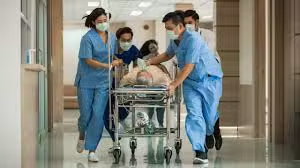
Sarah Kiptoo’s water broke at 2 a.m., three weeks before her due date.
The 23-year-old first-time mother in rural Kenya knew something was wrong when severe bleeding started almost immediately. Her husband ran to wake their neighbor who owned a motorcycle—the only transport option in their village 40 kilometers from the nearest hospital.
The motorcycle journey on rutted dirt roads took nearly two hours. When they finally reached the district hospital, there was no ambulance, no emergency entrance, no triage system to identify her as critical. Sarah waited in a general queue while bleeding internally from a ruptured placenta.
By the time a nurse noticed she was in shock—low blood pressure, rapid heartbeat, pale and confused—Sarah had lost massive amounts of blood. The hospital had no blood bank. No intensive care unit. No obstetrician on duty at night.
Sarah died at dawn. Her baby died with her.
“If we’d had an ambulance system to bring her here faster, if someone had recognized she was dying when she arrived, if we’d had blood available…” the nurse who tried to save her trailed off, exhausted and heartbroken. “We see this too often. People arrive at the moment they need emergency care most, and we don’t have the systems to save them.”
Sarah’s death represents a devastating reality: according to WHO’s work on emergency and critical care, over half of deaths and over a third of disability in low- and middle-income countries could be addressed by implementing effective emergency and critical care systems.
That’s not a projection or estimate. It’s preventable tragedy happening every single day.
Understanding Emergency and Critical Care
Emergency care is an integrated platform for delivering accessible, quality, and time-sensitive health care services for acute illness and injury across the life course. It’s first contact care for people experiencing medical, surgical, and obstetric emergencies—including injuries, sepsis, heart attacks and strokes, asthma, and acute complications of pregnancy.
Many proven health interventions are time dependent. The difference between life and death, recovery and disability, often comes down to minutes. Integrated emergency care services facilitate timely recognition, treatment management, and when needed, continued treatment of the acutely ill at the appropriate level of the health system.
Critical care is ongoing, intensive treatment provided to patients with life-threatening illnesses or injuries that require close, constant monitoring and support. Care is typically delivered in critical care units like intensive care units (ICUs) or high dependency units. Critically ill patients often need advanced medical equipment and therapies, intravenous medications to support heart function or blood pressure, and continuous monitoring of vital signs.
Emergency care isn’t just about trauma from accidents. It includes children with severe pneumonia or malaria, adults with sepsis from infections, people having heart attacks or strokes, women with pregnancy complications, snakebite victims, and countless other acute conditions.
Dr. James Omondi, an emergency physician who has worked in both high-income and low-income settings, explained the fundamental difference: “In high-income countries, when someone has a heart attack, they call an ambulance. Paramedics start treatment en route. The emergency department is ready when they arrive. They go straight to specialized cardiac care. The whole system is designed around time-sensitive treatment. In low-income countries, there might not be ambulances. No prehospital care. No triage system. No specialist available. The patient arrives late, waits in line, and may die before receiving basic care.”
For more on health system challenges, see our article on universal health coverage gaps.
The Pandemic Revealed Pervasive Gaps
The COVID-19 pandemic revealed pervasive gaps in provision of emergency and critical care and reinforced the need for an integrated approach to these services.
When ICU beds filled with severely ill COVID patients, health systems discovered they lacked:
- Sufficient critical care capacity
- Trained intensive care staff
- Ventilators and oxygen systems
- Monitoring equipment
- Surge capacity plans
- Integrated emergency systems
But these gaps existed before COVID. The pandemic just made them impossible to ignore.
WHO emphasizes that emergency and critical care are pivotal service delivery platforms of health systems, with essential roles in saving lives, reducing disabilities, and preventing complications.
Especially when there are logistical or financial barriers to healthcare access, people may present for care only when symptomatic with acute illness or injury. Emergency care is powerfully aligned with the primary health care agenda as it provides first contact clinical care for those who are acutely ill or injured.
WHO’s Response: Resolution 76.2 and Beyond
In 2023, the Seventy-sixth World Health Assembly adopted Resolution WHA76.2 calling on WHO to prioritize integrated emergency, critical, and operative care for universal health coverage and protection from health emergencies.
This built on earlier resolutions including WHA72.16 on emergency care systems for universal health coverage from 2019, and WHA68.15 on strengthening emergency and essential surgical care from 2015.
In May 2024, the World Health Assembly adopted Resolution 77.8 calling for development of a global strategy and action plan for integrated emergency, critical, and operative care for 2026-2035.
WHO announced in May 2025 that strengthening acute care systems saves lives, but urgent action is needed, and provided a progress update on emergency, critical and operative care.
WHO’s Clinical Services and Systems Unit is dedicated to strengthening health systems to deliver emergency and critical care, particularly in first contact locations, and supporting development of quality, timely emergency and critical care accessible to all.
Practical Tools and Training
WHO has developed numerous practical tools to help countries strengthen emergency care systems.
The WHO-ICRC Basic Emergency Care (BEC) course trains first-level healthcare providers in life-saving emergency care skills. The course uses simulation-based learning to teach recognition and management of common emergency conditions.
The WHO Emergency Care System Framework provides guidance for assessing and strengthening emergency care systems at national and facility levels.
WHO’s Prehospital emergency care operational guidance for ambulance systems, published in September 2025, provides detail on key components of effective prehospital systems—the ambulances, paramedics, and dispatch systems that provide care before patients reach hospitals.
The Emergency Care Toolkit and Prehospital Toolkit provide practical resources for implementing emergency care improvements.
For mass casualty events, WHO provides Mass Casualty Management guidance and published Standards and recommendations for burns care in mass casualty incidents in November 2024. In January 2026, WHO Egypt launched a new national training program on mass casualty management.
WHO also developed the Interagency Integrated Triage Tool to help health workers quickly identify which patients need immediate care and recently published WHO Medical Emergency Checklist and WHO Trauma Care Checklist in December 2025.
Global Networks and Initiatives
WHO convened the Acute Care Action Network, holding its first meeting in October 2024, bringing together global experts to advance acute care systems.
The Global Alliance for Care of the Injured (GACI) focuses specifically on trauma care—critical since injuries kill more people aged 5-29 than any other cause, as detailed in WHO’s fact sheet on injuries and violence.
WHO’s Emergency Care Saves Lives – 25×25 initiative aims to dramatically improve emergency care access by 2025.
Emergency Care Saves Lives—When Systems Work
Dr. Miriam Wanjiru works in a referral hospital in Nairobi that has implemented WHO’s emergency care guidelines and trained staff in BEC protocols.
“The transformation has been remarkable,” she explained. “We established a proper triage system so the sickest patients are seen first. We trained nurses in emergency care basics so they can start treatment before a doctor arrives. We created emergency protocols for common conditions like severe bleeding, breathing problems, shock. We equipped our emergency department properly. And most importantly, we changed the culture—everyone understands that emergencies require immediate action.”
Last month, a pregnant woman arrived at her hospital with the same condition that killed Sarah—a ruptured placenta with severe bleeding. “Our triage nurse recognized shock immediately and called the emergency team,” Dr. Wanjiru recalled. “We started IV fluids and blood transfusion within five minutes. The obstetrician was in surgery but we stabilized the patient and prepared for emergency cesarean section. Both mother and baby survived.”
The difference wasn’t money or high technology. It was systems, training, protocols, and a culture of emergency care.
The Path Forward
Building effective emergency and critical care systems requires several key elements:
Prehospital systems including ambulances, trained paramedics, and emergency dispatch that can provide care and transport before patients reach hospitals.
Facility-based emergency care with proper triage systems, trained emergency staff, essential equipment and medications, and clear protocols for common emergencies.
Critical care capacity including ICU beds, ventilators, monitoring equipment, and specialized intensive care training for doctors and nurses.
Integration across the health system so emergency care connects seamlessly to primary care, specialist services, surgery, and rehabilitation.
Workforce training using tools like the BEC course and WHO checklists to ensure all health workers can recognize and manage emergencies.
Quality improvement through the WHO Clinical Registry and other monitoring systems.
WHO’s work on improving care of the injured, accessing essential health services in fragile settings, and health workforce education and training all contribute to stronger emergency care systems.
Emergency and critical care also play an important role in public health. Disease surveillance at facilities delivering emergency care is essential to guide primary prevention and outbreak response. Building capacity for emergency care is vital foundation for health systems’ ability to surge during larger-scale health emergencies such as conflict, natural disaster, or epidemic outbreaks.
Sarah Kiptoo’s death was preventable. So are hundreds of thousands of other deaths every year from heart attacks, strokes, severe infections, pregnancy complications, injuries, and acute illnesses that could be treated with timely emergency care.
With WHO’s guidance, practical tools, training programs, and global action plan, countries can strengthen their emergency and critical care systems. The solutions exist. The question is whether we have the political will to implement them before more people die waiting for care that should have saved them.
Frequently Asked Questions (FAQs)
Emergency care is an integrated platform for delivering accessible, quality, and time-sensitive health care services for acute illness and injury across the life course. It provides first contact care for people with medical, surgical, and obstetric emergencies including injuries, sepsis, heart attacks, strokes, asthma, and acute pregnancy complications. Many proven health interventions are time dependent—emergency care facilitates timely recognition, treatment, and when needed, continued care at appropriate health system levels. Critical care is ongoing intensive treatment for patients with life-threatening illnesses or injuries requiring close constant monitoring and support, typically delivered in intensive care units or high dependency units with advanced medical equipment, IV medications supporting vital functions, and continuous monitoring. According to WHO, over half of deaths and over a third of disability in low- and middle-income countries could be addressed by implementing effective emergency and critical care. Emergency and critical care are pivotal service delivery platforms with essential roles in saving lives, reducing disabilities, and preventing complications. See WHO’s Clinical Services and Systems page for details.
The COVID-19 pandemic revealed pervasive gaps in provision of emergency and critical care and reinforced the need for integrated approaches. Health systems discovered insufficient critical care capacity, lack of trained intensive care staff, inadequate ventilators and oxygen systems, shortage of monitoring equipment, absence of surge capacity plans, and poorly integrated emergency systems. WHO emphasizes these gaps existed before COVID—the pandemic just made them impossible to ignore. Especially when there are logistical or financial barriers to healthcare access, people may present for care only when symptomatic with acute illness or injury, making emergency care powerfully aligned with primary health care agenda as it provides first contact clinical care. Pre-hospital and facility-based emergency care is high-impact and cost-effective secondary prevention. Building capacity for emergency and critical care is vital foundation for health systems’ ability to surge during larger-scale health emergencies such as conflict, natural disaster, or epidemic outbreaks. WHO published High-priority Health services for Humanitarian response (H3 package) in July 2024 and updates like May 2025 statement on urgent action needed.
The Seventy-sixth World Health Assembly adopted Resolution WHA76.2 in 2023 calling on WHO to prioritize integrated emergency, critical, and operative care for universal health coverage and protection from health emergencies. This built on Resolution WHA72.16 on emergency care systems for universal health coverage (2019), Resolution WHA68.15 on strengthening emergency and essential surgical care (2015), and Resolution WHA60.22 on emergency-care systems (2007). In May 2024, Resolution 77.8 called for development of a global strategy and action plan for integrated emergency, critical, and operative care for 2026-2035. WHO provides progress updates and works through the Acute Care Action Network (first meeting October 2024) and initiatives like Emergency Care Saves Lives – 25×25.
WHO provides comprehensive tools and training. The WHO-ICRC Basic Emergency Care (BEC) course trains first-level healthcare providers in life-saving skills using simulation-based learning. The WHO Emergency Care System Framework guides national and facility-level assessment and strengthening. WHO published Prehospital emergency care operational guidance for ambulance systems in September 2025. The Emergency Care Toolkit and Prehospital Toolkit provide practical implementation resources. For mass casualties, WHO offers Mass Casualty Management guidance and Standards for burns care in mass casualty incidents (November 2024). Recent tools include the Interagency Integrated Triage Tool, WHO Medical Emergency Checklist, and WHO Trauma Care Checklist (December 2025). WHO also maintains the WHO Clinical Registry.
Countries need integrated approaches addressing multiple elements. Prehospital systems including ambulances, trained paramedics, and emergencydispatch provide care and transport before hospital arrival. Facility-based emergency care requires proper triage systems, trained emergency staff, essential equipment/medications, and clear protocols for common emergencies. Critical care capacity needs ICU beds, ventilators, monitoring equipment, and specialized intensive care training. Integration across health systems connects emergency care to primary care, specialist services, surgery, and rehabilitation. Workforce training using tools like BEC course and WHO checklists ensures all health workers can recognize and manage emergencies. Quality improvement through WHO Clinical Registry and monitoring systems tracks outcomes. WHO’s work on improving care of the injured, accessing essential health services in fragile settings, and health workforce education contributes to stronger systems. The Global Alliance for Care of the Injured focuses on trauma care. Recent examples include WHO Egypt’s mass casualty training program (January 2026).
- WHO Emergency and Critical Care Health Topic
- WHO Clinical Services and Systems
- Resolution WHA76.2 on Integrated Emergency, Critical and Operative Care
- Resolution 77.8 – Global Strategy Development 2026-2035
- WHO-ICRC Basic Emergency Care Course
- WHO Emergency Care System Framework
- Prehospital Emergency Care Operational Guidance (Sep 2025)
- Emergency Care Toolkit
Disclaimer: This article is an adaptation of publicly available information from WHO’s Emergency and critical care health topic page (WHO, Geneva. Licence: CC BYNC-SA 3.0 IGO). WHO is not responsible for the content or accuracy of this adaptation. This content is for informational and educational purposes
only and does not constitute medical advice. ObserverVoice.com is a news and information platform
— not a healthcare provider.
Observer Voice is the one stop site for National, International news, Sports, Editor’s Choice, Art/culture contents, Quotes and much more. We also cover historical contents. Historical contents includes World History, Indian History, and what happened today. The website also covers Entertainment across the India and World.

