

US Tariff Threat on Russian Oil: India Remains Unfazed

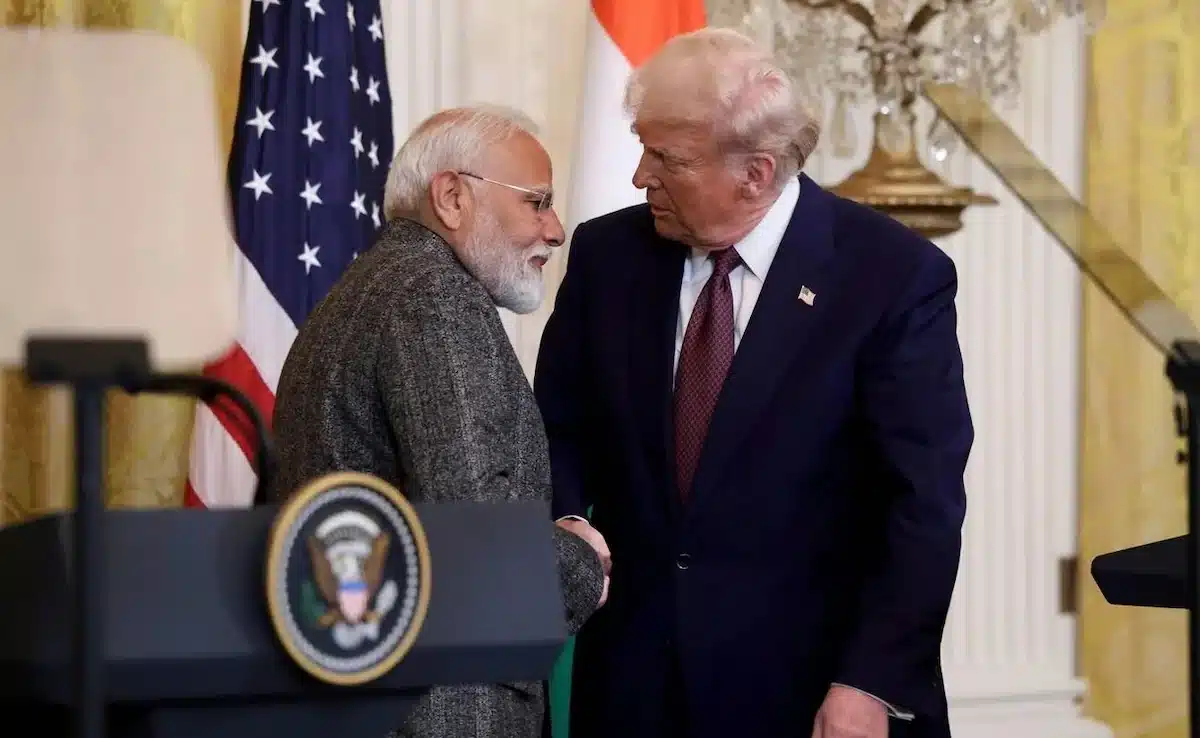
A bipartisan group of U.S. senators has introduced a revised bill proposing 100% tariffs on five countries, including India and China, for their continued purchases of Russian oil. This move follows a previous attempt by Washington to penalize India, which included a 25% tariff imposed last year but reversed in February. The new legislation aims to impose significant financial penalties on nations that support Russia’s economy amid ongoing geopolitical tensions.
Details of the Tariff Bill
The updated bill includes a provision that allows U.S. President Donald Trump to waive the sanctions if deemed in the national interest. It specifically excludes 15 European countries that import Russian gas, as their reliance on Russian supplies is minimal and they are taking steps to reduce it. In addition to India and China, the proposed tariffs would also affect Slovakia, Hungary, and Azerbaijan. Senator Richard Blumenthal emphasized that the bill goes beyond tariffs, imposing broad sanctions on various sectors of the Russian economy, including energy and finance.
If passed, this legislation would be the first instance of Congress explicitly authorizing tariffs as a means to penalize countries financing another nation’s military actions. A Senate aide indicated that the bill’s sponsors believe they have sufficient support for Senate approval, although the timing of a vote remains uncertain.
Impact on Global Oil Markets
Sumit Ritolia, Lead Analyst at Kpler, noted that the proposed U.S. tariffs come at a time of extreme volatility in the global oil market. Russian crude has been a stabilizing factor, and significant reductions in its purchase could create challenges in sourcing alternative supplies. With limited spare production capacity and ongoing risks in the Strait of Hormuz, replacing Russian oil at scale could lead to a sharp increase in prices.
Ritolia emphasized that if the tariffs were to be implemented, the market would face a critical question: where would replacement barrels come from? The complexities of the current oil landscape make such a transition difficult without significant price repercussions.
Implications for India
For India, Russian crude has become a crucial component of its energy security strategy, especially in light of disruptions in the Strait of Hormuz. The increased imports from Russia have allowed Indian refiners to maintain high utilization rates and ensure steady fuel availability, unlike other Asian refining systems. In June, Russian oil imports surged to approximately 2.6 million barrels per day, constituting over 50% of India’s total crude imports.
Experts suggest that India is unlikely to be significantly affected by the proposed tariffs. Ajay Srivastava, founder of the Global Trade Research Initiative, pointed out that previous tariff proposals have stalled in Congress, indicating limited support for such measures. He also noted that recent U.S. Supreme Court rulings have reinforced legal constraints on imposing tariffs outside existing trade laws.
Even if the bill were enacted, its implementation would be uncertain. The selective nature of the proposal, which exempts certain European countries and does not target China despite its larger imports from Russia, raises questions about its effectiveness. Srivastava concluded that India should prioritize its energy policy based on national interests rather than external pressures.
Observer Voice is the one stop site for National, International news, Sports, Editor’s Choice, Art/culture contents, Quotes and much more. We also cover historical contents. Historical contents includes World History, Indian History, and what happened today. The website also covers Entertainment across the India and World.

