

Contraception: Why 164 million women have unmet contraceptive needs while methods exist that could save their lives
Contraception: 164 million women want it but can't access it—here's why

Fatima sat across from the community health worker, finally voicing what she’d been afraid to say.
“I need to stop having children,” she whispered. “I already have six. My body can’t take another pregnancy. But my husband won’t allow contraception. And even if he did, the nearest clinic is three hours away by bus. I can’t afford the fare.”
The health worker nodded. She hears this story daily in rural Pakistan.
Fatima is one of 164 million women of reproductive age worldwide with an unmet need for contraception. They want to prevent or delay pregnancy but aren’t using any contraceptive method.
The number is staggering because contraception exists. Multiple safe, effective methods are available. The knowledge of how to provide them is clear.
Yet 164 million women can’t access what they need.
Why Contraception Matters So Much
Before diving into barriers, it’s worth understanding why contraception is fundamental to health and human rights.
Preventing unintended pregnancies reduces maternal illness and pregnancy-related deaths. Every time a woman can space or limit pregnancies, her health risks decrease.
Delaying pregnancies in young girls who face increased health problems from early childbearing saves lives. So does preventing pregnancies in older women who also face heightened risks.
Dr. Okafor works in maternal health in Nigeria. She explained the mathematics of survival: “When women can control if and when they become pregnant, maternal mortality drops dramatically. Unintended pregnancies often mean delayed or absent prenatal care, higher risk of complications, greater likelihood of unsafe abortion.”
Contraception reduces the need for unsafe abortion, which kills thousands of women annually in countries where safe abortion isn’t available.
It reduces HIV transmission from mothers to newborns by preventing pregnancies in HIV-positive women who aren’t yet ready to have children or who already have as many children as they want.
But the benefits extend far beyond health.
When girls can delay pregnancy, they stay in school longer. Education transforms life trajectories, breaking cycles of poverty.
When women can control their fertility, they participate more fully in society, including paid employment. Economic independence follows. Decision-making power within families increases.
Contraception isn’t just a health intervention. It’s a tool for social and economic transformation.
The Staggering Unmet Need
Here’s what the 164 million figure actually means: these are women who say they want to avoid pregnancy but aren’t using any contraceptive method.
The reasons they give reveal the systematic failures preventing access.
Limited availability tops the list. In many rural and poor areas, contraceptive methods simply aren’t available. Health facilities don’t stock them. Trained providers don’t exist. The nearest source may be hours or days away.
Limited choice compounds the problem. Even when contraception is available, often only one or two methods exist. If those methods don’t work for a particular woman—due to side effects, health conditions, or personal preferences—she has no alternatives.
Fear or experience of side effects keeps many women from using available methods. Some fear weight gain, mood changes, or irregular bleeding. Others have tried methods, experienced side effects, and stopped without alternative options.
Cultural or religious opposition creates powerful barriers. In some communities, contraception is considered immoral or against religious teachings. Women face social pressure, family opposition, or even violence for attempting to use it.
Poor quality services drives women away. Judgmental providers, lack of privacy, inadequate counseling, and disrespectful treatment make women avoid seeking contraceptive care.
Gender-based barriers prevent women from controlling their own fertility. In many societies, husbands or male family members control reproductive decisions. Women need permission to access contraception. Some face violence for even requesting it.
Maria lives in rural Guatemala. She wanted contraception after her fourth child but faced multiple barriers simultaneously. “The clinic stocks only pills, which made me nauseous. My husband thinks contraception is sinful. My mother-in-law watches me constantly. The health worker at the clinic made me feel ashamed for asking.”
Three different barriers—limited choice, cultural opposition, poor quality services—all preventing one woman from accessing a fundamental health service.
The Methods That Work
When women can access contraception with genuine choice, multiple effective methods exist.
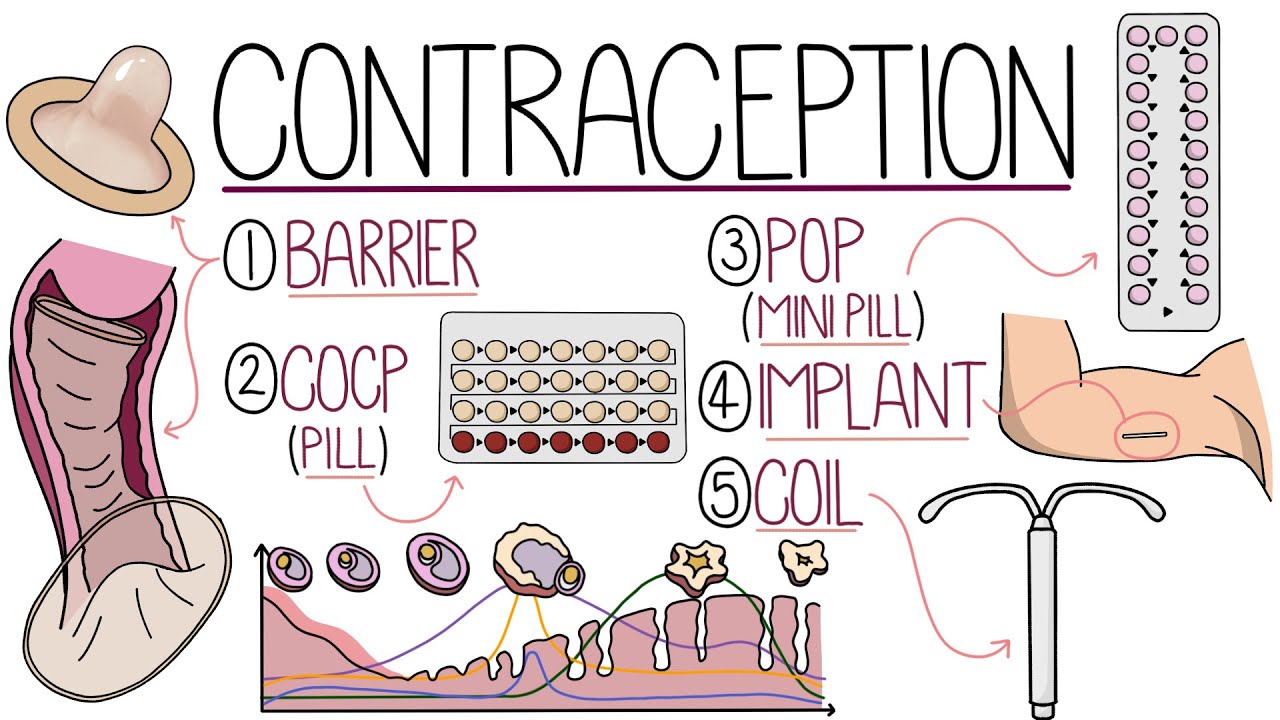
Hormonal contraceptives work by stopping ovulation, thickening cervical mucus, and thinning the uterine lining. Options include daily oral pills (either combined estrogen and progestin or progestin-only), hormonal IUDs lasting 3-5 years, vaginal rings replaced monthly, implants placed under arm skin lasting 3-5 years, and injectables given every 2-3 months.
Each offers different advantages. Pills allow immediate stopping but require daily remembering. Implants and IUDs provide years of protection without user action but require trained providers for insertion and removal. Injectables offer middle ground—user doesn’t need daily action but must return for repeat doses.
Non-hormonal methods include copper IUDs lasting up to 12 years without hormones, condoms that also protect against sexually transmitted infections, and permanent sterilization through vasectomy or tubal ligation for people certain they don’t want future children.
Emergency contraception provides backup when regular methods fail or weren’t used. Pills or copper IUD insertion within five days of unprotected sex can prevent pregnancy.
The variety matters because different women need different methods at different life stages. A teenager needs something her parents won’t discover. A woman spacing pregnancies between children needs reliable long-term protection. A woman finished with childbearing might choose permanent sterilization.
Choice isn’t luxury. It’s necessity for effective contraceptive care.
What Successful Programs Actually Do
Countries reducing unmet contraceptive need share common approaches.
They train multiple cadres of health workers—doctors, midwives, nurses, and community health workers—to provide contraceptive counseling and services. They bring services closer to where women live instead of requiring long journeys to distant clinics.
They ensure consistent supplies of multiple methods so women have real choice. They regulate quality so methods work properly and services meet standards.
They address cultural barriers through community education campaigns, engaging religious leaders and male partners in supporting women’s reproductive rights.
Rwanda provides a model. They trained thousands of community health workers to provide contraceptive counseling and distribute pills, condoms, and injectables at village level. They ensured higher-level facilities could insert IUDs and implants. They ran sustained campaigns addressing cultural attitudes.
Results: contraceptive use increased dramatically, maternal mortality dropped, girls stayed in school longer, women’s economic participation rose.
The interventions weren’t complicated or expensive. They required commitment and consistent implementation.
The Global Failure
Despite knowing what works, the world fails 164 million women annually.
Contraceptive services remain underfunded globally. Political opposition blocks programs in many countries. Religious institutions sometimes oppose contraception even when individual believers want access.
Gender inequality ensures that in many places, women’s reproductive autonomy isn’t recognized as a right but remains subject to male permission and control.
Dr. Chen works with WHO on family planning programs. She described the frustration: “We have the evidence. We have the methods. We have the guidelines. What’s missing is political will and sustained investment. Every year we delay, millions more women experience unintended pregnancies, unsafe abortions, maternal deaths, and lost opportunities.”
The Bottom Line
Contraception is a health intervention that transforms lives beyond health.
When women can control if, when, and how many children to have, they stay healthier, live longer, complete education, achieve economic independence, and participate fully in society.
The methods exist. The knowledge exists. The guidelines exist.
What’s missing is ensuring every woman who wants contraception can access multiple methods through trained, respectful providers at facilities within reasonable distance.
Back to Fatima in rural Pakistan. The health worker couldn’t solve all her problems that day. But she connected Fatima to a women’s support group where she found allies. She provided information Fatima could use when ready. She planted seeds that might grow into change.
Real solutions require addressing all barriers simultaneously—improving availability and choice, training providers, addressing cultural attitudes, challenging gender inequality, investing sustainably in services.
The 164 million women with unmet contraceptive needs deserve nothing less.
For more information:
- WHO Contraception Information
- Family Planning/Contraception Methods Fact Sheet
- Medical Eligibility Criteria for Contraceptive Use
- Emergency Contraception Fact Sheet
Disclaimer: This article is an adaptation of publicly available information from WHO’s Contraception
health topic page (WHO, Geneva. Licence: CC BYNC-SA 3.0 IGO). WHO is not responsible for the
content or accuracy of this adaptation. This content is for informational and educational purposes
only and does not constitute medical advice. ObserverVoice.com is a news and information platform
— not a healthcare provider.
Observer Voice is the one stop site for National, International news, Sports, Editor’s Choice, Art/culture contents, Quotes and much more. We also cover historical contents. Historical contents includes World History, Indian History, and what happened today. The website also covers Entertainment across the India and World.

