

Pleural Effusion: Why Fluid Accumulates Around the Lung and What It Signals

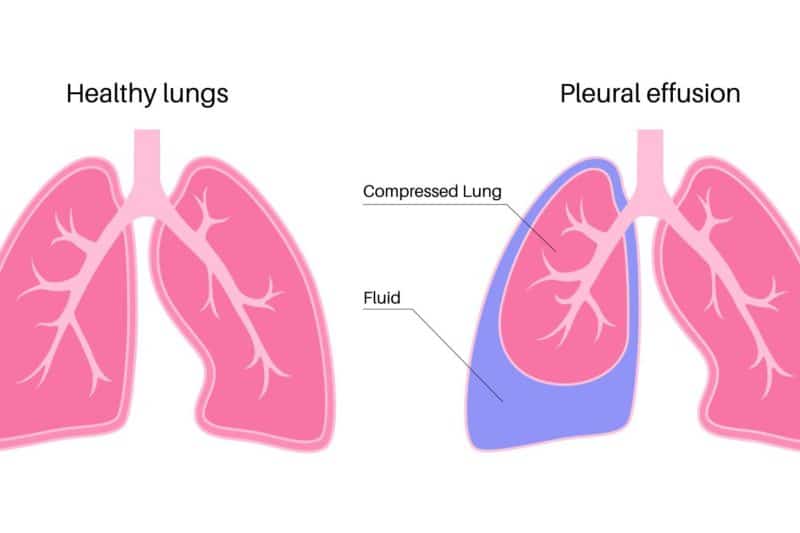
Pleural Effusion is a condition in which excess fluid builds up in the pleural space, the narrow gap between the lung and the chest wall. Under normal circumstances, only a thin film of fluid, roughly 15 millilitres, occupies this space, allowing the lungs to slide smoothly during breathing. When disease or injury disrupts the body’s fluid balance, this small amount can increase dramatically to hundreds or even thousands of millilitres, compressing the lung and impairing breathing.
What makes pleural effusion clinically significant is not merely the fluid itself but what that fluid reveals. Pleural effusion is almost always a sign of an underlying condition rather than a disease in its own right. Heart failure, pneumonia, cancer, tuberculosis, and kidney disease are among the most common culprits. Identifying and treating the underlying cause is therefore just as important as draining the fluid. Understanding pleural effusion equips people to recognise its symptoms, seek appropriate care, and engage meaningfully with their treatment journey.
What Is Pleural Effusion?
The lungs are surrounded by two thin membranes collectively called the pleura. The visceral pleura covers the outer surface of the lung directly. The parietal pleura lines the inside of the chest wall, the diaphragm, and the mediastinum, the central chest compartment containing the heart and major vessels.
Between these two membranes lies the pleural space. Normally, the small volume of pleural fluid present lubricates these surfaces, reducing friction during breathing. Fluid production and absorption remain in constant balance, maintained by a combination of pressure gradients and lymphatic drainage.
When the Balance Breaks Down
Pleural effusion develops when fluid production exceeds absorption or when lymphatic drainage becomes impaired. Several mechanisms drive this imbalance. Elevated pressure in blood vessels near the pleura forces fluid outward. Inflammation increases pleural membrane permeability, allowing protein-rich fluid to leak through. Blocked lymphatic channels prevent normal fluid clearance.
Each mechanism produces a distinct type of pleural fluid with different biochemical characteristics. These characteristics carry crucial diagnostic information that guides clinical investigation and management.
Types of Pleural Effusion
Doctors classify pleural effusions into two fundamental categories based on fluid characteristics. This classification, established through a process called thoracentesis and analysis, guides the entire diagnostic and treatment pathway.
Transudative Pleural Effusion
Transudates are watery, protein-poor fluids produced when systemic pressure imbalances force fluid out of blood vessels into the pleural space. The pleural membranes themselves are not inflamed or damaged. Instead, conditions affecting the heart, kidneys, or liver alter the pressure dynamics that normally keep the pleural space dry.
Heart failure accounts for the majority of transudative pleural effusions worldwide. Liver cirrhosis and nephrotic syndrome, a kidney condition causing protein loss, also commonly produce transudates. Treating the underlying systemic condition often resolves transudative effusions without direct pleural intervention.
Exudative Pleural Effusion
Exudates are protein-rich, cellular fluids resulting from direct inflammation, infection, or malignancy affecting the pleura or adjacent structures. Inflamed or damaged pleural membranes become leaky, allowing proteins and immune cells to spill into the pleural space. Lymphatic drainage also becomes impaired in many exudative conditions.
Pneumonia, malignancy, tuberculosis, and pulmonary embolism are leading causes of exudative effusions. Because exudates signal active disease in or near the pleura, they always require thorough investigation to identify the specific underlying cause.
Light’s Criteria
Distinguishing transudates from exudates uses a biochemical framework called Light’s Criteria, developed by physician Richard Light in 1972. This framework compares protein and lactate dehydrogenase levels in the pleural fluid against blood levels. An effusion meeting any exudative criterion receives an exudate classification and triggers further investigation.
Light’s Criteria remain the clinical gold standard for effusion classification despite over 50 years of research into alternative markers.
Common Causes of Pleural Effusion
Pleural effusion can result from a wide range of conditions affecting the heart, lungs, kidneys, liver, and immune system. Identifying the specific cause drives appropriate treatment.
Heart Failure
Heart failure is the single most common cause of pleural effusion globally. When the heart pumps inefficiently, pressure builds in the pulmonary veins, forcing fluid into the pleural space. Both left-sided and right-sided heart failure produce pleural effusions, though left-sided failure more commonly causes bilateral effusions affecting both lungs.
Optimising heart failure treatment with diuretics, angiotensin-converting enzyme inhibitors, and other evidence-based therapies typically resolves associated effusions without direct pleural drainage.
Pneumonia and Parapneumonic Effusions
Bacterial pneumonia frequently triggers adjacent pleural inflammation, causing a parapneumonic effusion. Most parapneumonic effusions are sterile and resolve with antibiotic therapy. However, some become infected, forming an empyema, a collection of pus within the pleural space, that requires urgent drainage.
Untreated empyema can progress to fibrothorax, meaning permanent scarring and thickening of the pleural membranes that traps the lung in a shrunken, non-functional state. Early recognition and drainage of complicated parapneumonic effusions prevents this serious complication.
Malignancy
Cancer represents the second most common cause of exudative pleural effusion. Malignant pleural effusions develop when tumour cells seed the pleural membranes, disrupt lymphatic drainage, or produce substances that increase pleural permeability. Lung cancer, breast cancer, and lymphoma account for the majority of malignant pleural effusions.
A malignant pleural effusion indicates advanced disease and carries significant prognostic implications. Management focuses on symptom control, fluid drainage, and decisions about definitive pleural procedures aligned with the person’s overall cancer treatment goals.
Tuberculosis
Tuberculosis causes pleural effusion through a hypersensitivity reaction to mycobacterial antigens in the pleural space. Tuberculous pleural effusions are exudative and lymphocyte-predominant, meaning lymphocytes are the dominant cell type in the fluid. They predominantly affect younger adults in high-tuberculosis-burden settings.
Prompt diagnosis and standard anti-tuberculosis treatment effectively resolves tuberculous pleural effusions in most cases. Delayed diagnosis risks progression to constrictive fibrothorax.
Pulmonary Embolism
Pulmonary embolism, a blood clot in the pulmonary arteries, causes pleural effusion in approximately 30 to 50 percent of cases. The effusion results from lung infarction, meaning death of lung tissue, that triggers pleural inflammation. Pulmonary embolism-related effusions are typically small and exudative, and they usually resolve with anticoagulation treatment targeting the underlying clot.
Considering pulmonary embolism in the differential diagnosis of unexplained pleural effusion is important, as its treatment differs fundamentally from other causes.
Other Important Causes
Several additional conditions deserve recognition as pleural effusion causes. Liver cirrhosis causes hepatic hydrothorax, a transudative effusion resulting from ascitic fluid tracking through diaphragmatic defects into the pleural space. Kidney disease produces effusions through fluid overload and reduced oncotic pressure, the force that keeps fluid within blood vessels.
Rheumatoid arthritis, lupus, and other autoimmune conditions cause inflammatory exudative effusions. Mesothelioma, a rare cancer directly affecting the pleural membranes and strongly linked to asbestos exposure, causes progressive exudative effusion as its most prominent feature.
Symptoms of Pleural Effusion
The symptoms of pleural effusion reflect both the mechanical effect of fluid compressing the lung and the impact of the underlying causative condition.
Breathlessness
Breathlessness is the most common and often most distressing symptom of pleural effusion. As fluid accumulates, it pushes against the lung, preventing full expansion and reducing the volume of air the lung can hold. Small effusions may cause only mild exertional breathlessness, while large effusions produce severe breathlessness even at rest.
The breathlessness of pleural effusion often worsens when lying flat, a symptom called orthopnoea, because fluid redistributes to compress more lung tissue in this position.
Chest Pain
Chest pain occurs in pleural effusion primarily when inflammation affects the parietal pleura, which contains pain-sensitive nerve endings. This pleuritic chest pain is typically sharp, catching, and worsens with deep breathing, coughing, and movement. As effusion size increases, separating the two pleural layers, the pain often paradoxically diminishes because the inflamed surfaces no longer rub together.
Persistent, dull chest heaviness accompanies large effusions and reflects the weight and pressure of accumulated fluid.
Cough
A persistent dry cough accompanies many pleural effusions, resulting from compression of adjacent lung tissue and airways. The cough produces little or no mucus and does not respond to standard cough treatments. It reflects mechanical irritation rather than airway infection.
In parapneumonic effusions, productive cough from the underlying pneumonia may initially predominate before the effusion becomes the primary concern.
Systemic and Underlying Disease Symptoms
Because pleural effusion is almost always secondary to an underlying condition, symptoms of that condition typically accompany the effusion. Ankle swelling and fatigue in heart failure, fever and productive cough in pneumonia, unintentional weight loss and night sweats in tuberculosis or malignancy, and abdominal distension in liver cirrhosis all provide vital diagnostic clues.
Diagnosing Pleural Effusion
Diagnosing pleural effusion requires confirming its presence, estimating its size, characterising the fluid, and identifying the underlying cause.
Clinical Examination
Experienced clinicians detect pleural effusion through physical examination. On the affected side, percussion produces a stony dull sound rather than the normal resonant tone. Breath sounds are reduced or absent at the lung base. Vocal resonance decreases over the effusion. These classical signs guide initial suspicion and indicate the need for imaging confirmation.
Physical signs are reliably detectable when more than 300 to 500 millilitres of fluid has accumulated. Smaller effusions may produce no detectable physical signs.
Chest X-Ray
Chest X-ray is typically the first imaging investigation for suspected pleural effusion. On a standard upright chest X-ray, fluid appears as a white opacity blunting the costophrenic angle, the sharp angle normally visible between the ribs and the diaphragm. As fluid volume increases, this opacity ascends to form a characteristic meniscus shape along the chest wall.
Large effusions appear as dense white opacification of an entire lung field, sometimes shifting the heart and mediastinum toward the opposite side. Chest X-ray is limited in detecting very small effusions and cannot characterise fluid type.
Ultrasound
Chest ultrasound has revolutionised pleural effusion assessment and is now the standard guidance tool for pleural procedures. Ultrasound reliably detects effusions as small as 20 millilitres, far smaller than chest X-ray can detect. It accurately estimates fluid volume, identifies internal septations or loculations meaning compartmentalised fluid collections, and guides safe needle placement for fluid sampling.
Bedside ultrasound performed by trained clinicians provides real-time assessment without radiation exposure, making it invaluable in clinical settings from emergency departments to intensive care units.
CT Scanning
CT scanning provides comprehensive anatomical information about the pleural space, lung parenchyma, and thoracic structures. CT identifies pleural thickening, nodularity suggesting malignancy, loculated fluid collections, and underlying lung consolidation or masses. CT pulmonary angiography specifically evaluates for pulmonary embolism as a cause of effusion.
CT is particularly valuable when chest X-ray and ultrasound leave diagnostic uncertainty or when planning complex pleural drainage procedures.
Thoracentesis and Fluid Analysis
Thoracentesis, meaning sampling of pleural fluid through a needle or small catheter inserted through the chest wall, provides definitive fluid characterisation. The procedure is performed under ultrasound guidance to maximise safety. Fluid samples undergo biochemical, cytological, and microbiological analysis.
Biochemical analysis applies Light’s Criteria to classify the effusion as transudate or exudate. Cytology identifies malignant cells. Microbiological culture detects bacterial, fungal, or mycobacterial infection. Additional tests including pH, glucose, amylase, cholesterol, and triglycerides address specific diagnostic questions in appropriate clinical contexts.
Treatment of Pleural Effusion
Treating pleural effusion requires addressing both the fluid accumulation and its underlying cause. Treatment intensity and approach depend on effusion size, symptoms, fluid type, and the underlying diagnosis.
Treating the Underlying Cause
For transudative effusions, treating the underlying systemic condition is the primary strategy. Diuretic therapy in heart failure, abstinence and medical management in liver cirrhosis, and dialysis optimisation in kidney disease all reduce fluid production and allow natural reabsorption. Many transudative effusions resolve completely with effective underlying disease management without requiring direct pleural intervention.
Exudative effusions from pneumonia respond to appropriate antibiotic therapy, while tuberculous effusions require standard multi-drug anti-tuberculosis treatment regimens.
Therapeutic Thoracentesis
Large or symptomatic effusions causing significant breathlessness benefit from therapeutic thoracentesis, draining fluid through a needle or catheter to relieve symptoms. Removing 1,000 to 1,500 millilitres of fluid in a single session typically produces dramatic symptomatic improvement.
Rapid removal of larger volumes risks re-expansion pulmonary oedema, a serious complication where the suddenly re-expanded lung develops fluid within its own tissue. Clinicians limit drainage volume per session and monitor carefully for developing symptoms of this complication.
Intercostal Chest Tube Drainage
Empyema, complicated parapneumonic effusions, and large malignant effusions often require formal intercostal chest tube drainage. Under ultrasound guidance, surgeons insert a drainage tube through the chest wall to remove fluid continuously over days. Small-bore tubes using the Seldinger technique, meaning a wire-guided catheter insertion method, have largely replaced large-bore surgical drains for most effusion types.
Intrapleural fibrinolytic therapy, instilling clot-dissolving medications through the chest tube, helps drain loculated parapneumonic effusions and empyema that resist simple drainage.
Pleurodesis
Pleurodesis aims to prevent recurrent effusion by obliterating the pleural space. A sclerosing agent, most commonly sterile talc, is instilled into the pleural space through a chest tube or during thoracoscopy. This agent causes intense inflammation that fuses the visceral and parietal pleura permanently together.
Pleurodesis is most commonly used for recurrent malignant pleural effusions, providing durable symptom control without requiring repeated drainage procedures. Success rates for talc pleurodesis exceed 70 to 80 percent in appropriate candidates.
Indwelling Pleural Catheters
Indwelling pleural catheters offer an alternative management strategy for recurrent malignant effusions, particularly in people who are not suitable candidates for pleurodesis or who prefer outpatient management. A soft, tunnelled catheter is inserted semi-permanently into the pleural space, allowing people or their carers to drain fluid at home every few days using a vacuum drainage system.
Indwelling catheters significantly reduce hospital admissions for effusion drainage and improve quality of life for people with advanced cancer experiencing recurrent effusion.
Surgical Options
Thoracoscopy, meaning keyhole surgery inside the chest, serves both diagnostic and therapeutic purposes. Video-assisted thoracoscopic surgery allows direct visualisation of the pleural surfaces, targeted biopsies of suspicious areas, breakdown of loculations, and talc pleurodesis under direct vision. Decortication, surgical removal of the fibrous peel that forms over trapped lung in chronic empyema or fibrothorax, restores lung expansion in carefully selected patients.
What Pleural Effusion Signals About Your Health
The discovery of pleural effusion is rarely the end of the clinical story. Rather, it opens an important diagnostic chapter aimed at identifying and addressing the underlying cause.
A Window Into Systemic Disease
Pleural effusion frequently represents the visible sign of a significant systemic illness. A new bilateral pleural effusion in an older person may be the first detectable sign of previously undiagnosed heart failure. An unexplained exudative effusion in a middle-aged person warrants thorough malignancy investigation. A lymphocyte-predominant effusion in a young person from a high-tuberculosis-burden region demands prompt microbiological evaluation.
Treating only the fluid without investigating its cause leaves the underlying disease unaddressed, allowing it to progress and cause further harm.
When Effusion Signals Malignancy
A malignant pleural effusion indicates that cancer has reached an advanced stage with pleural involvement. This finding significantly affects staging, prognosis, and treatment planning for most cancer types. Identifying malignant cells in pleural fluid through cytological analysis confirms the diagnosis in approximately 60 percent of cases.
When cytology is negative despite clinical suspicion, thoracoscopic biopsy of pleural nodules provides the highest diagnostic yield and should be pursued without undue delay.
Frequently Asked Questions
What causes pleural effusion?
Pleural effusion results from an imbalance between fluid production and absorption in the pleural space. Heart failure is the most common cause worldwide, producing protein-poor transudative fluid through elevated venous pressure. Infections including pneumonia and tuberculosis, malignancy, pulmonary embolism, liver cirrhosis, and kidney disease all cause effusions through various mechanisms. Identifying the specific underlying cause guides appropriate treatment.
Is pleural effusion serious?
The seriousness of pleural effusion depends entirely on its underlying cause and size. Small transudative effusions from controlled heart failure may be relatively benign. Large effusions causing significant breathlessness require drainage regardless of cause. Malignant pleural effusions indicate advanced cancer and require palliative management. Empyema, an infected pleural space, is a surgical emergency requiring urgent drainage and intensive antibiotic treatment.
How is pleural effusion treated?
Treatment combines addressing the underlying cause with managing the fluid directly when necessary. Transudative effusions from heart failure often respond to diuretic therapy alone. Symptomatic large effusions require thoracentesis or chest tube drainage for relief. Recurrent malignant effusions benefit from pleurodesis or indwelling pleural catheter insertion. Empyema requires chest tube drainage and intrapleural fibrinolytic therapy in most cases.
Can pleural effusion come back after drainage?
Yes, recurrence is common, particularly when the underlying cause remains active. Malignant pleural effusions frequently recur after simple drainage because the cancer continues to stimulate fluid production. Pleurodesis or indwelling pleural catheter insertion provides more durable control in recurrent cases. Transudative effusions from heart failure recur if the cardiac condition remains poorly controlled, reinforcing the importance of optimising underlying disease management.
What does pleural fluid analysis reveal?
Pleural fluid analysis provides critical diagnostic information. Biochemical analysis using Light’s Criteria classifies the fluid as transudate or exudate, narrowing the diagnostic possibilities. Cytology identifies malignant cells in approximately 60 percent of malignant effusions. Microbiological culture detects bacterial, mycobacterial, or fungal infection. Additional measurements of pH, glucose, amylase, and other markers address specific diagnostic questions in appropriate clinical situations.
How much fluid can accumulate in pleural effusion?
The pleural space can accommodate surprisingly large fluid volumes. While the normal pleural space contains only about 15 millilitres of fluid, effusions can accumulate several litres before producing maximum symptoms. Large effusions exceeding one to two litres cause significant breathlessness, visible chest asymmetry, and sometimes mediastinal shift. Thoracentesis typically drains 1,000 to 1,500 millilitres per session to achieve symptomatic relief safely.
Disclaimer:
This article is for informational purposes only and does not constitute medical advice. Always consult a qualified healthcare professional for diagnosis, treatment, or medical guidance related to any health condition.
References:
- Thymoma is a tumor arising from thymic epithelial cells characterized by relatively indolent behavior, frequent myasthenia gravis association, and excellent prognosis in early-stage disease.
- Pneumothorax is a serious and potentially life-threatening condition that occurs when air leaks into the space between the lung and the chest wall.
- Land grading reshapes your property’s topography to control water flow. It’s not about creating dramatic slopes everywhere.
Observer Voice is the one stop site for National, International news, Sports, Editor’s Choice, Art/culture contents, Quotes and much more. We also cover historical contents. Historical contents includes World History, Indian History, and what happened today. The website also covers Entertainment across the India and World.

