

Micronutrients: The Tiny Nutrients With Enormous Health Impact
Why Vitamins and Minerals Matter More Than You Think

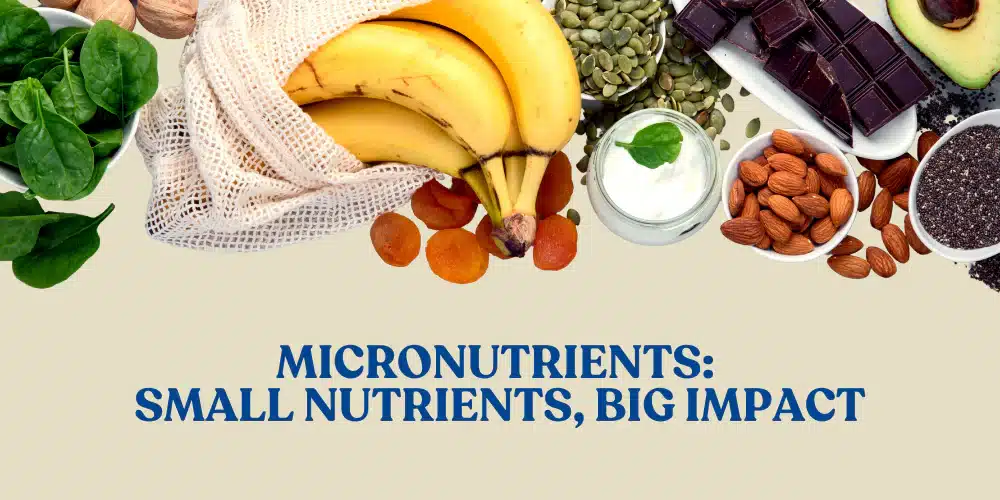
Imagine nutrients so small that you need only milligrams or even micrograms daily, yet their absence can cause blindness, intellectual disability, life-threatening anemia, or death. These are micronutrients—vitamins and minerals our bodies need in tiny amounts but cannot produce themselves. Unlike macronutrients (carbohydrates, proteins, and fats) that provide energy and building blocks, micronutrients enable thousands of chemical reactions that keep us alive and healthy.
According to the World Health Organization, micronutrient deficiencies affect over 2 billion people worldwide—nearly one-third of humanity. This “hidden hunger” occurs when people consume enough calories to feel full but not enough vitamins and minerals to stay healthy. The consequences are devastating: impaired growth and development, weakened immunity, reduced productivity, increased disease risk, and preventable deaths, particularly among children and pregnant women.
Understanding Micronutrients
Micronutrients are essential nutrients required in small quantities for proper body function. They fall into two categories:
Vitamins are organic compounds that support various bodily functions:
- Vitamin A: Essential for vision, immune function, and cell growth
- B vitamins: Including B12, folate (B9), and others supporting energy metabolism, nerve function, and red blood cell production
- Vitamin C: Important for immune function, wound healing, and iron absorption
- Vitamin D: Critical for bone health and immune function
- Vitamin E: Acts as an antioxidant protecting cells from damage
- Vitamin K: Essential for blood clotting and bone health
Minerals are inorganic elements with diverse functions:
- Iron: Carries oxygen in blood and supports cognitive development
- Iodine: Essential for thyroid hormones regulating metabolism and brain development
- Zinc: Supports immune function, wound healing, and growth
- Selenium: Functions as an antioxidant and supports thyroid function
- Calcium: Builds bones and teeth, supports muscle and nerve function
- Magnesium: Involved in over 300 biochemical reactions in the body
While all micronutrients are important, four deficiencies cause the greatest public health problems globally: iron, vitamin A, iodine, and zinc.
Iron Deficiency: The World’s Most Common Nutritional Disorder
Iron deficiency affects approximately 2 billion people worldwide, making it the most prevalent nutritional deficiency. It causes anemia—a condition where blood cannot carry adequate oxygen to tissues, resulting in fatigue, weakness, and impaired development.
Who is most affected:
- Pregnant women (iron needs nearly double during pregnancy)
- Young children during rapid growth periods
- Adolescent girls due to menstruation and growth
- Women of reproductive age due to menstrual blood loss
Consequences of iron deficiency:
- Maternal and child mortality increase
- Reduced work capacity and productivity (costing economies billions)
- Impaired cognitive development in children—lowering IQ by 5-10 points
- Increased susceptibility to infections
- Complications during pregnancy and childbirth
Solutions:
- Iron-rich foods (red meat, dark leafy greens, beans, fortified cereals)
- Iron-folic acid supplementation for pregnant women
- Food fortification with iron
- Treatment of parasitic infections that cause blood loss
- Cooking in iron pots (which adds iron to food)
Like challenges in addressing malnutrition broadly, iron deficiency requires multi-faceted approaches combining dietary improvement, supplementation, and addressing underlying causes.
Vitamin A Deficiency: A Leading Cause of Preventable Blindness
Vitamin A deficiency affects approximately 190 million preschool-age children and 19 million pregnant women, primarily in Africa and Southeast Asia. According to WHO guidelines on vitamin A supplementation, this deficiency is the leading cause of preventable childhood blindness.
Health impacts:
- Night blindness (difficulty seeing in dim light)
- Complete, irreversible blindness in severe cases
- Increased severity of infections (measles, diarrhea, respiratory infections)
- Increased child mortality—vitamin A deficiency contributes to 500,000 child deaths annually
- Impaired immune function
Prevention and treatment:
- Vitamin A supplementation (high-dose capsules every 4-6 months for young children)
- Food fortification (adding vitamin A to cooking oil, sugar, or flour)
- Promoting vitamin A-rich foods (orange vegetables like sweet potatoes and carrots, dark leafy greens, liver, eggs, dairy)
- Promoting breastfeeding (breast milk provides vitamin A for infants)
Vitamin A supplementation programs have prevented an estimated 1.25 million child deaths since 1998. Like vaccination programs preventing measles and meningitis, vitamin A supplementation represents a highly cost-effective public health intervention.
Iodine Deficiency: Threatening Brain Development
Iodine deficiency affects approximately 2 billion people worldwide, despite being easily preventable through salt iodization. Iodine is essential for producing thyroid hormones that regulate metabolism and are critical for brain development, particularly during pregnancy and early childhood.
Consequences of iodine deficiency:
- Goiter (enlarged thyroid gland in the neck)
- Hypothyroidism (underactive thyroid causing fatigue, weight gain, cold sensitivity)
- Intellectual disability—iodine deficiency is the leading preventable cause worldwide
- Reduced IQ by 10-15 points in populations with severe deficiency
- Cretinism (severe physical and mental disability) in extreme cases
- Pregnancy complications including miscarriage and stillbirth
Prevention:
- Universal salt iodization (adding iodine to all salt for human consumption)
- Iodine supplementation for pregnant women in deficient areas
- Monitoring iodine status through population surveys
Salt iodization is one of public health’s greatest success stories. Countries implementing universal salt iodization have virtually eliminated iodine deficiency disorders. Yet approximately 25% of households globally still lack access to adequately iodized salt.
Zinc Deficiency: The Overlooked Micronutrient
Zinc deficiency affects approximately 17% of the global population, though it receives less attention than other micronutrient deficiencies. Zinc is essential for immune function, growth, wound healing, and DNA synthesis.
Health impacts:
- Impaired immune function increasing infection susceptibility
- Stunted growth in children
- Increased severity and duration of diarrhea
- Delayed wound healing
- Skin problems and hair loss
- Taste and smell disturbances
High-risk groups:
- Young children in developing countries
- Pregnant and lactating women
- People with chronic diarrhea or intestinal diseases
- Vegetarians (plant-based diets contain less bioavailable zinc)
Interventions:
- Zinc supplementation (particularly zinc treatment for childhood diarrhea, which reduces severity and duration)
- Food fortification
- Promoting zinc-rich foods (meat, shellfish, legumes, seeds, nuts)
- Improving dietary diversity
Multiple Micronutrient Deficiencies: The Compound Problem
People rarely suffer from single micronutrient deficiencies—they typically lack multiple vitamins and minerals simultaneously. This creates compound health problems worse than any single deficiency alone.
For example, a child might simultaneously lack:
- Iron (causing anemia and cognitive impairment)
- Vitamin A (increasing infection risk)
- Zinc (further impairing immunity and growth)
- Iodine (affecting brain development)
These deficiencies interact, creating synergistic negative effects. WHO recommends multiple micronutrient supplementation for pregnant women in settings where anemia prevalence exceeds 20%, providing iron, folic acid, and other essential vitamins and minerals together.
Food Fortification: Reaching Millions
Food fortification—adding micronutrients to commonly consumed foods—represents one of the most cost-effective public health interventions. According to the WHO and FAO guidelines on food fortification, fortification reaches large populations without requiring behavior change.
Common fortification programs:
- Salt iodization (iodine)
- Flour fortification (iron, folic acid, B vitamins)
- Cooking oil fortification (vitamin A)
- Sugar fortification (vitamin A)
- Milk fortification (vitamin A, vitamin D)
Benefits:
- Large-scale impact reaching entire populations
- Cost-effective (pennies per person annually)
- Sustainable (becomes part of food system)
- Minimal behavior change required
However, fortification doesn’t reach everyone—particularly poor populations consuming unfortified staple foods or making food at home rather than purchasing processed products.
Dietary Diversity: The Natural Solution
The ultimate solution to micronutrient deficiencies is dietary diversity—consuming varied diets including fruits, vegetables, animal products, and fortified foods. This provides micronutrients in natural, bioavailable forms alongside fiber, antioxidants, and other beneficial compounds.
Promoting dietary diversity requires:
- Agricultural policies encouraging diverse crop production
- Nutrition education teaching families about balanced diets
- Economic empowerment enabling families to afford varied foods
- Market systems making diverse foods accessible
- School feeding programs exposing children to nutritious foods
- Home gardens producing vegetables and fruits
Like comprehensive approaches to mental health and essential medicines access, addressing micronutrient deficiencies requires multi-sectoral action beyond health systems alone.
Special Populations With Increased Needs
Certain groups have elevated micronutrient requirements:
Pregnant women: Need extra iron, folic acid, calcium, and other nutrients supporting fetal development and preventing maternal complications. Folic acid prevents neural tube defects, while iron prevents anemia—a major contributor to maternal mortality.
Infants and young children: Rapid growth during the first 1,000 days (conception through age 2) creates high micronutrient demands. Deficiencies during this critical period cause irreversible developmental damage.
Adolescents: Growth spurts increase nutrient needs, particularly iron for menstruating girls.
Elderly people: Age-related changes in absorption and appetite increase deficiency risks, particularly for vitamin B12, vitamin D, and calcium.
People with chronic diseases: Conditions affecting nutrient absorption or increasing nutrient losses elevate requirements.
The Path Forward
Eliminating micronutrient deficiencies would improve health, save lives, enhance productivity, and strengthen economies. The Copenhagen Consensus—a group of prominent economists—ranks micronutrient interventions among the most cost-effective development investments, with benefit-cost ratios exceeding 30:1.
Achieving this requires:
- Universal salt iodization
- Expanded food fortification programs
- Vitamin A supplementation for young children
- Iron-folic acid supplementation for pregnant women
- Zinc treatment for childhood diarrhea
- Agricultural policies promoting nutrient-dense crops
- Nutrition education and behavior change programs
- Addressing poverty and food insecurity
- Strengthening health systems delivering interventions
Micronutrients Matter
Though needed in tiny amounts, micronutrients enable life itself. They allow children to grow and develop normally, women to survive pregnancy and childbirth, workers to be productive, and immune systems to fight infections. Their absence causes suffering, disability, and death on a massive scale—yet these consequences are entirely preventable.
By ensuring everyone receives adequate micronutrients through diverse diets, fortified foods, and supplementation when needed, we invest in human potential and create healthier, more prosperous societies for all.
Frequently Asked Questions (FAQs)
Yes, excessive micronutrient intake can be harmful, though this rarely occurs from food alone—it typically results from oversupplementation. Fat-soluble vitamins (A, D, E, K) accumulate in body fat and can reach toxic levels. Excess vitamin A causes liver damage and birth defects; too much iron damages organs. However, water-soluble vitamins (B vitamins, vitamin C) are generally safer as excess is excreted in urine. The key is following recommended doses for supplements and not taking multiple supplements containing the same nutrients simultaneously without medical supervision.
For most micronutrients, synthetic vitamins are chemically identical to natural ones and work equally well. Your body cannot distinguish between vitamin C from an orange and vitamin C synthesized in a laboratory. However, food provides micronutrients alongside fiber, antioxidants, and other beneficial compounds that work synergistically. Some nutrients (like vitamin E) exist in multiple forms, and natural sources may provide better mixes. Supplements are valuable for preventing deficiencies but shouldn’t replace diverse diets providing comprehensive nutrition.
Plant-based diets can be very healthy but require attention to certain micronutrients primarily found in animal products. Vitamin B12 exists almost exclusively in animal foods, so vegans need B12-fortified foods or supplements. Iron from plants (non-heme iron) is less bioavailable than iron from meat (heme iron), though vitamin C enhances absorption. Zinc bioavailability is lower from plant sources. Vegans may need more attention to calcium, vitamin D, omega-3 fatty acids, and iodine. With proper planning, fortified foods, and targeted supplementation when needed, plant-based diets can meet all micronutrient requirements.
Yes, significantly. Water-soluble vitamins (B vitamins, vitamin C) leach into cooking water and are destroyed by heat, especially during prolonged boiling. Steaming, microwaving, or stir-frying preserves more nutrients than boiling. Fat-soluble vitamins (A, D, E, K) are more heat-stable but can be lost in cooking oils. However, cooking sometimes improves nutrient bioavailability—cooked tomatoes provide more absorbable lycopene, and cooked carrots offer more accessible beta-carotene. The best approach combines raw and cooked foods, uses minimal water, cooks briefly, and consumes cooking water when possible (as in soups or stews).
Many micronutrient deficiencies cause subtle symptoms initially. Iron deficiency causes fatigue, weakness, pale skin, and cold hands/feet. Vitamin D deficiency may cause bone pain, muscle weakness, and frequent infections. Vitamin B12 deficiency causes fatigue, memory problems, and tingling in hands/feet. However, symptoms often overlap with many conditions, making deficiencies hard to identify without blood tests. People at high risk (pregnant women, children, elderly, those with restricted diets or absorption problems) should discuss screening with healthcare providers. Blood tests can definitively diagnose most micronutrient deficiencies, allowing targeted supplementation if needed.
References
- World Health Organization. (2024). Micronutrients. Retrieved from https://www.who.int/health-topics/micronutrients
- World Health Organization. (2024). Vitamin and mineral nutrition. Retrieved from https://www.who.int/teams/nutrition-and-food-safety/micronutrients/vitamin-and-mineral-nutrition
- World Health Organization. (2024). Food fortification guidelines. Retrieved from https://www.who.int/teams/nutrition-and-food-safety/food-safety/food-fortification
- World Health Organization. (2016). WHO recommendations on antenatal care for a positive pregnancy experience. Retrieved from https://www.who.int/publications/i/item/9789241549912
- Observer Voice. Malnutrition: Causes, Symptoms and Prevention. Retrieved from https://observervoice.com/malnutrition-causes-symptoms-prevention/
Disclaimer: This article is an adaptation of publicly available information from WHO’s Micronutrients
health topic page (WHO, Geneva. Licence: CC BYNC-SA 3.0 IGO). WHO is not responsible for the
content or accuracy of this adaptation. This content is for informational and educational purposes
only and does not constitute medical advice. ObserverVoice.com is a news and information platform
— not a healthcare provider.
Observer Voice is the one stop site for National, International news, Sports, Editor’s Choice, Art/culture contents, Quotes and much more. We also cover historical contents. Historical contents includes World History, Indian History, and what happened today. The website also covers Entertainment across the India and World.

