

India to Establish High-Level Banking Committee for Budget 2026 Growth Strategy

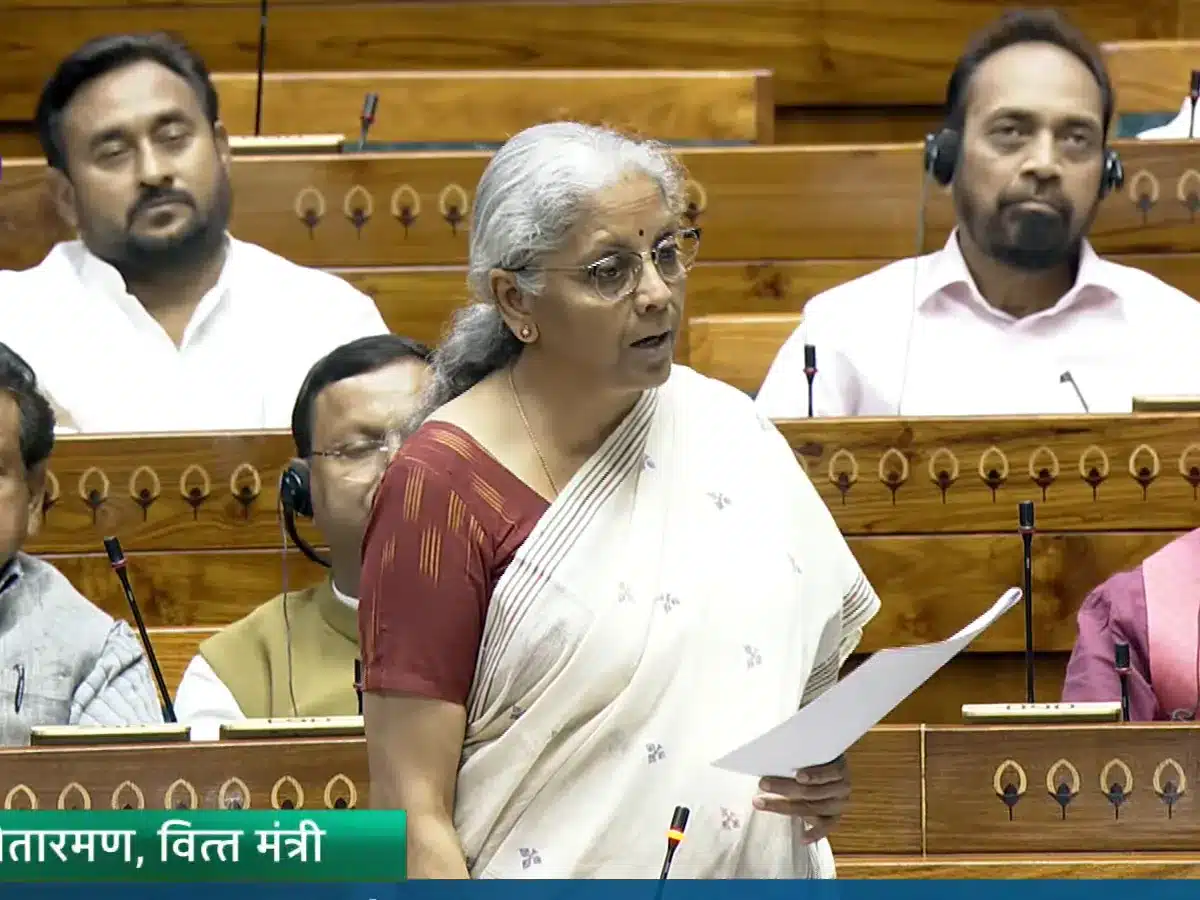
Presenting the Union Budget for 2026-27, Finance Minister Nirmala Sitharaman announced the establishment of a “High Level Committee on Banking for Viksit Bharat.” This initiative aims to thoroughly review the banking sector and align it with India’s growth trajectory while ensuring financial stability and consumer protection. Sitharaman highlighted the current strengths of the Indian banking sector, including robust balance sheets and improved asset quality, and outlined plans to enhance the efficiency of Public Sector Non-Banking Financial Companies (NBFCs). Additionally, she introduced indirect tax measures aimed at simplifying tariffs and boosting domestic manufacturing.
High Level Committee on Banking for Viksit Bharat
In her 90-minute budget speech, Finance Minister Nirmala Sitharaman proposed the creation of a “High Level Committee on Banking for Viksit Bharat.” This committee will conduct a comprehensive review of the banking sector to ensure it aligns with India’s next phase of growth. Sitharaman emphasized the importance of safeguarding financial stability, promoting inclusion, and protecting consumers. She noted that the Indian banking sector is currently characterized by strong balance sheets and historic profitability, with asset coverage exceeding 98 percent of villages across the country. The minister expressed confidence that this is an opportune moment to evaluate necessary reforms to sustain growth in the banking sector.
Restructuring Public Sector NBFCs
To enhance the efficiency of Public Sector NBFCs, Sitharaman proposed restructuring the Power Finance Corporation and the Rural Electrification Corporation as an initial step. She outlined a vision for these NBFCs that includes clear targets for credit disbursement and technology adoption. This restructuring is part of a broader strategy to improve the overall performance of the financial sector, which is crucial for supporting India’s economic growth. The finance minister’s proposals aim to ensure that these institutions can effectively contribute to the country’s development goals.
Indirect Tax Measures and Economic Survey
In addition to banking reforms, Sitharaman introduced a series of indirect tax measures designed to simplify the tariff structure. These measures aim to support domestic manufacturing, enhance export competitiveness, and address duty inversion. The finance minister presented her ninth consecutive Union Budget, continuing a tradition of outlining fiscal plans based on the Economic Survey of India. The survey, tabled in Parliament prior to the budget, provides a detailed review of the economy’s performance over the past year and sets the stage for future policy directions. It highlights India’s projected real GDP growth for 2026-27, estimated to be between 6.8 and 7.2 percent, reflecting the country’s sustained growth potential despite global challenges.
Observer Voice is the one stop site for National, International news, Sports, Editor’s Choice, Art/culture contents, Quotes and much more. We also cover historical contents. Historical contents includes World History, Indian History, and what happened today. The website also covers Entertainment across the India and World.

