

Dementia: 57 million people affected globally, 10 million new cases annually
Dementia: 57 million affected worldwide—yet it's not a normal part of aging

Margaret started forgetting small things first.
Car keys misplaced. Appointments missed. The same story told twice in one conversation. Her daughter noticed but brushed it off—Mom was 72, everyone gets forgetful with age, right?
Then Margaret got lost driving home from the grocery store she’d shopped at for 30 years. She forgot her grandson’s name. She couldn’t remember how to make the lasagna recipe she’d cooked hundreds of times.
The diagnosis came six months later: Alzheimer’s disease, the most common form of dementia.
“The doctor said it’s not just normal aging,” her daughter recalled. “I wish I’d known that earlier. We lost valuable time when early intervention might have helped.”
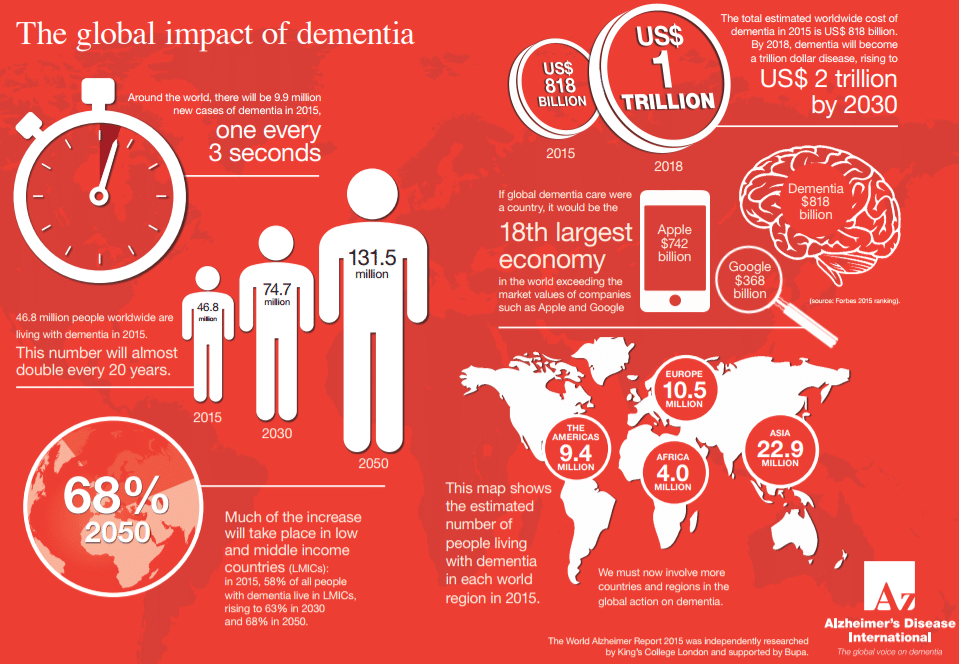
Margaret is one of 57 million people worldwide living with dementia, according to WHO’s latest data. And every three seconds, someone, somewhere develops dementia—nearly 10 million new cases annually.
What Dementia Actually Is
Dementia isn’t a single disease. It’s an umbrella term for several conditions affecting memory, thinking abilities, and behavior severely enough to interfere with daily life, as explained in WHO’s fact sheet on dementia.
Alzheimer’s disease accounts for 60-70% of cases. But dementia also includes vascular dementia (caused by reduced blood flow to the brain), Lewy body dementia, and frontotemporal dementia, among others.
The symptoms extend far beyond simple forgetfulness. People with dementia may experience memory loss that disrupts daily life, challenges in planning or solving problems, difficulty completing familiar tasks, confusion with time or place, trouble understanding visual images and spatial relationships, problems with words in speaking or writing, misplacing things and losing the ability to retrace steps, decreased judgment, withdrawal from work or social activities, and changes in mood and personality.
Here’s what many people misunderstand: dementia is not a normal part of aging. While age is the strongest known risk factor—the condition predominantly affects older people—plenty of people live into their 90s and beyond with sharp minds and intact memories.
Dr. Sarah Chen, a neurologist specializing in cognitive disorders, emphasized this point: “I still meet people who think dementia is inevitable if you live long enough. That’s simply not true. Yes, risk increases with age, but dementia results from specific disease processes, not aging itself.”
The Staggering Global Impact
The numbers reveal a growing crisis. In 2021, 57 million people worldwide lived with dementia. Over 60% of them live in low- and middle-income countries—regions with the fewest resources for diagnosis, treatment, and care.
Projections show this number will nearly triple by 2050, reaching 153 million people. Population aging drives this increase, but improved awareness and diagnosis also mean more cases get identified that previously went unrecognized.
Dementia is one of the major causes of disability and dependency among older people globally. The condition overwhelms not just those who have it, but their families and caregivers who provide the majority of care and support worldwide, often with minimal training, resources, or respite.
The economic costs are staggering—estimated at over $1 trillion annually in healthcare and lost productivity. But the human costs defy quantification. How do you measure the pain of watching a loved one slowly forget who you are? The exhaustion of providing 24-hour care? The isolation as friends drift away because visiting someone with dementia is “too hard”?
Maria Rodriguez cares for her husband who has dementia. “I lost my partner years before he died,” she explained. “The person I married disappeared gradually. I became his caregiver, not his wife. The loneliness was crushing even though he was still physically present.”
For more on the challenges facing aging populations, see our article on global aging and health.
The Stigma and Barrier Problem
Despite dementia affecting tens of millions, awareness and understanding remain shockingly low in many communities.
Stigma surrounds the condition. People with early dementia hide symptoms, fearing discrimination, losing independence, or being written off as incapable. Families feel shame or denial, delaying medical consultation.
Myths persist: that dementia is a normal part of aging, that nothing can be done, that people with dementia are dangerous or can’t understand anything, that it only affects memory.
These misconceptions create barriers to diagnosis and care. People don’t seek help early when interventions might slow progression. Healthcare systems don’t prioritize dementia services. Communities aren’t designed to accommodate people with cognitive impairment.
In many low- and middle-income countries, dementia isn’t even recognized as a health priority. Diagnosis capabilities barely exist. Medications aren’t available. Support services are non-existent.
The result? Millions of people with dementia and their families struggle alone without diagnosis, treatment, or support.
What Can Actually Be Done
Despite no cure existing yet, significant actions can reduce risk, improve care, and support people affected.
Risk Reduction
Research shows that up to 40% of dementia cases could potentially be prevented or delayed by addressing modifiable risk factors throughout life.
These include physical inactivity, smoking, excessive alcohol consumption, air pollution, head injuries, social isolation, less education, obesity, hypertension, diabetes, depression, and hearing loss.
The message is clear: what’s good for your heart is good for your brain. Regular exercise, healthy diet, cognitive stimulation, social engagement, and managing cardiovascular risk factors all protect brain health.
Dr. James Wilson, who researches dementia prevention, explained: “We can’t prevent all dementia, but we can significantly reduce risk. The tragedy is how few people know this. They assume dementia is inevitable, so they don’t bother with prevention.”
Early Diagnosis Matters
While dementia can’t be cured, early diagnosis provides several benefits. It enables access to available treatments that may temporarily improve symptoms or slow progression. It allows time for the person and family to plan for the future while they can still participate in decisions. It provides access to support services and information. It rules out other treatable causes of cognitive impairment like vitamin deficiencies, thyroid problems, or depression.
Yet many people with dementia never receive formal diagnosis. Some healthcare systems lack diagnostic capacity. Some doctors dismiss symptoms as normal aging. Some families avoid seeking help due to stigma or fatalism.
Supporting Caregivers
Family caregivers provide the vast majority of dementia care globally, often at tremendous personal cost to their health, careers, and wellbeing.
WHO provides information specifically for caregivers, recognizing that supporting caregivers is essential to supporting people with dementia.
Caregiver support includes respite care giving caregivers breaks, training in dementia care techniques, support groups connecting caregivers with others facing similar challenges, mental health services addressing caregiver stress and depression, and financial assistance or social services.
Countries with strong caregiver support systems see better outcomes for both people with dementia and their families.
The Global Action Plan
In 2017, the World Health Assembly endorsed the Global Action Plan on the Public Health Response to Dementia 2017-2025.
This plan provides a comprehensive framework across seven areas: making dementia a public health priority, increasing awareness and dementia-friendly communities, reducing risk through public health interventions, improving diagnosis, treatment, and care, supporting caregivers, strengthening information systems for dementia, and fostering research and innovation.
Progress has been mixed. Some countries have implemented national dementia plans, increased funding for research, and improved care services. Others have done little.
The Global Dementia Observatory tracks implementation, revealing wide disparities in dementia preparedness and response across countries.
What Must Happen
The dementia crisis will worsen unless urgent action occurs.
Countries must recognize dementia as a public health priority, not just an inevitable part of aging. Healthcare systems need integration of dementia diagnosis and care into primary care rather than keeping it exclusively in specialized centers. Communities should become dementia-friendly with awareness, reduced stigma, and environments accommodating cognitive impairment. Research investment must increase for both prevention and treatment, with recent promising developments in blood-based biomarker diagnostics for Alzheimer disease.
Caregiver support must be universal, recognizing that unpaid family caregivers provide the backbone of dementia care globally. Risk reduction campaigns should be public health priorities, potentially preventing millions of future cases.
For more articles on brain health and aging, visit ObserverVoice.com.
The Bottom Line
Dementia affects 57 million people now, heading toward 153 million by 2050. Every three seconds someone develops dementia. The human and economic costs are enormous and growing.
Yet much can be done. Risk reduction could prevent up to 40% of cases. Early diagnosis improves outcomes. Proper support helps people with dementia and caregivers maintain quality of life. Research continues advancing toward better treatments and eventual prevention.
Back to Margaret: she lived five more years after diagnosis. Her family learned to adapt, found support groups, and eventually placed her in memory care when home care became impossible. They treasure the early years after diagnosis when she still knew them, when they could reminisce, when she was still herself albeit with fading memories.
“I wish we’d caught it earlier,” her daughter said. “I wish I’d known the warning signs weren’t just normal aging. I wish there was more support. But most of all, I wish people understood that dementia isn’t inevitable, that it deserves research funding and public health attention just like cancer or heart disease.”
She’s right. Dementia deserves exactly that.
Frequently Asked Questions (FAQs)
Dementia is an umbrella term for several diseases that affect memory, thinking abilities, and behavior severely enough to interfere with daily living. It includes Alzheimer’s disease (60-70% of cases), vascular dementia, Lewy body dementia, and others. Importantly, dementia is NOT a normal part of aging. While age is the strongest risk factor, many people live into their 90s and beyond without dementia. Dementia results from specific disease processes, not aging itself. Learn more at WHO’s dementia information page.
As of 2021, 57 million people worldwide lived with dementia, with over 60% in low- and middle-income countries. Nearly 10 million new cases occur each year—that’s one new case every three seconds. Projections indicate this number will nearly triple to 153 million by 2050 as populations age globally. Dementia is one of the major causes of disability and dependency among older people worldwide. See WHO’s fact sheet on dementia for detailed statistics.
Research shows that up to 40% of dementia cases could potentially be prevented or delayed by addressing modifiable risk factors throughout life. These include physical inactivity, smoking, excessive alcohol consumption, obesity, hypertension, diabetes, less education, social isolation, depression, head injuries, air pollution, and hearing loss. What’s good for your heart is good for your brain—regular exercise, healthy diet, cognitive stimulation, social engagement, and managing cardiovascular risk factors all protect brain health. While we can’t prevent all dementia, significant risk reduction is possible.
Family caregivers provide the vast majority of dementia care globally, often at tremendous personal cost. WHO provides specific information for caregivers, recognizing that supporting caregivers is essential to supporting people with dementia. Important supports include respite care (giving caregivers breaks), training in dementia care techniques, support groups connecting caregivers facing similar challenges, mental health services for caregiver stress and depression, and financial assistance or social services. However, availability of these supports varies widely by country and region.
WHO recognizes dementia as a public health priority. In 2017, the World Health Assembly endorsed the Global Action Plan on the Public Health Response to Dementia 2017-2025, which provides a comprehensive blueprint across seven areas: making dementia a public health priority, increasing awareness and dementia-friendly communities, reducing risk, improving diagnosis and care, supporting caregivers, strengthening information systems, and fostering research. WHO also maintains the Global Dementia Observatory to track implementation globally and recently published guidance on blood-based biomarker diagnostics for Alzheimer disease.
- WHO Dementia Information Hub
- WHO Fact Sheet on Dementia
- Global Action Plan on Dementia 2017-2025
- WHO Information for Dementia Caregivers
- Global Dementia Observatory
- WHO Blueprint for Dementia Research
Disclaimer: This article is an adaptation of publicly available information from WHO’s Dementia
health topic page (WHO, Geneva. Licence: CC BYNC-SA 3.0 IGO). WHO is not responsible for the
content or accuracy of this adaptation. This content is for informational and educational purposes
only and does not constitute medical advice. ObserverVoice.com is a news and information platform
— not a healthcare provider.
Observer Voice is the one stop site for National, International news, Sports, Editor’s Choice, Art/culture contents, Quotes and much more. We also cover historical contents. Historical contents includes World History, Indian History, and what happened today. The website also covers Entertainment across the India and World.

