

Uterine (Endometrial) Cancer: Risk Factors, Symptoms, and Early Detection

Sarah was 52 when she noticed spotting between periods—just a little pink discharge that appeared randomly mid-cycle. She’d always had irregular periods approaching menopause, so she didn’t think much of it at first. But when the spotting continued for three months and then evolved into heavier bleeding after she thought her periods had finally stopped, she called her gynecologist. An endometrial biopsy revealed endometrial cancer, stage IA. Sarah was fortunate—her decision to report persistent abnormal bleeding enabled diagnosis at the earliest, most curable stage. “I almost waited longer,” she later said. “I thought it was just menopause being unpredictable. But my doctor said that any bleeding after your periods stop deserves immediate evaluation.”
Endometrial cancer is the most common gynecologic malignancy in developed countries. In 2024, 67,880 new cases of uterine cancer are expected to be diagnosed in the United States Texas Oncology. Unlike ovarian cancer, which often presents with vague symptoms after spreading, endometrial cancer typically announces itself early through abnormal vaginal bleeding—a symptom that, when heeded, allows detection at highly treatable stages. Understanding risk factors, recognizing symptoms, and knowing when to seek evaluation can mean the difference between stage I disease with over 95% five-year survival and advanced cancer with much poorer prognosis.
Understanding Endometrial Cancer: What It Is And Who Gets It
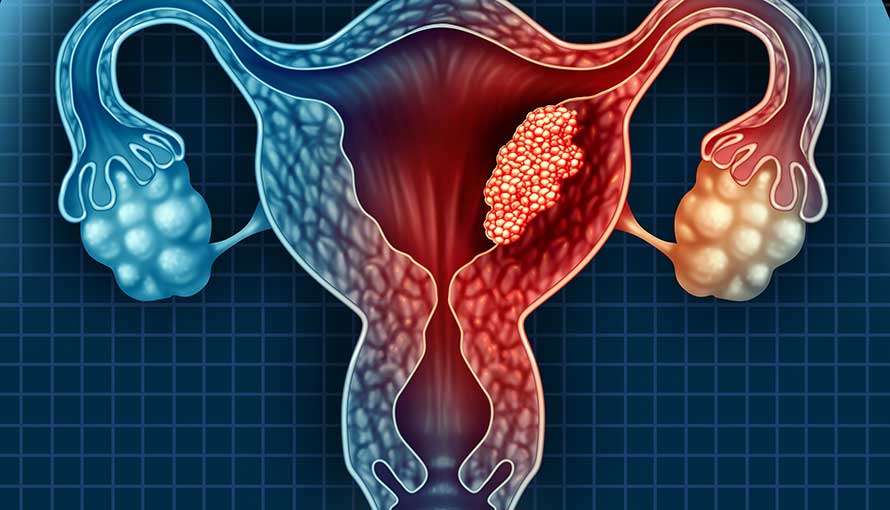
The uterus—a pear-shaped organ in the pelvis where pregnancy develops—has two main tissue layers. The inner lining is the endometrium, specialized tissue that thickens each month in response to hormones and sheds during menstruation if pregnancy doesn’t occur. The outer muscular wall is the myometrium. Endometrial cancer begins when cells in the endometrial lining develop genetic mutations causing uncontrolled growth.
Endometrial cancer can be divided into the following categories: Type I and Type II tumors. Type I tumors are FIGO Grade 1 endometrioid adenocarcinomas and are associated with unopposed estrogen stimulation. Type II tumors include FIGO Grade 3 endometrioid, serous, and clear cell carcinomas and are generally thought to be estrogen-independent. The incidence of Type I is 60–80% overall and that of Type II is 20% overall PubMed Central. This classification matters because Type I and Type II cancers have different causes, behaviors, and prognoses.
Type I endometrial cancers—the vast majority—develop from prolonged estrogen exposure without adequate progesterone balance. These cancers tend to be lower grade, slower growing, and present at earlier stages with better outcomes. They’re strongly linked to obesity, metabolic syndrome, and conditions creating hormonal imbalances. Type II cancers arise independently of estrogen exposure, often occur in older, thinner women, and tend to be more aggressive with poorer prognosis despite similar staging.
Age is a primary risk factor. Uterine cancer is most prevalent in women over age 50; the average age at time of diagnosis is 60 Texas Oncology. Most diagnoses occur in post menopausal women, though concerning trends show rising incidence in younger women. Overall incidence has risen in the last few decades as a consequence of the increase in the prevalence of its risk factors, mainly obesity and the aging of the population, and although diagnoses have increased across all age groups, the incidence rates have doubled in women under the age of 40 years nih. This younger-age increase parallels the obesity epidemic and rising rates of metabolic conditions.
The Estrogen Connection: Why Hormonal Balance Matters
Understanding endometrial cancer requires understanding the hormone estrogen’s role in the uterus. Each month during reproductive years, rising estrogen levels stimulate endometrial cells to multiply and thicken, preparing for potential pregnancy. Progesterone—released after ovulation—halts this growth and stabilizes the endometrium. If pregnancy doesn’t occur, hormone levels drop, triggering menstruation where the thickened lining sheds.
Problems arise when estrogen stimulates endometrial growth without progesterone’s counterbalancing effect—a situation called unopposed estrogen. Under continuous estrogen stimulation without progesterone, endometrial cells keep proliferating month after month. This chronic overgrowth creates endometrial hyperplasia—abnormal thickening of the uterine lining. Simple hyperplasia without atypical (abnormal-appearing) cells usually remains benign. But complex atypical hyperplasia—now termed endometrial intraepithelial neoplasia (EIN)—is precancerous, with substantial risk of progression to invasive cancer if untreated.
Multiple factors create unopposed estrogen exposure. Starting menstruation at a young age and going through menopause at a late age increases the exposure of the endometrium to estrogen and therefore increases the risk of endometrial cancer. The risk of endometrial cancer is higher if you have never been pregnant compared to having at least one pregnancy American Cancer Society. Early menarche (before age 12) and late menopause (after age 55) extend the years of monthly estrogen exposure. Never being pregnant means never experiencing pregnancy’s prolonged high progesterone state that protects against endometrial overgrowth.
Anovulation—failure to ovulate regularly—removes progesterone’s protective effect since progesterone production requires ovulation. Women with polycystic ovary syndrome (PCOS) often experience chronic anovulation. Females with PCOS had a significantly increased odds of developing endometrial cancer as compared to those without PCOS [OR, 4.07; 95% confidence interval (CI), 2.13-7.78; P<0.0001]. When postmenopausal subjects (age, >54 years) were excluded from the meta-analysis, the odds increased further (OR, 5.14; 95% CI, 3.22-8.21; P<0.00001) PubMed Central. Women with PCOS face up to five times higher endometrial cancer risk than women without PCOS.
Estrogen-only hormone replacement therapy poses significant risk. Estrogen-replacement therapy is given to improve symptoms of menopause. No progestin (another hormone) is given. This is called unopposed estrogen therapy. This can be given in the form of a pill, patch, or vaginal ring. It is a risk factor when the person taking it still has a uterus American Cancer Society. Women who still have a uterus should never take estrogen-only hormone therapy; combined estrogen-progestin therapy eliminates the excess cancer risk.
Obesity: The Number One Modifiable Risk Factor
Obesity stands as the strongest modifiable risk factor for endometrial cancer. Obesity is defined as body mass index (BMI) at or above 30 and can easily be determined with an online calculator. Excess adipose or fat tissue can increase a woman’s estrogen levels and increase the risk of endometrial cancer Texas Oncology. The relationship between excess weight and endometrial cancer is powerful and multifaceted.
The ovaries produce the most estrogen before menopause. But fat tissue can change a hormone called androgen into estrogen. Having more fat tissue can increase estrogen levels, especially after menopause, which increases the risk of endometrial cancer American Cancer Society. After menopause when ovaries stop producing estrogen, fat tissue becomes the primary estrogen source. Obese postmenopausal women have much higher circulating estrogen than lean postmenopausal women—estrogen that continuously stimulates endometrial growth without progesterone’s balance.
But estrogen isn’t the only mechanism. Studies show that BMI > 30 kg/m², prolonged duration of menses, nulliparity, presence of polycystic ovarian syndrome, and Lynch syndrome are the most common causes of EC in premenopausal women MDPI. Obesity creates insulin resistance where cells don’t respond normally to insulin, forcing the pancreas to produce more insulin. High insulin and insulin-like growth factor-1 (IGF-1) levels stimulate cell proliferation and inhibit normal cell death—changes that promote cancer development.
Chronic inflammation represents another pathway linking obesity to cancer. Visceral fat—deep abdominal fat surrounding organs—produces inflammatory molecules called cytokines that create a pro-cancer environment. Fat cells also produce altered levels of hormones like leptin (increased) and adiponectin (decreased) that affect cell growth regulation. The combination of excess estrogen, high insulin/IGF-1, and chronic inflammation creates multiple simultaneous pathways driving endometrial cancer development in obese women.
The cancer risk increases progressively with weight. Women with BMI 25-30 (overweight) have moderately increased risk; BMI 30-35 (class I obesity) has substantially higher risk; BMI over 40 (class III obesity) carries the highest risk. Some studies estimate that obesity accounts for 40-50% of endometrial cancer cases in the United States—making weight management a powerful prevention strategy.
Polycystic Ovary Syndrome: A Perfect Storm For Endometrial Risk
PCOS affects 4-18% of reproductive-aged women, making it the most common reproductive endocrine disorder. Women with conditions such as obesity, polycystic ovarian syndrome (PCOS), and type 2 diabetes can experience higher levels of estrogen than progesterone hormone, putting them at increased risk of developing Type 1 endometrial cancer Houston Methodist. Women with PCOS face multiple compounding risk factors that synergistically increase endometrial cancer risk.
The core problem in PCOS is hormonal imbalance—excess androgens (male hormones) interfere with normal ovulation. Chronic anovulation means no monthly progesterone surge to counterbalance estrogen. The endometrium experiences months or years of unopposed estrogen exposure, creating hyperplasia risk. Many women with PCOS have irregular periods with cycles lasting months or experience amenorrhea (absent periods) for extended intervals—periods during which endometrial tissue continually thickens without shedding.
PCOS strongly associates with insulin resistance independent of obesity, though obesity worsens insulin resistance severity. Insulin resistance is seen in 50–70% of women with PCOS. Metformin has been demonstrated to decrease the inflammatory state associated with obesity in women with PCOS, primarily via the presence of increased inflammatory markers (increased CRP, IL-6, IL-8) MDPI. High insulin promotes endometrial cell growth both directly and by increasing estrogen availability. Insulin also reduces production of sex hormone-binding globulin (SHBG), the protein that binds and inactivates sex hormones, resulting in more free (active) estrogen circulating.
Many women with PCOS are also obese, creating compounding risk. A woman with PCOS who is also obese faces elevated risk from multiple mechanisms operating simultaneously: anovulation creating unopposed estrogen, obesity generating excess estrogen from fat tissue, insulin resistance promoting cell proliferation, and chronic inflammation facilitating cancer development. This explains why PCOS increases endometrial cancer risk four to five-fold.
Treatment of PCOS can reduce endometrial cancer risk. Birth control pills—containing both estrogen and progestin—regulate menstrual cycles and provide progesterone’s protective effect. The progestin component prevents endometrial hyperplasia by counteracting estrogen stimulation. Metformin improves insulin sensitivity, potentially reducing cancer-promoting effects of hyperinsulinemia. Weight loss in obese women with PCOS addresses multiple risk factors simultaneously—reducing estrogen production from fat, improving insulin sensitivity, and decreasing inflammation.
Lynch Syndrome And Hereditary Endometrial Cancer
Most endometrial cancer is sporadic (not inherited), but approximately 5% of cases result from Lynch syndrome, also called hereditary non-polyposis colorectal cancer (HNPCC). Lynch syndrome is caused by inherited mutations in DNA mismatch repair genes (MLH1, MSH2, MSH6, PMS2, or EPCAM) that normally fix DNA copying errors. When these repair genes don’t function, errors accumulate in cells, dramatically increasing cancer risk.
Lynch syndrome or hereditary non-polyposis colon cancer (HNPCC) and Cowden syndrome are genetic conditions that increase the risk of endometrial cancer American Cancer Society. Women with Lynch syndrome face approximately 40-60% lifetime risk of endometrial cancer—far exceeding the 3% lifetime risk in the general population. Many women with Lynch syndrome develop endometrial cancer before age 50, often as their first cancer presentation even before developing the colorectal cancer the syndrome is named for.
Lynch syndrome warrants consideration when: a woman develops endometrial cancer before age 50; endometrial cancer occurs in someone with personal or family history of Lynch-associated cancers (colorectal, ovarian, stomach, small bowel, pancreatic, upper urinary tract, brain, sebaceous gland tumors); or multiple family members across generations have these cancers. Genetic testing and counseling can identify Lynch syndrome carriers.
Women diagnosed with Lynch syndrome need heightened surveillance and risk-reduction strategies. Options include: annual endometrial biopsies starting age 30-35 (though evidence for this is limited); prophylactic hysterectomy and bilateral salpingo-oophorectomy (removal of uterus, ovaries, and fallopian tubes) after childbearing is complete—this surgery eliminates endometrial and ovarian cancer risk while addressing colorectal cancer surveillance separately; and colonoscopy surveillance for colorectal cancer. The decision about prophylactic surgery requires careful discussion weighing cancer risk reduction against surgical risks and early menopause effects.
The Key Symptom: Abnormal Vaginal Bleeding
The single most important fact about endometrial cancer is that it typically produces symptoms early—symptoms that, when promptly evaluated, lead to diagnosis at curable stages. The most common symptom of endometrial cancer is abnormal uterine bleeding, especially bleeding after menopause or between periods. This early warning sign often prompts women to seek care, leading to earlier diagnosis and better outcomes Ovarian Cancer Research Alliance.
For postmenopausal women, any vaginal bleeding—even minimal spotting—is abnormal and demands immediate evaluation. The definition of menopause is twelve consecutive months without a menstrual period. After reaching that milestone, any vaginal bleeding represents abnormal bleeding requiring investigation. While many causes of postmenopausal bleeding are benign (atrophic vaginitis, polyps, hormone therapy effects), endometrial cancer must be ruled out. Approximately 10% of postmenopausal bleeding cases are caused by endometrial cancer.
For premenopausal women, abnormal bleeding manifests differently. In premenopausal women, irregular or heavy menstruation may indicate the disease, while other symptoms include pelvic pain, dyspareunia, and abnormal vaginal discharge nih. Warning patterns include: intermenstrual bleeding (bleeding between regular periods); menorrhagia (excessively heavy periods requiring pad/tampon changes hourly, lasting longer than 7 days, or passing large clots); prolonged bleeding (periods lasting 10+ days); and frequent irregular bleeding without recognizable cycle pattern.
The challenge in premenopausal women is distinguishing cancer-related bleeding from common benign causes like anovulatory cycles, fibroids, polyps, or perimenopause transition. The key is persistence—bleeding irregularities lasting months without improvement despite treatment for presumed benign causes warrant endometrial sampling to exclude cancer.
Other symptoms occur less commonly but still matter. Pelvic pain or pressure, though vague and nonspecific, can accompany endometrial cancer especially in more advanced disease. Pain during intercourse (dyspareunia) may signal tumor presence. Abnormal vaginal discharge—particularly if watery, blood-tinged, or foul-smelling—warrants evaluation. Unintentional weight loss combined with abnormal bleeding raises concern. Lower abdominal or back pain, difficulty urinating, or pelvic mass sensation can indicate advanced disease but are rare presenting symptoms.
Diagnosis: From Symptom To Confirmation
When abnormal bleeding prompts evaluation, the diagnostic pathway typically begins with pelvic examination and history. Since endometrial cancer typically causes symptoms, doctors can often detect it at an earlier stage, which usually means a better prognosis (chance of recovery). There are currently no preventive or early detection endometrial cancer screenings Johns Hopkins Medicine. Unlike breast, cervical, or colon cancer where screening detects disease in asymptomatic people, endometrial cancer diagnosis relies on evaluating symptomatic women.
The pelvic exam allows assessment of uterine size, shape, and any palpable masses. However, early endometrial cancer usually doesn’t enlarge the uterus or create palpable abnormalities—it’s a surface lining disease initially. Transvaginal ultrasound provides better information, measuring endometrial thickness and detecting structural abnormalities. In postmenopausal women, endometrial thickness under 4-5mm generally indicates benign bleeding causes, while thickness exceeding 5mm raises cancer concern. In premenopausal women, endometrial thickness varies with menstrual cycle, complicating ultrasound interpretation.
Definitive diagnosis requires endometrial tissue sampling. Office-based endometrial biopsy using a thin flexible catheter (Pipelle biopsy) can be performed without anesthesia, though it causes cramping. The catheter aspirates small tissue fragments for pathologic examination. Endometrial biopsy detects approximately 90% of endometrial cancers. If biopsy is inadequate (insufficient tissue obtained), nondiagnostic but clinical suspicion remains, or pathology shows atypical hyperplasia, hysteroscopy with dilation and curettage (D&C) may be performed. Hysteroscopy uses a thin telescope inserted through the cervix to visualize the uterine cavity, identify lesions, and obtain targeted biopsies under direct visualization.
Pathology examination classifies findings into: benign endometrium (normal or showing effects of hormones/inflammation); simple or complex hyperplasia without atypia (endometrial overgrowth without precancerous changes—managed with hormones, repeat biopsy to ensure resolution); atypical hyperplasia/EIN (precancerous changes—usually treated with hysterectomy due to cancer progression risk); or invasive carcinoma (cancer). If cancer is diagnosed, further staging evaluation with CT or MRI assesses disease extent beyond the uterus.
Prognosis And Survival: The Stage Makes The Difference
Endometrial cancer has relatively favorable overall survival compared to other gynecologic malignancies. According to data compiled by leading cancer organizations like the American Cancer Society, the overall 5-year relative survival rate for all stages of endometrial cancer combined is approximately 81% to 82%. This reflects significant advancements in diagnostic methods and treatment protocols over the years Massive Bio. This good overall survival reflects that most cases are diagnosed at early stages due to abnormal bleeding prompting timely evaluation.
Stage at diagnosis is the most critical prognostic factor. Most people with localized endometrial cancer have a good prognosis. According to SEER survival statistics, 95 percent of people diagnosed with localized endometrial cancer live at least five years, known as the five-year relative survival rate Myendometrialcancerteam. Localized disease—stage I, confined to the uterus—comprises the majority of diagnoses and carries excellent prognosis with appropriate treatment.
The International Federation of Gynecology and Obstetrics (FIGO) reports those diagnosed with stage I endometrial cancer before the cancer spreads outside the uterus, have a relative five-year survival rate of 85% to 95% Professor Andreas Obermair. Stage I subdivides into IA (tumor limited to inner half of myometrium) and IB (tumor invading outer half of myometrium), with IA having slightly better prognosis. Treatment typically involves total hysterectomy and bilateral salpingo-oophorectomy (removing uterus, cervix, ovaries, and fallopian tubes). Depending on tumor grade and depth of myometrial invasion, some stage I patients receive adjuvant radiation or chemotherapy, but many require surgery alone.
Regional disease—stage II (cervical involvement) and stage III (spread to pelvic/para-aortic lymph nodes, ovaries, vagina, or parametrium)—has intermediate survival around 69-77% at five years for stage II and 58-66% for stage IIIA-IIIB, dropping to around 47% for stage IIIC with lymph node involvement. Treatment combines surgery with radiation and often chemotherapy. Distant metastatic disease (stage IV—spread to bladder, bowel mucosa, or distant organs like lungs or liver) has five-year survival around 17-20%, requiring systemic chemotherapy as primary treatment with surgery and radiation for palliation.
Other prognostic factors beyond stage include: tumor grade (grade 1 well-differentiated tumors have better prognosis than grade 3 poorly differentiated tumors); histologic type (endometrioid has better prognosis than serous or clear cell); lymphovascular invasion presence; molecular subtype (recent molecular classification identifies four groups with different prognoses—POLE-mutated tumors have excellent outcomes, while p53-abnormal tumors behave more aggressively); and patient age and comorbidities.
Prevention And Risk Reduction
While endometrial cancer can’t always be prevented, multiple strategies reduce risk. Weight management stands paramount. Achieving and maintaining healthy body weight dramatically reduces endometrial cancer risk, with evidence suggesting even modest weight loss in obese women provides benefit. Physical activity, independent of weight loss, also reduces risk—aim for at least 150 minutes of moderate aerobic activity weekly.
Oral contraceptive use provides substantial long-term protection. Birth control pills combining estrogen and progestin reduce endometrial cancer risk by approximately 50% with 5-10 years of use, with protection persisting for decades after discontinuation. Even shorter-term use provides some benefit. Progestin-containing intrauterine devices (IUDs) also reduce risk, though evidence is less extensive than for oral contraceptives.
For women taking tamoxifen for breast cancer treatment, awareness matters. Tamoxifen acts as an anti-estrogen in breast tissue, but it acts like an estrogen in the uterus. The risk of developing endometrial cancer from tamoxifen is very low (less than 1% per year) American Cancer Society. Annual gynecologic exams and prompt reporting of any abnormal bleeding allow early detection if cancer develops. The breast cancer risk reduction benefits of tamoxifen far outweigh the small endometrial cancer risk for most women.
Women using hormone replacement therapy after menopause should take combined estrogen-progestin therapy if they have an intact uterus. The progestin component protects against endometrial hyperplasia and cancer. Women who’ve had hysterectomy can safely use estrogen-only therapy since they no longer have endometrial tissue at risk.
For women with Lynch syndrome, prophylactic hysterectomy and bilateral salpingo-oophorectomy after childbearing eliminates endometrial and ovarian cancer risk. This surgery is typically recommended around age 40-45 after genetic counseling and shared decision-making. Women choosing surveillance over surgery need annual endometrial sampling starting age 30-35, though this strategy’s effectiveness remains uncertain.
Managing PCOS reduces risk. Birth control pills regulate cycles and provide progesterone protection. Metformin improves insulin sensitivity. Weight loss in overweight/obese women with PCOS addresses multiple risk pathways. For women with PCOS who experience prolonged amenorrhea (months without periods), progestin withdrawal to induce shedding prevents endometrial buildup.
Frequently Asked Questions
Q1: I’m 48 and started having irregular periods. Is this menopause or could it be cancer? Perimenopause—the menopause transition typically beginning in the mid-to-late 40s—commonly causes irregular periods. However, any persistent bleeding abnormality deserves evaluation to exclude endometrial cancer, especially if you have risk factors like obesity, PCOS, or family history. Contact your gynecologist if irregular bleeding persists more than 3 months, becomes progressively heavier, or includes bleeding between periods. An office endometrial biopsy—a brief outpatient procedure—can distinguish benign perimenopausal changes from hyperplasia or cancer.
Q2: I’ve been postmenopausal for 5 years and had spotting last week. How urgent is this? Very urgent. Any vaginal bleeding after menopause is abnormal and requires prompt evaluation—contact your gynecologist within days, not weeks. While most postmenopausal bleeding has benign causes (atrophic vaginitis, polyps, or if you’re on hormone therapy), approximately 10% is caused by endometrial cancer. Early evaluation allows diagnosis at curable stages. Don’t delay hoping it resolves on its own—postmenopausal bleeding never represents normal menopause effects.
Q3: I have PCOS and haven’t had a period in 8 months. Should I be worried about cancer risk? Prolonged amenorrhea in PCOS is concerning because your endometrium may be continuously thickening under unopposed estrogen without periodic shedding. Contact your gynecologist to discuss inducing a withdrawal bleed with progestin and establishing regular cycle control. Options include birth control pills (providing both cycle regulation and contraception), cyclic progestin therapy to induce monthly periods, or progestin IUD for continuous endometrial suppression. These interventions prevent endometrial hyperplasia and reduce long-term cancer risk. If you have any abnormal bleeding when periods do occur, prompt evaluation with endometrial sampling is warranted.
Q4: My mother had endometrial cancer at age 62. Does this mean I need special screening? Having one first-degree relative with endometrial cancer modestly increases your risk, but routine screening isn’t currently recommended for average-risk women—even with family history—because symptom-prompted evaluation works well for early detection. However, if your mother developed endometrial cancer before age 50, or if multiple relatives have endometrial, colorectal, ovarian, or other Lynch-associated cancers, genetic counseling and testing for Lynch syndrome is appropriate. Focus on modifiable risk factors: maintain healthy weight, exercise regularly, and don’t use unopposed estrogen therapy. Report any abnormal bleeding promptly to your doctor.
Q5: I’m obese and trying to lose weight. How much weight loss actually reduces my cancer risk? Any weight loss helps, and you don’t need to reach ideal body weight to benefit. Studies suggest even 5-10% body weight reduction improves metabolic parameters and likely reduces cancer risk, though greater weight loss provides more substantial benefit. For a 200-pound woman, losing just 10-20 pounds (5-10% of body weight) improves insulin sensitivity and reduces inflammation. Sustained weight loss—maintaining lower weight long-term—matters more than rapid loss followed by regain. Focus on sustainable lifestyle changes: balanced nutrition, portion control, regular physical activity. If you have obesity-related conditions like diabetes or PCOS, weight loss also improves these conditions, further reducing cancer risk through multiple pathways.
Disclaimer
This article adapts publicly available information from reputable medical sources and cancer research organizations. This content is for informational and educational purposes only and does not constitute medical advice. ObserverVoice.com is a news and information platform — not a healthcare provider. Decisions about endometrial cancer screening, diagnosis, and treatment should be made in consultation with qualified gynecologists, gynecologic oncologists, and other healthcare professionals who can evaluate your individual symptoms, risk factors, family history, and overall health status. If you experience abnormal vaginal bleeding—especially postmenopausal bleeding—please consult with your healthcare provider promptly for proper evaluation.
References
- Johns Hopkins Medicine. Endometrial Cancer. https://www.hopkinsmedicine.org/health/conditions-and-diseases/endometrial-cancer
- American Cancer Society. Endometrial Cancer Risk Factors. https://www.cancer.org/cancer/types/endometrial-cancer/causes-risks-prevention/risk-factors.html
- PMC. Endometrial Cancer in Reproductive-Aged Females: Etiology and Pathogenesis. https://pmc.ncbi.nlm.nih.gov/articles/PMC11047839/
- PMC. Risk of endometrial cancer in patients with polycystic ovarian syndrome: A meta‑analysis. https://pmc.ncbi.nlm.nih.gov/articles/PMC10028221/
- Ovarian Cancer Research Alliance. Endometrial Cancer Guide: Symptoms & Treatment. https://ocrahope.org/for-patients/gynecologic-cancers/endometrial-cancer/
Observer Voice is the one stop site for National, International news, Sports, Editor’s Choice, Art/culture contents, Quotes and much more. We also cover historical contents. Historical contents includes World History, Indian History, and what happened today. The website also covers Entertainment across the India and World.

