

Takayasu Arteritis: The Rare Large Vessel Vasculitis Primarily Affecting Young Women

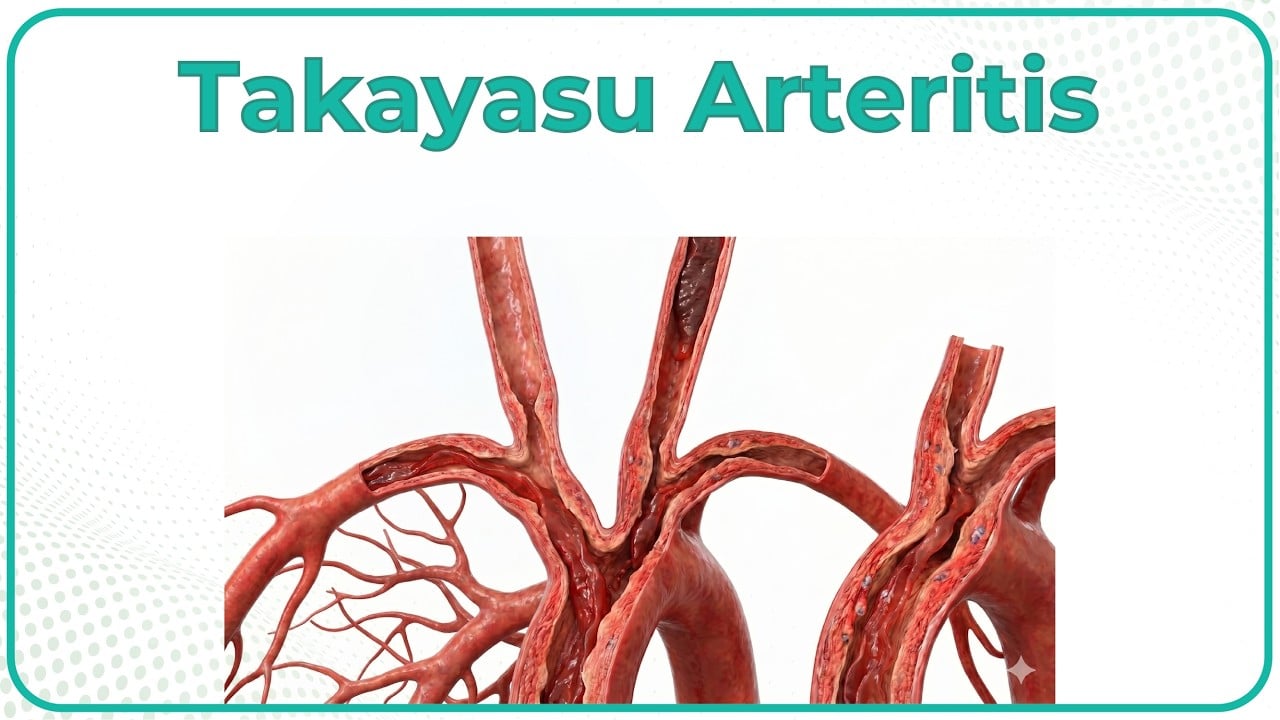
Most people have never heard of Takayasu arteritis. Yet for the young women it predominantly strikes, this rare inflammatory disease can silently destroy the body’s largest arteries long before symptoms become obvious. By the time a diagnosis arrives, significant and potentially irreversible vascular damage may already have occurred.
Takayasu arteritis belongs to a group of conditions called vasculitides — diseases characterised by inflammation of blood vessels. What sets it apart is its specific predilection for the aorta and its major branches, its striking pattern of affecting young women, and the diagnostic challenge it poses to even experienced clinicians. Greater awareness of this condition is urgently needed.
What Is Takayasu Arteritis?
Takayasu arteritis (TA) is a chronic inflammatory disease that targets large blood vessels — primarily the aorta, the body’s main artery, and the major arteries branching from it. The inflammation thickens, narrows, and sometimes completely blocks these vessels, reducing or eliminating blood flow to vital organs and limbs.
How the Disease Got Its Name
Japanese ophthalmologist Mikito Takayasu first described the condition in 1908. He reported unusual changes in the blood vessels of the retina in a young woman, changes caused by severely impaired blood flow to the eyes. Subsequent reports by colleagues Onishi and Kagoshima described similar patients who had absent pulses in their wrists — a hallmark feature that earned Takayasu arteritis the evocative nickname “pulseless disease.”
The condition is now recognised worldwide, though it remains significantly more prevalent in Asia, particularly Japan, India, China, and South Korea, as well as in Mexico and Central and South America.
The Aorta and Its Branches
Understanding which vessels Takayasu arteritis targets helps explain its wide range of consequences. The aorta is the body’s largest artery, originating from the heart and distributing blood to every major organ system. Its principal branches supply the brain, arms, kidneys, gut, and legs.
When inflammation strikes the aorta or these branches, the organs they serve begin to suffer from chronic ischaemia — insufficient blood supply. The consequences range from arm claudication and visual disturbance to stroke, heart failure, and hypertension, depending on which vessels are involved.
Who Does Takayasu Arteritis Affect?
Takayasu arteritis predominantly affects young women, typically between 10 and 40 years of age. Women account for approximately 80–90% of all reported cases globally. This strong female predominance — one of the most striking in all of medicine — suggests that sex hormones play a significant role in disease susceptibility and progression.
Global Distribution
While Takayasu arteritis occurs worldwide, its incidence varies considerably by geography. Japan and other East and Southeast Asian countries report the highest prevalence. India carries a particularly high burden, with Takayasu arteritis accounting for a substantial proportion of non-atherosclerotic renovascular hypertension in young people there.
Estimated incidence in Western countries is approximately 1–3 cases per million per year. However, many experts believe the true global incidence is considerably higher, as the disease frequently goes unrecognised for years before diagnosis.
The Diagnostic Delay Problem
One of the most significant challenges in Takayasu arteritis is the prolonged interval between symptom onset and diagnosis. Studies report an average diagnostic delay of one to three years in many centres. During this window, unchecked vascular inflammation can cause progressive narrowing and scarring of major arteries.
This delay reflects both the rarity of the condition and its highly variable early presentation, which mimics many commoner conditions including tuberculosis, rheumatic fever, and non-specific systemic illness.
What Causes Takayasu Arteritis?
The precise cause of Takayasu arteritis remains incompletely understood. Current evidence strongly supports an autoimmune mechanism, in which the body’s immune system mistakenly attacks the walls of large arteries.
Immune System Dysfunction
In Takayasu arteritis, immune cells — particularly T lymphocytes and macrophages — infiltrate the outer and middle layers of large artery walls. These cells release inflammatory molecules called cytokines, including tumour necrosis factor-alpha (TNF-α) and interleukin-6 (IL-6), that drive chronic arterial wall inflammation.
Over time, this inflammatory process causes the arterial wall to thicken and stiffen. The lumen — the channel inside the artery through which blood flows — progressively narrows in a process called stenosis. Some segments develop complete occlusion, while others develop aneurysms — abnormal outward ballooning of a weakened arterial wall.
Genetic Factors
Genetic predisposition plays a meaningful role in Takayasu arteritis susceptibility. Several human leukocyte antigen (HLA) gene variants — particularly HLA-B52 in Asian populations — associate strongly with disease risk. HLA genes regulate immune system function and shape how the body recognises and responds to potential threats.
Other genetic variants affecting immune cell function and cytokine production have been identified in research studies, further supporting the autoimmune basis of the disease.
Infectious Triggers
Some researchers hypothesise that an initial infectious trigger — perhaps Mycobacterium tuberculosis or other pathogens — may activate the immune response that subsequently targets arterial tissue in genetically susceptible individuals. The geographic overlap between tuberculosis-endemic regions and high Takayasu arteritis prevalence is frequently cited in support of this hypothesis. However, direct causation remains unproven.
Phases and Classification of Takayasu Arteritis
Takayasu arteritis follows a characteristic disease course with two broad phases, and clinicians use an anatomical classification to guide management.
The Early Systemic Phase
The early or pre-occlusive phase of Takayasu arteritis produces non-specific systemic symptoms reflecting active inflammation. Patients typically experience fever, fatigue, night sweats, weight loss, joint pain, and generalised malaise. These constitutional symptoms often lead clinicians toward diagnoses of tuberculosis, autoimmune conditions, or occult malignancy before the correct diagnosis emerges.
Identifying Takayasu arteritis during this early phase offers the best opportunity to suppress inflammation before permanent vascular damage occurs. Unfortunately, vascular imaging during this stage may not yet show the characteristic changes, further complicating early detection.
The Late Occlusive Phase
The late or occlusive phase develops as chronic inflammation leads to arterial narrowing, occlusion, and aneurysm formation. Systemic symptoms may subside or become less prominent during this phase, even as vascular damage continues to progress. Patients develop symptoms directly attributable to reduced blood flow in specific arterial territories.
Paradoxically, disease activity assessment is more challenging during this phase because the inflammatory markers that guide treatment may normalise even during ongoing vascular injury.
Anatomical Classification
The Numano classification divides Takayasu arteritis into five types based on which arterial segments are involved. Type I affects only the aortic arch and its branches. Type IIa involves the ascending aorta and arch. Type IIb extends involvement to the descending thoracic aorta. Type III includes the abdominal aorta and renal arteries. Type IV predominantly involves the abdominal aorta, while Type V represents the most extensive involvement, combining features of multiple types.
This classification guides imaging strategies, predicts likely clinical manifestations, and helps plan revascularisation procedures.
Recognising the Symptoms of Takayasu Arteritis
Symptoms of Takayasu arteritis vary considerably depending on disease phase, which arteries are involved, and the degree of vessel narrowing. This variability is a major contributor to the diagnostic delay many patients experience.
Systemic and Constitutional Symptoms
Fatigue, low-grade fever, and night sweats are common early symptoms that reflect active systemic inflammation. Weight loss, loss of appetite, and generalised body aches accompany the inflammatory state. Many patients also describe joint pain and skin rashes during early disease, further broadening the differential diagnosis.
These symptoms are easily attributed to more common conditions, which is why clinicians must maintain a high index of suspicion in young women presenting with unexplained systemic inflammation.
Symptoms From Upper Limb Involvement
Arm claudication — pain, weakness, or fatigue in the arms during activity — results from narrowing of the subclavian arteries that supply the upper limbs. Absent or diminished pulses at the wrist are a classic examination finding. Blood pressure differences between the two arms of more than 10 mmHg suggest subclavian artery stenosis and should always prompt further investigation.
Coolness, pallor, and numbness of the hands can occur in severe cases. Raynaud’s phenomenon — colour changes of the fingers in response to cold — sometimes develops when upper limb blood flow is significantly compromised.
Symptoms From Neurological Involvement
Carotid and vertebral artery involvement causes a range of neurological symptoms. Dizziness, visual disturbances, headaches, and fainting spells reflect reduced blood flow to the brain. Transient ischaemic attacks (TIAs) and completed strokes can occur when carotid stenosis is severe.
Some patients describe visual blurring or even transient loss of vision in one eye — amaurosis fugax — caused by insufficient blood supply to the retinal arteries. Tinnitus and hearing disturbances are occasionally reported.
Hypertension and Cardiac Symptoms
Renovascular hypertension — dangerously high blood pressure caused by renal artery stenosis — is one of the most important complications of Takayasu arteritis. Narrowing of the renal arteries activates the renin-angiotensin system, driving severe and often treatment-resistant hypertension. Controlling this blood pressure is critical to preventing stroke and heart failure.
Cardiac involvement includes aortic regurgitation — leaking of the aortic valve due to inflammation of the aortic root — and coronary arteritis causing angina or heart attack. Pulmonary artery involvement causes breathlessness and exercise intolerance.
Diagnosing Takayasu Arteritis
No single test confirms Takayasu arteritis. Diagnosis requires integrating clinical features, laboratory findings, and vascular imaging in a characteristic pattern.
Laboratory Tests
Blood tests reveal elevated inflammatory markers including erythrocyte sedimentation rate (ESR) and C-reactive protein (CRP) during active disease. A full blood count may show anaemia of chronic inflammation and elevated white cell count. Serum interleukin-6 levels correlate with disease activity in research settings.
Importantly, inflammatory markers can normalise even during ongoing vascular inflammation, which limits their reliability as sole indicators of disease activity. Autoimmune antibody testing — including antinuclear antibodies — is usually negative, helping distinguish Takayasu arteritis from other autoimmune conditions.
Vascular Imaging
Vascular imaging forms the cornerstone of Takayasu arteritis diagnosis and monitoring. Multiple modalities contribute complementary information.
CT angiography provides rapid, comprehensive visualisation of the entire aorta and its branches. It identifies arterial stenosis, occlusion, aneurysm, and characteristic mural thickening with high spatial resolution. MR angiography offers similar anatomical information without ionising radiation, making it preferable for young patients requiring repeated imaging surveillance.
Positron emission tomography (PET) combined with CT (PET-CT) detects metabolically active arterial wall inflammation using a radioactive glucose tracer. PET-CT is particularly valuable for assessing disease activity and detecting early inflammation before structural changes are visible on conventional angiography.
Conventional Angiography and Ultrasound
Conventional catheter angiography remains the gold standard for detailed vessel assessment before revascularisation procedures. Doppler ultrasound of the carotid and subclavian arteries provides accessible, non-invasive assessment of vessel narrowing and flow disturbance. The characteristic “macaroni sign” — circumferential arterial wall thickening visible on ultrasound — is highly specific for Takayasu arteritis.
Diagnostic Criteria
The American College of Rheumatology (ACR) 1990 classification criteria require at least three of six features: onset before age 40, limb claudication, decreased brachial artery pulse, blood pressure difference greater than 10 mmHg between arms, bruit over subclavian arteries or aorta, and angiographic evidence of arterial narrowing. These criteria achieve a sensitivity of approximately 91% in published series.
Treatment of Takayasu Arteritis
Treatment aims to suppress inflammation, prevent disease progression, manage complications, and improve quality of life. A specialist rheumatologist leads management, often in collaboration with vascular surgeons, cardiologists, and nephrologists.
Corticosteroids as First-Line Therapy
High-dose corticosteroids — typically prednisolone at 1 mg per kilogram of body weight per day — remain the cornerstone of initial treatment for active Takayasu arteritis. Corticosteroids rapidly suppress arterial wall inflammation and relieve systemic symptoms in the majority of patients. Treatment continues for several weeks before a slow, carefully supervised dose reduction begins.
Unfortunately, approximately 50% of patients experience disease relapse during or after steroid tapering. Many require prolonged low-dose corticosteroid maintenance, exposing them to the long-term adverse effects of steroid therapy including osteoporosis, weight gain, diabetes, and infection susceptibility.
Steroid-Sparing Immunosuppressive Agents
To reduce corticosteroid exposure, rheumatologists add immunosuppressive medications that dampen the immune response through different mechanisms. Methotrexate, azathioprine, mycophenolate mofetil, and leflunomide all serve as steroid-sparing agents in Takayasu arteritis.
These medications help maintain disease remission at lower corticosteroid doses, reducing cumulative steroid toxicity. Regular blood monitoring checks for medication side effects including bone marrow suppression and liver toxicity. Response to steroid-sparing agents varies between individuals.
Biological Therapies
Biological therapies targeting specific inflammatory molecules have transformed treatment for patients with refractory Takayasu arteritis. Tocilizumab — an interleukin-6 receptor inhibitor — has demonstrated significant efficacy in achieving and maintaining remission, particularly in patients who fail conventional immunosuppression. The phase III GIACTA trial showed tocilizumab’s superiority over placebo in sustaining remission during corticosteroid tapering.
TNF-alpha inhibitors including infliximab, etanercept, and adalimumab also show benefit in case series and small trials. Abatacept, which modulates T cell activation, represents another emerging option. Biological therapy selection considers disease severity, prior treatment response, comorbidities, and availability.
Vascular Interventions and Surgery
When arterial stenosis causes severe symptoms despite medical management, vascular interventions restore blood flow and protect organ function.
Percutaneous Transluminal Angioplasty
Percutaneous transluminal angioplasty (PTA) — inflating a small balloon inside a narrowed artery through a catheter — is the preferred initial revascularisation approach for many stenotic lesions. Stenting, which places a metal scaffold inside the artery to maintain its opening, may complement angioplasty for certain vessel types.
The optimal timing of intervention requires careful consideration. Performing revascularisation during active inflammation carries higher rates of restenosis — re-narrowing of the treated vessel. Most experts recommend suppressing disease activity medically before planning elective vascular procedures.
Surgical Bypass
Open surgical bypass grafting — creating a new route for blood to flow around a blocked or severely narrowed arterial segment — offers more durable results than angioplasty for some lesion types. Bypass surgery is particularly considered for long-segment occlusions, carotid artery disease causing neurological symptoms, and severe renovascular hypertension from renal artery stenosis.
Surgical outcomes improve significantly when patients are in remission at the time of operation.
Managing Aneurysms
Aortic aneurysms complicating Takayasu arteritis require close surveillance imaging and elective surgical repair when size thresholds are reached. Aneurysm rupture is rare but potentially fatal. The decision to operate balances aneurysm rupture risk against surgical risk in the context of ongoing systemic inflammation and immunosuppression.
Living With Takayasu Arteritis
Takayasu arteritis is a chronic, relapsing condition that requires long-term specialist follow-up and significant lifestyle adaptation.
Monitoring Disease Activity
Regular clinical review, laboratory testing, and vascular imaging form the framework of ongoing monitoring. Clinicians assess symptoms, blood pressure in both arms, peripheral pulses, and inflammatory markers at each visit. Interval imaging — typically every one to two years, or sooner with symptom change — tracks disease stability and detects new or worsening vascular lesions.
Standardised disease activity scores such as the Indian Takayasu Activity Score (ITAS) and Physician Global Assessment help quantify disease status and guide treatment decisions objectively.
Cardiovascular Risk Management
Beyond controlling inflammation, managing cardiovascular risk factors is essential in Takayasu arteritis. Hypertension — extremely common in this condition — requires aggressive treatment with antihypertensive medications. Measuring blood pressure accurately requires using the arm with the higher reading, or using leg blood pressure if both arms are affected by subclavian stenosis.
Statins, which reduce cholesterol and carry anti-inflammatory vascular properties, are increasingly used in Takayasu arteritis management. Antiplatelet therapy with low-dose aspirin may reduce the risk of thrombotic events in selected patients.
Pregnancy Considerations
Pregnancy in Takayasu arteritis requires careful multidisciplinary planning and management. Active disease during pregnancy associates with increased risks including hypertension, pre-eclampsia, fetal growth restriction, and maternal vascular complications. Ideally, conception should occur during sustained remission with medications compatible with pregnancy.
Immunosuppressive medications require careful review before conception, as some agents — including methotrexate — are teratogenic and must be stopped well before attempting pregnancy. Close joint management between rheumatology, maternal-fetal medicine, and cardiology specialists optimises outcomes for both mother and baby.
Frequently Asked Questions
Is Takayasu arteritis life-threatening?
Takayasu arteritis can cause life-threatening complications if it goes undiagnosed or untreated. Severe complications include stroke from carotid artery stenosis, heart failure from aortic regurgitation, aortic aneurysm rupture, and hypertensive crises from renal artery involvement. However, with early diagnosis, appropriate immunosuppressive treatment, and specialist monitoring, many people achieve good disease control and a meaningful quality of life. Prognosis has improved considerably over recent decades with advances in treatment.
Why does Takayasu arteritis predominantly affect young women?
The precise reason for the striking female predominance in Takayasu arteritis is not fully understood. Sex hormones — particularly oestrogen — are thought to influence immune system regulation and vascular inflammation in ways that increase susceptibility in women during reproductive years. Genetic factors, including HLA variants more prevalent in women, likely also contribute. Research into the hormonal and immunological mechanisms underlying this sex difference remains an active area of investigation.
How is Takayasu arteritis different from other types of vasculitis?
Takayasu arteritis specifically targets large vessels — the aorta and its major branches — in contrast to other vasculitides that affect medium or small vessels. Its demographic profile, primarily affecting young women, differs markedly from giant cell arteritis, which primarily affects people over 50. Other vasculitides such as ANCA-associated vasculitis predominantly affect small vessels and cause different patterns of organ damage. The anatomical scale of involvement and the age-sex profile distinguish Takayasu arteritis within the broader vasculitis family.
Can Takayasu arteritis be cured?
There is currently no cure for Takayasu arteritis. The disease tends to follow a chronic, relapsing course requiring long-term immunosuppressive management. However, many patients achieve sustained clinical remission — a state of low or absent disease activity — with appropriate treatment. During remission, disease progression halts and quality of life improves substantially. Biological therapies have significantly expanded treatment options for patients with refractory disease who do not respond to conventional immunosuppression.
What happens if Takayasu arteritis goes untreated?
Untreated Takayasu arteritis allows uncontrolled arterial wall inflammation to progress steadily, causing worsening stenosis, complete arterial occlusion, and aneurysm formation. The consequences include stroke, limb ischaemia, irreversible kidney damage, hypertensive heart failure, and visual loss. Long-term untreated disease carries significant mortality risk from these vascular complications. Early treatment dramatically reduces the risk of irreversible organ damage and preserves long-term vascular function.
Is Takayasu arteritis hereditary?
Takayasu arteritis is not directly inherited in a simple Mendelian pattern, but genetic factors influence susceptibility meaningfully. Specific HLA gene variants — particularly HLA-B52:01 — confer elevated risk in East Asian populations. Other immune-regulatory gene variants have been identified in genome-wide association studies. First-degree relatives of affected individuals carry a modestly higher risk than the general population, though the absolute risk remains low. Genetic testing is not currently part of routine clinical management.
Conclusion
Takayasu arteritis remains one of medicine’s most complex diagnostic and management challenges. Its ability to mimic common conditions, its silent arterial destruction during early phases, and its predilection for young women in their most productive years make it a condition that demands greater medical and public awareness.
The last two decades have brought remarkable advances — from high-resolution vascular imaging to biological therapies targeting the precise inflammatory molecules driving arterial damage. These advances have genuinely transformed outcomes for many people living with this condition. Yet earlier diagnosis remains the most powerful tool available. Recognising the subtle early signs of Takayasu arteritis — unexplained systemic inflammation, blood pressure differences between arms, or weak pulses in a young woman — and acting promptly can prevent years of avoidable damage and preserve a lifetime of vascular health.
References
- Giant cell arteritis is a chronic autoimmune inflammatory disease affecting medium and large blood vessels, causing inflammation, artery wall thickening, and blood vessel narrowing.
- Polymyalgia rheumatica symptoms can seem like normal aging stiffness, but the sudden onset and severity distinguish PMR from gradual age-related changes.
- Giant Cell Arteritis causes variable symptoms depending on which arteries are involved.
Disclaimer:
This article is for general informational purposes only and does not constitute medical advice. Always consult a qualified healthcare professional for personalised diagnosis, treatment, or health guidance.
Observer Voice is the one stop site for National, International news, Sports, Editor’s Choice, Art/culture contents, Quotes and much more. We also cover historical contents. Historical contents includes World History, Indian History, and what happened today. The website also covers Entertainment across the India and World.

