

Health impact assessment: Judging how policies affect population health
Health impact assessment: Predicting policies' effects before harm occurs

City planners in Jakarta proposed a massive highway expansion to ease traffic congestion. Engineers presented impressive diagrams showing faster commute times and economic benefits. Everyone celebrated—until Dr. Sari stood up.
“Have we assessed the health impact?” she asked.
The room went silent. Health impact? This was about roads, not hospitals.
Dr. Sari explained that the new highway would demolish green spaces where families exercised, increase air pollution in residential neighborhoods, force pedestrians to take dangerous routes across busy intersections, and displace low-income communities to areas with poor access to healthcare. “We need a health impact assessment before proceeding,” she insisted.
Six months later, the revised plan included pedestrian bridges, protected bike lanes, expanded green corridors, and affordable housing with healthcare access. The health impact assessment had transformed a purely infrastructure project into one that protected—even improved—community health.
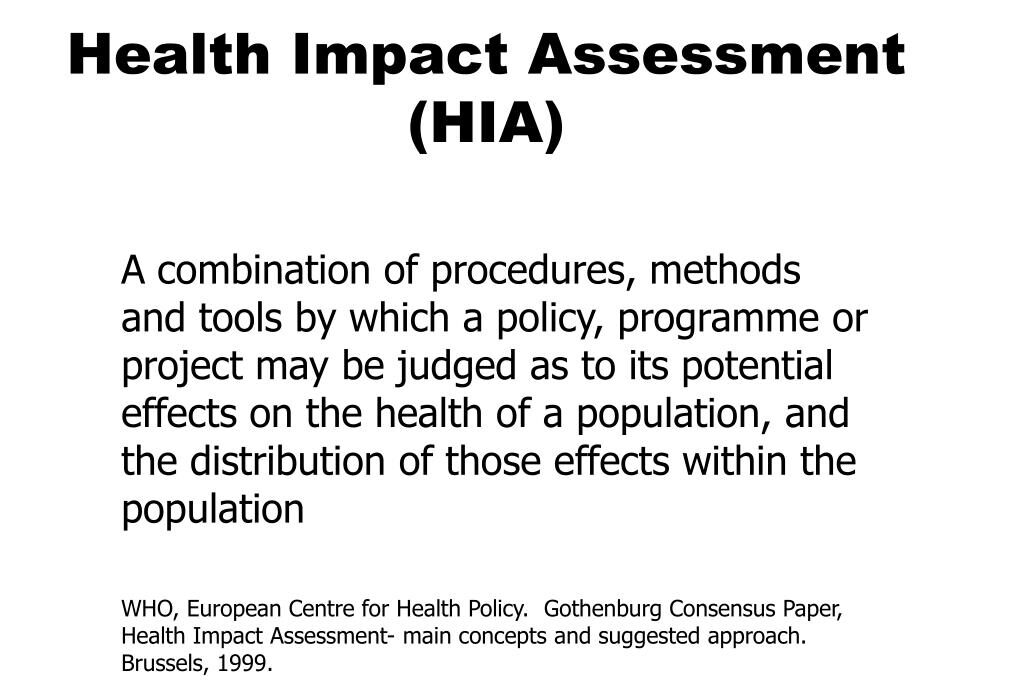
This is health impact assessment (HIA) in action. According to WHO, HIA is a practical approach used to systematically judge the potential health effects of a policy, strategy, plan, programme or project on a population, particularly on vulnerable or disadvantaged groups.
WHO’s Q&A on health impact assessment (HIA) and its role in decision making explains how this tool supports better policies. For more on environmental health factors, see our articles on urban planning and sustainable development at ObserverVoice.com.
What HIA Accomplishes
HIA can help to identify the distribution of those effects within the population, generate evidence for proper action to avoid and mitigate sometimes unintended health risks, and promote health opportunities. Recommendations are produced for decision-makers and stakeholders, and a framework for monitoring and evaluating changes in health is offered as part of performance management and sustainable development.
The approach can be applied in diverse economic sectors and uses quantitative, qualitative and participatory techniques. Examples include clean energy options, master plans, planning for green spaces, transportation and urban growth projects, zoning for walkability, air pollution and noise reduction interventions, climate change mitigation and adaptation policies.
HIA provides a way to engage with members of the public affected by a particular proposal. It also helps decision-makers and Member States make choices about alternatives and improvements to prevent disease or injury and to actively promote health.
The methodology is based on four interlinked values: democracy (promoting stakeholder participation), equity (considering the impact on the whole population), sustainable development and the ethical use of evidence.
Real-World Impact Across Sectors
HIA is a consolidated approach to estimate and anticipate the consequences of policies, plans, programmes and projects. Economic sectors such as transport, agriculture, energy, waste and housing have profound impacts on health.
For instance, transport is a major factor in traffic injuries, air pollution and noise, and healthy transport policies can help reduce these risks, as well as promoting walking and cycling. In agriculture, fertilizers and pesticides may boost crop yields, but wise use is important to protect farm workers and consumers from excessive chemical exposure.
Health impact assessment can be a valuable tool for helping to develop policy and assisting decision-makers in these and other areas. WHO’s activities include estimating environmental health impacts and supporting policymaking and evidence-gathering for health impact assessment.
Related health topics include air pollution, sustainable development, and urban health. For more on environmental health, see our article on pollution impact at ObserverVoice.com.
WHO’s Tools and Resources
WHO is responding by building capacity, providing tools and initiatives in health impact assessment to dynamically improve health and well-being across sectors. WHO supports the health sector to effectively engage in urban health, working across sectors to help cities to produce contextual, meaningful and actionable information on the health, economic and climate impacts of urban environments.
WHO supports decision-makers to equip themselves to accept, reject or amend policy alternatives, in the knowledge that they have the best available health evidence before them. Health risk assessment techniques have been applied in the air pollution field for many years.
WHO provides several powerful free tools. AirQ+ quantifies the health burden and impact of air pollution. CLIMAQ-H is software assessing the outcomes of climate-driven policies and supporting decision-making. HEAT for walking and cycling is a web-based tool used to estimate the health and economic impacts of increased walking and cycling. All tools are downloadable for free.
WHO provides comprehensive health impact assessment (HIA) tools and methods for practitioners worldwide. Additional resources are available from WHO-EURO’s Health Impact Assessment team.
Latest Developments
July 2024 WHO announced the 2024 updated Compendium of interventions on environmental health. The same month WHO published Compendium of WHO and other UN guidance in health and environment, 2024 update, a comprehensive collection of available guidance.
January 2024 WHO published Compendium of WHO and other UN guidance on health and environment: version with International Classification of Health Intervention (ICHI) codes where each guidance is coded using the International Classification of Health Interventions.
October 2024 WHO published Monitoring progress on universal health coverage and the health-related Sustainable Development Goals in the South-East Asia Region – 2024 update. September 2022 WHO published Regulations and Laws promoting health and well-being goals (SDG3) in WHO South-East Asian countries.
WHO created helpful infographics showing 500 actions to take, including 190 measures to create healthier environments in health care, 500 actions including 20 practical steps to improve schools and child-care settings, and 500 actions including 22 ways to promote food safety and healthier, more sustainable diets.
Calculating Health and Economic Impacts
WHO produced educational videos explaining technical aspects of health impact assessment. Topics include how to calculate economic loss or benefits based on air pollution reduction efforts, the two different ways Years of Life Lost (YLLs) are calculated, the disability adjusted life year calculator and Global Exposure Model updates, and the path air pollution particles take through our body.
WHO’s Technical Teams
WHO’s Environment, Climate Change and Health department coordinates comprehensive work. The Air Quality, Energy and Health team provides specialized expertise. WHO-EURO maintains dedicated Health Impact Assessment programs.
Dr. Sari’s insistence on health impact assessment in Jakarta saved lives. Air pollution modeling showed the original highway plan would have caused an estimated 300 premature deaths annually from respiratory disease and cardiovascular problems. The revised plan actually improved air quality by reducing congestion and encouraging active transport.
“Health impact assessment isn’t anti-development,” Dr. Sari explained. “It’s pro-smart development. It ensures we build cities that make people healthier, not sicker. Every major policy decision should ask: how will this affect health? HIA gives us the evidence to answer that question before it’s too late.”
For more information, visit WHO’s health impact assessment topic page or explore related content at ObserverVoice.com.
Frequently Asked Questions (FAQs)
Health impact assessment (HIA) is a practical approach used to systematically judge the potential health effects of a policy, strategy, plan, programme or project on a population, particularly on vulnerable or disadvantaged groups. HIA identifies distribution of effects, generates evidence to avoid unintended health risks, and promotes health opportunities. It’s based on four values: democracy (stakeholder participation), equity (whole population impact), sustainable development, and ethical use of evidence. WHO provides Q&A on HIA’s role in decision making.
WHO provides free downloadable tools: AirQ+ quantifies health burden and impact of air pollution; CLIMAQ-H assesses outcomes of climate-driven policies; HEAT for walking and cycling estimates health and economic impacts of increased active transport. WHO offers comprehensive health impact assessment (HIA) tools and methods. Additional resources available from WHO-EURO Health Impact Assessment team.
HIA can be applied in diverse economic sectors using quantitative, qualitative and participatory techniques. Examples include clean energy options, master plans, green space planning, transportation and urban growth projects, zoning for walkability, air pollution and noise reduction interventions, climate change mitigation and adaptation policies. Economic sectors like transport, agriculture, energy, waste and housing have profound health impacts. WHO supports estimating environmental health impacts across sectors. Related topics: air pollution, urban health.
July 2024 WHO published Compendium of WHO and other UN guidance in health and environment, 2024 update, a comprehensive collection of available guidance. January 2024 WHO published Compendium with ICHI codes. October 2024 WHO published Monitoring progress on UHC and health-related SDGs in South-East Asia Region. September 2022 WHO published Regulations and Laws promoting SDG3 in South-East Asian countries. WHO’s Environment, Climate Change and Health department coordinates work.
WHO builds capacity and provides tools and initiatives in health impact assessment to dynamically improve health and well-being across sectors. WHO supports health sector to effectively engage in urban health, working across sectors to help cities produce contextual, meaningful and actionable information on health, economic and climate impacts. WHO supports decision-makers to accept, reject or amend policy alternatives with best available health evidence. Activities include supporting policymaking and evidence-gathering for HIA. Related: sustainable development.
- WHO Health Impact Assessment Topic Page
- AirQ+ Tool – Quantifying Health Burden of Air Pollution
- HEAT for Walking and Cycling – Health Economic Assessment Tool
- Compendium of WHO and other UN Guidance in Health and Environment, 2024 Update
- WHO-EURO Health Impact Assessment Team
Disclaimer: This article is an adaptation of publicly available information from WHO’s Health impact assessment health topic page (WHO, Geneva. Licence: CC BYNC-SA 3.0 IGO). WHO is not responsible for the content or accuracy of this adaptation. This content is for informational and educational purposes
only and does not constitute medical advice. ObserverVoice.com is a news and information platform
— not a healthcare provider.
Observer Voice is the one stop site for National, International news, Sports, Editor’s Choice, Art/culture contents, Quotes and much more. We also cover historical contents. Historical contents includes World History, Indian History, and what happened today. The website also covers Entertainment across the India and World.

