

Cabinet Approves Three Major Initiatives: Rabi MSP Increase, Rs 1.86 Lakh Crore Green Corridor, and Delhi AI Traffic System

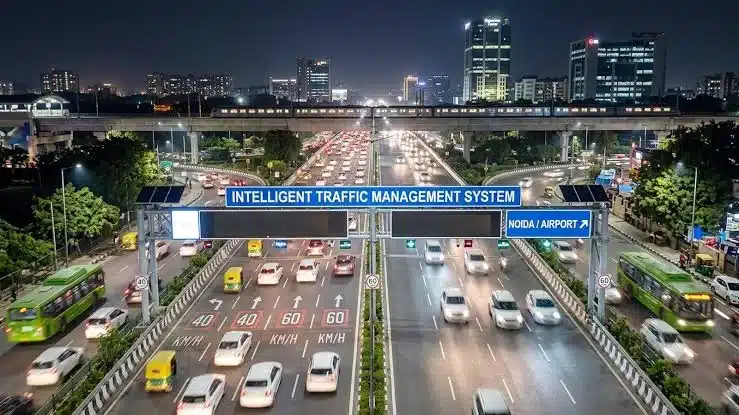
NEW DELHI: The Union Cabinet approved three significant initiatives on Wednesday, focusing on agriculture, power infrastructure, and urban mobility. These measures include higher Minimum Support Prices (MSP) for Rabi crops for the 2027-28 marketing season, a ₹1.86 lakh crore Green Energy Corridor Phase-III scheme, and a ₹1,789.52 crore Intelligent Traffic Management System for Delhi.
The MSP increases for Rabi crops range from ₹25 per quintal for wheat to ₹675 for safflower. The Green Energy Corridor-III scheme aims to enhance intra-state transmission networks and add 50 GWh of battery storage capacity. The new traffic management system will cover 42 corridors in Delhi, utilizing adaptive signals and real-time data.
Rabi MSP raised; safflower gets highest increase
The Cabinet Committee on Economic Affairs (CCEA) has approved increased MSPs for all six mandated Rabi crops for the upcoming marketing season. The government stated that this decision will ensure better prices for farmers and promote crop diversification. Safflower received the highest increase of ₹675 per quintal, bringing its MSP to ₹7,215. Other crops, such as rapeseed and mustard, saw an increase of ₹413 to ₹6,613 per quintal, while lentil (masur) increased by ₹390 to ₹7,390.
The MSP for gram rose by ₹83 to ₹5,958 per quintal, barley by ₹136 to ₹2,286, and wheat by ₹25 to ₹2,610. The government noted that these new MSPs align with its commitment to set MSP at least 1.5 times the all-India weighted average cost of production. The expected margin over production costs is highest for wheat at 106%, followed by rapeseed and mustard at 96%.
Green Energy Corridor-III approved
The Cabinet also sanctioned the third phase of the Green Energy Corridor scheme, with a total budget of ₹1,86,405 crore. This initiative aims to strengthen intra-state transmission systems and facilitate the evacuation of up to 135 GW of renewable energy across states and Union territories. The scheme is set for completion by FY2032-33 and includes ₹1,36,378 crore for transmission systems and ₹50,000 crore for 50 GWh of Battery Energy Storage Systems (BESS).
The Centre will provide ₹54,082 crore in financial support under this scheme. This assistance is designed to offset intra-state transmission charges and help maintain lower power costs for consumers. The battery storage component will enhance grid flexibility and address issues related to renewable energy intermittency.
AI-enabled traffic management system
The Cabinet has approved a ₹1,789.52 crore Intelligent Traffic Management System (ITMS) for Delhi. This system aims to leverage real-time data and technology to improve traffic management across the city. Union Minister Ashwini Vaishnaw described the initiative as one that will “add brain” to Delhi’s traffic management.
The project will cover 42 traffic corridors and will be implemented in three phases over 24 months, followed by five years of operation and maintenance. The system will utilize adaptive traffic signals that adjust timings based on current traffic conditions and will prioritize emergency vehicles. Delhi currently has around 71 lakh active registered vehicles, with vehicle growth outpacing road infrastructure expansion.
The ITMS will include 1,092 adaptive traffic control locations and 1,029 enforcement locations. Automated systems will monitor violations such as speeding and illegal parking. Traffic Command and Control Centres will integrate traffic regulation and information dissemination, supported by a Data Centre and Disaster Recovery infrastructure.
Observer Voice is the one stop site for National, International news, Sports, Editor’s Choice, Art/culture contents, Quotes and much more. We also cover historical contents. Historical contents includes World History, Indian History, and what happened today. The website also covers Entertainment across the India and World.
Follow Us on Twitter, Instagram, Facebook, & LinkedIn

