

Thyroid Cancer: Why It’s One of the Most Survivable Cancers (and What to Know)

When Sarah felt a small, hard lump on the right side of her neck while applying moisturizer one evening, she initially dismissed it. But the lump persisted, and within a week, she noticed her voice had become slightly hoarse. Her doctor ordered an ultrasound and biopsy, which revealed papillary thyroid cancer—the most common type. “I was terrified when I heard the word ‘cancer,'” Sarah recalled. “But my endocrinologist immediately reassured me: ‘If you have to get cancer, this is one of the best ones to have.’ I didn’t understand what she meant until I learned about the survival rates.” Sarah underwent thyroid removal surgery and radioactive iodine treatment. Five years later, she remains cancer-free and leads a completely normal life with daily thyroid hormone replacement.
Thyroid cancer has a five-year survival rate of over 98%. This means that you’re about just as likely to live for at least five years as someone who doesn’t have thyroid cancer. Usually, the cancer stays in remission. Remission means there are no signs or symptoms of cancer Cleveland Clinic. Sarah’s experience reflects a crucial reality: thyroid cancer, while frightening to hear, is one of the most treatable and curable cancers. Understanding why thyroid cancer has such excellent outcomes, recognizing the warning signs, knowing the different types, and learning about highly effective treatments can transform a cancer diagnosis from a death sentence to a manageable—and usually curable—medical condition.
Understanding Thyroid Cancer: Location And Function
The thyroid is a small, butterfly-shaped gland located at the base of your neck, just below the Adam’s apple and in front of the windpipe (trachea). Despite its small size—typically weighing only 15-20 grams—the thyroid plays enormous roles in regulating metabolism, heart rate, body temperature, blood pressure, and calcium levels through hormone production. The thyroid produces two main hormones: thyroxine (T4) and triiodothyronine (T3), which control how cells use energy. The thyroid also produces calcitonin, which helps regulate calcium levels in blood and bones.
Thyroid cancer develops when cells in the thyroid gland undergo genetic mutations causing uncontrolled growth. These abnormal cells form nodules or tumors. The good news is that most thyroid nodules—lumps found in the thyroid—are benign (non-cancerous). Studies suggest only about 5-10% of thyroid nodules are cancerous. However, thyroid nodules are extremely common, found in up to 50% of people by age 60 through ultrasound imaging, though most never cause problems.
About 44,000 people in the U.S. develop cancer in their thyroid glands each year. Most are treatable and curable. Thyroid cancer is often diagnosed at a younger age than most other adult cancers. The average age when a person is diagnosed with thyroid cancer is 51. This cancer is almost 3 times more common in women than in men American Cancer Society. The female predominance is striking—women account for roughly 75% of thyroid cancer cases. The reasons aren’t entirely clear but likely involve hormonal factors, particularly estrogen, and possibly differences in immune system function.
Racial and ethnic patterns exist as well. Thyroid cancer incidence is highest in white populations, followed by Asian/Pacific Islander, Hispanic, and Black populations. Until recently, thyroid cancer incidence was rising faster than any other cancer in the United States, though this primarily reflected improved detection rather than a true epidemic. Increasingly sensitive imaging technologies were finding small thyroid cancers that might never have caused symptoms or harm—a phenomenon called overdiagnosis that has led to more conservative diagnostic criteria.
Why Thyroid Cancer Is So Survivable: The Biology Behind The Numbers
Multiple factors converge to make thyroid cancer one of the most survivable cancers. The overall five-year relative survival rate for thyroid cancer is 98.5 percent. The National Cancer Institute SEER Program further bases the survival rate for thyroid cancers on how far the cancer has spread: Localized cancer hasn’t spread outside of the thyroid. The five-year survival rate for localized thyroid cancer is about 99.9 percent. Regional cancer has spread from the thyroid area to nearby lymph nodes. The five-year survival rate for regional thyroid cancer is about 98.3 percent. Distant cancer has spread to structures that are further away from the thyroid. The five-year survival rate for distant thyroid cancer is about 53.5 percent City of Hope.
The first factor is tumor biology. Most thyroid cancers—particularly papillary and follicular types—are inherently slow-growing and well-differentiated. Well-differentiated means cancer cells resemble normal thyroid cells and retain some normal cellular functions, including the unique ability to absorb iodine. This biological characteristic becomes crucial for treatment, as radioactive iodine can selectively target and destroy thyroid cancer cells while sparing other tissues. Unlike aggressive cancers that rapidly invade and metastasize, most thyroid cancers grow slowly over years, providing extended windows for detection and intervention.
The second factor is anatomical accessibility. The thyroid sits superficially in the neck, making lumps and enlargement easily visible and palpable. You or your doctor can literally feel thyroid abnormalities during routine examination. This surface location also makes thyroid surgery relatively straightforward compared to cancers deep in the body requiring complex surgical approaches. Neck imaging with ultrasound is inexpensive, non-invasive, and highly sensitive for detecting thyroid nodules—enabling early detection before cancers become advanced.
The third factor is highly effective treatment. Thyroid cancer responds exceptionally well to surgery, which removes the tumor and often cures the disease. For differentiated thyroid cancers (papillary and follicular), post-surgical radioactive iodine therapy can eliminate any remaining cancer cells since thyroid cells uniquely concentrate iodine. This one-two punch—surgery plus radioactive iodine—achieves cure rates approaching 100% for early-stage disease. Even when thyroid cancer spreads to lymph nodes, aggressive surgical removal combined with radioactive iodine often achieves long-term remission.
The fourth factor is age-related prognosis. A 2015 study evaluated survival rates for thyroid cancer by age. It found that the mortality rate progressively increases the older someone is Medical News Today. Thyroid cancer diagnosed in younger patients—particularly those under 45-55—has extraordinarily favorable prognosis, with near-100% cure rates for localized disease. The staging system for differentiated thyroid cancer actually incorporates age, with patients under 55 classified as stage I or II regardless of tumor size or lymph node involvement, reflecting the excellent outcomes in this age group.
The fifth factor is effective surveillance and long-term management. After treatment, patients undergo regular monitoring with blood tests (thyroglobulin—a tumor marker), ultrasound imaging, and whole-body radioiodine scans when indicated. Recurrences can be detected early and treated effectively. Thyroid hormone replacement therapy—required after thyroidectomy—also provides a treatment advantage: keeping TSH (thyroid-stimulating hormone) suppressed reduces cancer recurrence risk by depriving any remaining cancer cells of growth signals.
Types Of Thyroid Cancer: From Excellent To Aggressive
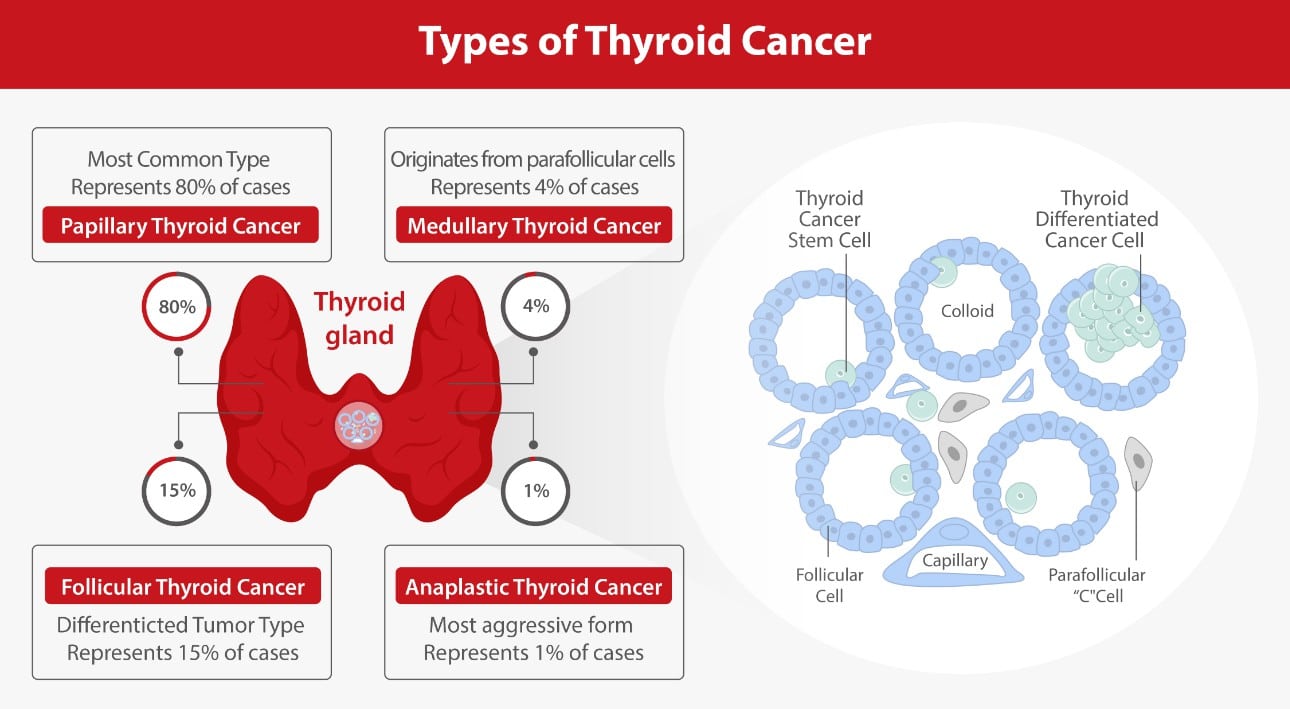
Not all thyroid cancers behave identically. Classification matters because prognosis and treatment differ substantially between types. Healthcare providers classify thyroid cancer based on the type of cells from which the cancer grows. The most common types of thyroid cancer include: Papillary: Up to 90% of thyroid cancers are papillary Cleveland Clinic. Understanding your specific type helps frame realistic expectations.
Papillary thyroid cancer (PTC) comprises 80-90% of all thyroid cancers and carries the most favorable prognosis. Overall, papillary and follicular thyroid cancers have the highest survival rates, especially if the cancer is detected early. Up to 80% of thyroid cancer cases are papillary thyroid cancer. The survival rates for thyroid cancer vary by the type and stage of the cancer. For instance, early stage papillary thyroid cancer has a 5-year survival rate of more than 99% Healthline. PTC tends to grow very slowly, often over years or decades. It frequently spreads to lymph nodes in the neck but less commonly metastasizes to distant organs. Even when lymph node spread occurs, prognosis remains excellent with appropriate treatment. Many small papillary cancers are discovered incidentally during imaging for other reasons and might never have caused problems if left undetected.
Follicular thyroid cancer (FTC) accounts for 10-15% of cases and also has excellent prognosis, though slightly more aggressive than papillary cancer. Follicular cancer tends to invade blood vessels more readily than papillary cancer and is more likely to spread to distant organs—particularly lungs and bones—though this still occurs in a minority of cases. Like papillary cancer, follicular cancer absorbs iodine, making radioactive iodine therapy effective. Five-year survival for localized follicular cancer exceeds 99%.
Hürthle cell carcinoma is considered a variant of follicular cancer, comprising about 3% of cases. It behaves similarly to follicular cancer but sometimes doesn’t absorb radioactive iodine as effectively, potentially limiting one treatment option. Prognosis remains favorable, though slightly worse than standard follicular cancer.
Medullary thyroid cancer (MTC) accounts for 3-4% of cases and differs biologically from papillary and follicular cancers. MTC arises from C-cells that produce calcitonin rather than from thyroid hormone-producing cells. This means MTC doesn’t absorb iodine, so radioactive iodine therapy is ineffective. MTC can be hereditary (about 25% of cases, associated with genetic syndromes like Multiple Endocrine Neoplasia type 2) or sporadic. Prognosis for MTC is intermediate—better than anaplastic but worse than papillary/follicular. Five-year survival ranges from 75-95% depending on stage and whether disease is hereditary or sporadic.
Anaplastic thyroid cancer (ATC) represents less than 2% of cases but is the most aggressive thyroid malignancy. Late stage anaplastic thyroid cancer has a 5-year survival rate of only 4% Healthline. ATC consists of undifferentiated cells that grow and spread rapidly. Most patients present with advanced disease—large neck masses causing breathing or swallowing difficulty. ATC doesn’t respond to radioactive iodine and is often resistant to conventional treatments. However, recent advances with targeted therapies and immunotherapy are improving outcomes for some ATC patients. The rarity of ATC means it accounts for disproportionate thyroid cancer mortality despite representing only 1-2% of cases.
Symptoms: What To Watch For
Many thyroid cancers produce no symptoms initially, discovered incidentally during imaging for other reasons or found during routine neck examination. When symptoms do occur, they relate to the tumor’s size and location. Patients usually notice a lump or nodule in and around their neck, or a change in their voice, which prompts them to get it checked out by their doctor. Other thyroid cancers are found during a routine checkup. At times, thyroid cancer is found when people have imaging tests like computed tomography (CT) scans or ultrasounds for another condition Winship Cancer Institute.
The most common symptom is a palpable neck lump or nodule. You might feel a firm, painless lump on one side of your neck, usually in the lower front portion near the collarbone. The lump may be discovered by you while shaving, applying makeup or lotion, or wearing tight collars. Sometimes family members or friends notice neck asymmetry before you do. Most thyroid nodules are benign, but any persistent neck lump warrants medical evaluation. The nodule may be visible in the mirror, particularly when swallowing, as thyroid masses move up and down with swallowing.
Voice changes, particularly hoarseness or weak voice, can signal thyroid cancer, especially if the tumor is large or growing posteriorly toward the recurrent laryngeal nerve controlling the vocal cords. Persistent hoarseness lasting more than 2-3 weeks without obvious cause (like recent cold or voice overuse) requires evaluation. The voice change is typically gradual and progressive rather than sudden.
Difficulty swallowing (dysphagia) or a sensation of something stuck in the throat occurs when tumors enlarge enough to compress the esophagus. You might notice difficulty with solid foods initially, progressing to liquids with very large tumors. Neck or throat pain—particularly pain radiating to the ears—can occur with larger tumors or aggressive cancers invading surrounding structures. Most early thyroid cancers cause no pain.
Swollen lymph nodes in the neck suggest cancer spread beyond the thyroid. Lymph nodes feel like firm, rubbery lumps along the sides of the neck. Persistent cough unrelated to respiratory infection may occur with large thyroid masses irritating the trachea. Breathing difficulty or noisy breathing (stridor) signals significant tracheal compression requiring urgent evaluation.
It’s crucial to note that most people with thyroid nodules have no symptoms. The nodules are discovered incidentally during carotid ultrasounds, CT scans of chest or neck performed for trauma or other reasons, or routine physical examination. Additionally, all these symptoms—lumps, hoarseness, swallowing difficulty—more commonly result from benign conditions than cancer. However, persistent symptoms warrant evaluation to determine the cause.
Diagnosis: From Nodule Detection To Cancer Confirmation
Diagnostic evaluation typically begins when a thyroid nodule is detected—either through symptoms, physical examination, or incidental imaging. The first test is usually thyroid function tests (TSH, free T4) to assess whether the thyroid is functioning normally. Most thyroid cancers occur in patients with normal thyroid function (euthyroid). Abnormal function doesn’t exclude cancer but does influence management.
Thyroid ultrasound represents the gold standard imaging modality for evaluating thyroid nodules. Ultrasound reveals nodule size, composition (solid, cystic, mixed), borders (smooth vs. irregular), calcifications, blood flow, and relationship to surrounding structures. Certain ultrasound features raise cancer suspicion: solid composition, irregular margins, taller-than-wide shape, microcalcifications, increased internal blood flow, and extension beyond thyroid capsule. Ultrasound also evaluates lymph nodes for concerning features suggesting metastases.
Fine needle aspiration (FNA) biopsy is the definitive test for diagnosing thyroid cancer. Performed in an outpatient setting under ultrasound guidance, FNA uses a thin needle to extract cells from the nodule for microscopic examination. The procedure causes minimal discomfort—typically less painful than blood draws—and requires no anesthesia. Results are reported using the Bethesda System: benign, indeterminate (atypia of undetermined significance, follicular neoplasm, suspicious for malignancy), or malignant. Clearly benign nodules may be monitored with ultrasound surveillance. Clearly malignant nodules proceed to surgery. Indeterminate nodules may undergo molecular testing, repeat biopsy, or surgery depending on clinical factors.
Molecular testing analyzes genetic mutations and gene expression patterns in biopsy samples to refine cancer risk assessment for indeterminate nodules. Tests like Afirma Gene Expression Classifier or ThyroSeq can help avoid unnecessary surgery for benign nodules while identifying high-risk nodules requiring treatment.
Once cancer is diagnosed, staging evaluation determines extent of disease. Neck ultrasound evaluates lymph nodes. Chest CT assesses for lung metastases. For medullary thyroid cancer, blood tests for calcitonin and CEA levels help assess disease burden. Patients with medullary cancer also undergo genetic testing for hereditary syndromes. For aggressive cancers or extensive disease, PET/CT scans may be performed. Complete staging guides treatment planning and prognostic assessment.
Treatment: Surgery Plus Radioactive Iodine
Surgery forms the cornerstone of thyroid cancer treatment. Surgery is a common treatment option for thyroid cancer. Depending on the patient’s specific thyroid cancer diagnosis, type and stage, the care team may recommend one of the surgery types listed below City of Hope. The extent of surgery depends on tumor size, type, and lymph node involvement.
Lobectomy (hemithyroidectomy) removes one thyroid lobe plus the isthmus (connecting tissue). This approach may be appropriate for small (<4 cm), low-risk papillary cancers confined to one lobe without lymph node involvement. Lobectomy preserves the remaining thyroid lobe, potentially maintaining normal thyroid function without requiring lifelong hormone replacement. However, lobectomy precludes post-operative radioactive iodine therapy and makes surveillance more challenging since remaining thyroid tissue can produce thyroglobulin (the tumor marker used to detect recurrence).
Total thyroidectomy removes the entire thyroid gland and is the most common surgery for thyroid cancer. Benefits include: enabling radioactive iodine therapy post-operatively; simplifying surveillance since any detectable thyroglobulin suggests recurrence; reducing recurrence risk by removing all tissue where cancer could develop; and treating bilateral disease or aggressive cancers. Total thyroidectomy requires lifelong thyroid hormone replacement, but this is easily managed with daily levothyroxine pills.
Neck dissection removes lymph nodes when cancer has spread beyond the thyroid. Central neck dissection removes lymph nodes in the central compartment around the trachea and esophagus. Lateral neck dissection removes lymph nodes along the sides of the neck. Extent of dissection depends on which lymph node groups harbor cancer based on pre-operative imaging and intra-operative findings.
Thyroid surgery carries several potential complications. Hoarseness or loss of voice. If the voice box (larynx) is irritated at any point during the surgery, or if the nerves to the vocal cords are damaged, this can occur. This side effect may be temporary or permanent. Damage to the parathyroid glands. These are small glands located behind the thyroid that control calcium in the body. If they become damaged, it can affect calcium levels in the blood, which may lead to muscle spasms, numbness and tingling Winship Cancer Institute. Temporary hoarseness occurs in 5-10% of patients, permanent vocal cord paralysis in <2%. Parathyroid damage causing low calcium affects 20-30% temporarily, <2% permanently. Bleeding and infection are rare. Experienced thyroid surgeons have significantly lower complication rates.
For differentiated thyroid cancers (papillary, follicular) with certain high-risk features—large tumors, lymph node involvement, aggressive variants, distant metastases—radioactive iodine (RAI) therapy follows surgery. Radioactive iodine is taken in capsule form, then travels through the blood to collect in thyroid cells and thyroid cancer cells. The thyroid gland absorbs nearly all the iodine in the blood, so when a large dose of radioactive iodine is taken, the radiation can destroy the thyroid gland and cancer cells with little effect on the rest of the body City of Hope.
RAI treatment typically occurs 4-6 weeks post-surgery. Patients swallow a radioactive iodine capsule (iodine-131). The radioactive iodine concentrates in any remaining thyroid tissue or thyroid cancer cells and destroys them through radiation. Patients must follow a low-iodine diet for 1-2 weeks before treatment to maximize RAI uptake. After swallowing the capsule, radiation safety precautions are necessary—limiting close contact with others, especially children and pregnant women, for several days until radiation levels decline. Side effects include temporary salivary gland swelling, taste changes, nausea, and dry mouth. Long-term risks include minor increased risk of secondary cancers with high cumulative doses.
For low-risk, small papillary cancers without high-risk features, surgery alone may be sufficient without RAI therapy. This “less is more” approach, supported by recent studies, avoids RAI side effects while maintaining excellent outcomes.
For medullary and anaplastic thyroid cancers that don’t absorb iodine, treatment relies on surgery plus newer therapies. Targeted therapies like cabozantinib and vandetanib treat advanced medullary cancer by blocking specific molecular pathways. Anaplastic cancer may be treated with combinations of targeted therapy, immunotherapy, chemotherapy, and radiation. External beam radiation therapy treats unresectable tumors, post-operative disease when margins are positive, or symptomatic metastases.
Life After Thyroid Cancer: Hormone Replacement And Surveillance
Following total thyroidectomy, patients require lifelong thyroid hormone replacement with levothyroxine (synthetic T4). The dosage is adjusted to maintain TSH levels in the low-normal or slightly suppressed range. For cancer patients, TSH suppression provides therapeutic benefit since TSH stimulates thyroid cell growth—keeping TSH low reduces recurrence risk. Blood tests monitor thyroid hormone levels initially every 6-12 weeks until optimal dosage is established, then annually. Most patients feel completely normal on appropriate hormone replacement.
Long-term surveillance monitors for recurrence using multiple tools. Blood tests for thyroglobulin—a protein produced only by thyroid cells—serve as a sensitive tumor marker. After total thyroidectomy and RAI ablation, thyroglobulin should be undetectable. Any detectable or rising thyroglobulin suggests recurrent disease. Neck ultrasound performed every 6-12 months detects structural recurrence in the thyroid bed or lymph nodes. Whole-body radioiodine scans may be performed periodically to detect iodine-avid recurrences. For medullary cancer, calcitonin and CEA levels are monitored.
Most recurrences occur within the first 5-10 years, but late recurrences beyond 20 years can occur with thyroid cancer. Fortunately, even recurrences are often curable with additional surgery, repeat radioactive iodine, or other targeted treatments. The excellent long-term survival means many thyroid cancer survivors live decades after diagnosis, requiring lifelong surveillance but enjoying normal quality of life.
Risk Factors: Who Gets Thyroid Cancer And Why
Several factors increase thyroid cancer risk. Radiation exposure to the head and neck—particularly during childhood—substantially increases risk. Historical radiation treatments for acne, enlarged tonsils, or other conditions caused thyroid cancer clusters. Survivors of atomic bomb exposure and nuclear accidents (Chernobyl, Fukushima) have elevated rates. Medical radiation like multiple CT scans accumulates exposure, though the risk from appropriate diagnostic imaging is small.
Family history matters, especially for medullary thyroid cancer where 25% of cases are hereditary. Having a first-degree relative with thyroid cancer doubles your risk. Certain genetic syndromes—familial adenomatous polyposis, Cowden syndrome, Carney complex, Multiple Endocrine Neoplasia 2—carry substantially elevated thyroid cancer risk. Genetic counseling and testing should be offered to medullary cancer patients to identify hereditary cases requiring family screening.
Iodine intake influences thyroid cancer types. Iodine deficiency increases follicular and anaplastic cancer risk while iodine sufficiency shifts distribution toward papillary cancer (which has better prognosis). Most developed countries have adequate dietary iodine through iodized salt. Being female dramatically increases risk—the 3:1 female predominance likely reflects hormonal influences. Estrogen may promote thyroid cancer development, though mechanisms aren’t fully understood. Obesity, particularly in women, modestly increases risk.
Pre-existing thyroid conditions—benign nodules, goiter, thyroiditis—slightly increase cancer risk, though the vast majority of people with these conditions never develop cancer. Age factors in as well, with incidence peaking in the 40s-50s for women and slightly later for men.
Frequently Asked Questions
Q1: I have a thyroid nodule. Does this mean I have cancer? Most likely not. Thyroid nodules are extremely common—found in up to 50% of people by age 60—but only 5-10% are cancerous. The vast majority are benign colloid nodules, follicular adenomas, or cysts. Your doctor will evaluate the nodule with ultrasound and possibly biopsy to determine whether it’s benign or concerning for cancer. Ultrasound features help risk-stratify nodules: purely cystic nodules are almost always benign, while solid nodules with irregular borders, microcalcifications, or taller-than-wide shape are higher risk. Fine needle aspiration biopsy provides definitive diagnosis. Many benign nodules can simply be monitored with periodic ultrasound rather than requiring surgery.
Q2: If thyroid cancer has such good survival, why do some people still die from it? The excellent overall survival statistics are driven by the 80-90% of patients with papillary or follicular cancer diagnosed at early stages. However, the rare aggressive subtypes—particularly anaplastic thyroid cancer (1-2% of cases)—account for disproportionate mortality. Anaplastic cancer is extremely aggressive with poor prognosis. Additionally, even differentiated cancers that present with extensive distant metastases (lungs, bones, brain) have much worse outcomes—five-year survival drops to around 50-55% for distant disease. Older patients (over 70-80) with thyroid cancer also have worse outcomes. Fortunately, these worst-case scenarios represent a small minority of total cases, but they explain why some patients still die from thyroid cancer despite generally favorable statistics.
Q3: I had my thyroid removed for cancer. Will I feel normal taking thyroid hormone pills? Most patients feel completely normal on appropriate levothyroxine replacement. The key is finding the right dose for you through blood test monitoring. Some patients initially experience fatigue, weight changes, or temperature sensitivity while dosage is being optimized. Once stable on the correct dose—which may take several months to establish—the vast majority of patients report feeling no different than before surgery. Take your pill consistently every morning on an empty stomach (30-60 minutes before breakfast), as food and certain medications interfere with absorption. Some patients require dosage adjustments over time due to weight changes, pregnancy, or aging. Annual monitoring ensures your hormone levels remain optimal.
Q4: Can I prevent thyroid cancer or detect it earlier? There’s no proven screening test for thyroid cancer in average-risk people, and routine screening isn’t recommended because it leads to overdiagnosis of small cancers that might never cause harm. Prevention focuses on avoiding unnecessary radiation exposure—particularly to the head and neck in children—and maintaining adequate dietary iodine through iodized salt. If you have risk factors (family history, genetic syndrome, prior radiation exposure), discuss with your doctor whether surveillance neck ultrasounds are appropriate. The best “early detection” is self-awareness: regularly feel your neck for lumps and see your doctor promptly for persistent neck masses, hoarseness, or swallowing difficulty. Most thyroid cancers are discovered at curable stages even without formal screening programs.
Q5: I had thyroid cancer 10 years ago and was told I’m cured. Do I still need follow-up? Yes, lifelong surveillance is recommended even many years after treatment. While most recurrences occur within 5-10 years, late recurrences beyond 10-20 years can happen with thyroid cancer more often than with many other cancers. Continue annual monitoring with thyroglobulin blood tests and periodic neck ultrasounds. The frequency may decrease over time if you remain disease-free, but complete discontinuation of surveillance isn’t recommended. The good news is that even late recurrences are usually treatable. Additionally, long-term follow-up ensures your thyroid hormone replacement remains properly dosed and monitors for potential long-term treatment effects or second cancers, which occur at slightly elevated rates in thyroid cancer survivors.
Disclaimer
This article adapts publicly available information from reputable medical sources and cancer research organizations. This content is for informational and educational purposes only and does not constitute medical advice. ObserverVoice.com is a news and information platform — not a healthcare provider. Decisions about thyroid cancer screening, diagnosis, and treatment should be made in consultation with qualified endocrinologists, surgeons, oncologists, and other healthcare professionals who can evaluate your individual tumor characteristics, stage, risk factors, and overall health status. If you have symptoms suggestive of thyroid disease or have been diagnosed with a thyroid nodule or thyroid cancer, please consult with your healthcare team promptly to discuss appropriate evaluation and treatment options.
References
- American Cancer Society. Thyroid Cancer Survival Rates. https://www.cancer.org/cancer/types/thyroid-cancer/detection-diagnosis-staging/survival-rates.html
- SEER. Cancer of the Thyroid – Cancer Stat Facts. https://seer.cancer.gov/statfacts/html/thyro.html
- Healthline. Thyroid Cancer Survival Rate by Type and Stage. https://www.healthline.com/health/cancer/thyroid-cancer-survival-rate
- Cleveland Clinic. Thyroid Cancer: Types, Symptoms, Causes & Treatment. https://my.clevelandclinic.org/health/diseases/12210-thyroid-cancer
- Winship Cancer Institute. Thyroid Cancer Outcomes. https://winshipcancer.emory.edu/cancer-types-and-treatments/thyroid-cancer/outcomes.php
Observer Voice is the one stop site for National, International news, Sports, Editor’s Choice, Art/culture contents, Quotes and much more. We also cover historical contents. Historical contents includes World History, Indian History, and what happened today. The website also covers Entertainment across the India and World.

