

Budget 2026 Insights: Raghuram Rajan Advocates for Long-Term Vision to Enhance Resilience and Sustain Growth

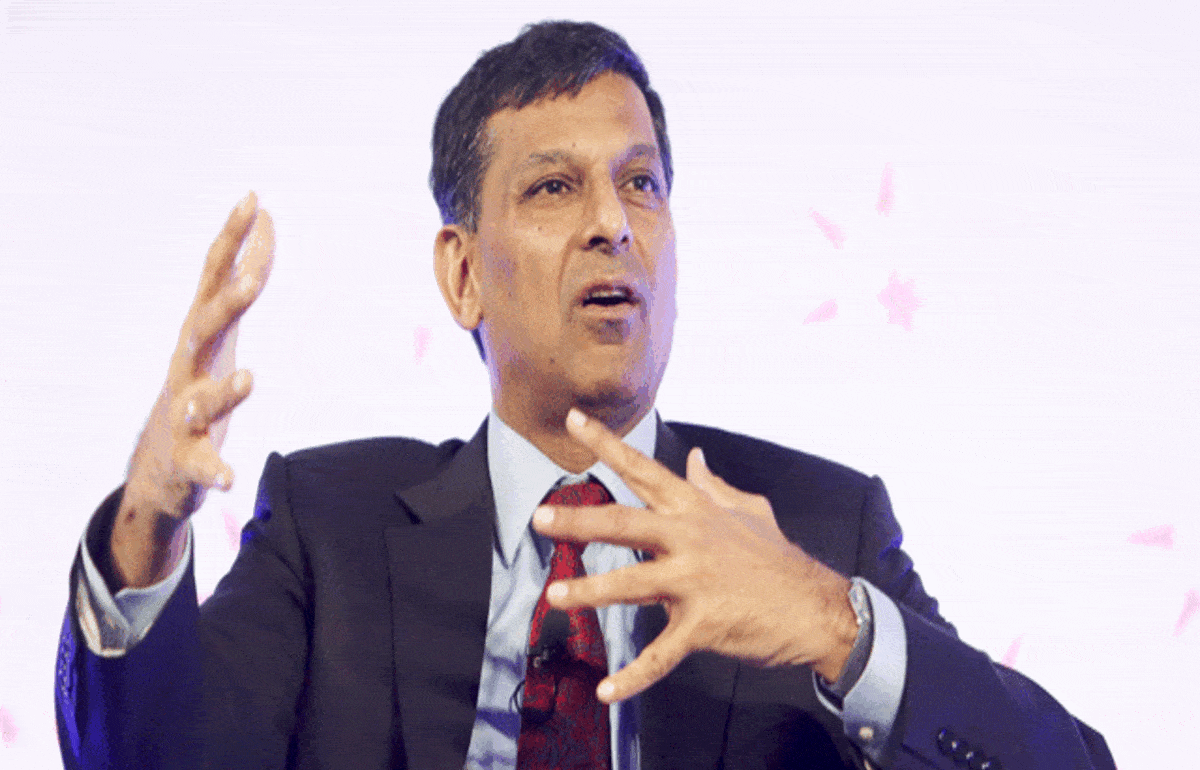
Former Reserve Bank of India Governor Raghuram Rajan has called for a transformative approach to the upcoming Union Budget, urging it to be rooted in a long-term vision that enhances the resilience and independence of the Indian economy. In a recent interview, Rajan emphasized the need for the budget to align with a strategic roadmap that extends beyond annual fiscal exercises. He warned of the precarious global economic landscape while highlighting the opportunities presented by advancements in artificial intelligence. Rajan expressed optimism that Finance Minister Nirmala Sitharaman’s budget, set to be unveiled on February 1, would reflect these priorities.
Long-Term Vision for Economic Resilience
Raghuram Rajan believes that India’s upcoming Union Budget should not merely serve as a short-term fiscal tool but should instead be integrated with a broader strategic vision. He pointed out that the country has historically engaged in five-year plans, yet the budgets often lack alignment with these long-term objectives. Rajan stated, “I think it should be integrated with a longer-term vision. How do we become more resilient, more independent as an economy, but also fast growing?” He underscored the importance of sustained efforts to achieve these goals, especially in light of the current global economic challenges.
Rajan’s remarks come at a time when the world is facing significant risks, and he noted that India must be cautious about its reliance on a limited number of external partners. He highlighted the absence of a nearby, affluent market, apart from India itself, which necessitates careful economic positioning. The former RBI governor expressed hope that the forthcoming budget would take steps toward enhancing India’s economic independence while fostering growth.
Opportunities Amid Global Challenges
In his interview, Rajan acknowledged the potential benefits arising from substantial investments in artificial intelligence. He pointed out that while these advancements present positive opportunities, they also come with risks, particularly if India becomes overly dependent on a narrow set of partners. He emphasized the need for India to diversify its economic relationships, particularly with neighboring countries such as Bangladesh, Sri Lanka, and Nepal.
Rajan also addressed the potential impact of escalating trade tensions with the United States. He advised that India should focus on internal reforms to boost its growth trajectory, rather than getting distracted by external pressures. He recalled the significant reforms undertaken in the 1990s and early 2000s and suggested that it is time to reignite that reform momentum. Rajan believes that identifying measures capable of adding two percentage points or more to India’s growth rate should be a priority.
Diversifying Supply Chains and Economic Relationships
Rajan highlighted the current global uncertainty, which he believes presents an opportunity for India to reintegrate itself into global supply chains. He noted that India’s geographical position and its complex relationship with China limit its natural embedding in these chains. To address this, he stressed the importance of diversifying supply chains, not only with China but also with regions such as Europe, Australia, Canada, and the Middle East.
He acknowledged that while India may have missed previous opportunities, it now has a chance to catch up in various sectors, including manufacturing and services. Rajan urged policymakers to think systematically about expanding India’s presence in these areas. He argued that credible reforms could attract more foreign direct investment and deepen India’s integration into global supply chains, ultimately benefiting the economy.
Quality of Growth and Sustainable Investments
While celebrating India as the fastest-growing large economy, Rajan raised concerns about the quality of that growth, particularly regarding infrastructure development. He pointed out that not every city has the capacity to effectively implement metro systems, cautioning that some investments may not yield long-term benefits. He emphasized the need for public infrastructure projects to be carefully planned to ensure they can be utilized effectively.
Rajan also warned against pursuing growth that generates only short-term momentum, particularly in the housing sector. He noted that not all housing projects can be effectively utilized, even in a country with significant unmet demand. He urged policymakers to be cautious about investments that do not contribute to sustainable growth, advocating for a more measured approach to economic development.
Observer Voice is the one stop site for National, International news, Sports, Editor’s Choice, Art/culture contents, Quotes and much more. We also cover historical contents. Historical contents includes World History, Indian History, and what happened today. The website also covers Entertainment across the India and World.
Follow Us on Twitter, Instagram, Facebook, & LinkedIn

