

Strategies in Budget 2026 to Shield India’s Growth from Trump’s Tariff War

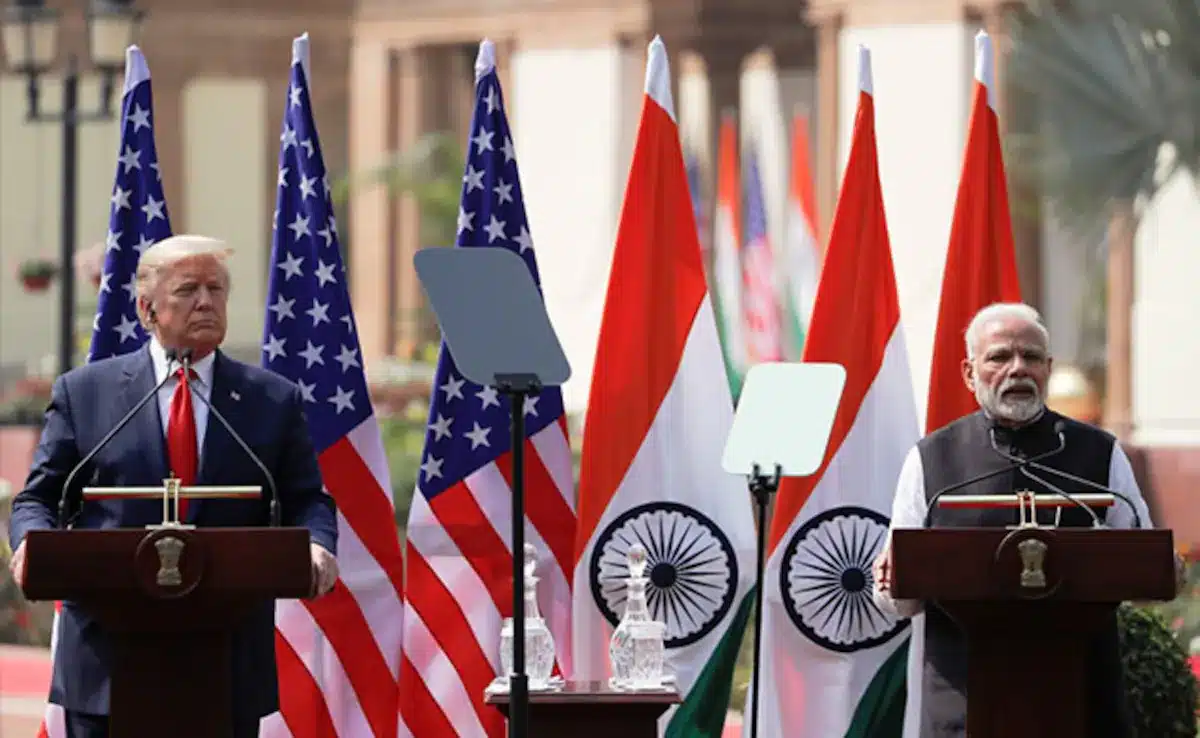
Finance Minister Nirmala Sitharaman is set to unveil the Union Budget 2026 amid significant global economic challenges, particularly stemming from trade tensions initiated by former US President Donald Trump. With India facing a steep 50% tariff on its exports to the US, the implications for the nation’s economy are profound, given that the US is India’s largest trading partner. As negotiations for a bilateral trade deal remain stalled, the upcoming budget will be crucial in determining how the Modi government plans to shield the Indian economy from these external pressures.
Understanding the Economic Landscape and the Impact of US Tariffs
India stands as one of the top five economies globally, with aspirations to become the third largest after the US and China. The country is also recognized as the fastest-growing major economy, driven primarily by domestic demand. This internal focus provides a buffer against external economic shocks, according to Dr. DK Srivastava, Chief Policy Advisor at EY. He emphasizes that India’s strategy involves diversifying its export markets and enhancing competitiveness to ensure that domestic producers can thrive despite global uncertainties.
However, the recent imposition of a 50% tariff on Indian goods by the US poses a significant challenge. Data shows that India’s merchandise exports to the US declined by 1.83% year-on-year to $6.88 billion in December 2025, while imports surged by 7.57% to $4.03 billion. Despite these tariffs, Commerce Secretary Rajesh Agrawal has indicated that exports are still on a growth trajectory as both nations continue to negotiate a trade agreement. Rishi Shah, an economic advisory leader at Grant Thornton Bharat, notes that the Union Budget has historically played a vital role in fostering an environment conducive to growth, allowing India to withstand global economic shocks with minimal disruption.
Strategies for Budget 2026 to Mitigate Tariff Risks
Experts believe that while India’s economic growth is primarily driven by domestic factors, sectors reliant on exports are feeling the strain from the ongoing trade war. To address these challenges, economists suggest that the upcoming budget should focus on enhancing export competitiveness, rationalizing customs duties, and providing relief to micro, small, and medium enterprises (MSMEs). Continued capital expenditure and efforts to reduce the fiscal deficit while creating jobs are also seen as essential components of a robust budget strategy.
Ranen Banerjee, a partner at PwC India, highlights the need for the budget to lower the cost of doing business for sectors vulnerable to external pressures. He suggests that this could be achieved through increased allocations for credit guarantee schemes, reducing compliance burdens, and developing shared infrastructure to improve quality control and meet export standards. Additionally, redirecting labor from sectors affected by global uncertainties to construction projects could help mitigate short-term employment pressures.
An economist from an industry body emphasizes the importance of boosting consumption through job creation and lowering living costs. This could involve prioritizing public investment, facilitating domestic and foreign private capital, and enhancing education and skills training to expand employment opportunities.
Key Recommendations for Budget 2026
As the budget approaches, several themes have emerged from discussions with economists. These include a focus on strengthening businesses by reducing operational costs, maintaining elevated public sector capital expenditure, and emphasizing innovation and quality standards, particularly in manufacturing and MSMEs. The goal is to enhance India’s resilience to external volatility while laying the groundwork for sustainable economic transformation.
Madan Sabnavis, Chief Economist at Bank of Baroda, notes that the budget should provide support to vulnerable sectors, particularly those within the MSME segment, which includes industries like garments and auto parts that are susceptible to the current tariff regime. Radhika Rao, Senior Economist at DBS Bank, suggests that the government may prioritize strategic sectors such as defense and renewable energy, which require a skilled workforce and domestic procurement to bolster security and technological advancement.
Yuvika Singhal, an economist at QuantEco, points out that diversifying products and markets is crucial for insulating India from external shocks. She advocates for revising the customs duty framework to facilitate trade deals, particularly with the US, which remains a priority for India. Overall, the consensus among economists is that Budget 2026 must focus on fostering a resilient economy capable of navigating the complexities of global trade dynamics.
Observer Voice is the one stop site for National, International news, Sports, Editor’s Choice, Art/culture contents, Quotes and much more. We also cover historical contents. Historical contents includes World History, Indian History, and what happened today. The website also covers Entertainment across the India and World.
Follow Us on Twitter, Instagram, Facebook, & LinkedIn

