

Why The One Different Thing Is What You Remember

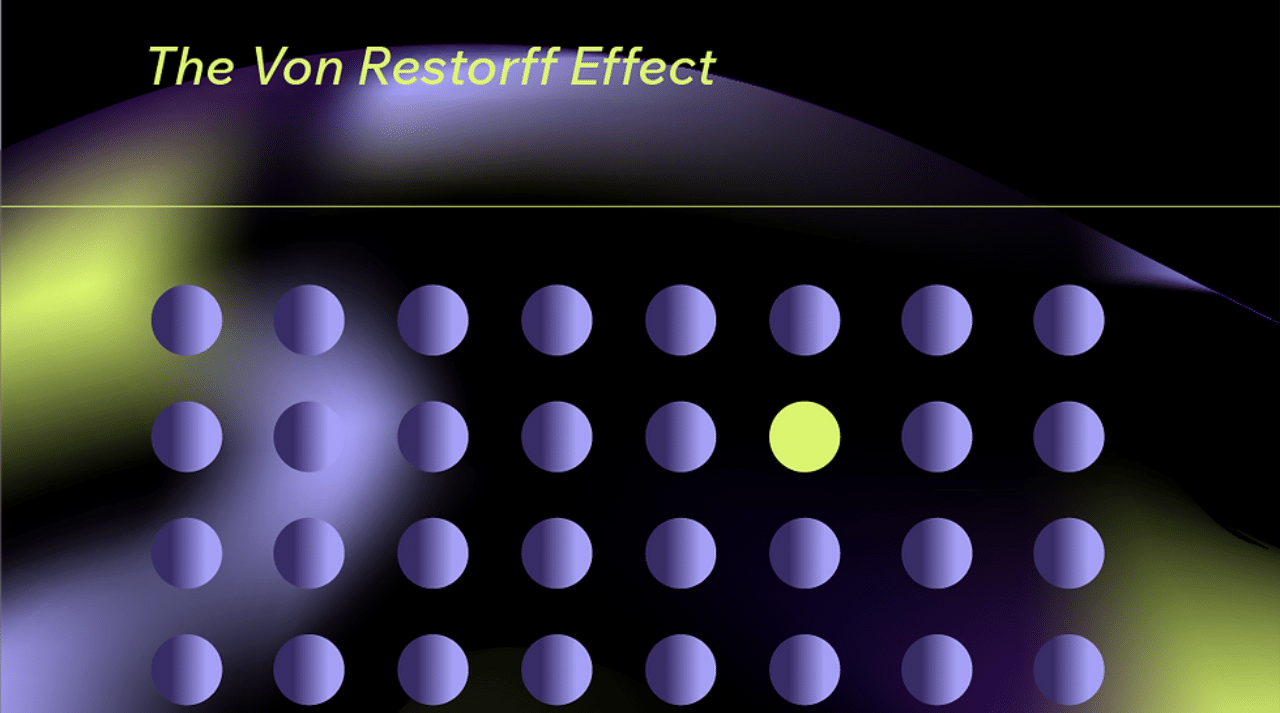
During a memory experiment in Class 10 psychology at Mumbai’s National Public School, teacher Mrs. Sharma gave two groups of students an identical task: memorize a list of 10 words in two minutes, then recall as many as possible.
Group A saw this list: table, chair, sofa, desk, cabinet, bookshelf, dresser, stool, bench, wardrobe
Group B saw this same list with one change: table, chair, sofa, desk, ELEPHANT, bookshelf, dresser, stool, bench, wardrobe
The word “ELEPHANT” in Group B’s list was printed in large bold red letters, completely different from the other words which were small black text like Group A’s entire list.
Both groups had equal study time. Both had equal motivation. The only difference was that one word in Group B’s list visually and semantically stood out dramatically from the others.
When Mrs. Sharma tested recall, the results were striking:
Group A (all similar items):
- Average recall: 5.2 words out of 10 (52%)
- “Cabinet” (the 5th item, same position as ELEPHANT): recalled by 45% of students
Group B (one distinctive item):
- Average recall: 5.8 words out of 10 (58%)
- “ELEPHANT” (the distinctive 5th item): recalled by 95% of students
Eighteen-year-old Arjun from Group B said: “I remembered ELEPHANT immediately—it was so different from all the furniture words, and it was in huge red letters. That one was impossible to forget. But I struggled to remember the furniture words—they all blended together.”
His friend Priya from Group A said: “All our words were just furniture items. Nothing stood out. I couldn’t tell them apart in my memory—was it cabinet or dresser? Bench or stool? They all felt the same.”
Mrs. Sharma explained: “You’ve experienced the Von Restorff effect—also called the isolation effect or distinctiveness effect. Items that stand out as different from their surrounding context are remembered dramatically better than items that blend in. The distinctive item—ELEPHANT among furniture words, presented in bold red among plain black text—captured attention and created a unique memory trace that was easy to retrieve. The similar items created overlapping interfering memory traces that were hard to distinguish and retrieve.”
She continued: “This effect explains why you remember the one student who wore costume to school but forget what everyone else wore. Why you remember the one spelling mistake on a sign but not the correct words. Why the unusual example in a textbook sticks while standard examples fade. Why advertisements use bizarre imagery—distinctiveness creates memorability. Understanding this reveals that memory isn’t democratic—it doesn’t treat all information equally. Distinctive information dominates memory while similar information fades into forgettable uniformity.”
This memory phenomenon—where distinctive or isolated items are remembered significantly better than uniform similar items—affects learning, advertising, communication, and all contexts where memory matters. Understanding the Von Restorff effect reveals why standing out helps memory, why similarity hurts memory, why the unusual is remembered while the typical is forgotten, and why creating distinctiveness is a powerful memory strategy.
What Is the Von Restorff Effect?
The Von Restorff effect (also called the isolation effect or distinctiveness effect) is the memory phenomenon where an item that differs from surrounding items—through visual appearance, semantic category, size, color, position, or any distinctive feature—is remembered significantly better than surrounding homogeneous items. When one item in a set “sticks out” or is isolated by being different, it receives enhanced encoding, creates a more distinctive memory trace, and shows superior recall compared to non-distinctive items. Distinctiveness is one of the most powerful determinants of memorability.
The phenomenon was first documented by German psychiatrist Hedwig von Restorff in 1933. Research demonstrating the effect showed that when participants studied lists containing mostly similar items with one distinctive item (for example, nine numbers and one word, or nine black items and one red item), the distinctive item was recalled 2-3 times better than similar items. The effect was robust across different types of distinctiveness—the mechanism was isolation/difference, regardless of how the item was made distinctive.
According to studies from University of Texas, the Von Restorff effect operates through multiple mechanisms: distinctive items receive more attention during encoding (standing out captures focus), create unique memory traces with less interference (not competing with similar memories), and provide better retrieval cues (distinctiveness makes the item easily located in memory). Together these processes make distinctive items dramatically more memorable than similar items.
Research from Johns Hopkins University demonstrates that the Von Restorff effect is particularly strong when: (1) distinctiveness is perceptual/visual (color, size, font stand out strongly), (2) distinctiveness is semantic (one category among others, like one animal among tools), (3) the distinctive item occurs mid-list (neither primacy nor recency position, showing effect beyond position effects), and (4) surrounding items are highly similar to each other (greater homogeneity amplifies the distinctive item’s advantage). These conditions make the effect powerful and reliable.
The Parable of the White Peacock Among Grey Pigeons
A teaching tale illustrates the Von Restorff effect through birds gathering in a city square.
Every day, a city square filled with birds seeking food from people passing by. Usually, the square hosted dozens of grey pigeons—all similar in appearance, behavior, and sound. Visitors to the square would scatter bread crumbs, and the pigeons would gather, but people rarely remembered individual pigeons. After feeding the birds, if you asked someone “what birds did you see?”, they’d say “some pigeons” without remembering any specific bird.
One day, a magnificent white peacock wandered into the square and joined the grey pigeons seeking food. The peacock was dramatically different—brilliant white plumage, distinctive crest, unique calls, elegant movements that contrasted sharply with the pigeons’ commonplace appearance.
That day, everyone who visited the square remembered the white peacock. Weeks later, people would still talk about it: “Remember that white peacock in the pigeon square? That was remarkable!” Yet none of them remembered any individual grey pigeon, despite dozens being present.
A wise observer explained: “The white peacock demonstrates the Von Restorff effect—distinctiveness creates memorability. The peacock stood out against its background of similar grey pigeons, making it impossible to ignore and impossible to forget. Each grey pigeon blended with all the other grey pigeons, creating a uniform blur in memory where individual pigeons couldn’t be distinguished. The peacock’s distinctiveness gave it unique presence in memory that the pigeons’ similarity denied them.”
The observer continued: “This is why teachers who make one lesson dramatically different from typical lessons find students remember that lesson for years. Why one unusual example in a textbook is recalled while ten standard examples are forgotten. Why the strange student is remembered while typical students fade from memory. Distinctiveness is memory’s amplifier—it makes the distinctive item loud and clear while similar items remain quiet background noise.”
The lesson extended further: “For students, this means: if you want information to be memorable, make it distinctive. Use colors, unusual examples, bizarre imagery, unique connections. Don’t present information uniformly—create islands of distinctiveness. The peacock was remembered not because it was better than the pigeons but because it was different. Apply this principle: make what you want to remember different from what surrounds it, and memory will naturally preserve it while discarding the uniform background.”
Buddhist teachings use distinctive imagery deliberately in teaching stories—unusual parables, striking metaphors, memorable paradoxes. The Buddha’s teaching method relied heavily on distinctive examples that created Von Restorff effects: the elephant crushing lotus plants (distinctive image for explaining harm from good intentions), the raft that must be abandoned (counterintuitive memorable metaphor). The teaching method exploited distinctiveness for memorability.
Hindu mythology and the Puranas are filled with extraordinary distinctive imagery specifically designed for memorability—gods with multiple arms, cosmic battles, extraordinary births, impossible feats. These distinctive elements create Von Restorff effects that make the teachings embedded in stories memorable across generations. The seemingly fantastical elements serve pedagogical purpose: distinctiveness ensures memory preservation across oral tradition where forgetting means permanent loss.
How Being Different Makes Things Unforgettable
In advertising and marketing, the Von Restorff effect drives creative strategy toward distinctive bizarre memorable imagery. Research shows that advertisements using unusual visuals, unexpected scenarios, or distinctive presentation are remembered 2-4 times better than conventional advertisements, though distinctiveness must still connect to product/brand for effectiveness.
Studies from University of Southern California examining advertising recall found that commercials rated as “highly distinctive” or “unusual” showed 180% better brand recall than conventional commercials, even when controlling for production quality and media spending. The Von Restorff effect made distinctive ads dominate memory in competitive advertising environments where most ads were forgotten.
In educational materials and textbook design, the Von Restorff effect makes highlighted, bolded, or distinctively presented key information more memorable. Research shows that students remember highlighted key terms, boxed definitions, and distinctively formatted important concepts 40-60% better than uniformly formatted text, demonstrating that visual distinctiveness enhances educational memory.
Studies from Carnegie Mellon University examining textbook design found that students reading chapters with key concepts in colored boxes or bold formatting recalled those concepts 55% better than students reading identical content in uniform formatting. The Von Restorff effect made visual distinctiveness translate directly to learning advantage.
In presentation design and public speaking, the Von Restorff effect makes distinctive moments in presentations disproportionately memorable. Research shows that audiences remember unusual slides, unexpected examples, dramatic demonstrations, or moments of distinctiveness far better than the bulk of uniform content, making strategic use of distinctiveness crucial for effective presentations.
Studies demonstrate that when audience members recall presentations weeks later, they remember an average of 2-3 distinctive moments vividly while forgetting most standard content. Presenters who strategically created 3-4 distinctive moments per presentation achieved dramatically higher message retention than presenters delivering uniform content regardless of overall quality.
In personal memory and autobiographical recall, the Von Restorff effect makes unusual distinctive life events (first kiss, accidents, unusual vacations, distinctive achievements) dominate autobiographical memory while routine similar days fade completely. Research shows people’s life memories consist primarily of distinctive events with vast stretches of routine time completely unremembered, creating a highlight reel memory of life rather than comprehensive record.
Studies from University of California, Davis examining autobiographical memory found that people asked to recall the past year produced memories overwhelmingly from distinctive events (unusual activities, first-time experiences, emotionally intense moments) while having almost no memory of routine similar days that constituted 80-90% of actual time. The Von Restorff effect made distinctive days dominate life narrative while similar days vanished.
In workplace training and professional development, the Von Restorff effect makes distinctive training elements (unusual cases, dramatic demonstrations, unique activities) more memorable than standard lecture content. Research shows employees remember distinctive training examples years later while forgetting standard content from the same training within weeks.
Studies from MIT Sloan School examining corporate training found that employees recalled distinctive case studies, unusual scenarios, and hands-on demonstrations from training programs 70% more than lecture content or standard examples, even years after training. Training designers who strategically created distinctive memorable moments achieved lasting learning that uniform training didn’t produce.
Making Important Information Stand Out From Everything Else
The most important practice for leveraging the Von Restorff effect is deliberately making information you want remembered distinctive from surrounding information. Use color, size, unusual examples, bizarre imagery, or any feature that creates isolation/distinctiveness. Don’t present all information uniformly—create strategic distinctiveness for key content.
In studying, highlight or mark truly important information distinctively, but use sparingly—if everything is highlighted, nothing stands out. The Von Restorff effect requires contrast: one distinctive item among many similar items. Highlighting everything eliminates distinctiveness, destroying the effect. Strategic selective highlighting maximizes the effect.
Create bizarre memorable imagery or associations for difficult-to-remember information. The more unusual and distinctive the imagery, the stronger the Von Restorff effect. “Bizarre imagery” isn’t random—it’s deliberate distinctiveness creation that makes information stand out against typical mental content, dramatically enhancing memorability.
In teaching or presenting, strategically place 2-3 highly distinctive moments or examples within standard content. These distinctive islands in a sea of uniform content will be remembered when most content is forgotten. Don’t try to make everything distinctive—strategic placement of distinctiveness within uniformity is what creates the effect.
Recognize that similarity is memory’s enemy—when information is too similar to surrounding information, it blends into forgettable uniformity. Creating distinctions, differences, or unique features transforms forgettable information into memorable information through the Von Restorff effect’s power.
Remember the word ELEPHANT that 95% of students recalled while similar furniture words were forgotten, and the white peacock remembered while dozens of grey pigeons were forgotten. Both illustrate how the Von Restorff effect makes distinctive items dominate memory while similar items fade.
The Von Restorff effect can’t be eliminated because it reflects fundamental features of memory encoding and retrieval—attention gravitates to distinctive stimuli, unique memory traces avoid interference, and retrieval cues from distinctiveness make information easy to locate. But understanding the effect allows strategic application: create distinctiveness for information you want remembered, use similarity for information that can be forgotten, and recognize that uniform presentation guarantees uniformity in memory—most will be forgotten. Distinctiveness is memory’s spotlight, illuminating what stands out while leaving similar items in forgettable darkness.
Frequently Asked Questions
If I highlight everything in my textbook, does that make everything more memorable?
No—highlighting everything eliminates distinctiveness, destroying the Von Restorff effect. The effect requires contrast: distinctive items among similar items. If everything is highlighted, nothing stands out, and you lose the memory advantage. Use highlighting very selectively (5-10% of content maximum) to create true distinctiveness for the most important information.
Does the Von Restorff effect work better with visual or verbal distinctiveness?
Both work, often best in combination. Visual distinctiveness (color, size, font) creates immediate perceptual standing-out. Semantic/conceptual distinctiveness (one category among others, unusual example) creates cognitive standing-out. Multi-modal distinctiveness (both visual AND semantic) typically produces the strongest effects—like ELEPHANT in red among black furniture words.
Can you make yourself remember boring information by making it distinctive?
Yes—this is exactly what memory techniques like bizarre imagery and memory palaces do. They transform boring uniform information into distinctive bizarre imagery that stands out. The information itself doesn’t become interesting, but creating distinctiveness makes it memorable despite being inherently boring. Distinctiveness works regardless of inherent interest.
Why do I remember embarrassing moments so well—is that Von Restorff effect?
Partly yes—embarrassing moments are distinctive unusual events that stand out against routine daily life, creating Von Restorff effects. But emotional intensity also enhances memory independently. Embarrassing moments combine distinctiveness (Von Restorff) with emotional arousal (separate memory enhancement), making them especially memorable through multiple mechanisms working together.
Does the Von Restorff effect mean similar items can’t be remembered at all?
No—similar items CAN be remembered, just not as well as distinctive items. With enough repetition, effort, or organization, similar items can be learned. The effect shows that for equal encoding effort, distinctive items show better retention than similar items. It’s a relative advantage for distinctiveness, not absolute forgetting of similarity. But the difference is large enough to make distinctiveness strategically important.
Observer Voice is the one stop site for National, International news, Sports, Editor’s Choice, Art/culture contents, Quotes and much more. We also cover historical contents. Historical contents includes World History, Indian History, and what happened today. The website also covers Entertainment across the India and World.

