

Why Songs You Hated at First Become Your Favorites: The Power of Familiarity

Fifteen-year-old Priya despised the new song her friends kept playing at lunch break. “This is terrible!” she complained the first time she heard it. “The lyrics are repetitive, the tune is annoying, and I don’t understand why anyone likes it.” Her friends just laughed and kept playing it.
A week later, after hearing it daily, Priya found herself humming the chorus without realizing it. Two weeks in, she was actually looking forward to hearing it during lunch. By the third week, she had downloaded it and added it to her own playlist. When a new friend joined their group and complained about the same song, Priya found herself defending it. “Actually, once you really listen to it, it’s pretty catchy!”
Her psychology teacher, overhearing this exchange, smiled. “Priya, you’ve just experienced the mere exposure effect. You didn’t suddenly develop better taste in music. You developed familiarity with the song, and familiarity breeds liking. The more you’re exposed to something—even something you initially disliked—the more you tend to like it. Your brain confused familiarity with quality.”
Priya was shocked to realize her strong preference for the song had nothing to do with the song itself changing or her understanding it better. It was simply that repeated exposure had transformed her opinion from dislike to genuine affection. This phenomenon—the mere exposure effect—shapes our preferences for everything from music to people to brands, often without us realizing it’s happening.
What Is the Mere Exposure Effect?
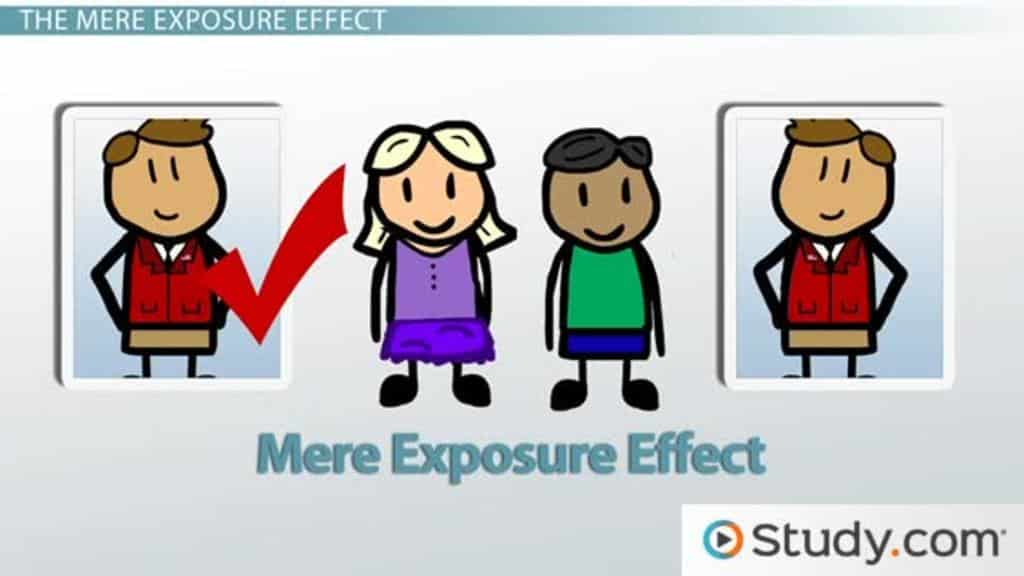
The mere exposure effect, also called the familiarity principle, is our tendency to develop preference for things simply because we’re familiar with them. The more we’re exposed to a stimulus—a song, a face, a brand, an idea—the more we tend to like it, even if we initially found it neutral or negative. Familiarity itself creates positive feelings that we mistake for genuine quality or compatibility.
The phenomenon was systematically studied by psychologist Robert Zajonc beginning in the 1960s. In classic experiments at University of Michigan, Zajonc showed participants nonsense words, random shapes, or unfamiliar faces different numbers of times, then asked them to rate how much they liked each item. Consistently, items shown more frequently were rated more favorably—even though the items themselves had no meaningful content and participants often didn’t consciously remember seeing them before.
Research from Stanford University demonstrates that the mere exposure effect works even with subliminal exposure—stimuli shown too briefly for conscious recognition still create preference through familiarity. In studies where shapes were flashed for milliseconds, too fast to consciously perceive, participants still rated the more-frequently-flashed shapes as more likable when shown them later. The effect operates below conscious awareness, making it particularly powerful and hard to resist.
According to studies from Yale University, the mere exposure effect has an important boundary: it works for neutral or mildly negative stimuli but not for intensely negative ones. If you absolutely hate something initially, repeated exposure may not transform it into liking—though it often reduces the intensity of dislike. The effect is strongest when you start neutral or slightly negative, as with Priya’s experience with the song she initially disliked but not with enough intensity to prevent familiarity from creating preference.
The Stranger Who Became a Friend
A Chinese folk wisdom story tells of a merchant who moved to a new village. His first week, he found the local baker cold and unwelcoming. “These village people are unfriendly,” he complained to his wife. “That baker barely acknowledges me when I buy bread.”
But he bought bread from the same baker every morning because it was the closest shop. After a month of daily transactions, the baker began nodding in greeting. After three months, they exchanged pleasantries about the weather. After six months, they were chatting like old friends, and the baker always gave him the freshest bread and occasionally added a small sweet pastry as a gift.
“I misjudged this baker,” the merchant told his wife. “He’s actually a very warm and generous person. I don’t know why I thought he was cold.” His wife smiled knowingly. “The baker hasn’t changed—you’ve simply become familiar to him, and he to you. Familiarity melts coldness. What you thought was a change in his character was just the natural warming that comes from seeing the same face every day.”
Buddhist philosophy recognizes the mere exposure effect in teachings about habituation and mental formations. The Buddha taught that repeated exposure to ideas, people, or practices creates mental grooves that make those things feel natural, right, and good—regardless of whether they actually are. This is why the Buddha emphasized mindful awareness: to prevent automatic preference formation based on mere familiarity rather than genuine wisdom about what’s beneficial.
The Bhagavad Gita touches on this through Krishna’s discussion of habit and conditioning. Krishna explains how repeated exposure to certain thoughts, people, or environments shapes our preferences and tendencies, often unconsciously. The teaching warns against letting familiarity alone guide choices, encouraging instead deliberate discernment about what truly serves dharma versus what merely feels comfortable through repetition.
How Familiarity Shapes What We Like
In music and entertainment, the mere exposure effect explains why radio hits and viral songs often follow a predictable pattern: initial resistance, growing tolerance, eventual affection. Music programmers know this and deliberately repeat songs frequently. What listeners interpret as the song “growing on them” or “getting it after a few listens” is often just the mere exposure effect transforming unfamiliarity (disliked) into familiarity (liked).
Research from Harvard University shows that even people who claim to value originality and novelty in music show strong mere exposure effects. Songs they’ve heard multiple times are rated higher than objectively similar songs they’ve heard only once, even when they’re not consciously aware they’ve heard the preferred songs before. Familiarity masquerades as quality.
In advertising and marketing, the mere exposure effect is the foundation of brand building. Companies don’t need to convince you their product is best—they just need you to see their logo, hear their jingle, or encounter their brand name repeatedly. Coca-Cola doesn’t run ads showing chemical analysis proving their soda is superior. They just ensure their logo is everywhere, creating familiarity that translates into preference through mere exposure.
This explains why companies pay enormous sums for repeated ad placement even when the ads contain minimal informational content. A beer commercial showing friends having fun doesn’t logically convince you the beer is higher quality, but seeing it fifty times creates familiarity that makes you reach for that brand at the store. The mere exposure effect makes advertising work through repetition, not through rational persuasion.
In relationships and social attraction, familiarity breeds liking in powerful ways. People who see each other frequently—coworkers, classmates, neighbors—often develop mutual attraction even without particularly compatible personalities or shared interests. The mere exposure effect explains why proximity is one of the strongest predictors of friendship formation: people who are physically near each other get exposed to each other repeatedly, and that familiarity creates liking.
Studies show that students assigned to seats near each other in classrooms are more likely to become friends than students seated far apart, even when seat assignment is random. Apartment residents are more likely to befriend neighbors on their floor than residents on different floors. The friendship isn’t based on compatibility—it’s based on repeated exposure creating familiarity creating liking.
In politics and propaganda, the mere exposure effect explains why repeated slogans, messages, and images shape public opinion regardless of their factual content. Political campaigns don’t necessarily win by having the best policies—they often win by having the most familiar candidate. Name recognition is enormously valuable because mere exposure makes that familiar name feel trustworthy and preferable to unknown alternatives.
Authoritarian regimes understand this deeply, filling public spaces with leader portraits, repeating official messages constantly, and ensuring state narratives dominate all media. Citizens may not initially support the regime, but repeated exposure to its symbols, leaders, and messages creates familiarity that gradually shifts from neutrality toward preference, or at least toward acceptance and normalization.
In food preferences and eating habits, the mere exposure effect shapes what cuisines and flavors we like. Children initially reject unfamiliar foods but develop preference through repeated exposure—the same spinach they rejected seven times tastes good on the eighth try, not because it changed but because familiarity reduced the negative response. Adults show the same pattern with new cuisines or unusual ingredients.
This is why traditional foods of each culture seem “naturally” delicious to people raised in that culture while seeming strange to outsiders. It’s not that Indian food is objectively superior to Chinese food or vice versa—it’s that whatever you ate repeatedly growing up became familiar, and familiarity created strong positive preference that feels like objective judgment of quality.
Recognizing When Familiarity Drives Preference
The key to managing the mere exposure effect is asking: “Do I like this because it’s genuinely good for me, or just because I’m familiar with it?” This distinction is crucial because familiarity can make harmful things feel good. People stay in toxic relationships partly because the familiar dysfunction feels more comfortable than unfamiliar healthy relationships. Workers stay in terrible companies because the familiar bad job feels less scary than an unfamiliar potentially good job.
Deliberately seek unfamiliar alternatives to familiar preferences. If you always choose the same brand, genre, route, or restaurant, experiment with unfamiliar options multiple times before judging them. The first exposure to something new will feel worse than the familiar option due to mere exposure effect—but after several exposures, you can compare more fairly. This prevents familiarity from becoming an unbreakable habit.
Recognize that “growing on you” might be mere exposure rather than developing taste. When something you initially disliked becomes likable after repeated exposure, consider whether it actually improved or whether you’re just experiencing the familiarity principle. Sometimes developing appreciation is genuine—you understand something better through repeated experience. But often it’s just your brain learning to like what it knows.
Be especially cautious with marketing and advertising exposure. Companies engineer familiarity deliberately to shape your preferences through mere exposure. When you feel preference for a familiar brand over an unfamiliar alternative, ask whether actual quality justifies the preference or whether you’re just responding to exposure. Blind tests often reveal that people can’t distinguish their preferred brand from alternatives, proving the preference is familiarity-based rather than quality-based.
Use the mere exposure effect strategically for positive goals. If you want to develop healthy habits, repeatedly expose yourself to healthy foods, exercise routines, or productive practices. Initial resistance is normal, but sustained exposure will create familiarity that transforms into preference. The same principle that makes junk food advertising work can make healthy habits stick if you engineer repeated exposure to positive alternatives.
Remember Priya’s transformation from hating to loving the song through nothing but repeated exposure, and the merchant whose opinion of the cold baker warmed purely through daily contact. Neither the song nor the baker changed—only familiarity changed, and familiarity created liking that felt like genuine quality assessment or character judgment. This happens constantly in our lives, shaping preferences we believe are based on objective merit when they’re often just based on what we’ve seen most often. Question your preferences, especially strong ones about familiar things. Sometimes they’re genuine wisdom. But often they’re just the mere exposure effect whispering: “You know this. The known feels safe. The known feels good. Choose the known.” And we do, again and again, mistaking the comfort of familiarity for the confirmation of quality.
Frequently Asked Questions
If the mere exposure effect is real, why do some songs I hear repeatedly just get more annoying?
The effect has limits and can reverse with excessive exposure. Moderate repetition creates liking through familiarity, but extreme repetition often leads to boredom and irritation—called “wear-out effect.” Additionally, if you intensely dislike something from the first exposure, repetition may not create liking. The sweet spot is neutral-to-mildly-negative initial reactions with moderate (not excessive) repetition. That’s why radio stations rotate songs rather than playing the same one constantly.
Can businesses manipulate me through the mere exposure effect?
Yes, and they do constantly. Every billboard, logo placement, jingle repetition, and product placement in movies is partially exploiting mere exposure. Once you’re aware of it, you can somewhat resist by consciously questioning whether your brand preference is based on quality or just on having seen that logo more often. However, the effect works partly subconsciously, so awareness doesn’t eliminate it—it just reduces its power.
Does the mere exposure effect explain why people stay in bad relationships?
Partially. Familiarity with a partner, even a harmful one, can feel more comfortable than the unfamiliar prospect of being alone or dating someone new. Additionally, repeated exposure to certain relationship patterns can normalize them, making unhealthy dynamics feel “normal” through familiarity. However, relationships are complex, and factors beyond mere exposure (fear, economic dependence, genuine affection despite problems) also contribute to staying. The mere exposure effect is one factor among many.
Is the mere exposure effect stronger for some people than others?
Research suggests some personality differences exist. People who are generally more anxious or uncertainty-averse show stronger mere exposure effects—familiarity is especially comforting for those who find novelty stressful. People who score high on “openness to experience” may show somewhat weaker effects, being more willing to appreciate novelty. Cultural background also matters, with some cultures emphasizing tradition and familiarity more than others. But the basic effect appears universal across all humans.
Can I use mere exposure to make myself like healthy foods or productive habits?
Yes, this is one of the most practical applications. Repeatedly expose yourself to healthy foods you currently dislike (within reason—don’t force yourself to eat things that make you sick). Research shows that 8-15 exposures to a new food significantly increases liking in most people. Similarly, repeatedly doing a productive habit you initially resist will create familiarity that transforms into genuine preference. The trick is persisting through initial resistance until the mere exposure effect kicks in, which typically takes weeks of consistent exposure.
Observer Voice is the one stop site for National, International news, Sports, Editor’s Choice, Art/culture contents, Quotes and much more. We also cover historical contents. Historical contents includes World History, Indian History, and what happened today. The website also covers Entertainment across the India and World.

