

Why Do Leaves Change Color in Autumn?

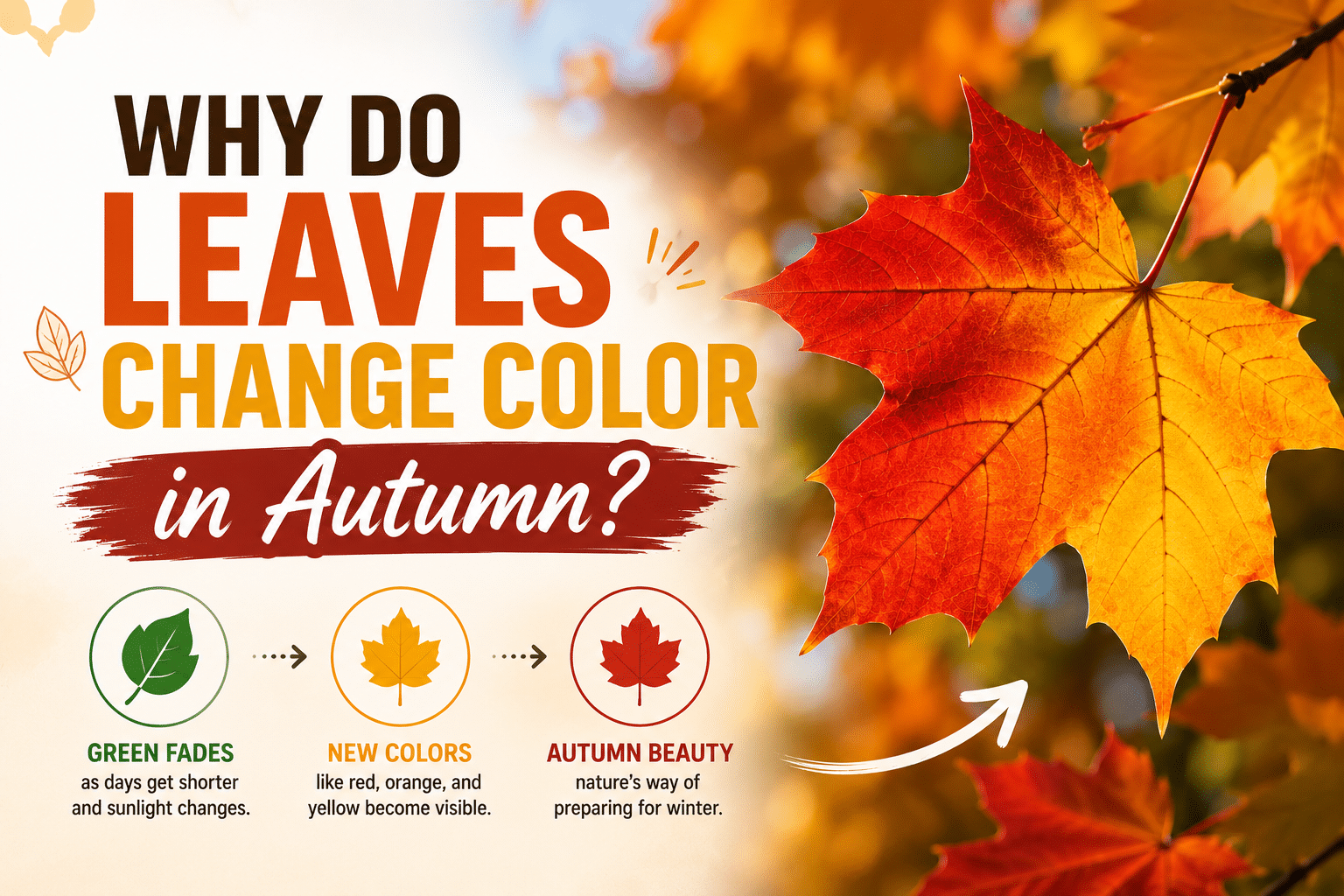
Every year, without fail, something extraordinary happens. The world’s trees — green all summer long — suddenly burst into flames of red, orange, gold, and purple. It lasts only a few weeks. Then it’s gone.
But why? Why do leaves change color in autumn at all? Is it the cold? The rain? Something the tree is doing on purpose?
The answer is a surprisingly beautiful story about light, chemistry, and a tree’s quiet strategy for survival. Let’s unpack it.
What Makes Leaves Green in the First Place?
To understand why leaves change color, you first need to understand why they’re green all summer.
Leaves are green because of a pigment called chlorophyll. Chlorophyll is the molecule inside plant cells that captures sunlight and uses it to convert water and carbon dioxide into sugar — the process called photosynthesis. It is essentially the tree’s food factory.
Chlorophyll absorbs red and blue light from the sun, but reflects green light back — which is why our eyes see green. During spring and summer, trees produce chlorophyll in enormous quantities. It’s so abundant it completely masks every other color in the leaf.
But chlorophyll is fragile. It breaks down constantly and must be continuously replaced. As long as there is plenty of sunlight and warm temperatures, trees keep producing it. The moment conditions change, the whole system shifts.
The Main Reason Leaves Change Color: Shorter Days
The trigger for autumn color change is not temperature — it’s daylight.
As summer ends, the days grow shorter. Trees are remarkably sensitive to this. Specialized cells in the leaf detect the reduction in light hours, signaling that winter is approaching. In response, trees begin a process called senescence — a controlled, deliberate shutdown of the leaf’s systems.
The tree starts producing a special layer of cells at the base of each leaf stem called the abscission layer. This gradually cuts off the flow of water and nutrients between the leaf and the branch. Without that supply line, the leaf can no longer produce new chlorophyll.
As the existing chlorophyll breaks down and is not replaced, the green color fades — and the other pigments hiding underneath are finally revealed.
The Science of Autumn Colors
Yellow and Orange: The Hidden Pigments
Here’s something surprising: yellow and orange were always there.
Leaves contain pigments called carotenoids — the same family of pigments that make carrots orange and bananas yellow. These pigments are present in leaves all year round, but during spring and summer they are completely hidden behind the dominant green of chlorophyll.
When chlorophyll breaks down in autumn and its green color fades, the carotenoids are unmasked. Yellows and oranges appear not because the tree makes new pigments, but because old ones are finally visible.
Common carotenoid pigments include:
- Xanthophylls — responsible for yellow tones (found in birch, ginkgo, and poplar)
- Beta-carotene — responsible for orange tones (found in maple and sassafras)
Red and Purple: The Freshly Made Pigments
Red and purple colors are different — and more interesting. They come from pigments called anthocyanins, and unlike carotenoids, these are newly produced in autumn.
As the abscission layer forms and sugars get trapped in the leaf (unable to move back into the tree), those sugars interact with light and amino acids to create anthocyanins. The more sugar trapped, the more anthocyanins produced, and the more vivid the red color.
This is why:
- Sunny autumn days produce brilliant reds (more sunlight = more sugar production)
- Cool nights enhance red color (cold slows sugar movement out of the leaf)
- Cloudy or warm autumns produce duller, more yellow-brown displays
Trees famous for red autumn color include red maple, sweet gum, sumac, and scarlet oak.
Brown: The Tannins
Eventually, all the remaining pigments break down too. What’s left are tannins — brown-colored compounds that were always present in the leaf as a natural defence against insects and fungi. Oak leaves are particularly rich in tannins, which is why they turn brown rather than vivid red or yellow.
A Simple Color Guide: Which Tree Turns Which Color?
| Color | Pigment | Example Trees |
|---|---|---|
| Yellow | Xanthophylls (carotenoid) | Birch, ginkgo, poplar, hickory |
| Orange | Beta-carotene (carotenoid) | Maple, sassafras, mountain ash |
| Red / Purple | Anthocyanins (new production) | Red maple, sweet gum, sumac, dogwood |
| Brown | Tannins | Oak, beech, elm |
Why Do Trees Drop Their Leaves at All?
The color change is beautiful, but it’s actually a side effect of something more urgent: the tree is preparing to survive winter.
Leaves are costly to maintain. They require water — which is scarce in winter when soil freezes — and they lose water through tiny pores called stomata. A tree keeping its leaves through a cold winter would risk dying of dehydration.
So deciduous trees (trees that lose their leaves) evolved a solution: drop the leaves before winter arrives, seal up the wound, and wait.
Before dropping each leaf, the tree does something clever — it recycles it. Valuable nutrients, especially nitrogen from the chlorophyll molecules, are broken down and pulled back into the branches and trunk for storage. Only after this recycling is complete does the tree fully cut off the leaf.
The brilliant colors of autumn are, in a sense, the visible evidence of this recycling process.
Evergreen trees (pines, spruces, firs) use a different strategy — their needle-shaped leaves are coated in wax and are tough enough to survive winter with minimal water loss, so they don’t need to shed them.
Why Are Some Autumns More Colorful Than Others?
The intensity and duration of autumn color varies from year to year depending on weather conditions.
The ideal recipe for a spectacular autumn:
- A warm, sunny summer that allows trees to build up large sugar reserves
- Early autumn with warm sunny days and cool (but not freezing) nights
- Low rainfall in autumn (drought stress can actually enhance color in some species)
- A slow, gradual temperature drop rather than a sudden hard frost
What dulls the display:
- A dry summer (stressed trees produce less vivid color)
- Overcast, warm autumn weather (less sugar production, less anthocyanin)
- An early hard frost (kills the leaf quickly before pigments fully develop)
- High winds and early rain (strip leaves before peak color)
This is why the same forest can look dramatically different from one October to the next.
Real-Life Examples From Around the World
New England, USA – The northeastern United States — particularly Vermont, New Hampshire, and Maine — is famous for some of the world’s most spectacular autumn foliage. The mix of maple, birch, beech, and oak species, combined with the region’s climate of warm days and cold nights, produces extraordinary reds, oranges, and yellows. “Leaf peeping” tourism is a major industry, drawing millions of visitors each autumn.
Kyoto, Japan – Japan’s autumn color season, called koyo (紅葉), is celebrated with the same cultural reverence as the spring cherry blossom season. The Japanese maple (Acer palmatum) in particular produces vivid crimson foliage that transforms temple gardens into unforgettable landscapes.
The Scottish Highlands – Ancient birch and rowan trees in Scotland’s highlands and glens turn brilliant gold and orange in October, set against the purple of heather moorlands and the grey of lochs — a combination found nowhere else on Earth.
The Himalayas, India – In states like Himachal Pradesh and Uttarakhand, chinar trees (Oriental plane trees) and various oak and rhododendron species produce autumn color from October onwards, particularly striking in the Kashmir Valley.
Did You Know?
- A single mature maple tree can produce tens of thousands of leaves — each one turning independently based on its own sugar levels and sun exposure.
- The word deciduous comes from the Latin decidere, meaning “to fall down.”
- Trees can “sense” when a neighbour is being attacked by insects and begin producing defensive tannins in response — before they themselves are attacked.
- In some years, climate change is pushing peak autumn color 1–2 weeks later than historical averages in many regions, as warmer temperatures delay the shortening daylight signal.
- Anthocyanins — the pigments that make autumn leaves red — are the same pigments that make blueberries blue, red cabbage purple, and strawberries red.
Effects of Climate Change on Autumn Color
Scientists are increasingly concerned about how a warming climate is affecting autumn foliage.
Warmer temperatures mean trees receive the “shorter day” signal later and respond more slowly. Studies suggest that in many regions, peak autumn color is occurring later in the season — and in some areas, the displays are becoming less vivid. Drought stress from warmer summers, changes in rainfall patterns, and increased pest damage are all affecting the health of the leaf pigment systems.
For nature lovers, this makes enjoying autumn color each year feel more precious — and more urgent.
Common Misconceptions About Autumn Leaves
“Cold weather causes the color change”
Not quite. Temperature plays a supporting role — especially in intensifying red colors — but the primary trigger is the shortening of days, not falling temperatures. A warm autumn with short days will still produce color change; a cold autumn with long days (if such a thing were possible) would not.
“Leaves turn brown because they die”
Partially true, but incomplete. Brown tannins are the last stage of a controlled recycling process. The leaf doesn’t simply die — it is systematically dismantled by the tree to recover valuable nutrients before the final separation.
“All trees change color in autumn”
False. Only deciduous trees change color and drop their leaves. Evergreen trees — pines, firs, spruces, cedars — retain their leaves (needles) year-round and stay green through winter.
“Leaves change color because of frost”
Mostly false. Frost can actually damage the color change process by killing leaves before they complete their pigment development. The best autumn colors occur when there is no frost yet, but nights are consistently cool.
FAQs
Decreasing daylight triggers trees to stop making chlorophyll. As the green pigment fades, yellow and orange pigments (always present but hidden) are revealed. Red pigments are freshly produced from sugars trapped in the leaf.
Primarily short days. Trees detect the reduction in daylight hours and begin their autumn shutdown process. Temperature affects the intensity of color — especially reds — but daylight length is the main trigger.
The most vivid displays occur after warm sunny summers (builds sugar reserves) followed by sunny autumn days and cool nights without frost. Overcast or warm autumns tend to produce less vibrant displays.
No. Only deciduous trees change color and shed their leaves. Evergreen trees (pines, spruces, firs) keep their leaves year-round and stay green.
Pigments called anthocyanins, produced in autumn when sugars get trapped in the leaf. More trapped sugar means more vivid red color — which is why sunny autumn days enhance the display.
Observer Voice is the one stop site for National, International news, Sports, Editor’s Choice, Art/culture contents, Quotes and much more. We also cover historical contents. Historical contents includes World History, Indian History, and what happened today. The website also covers Entertainment across the India and World.

