

New Draft Labour Regulations Set the Stage for Increased Minimum Wages

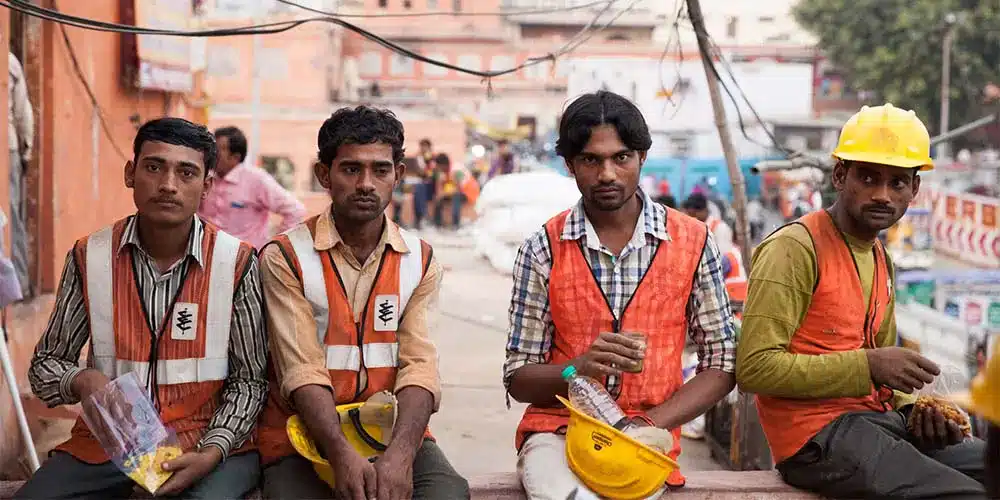
A month after the introduction of four new labour codes, the Indian government has unveiled draft rules aimed at their implementation. These rules outline the calculation of minimum wages, establish weekly working hours, and set procedures for recognizing trade union memberships. Additionally, they propose the formation of a National Social Security Board to oversee the welfare of gig and platform workers. The government is inviting public comments on these draft rules within the next 30 to 45 days.
Minimum Wage Calculation
Under the newly proposed rules, the calculation of minimum daily wages will be based on the needs of a standard working-class family, which includes a worker, a spouse, and two children. The guidelines stipulate that each family member should receive a daily intake of 2,700 calories. Furthermore, the rules account for clothing needs, which are set at 66 meters per year for the family. Housing costs will be calculated at 10% of food and clothing expenses, while 20% of wages will be allocated for fuel, electricity, and other essentials. An additional 25% will be reserved for education, healthcare, recreation, and unforeseen expenses. An official stated that this wage calculation aligns with the principles established in the Reptakos Brett judgment, emphasizing the socio-economic aspects of wage structures. As a result, an upward revision of minimum wages is anticipated once the new codes are enacted.
Working Hours and Social Security
The draft rules also propose a cap on weekly working hours, limiting them to 48. Specific guidelines regarding daily working hours, rest intervals, and spread-over time will be announced separately. In a significant move for gig workers, the proposed National Social Security Board will consist of lawmakers, state representatives, and members from both worker and employer organizations, along with nominees from the central government. This board aims to ensure that gig and platform workers receive adequate social security benefits, reflecting the changing nature of work in the modern economy.
Gratuity and Wage Definitions
Regarding gratuity, the government clarified that the provisions will take effect from November 21, 2025, coinciding with the implementation of the new labour codes. Fixed-term employees will now be eligible for gratuity after one year of continuous service, a significant reduction from the previous five-year requirement for permanent workers. Additionally, the labour ministry has reiterated the definition of wages under the new codes. If components other than basic pay, dearness allowance, and retaining allowance exceed 50% of the total pay, the excess will be classified as wages. Notably, performance-linked incentives, Employee Stock Ownership Plans (ESOPs), variable payments, and leave encashment will not be included in this calculation.
Transition Period and State Regulations
During the transition period, the old labour rules will remain in effect until the new regulations are finalized. The labour ministry has also indicated that states will be required to draft their own rules in accordance with the new labour codes. This collaborative approach aims to ensure that the implementation of the new codes is consistent across the country while allowing for regional adaptations as necessary. The government’s initiative to seek public feedback on these draft rules underscores its commitment to fostering a more equitable and transparent labour market in India.
Observer Voice is the one stop site for National, International news, Sports, Editor’s Choice, Art/culture contents, Quotes and much more. We also cover historical contents. Historical contents includes World History, Indian History, and what happened today. The website also covers Entertainment across the India and World.
Follow Us on Twitter, Instagram, Facebook, & LinkedIn

