

Mpox: Understanding the Viral Disease Formerly Known as Monkeypox
A Re-Emerging Infectious Disease With Global Reach

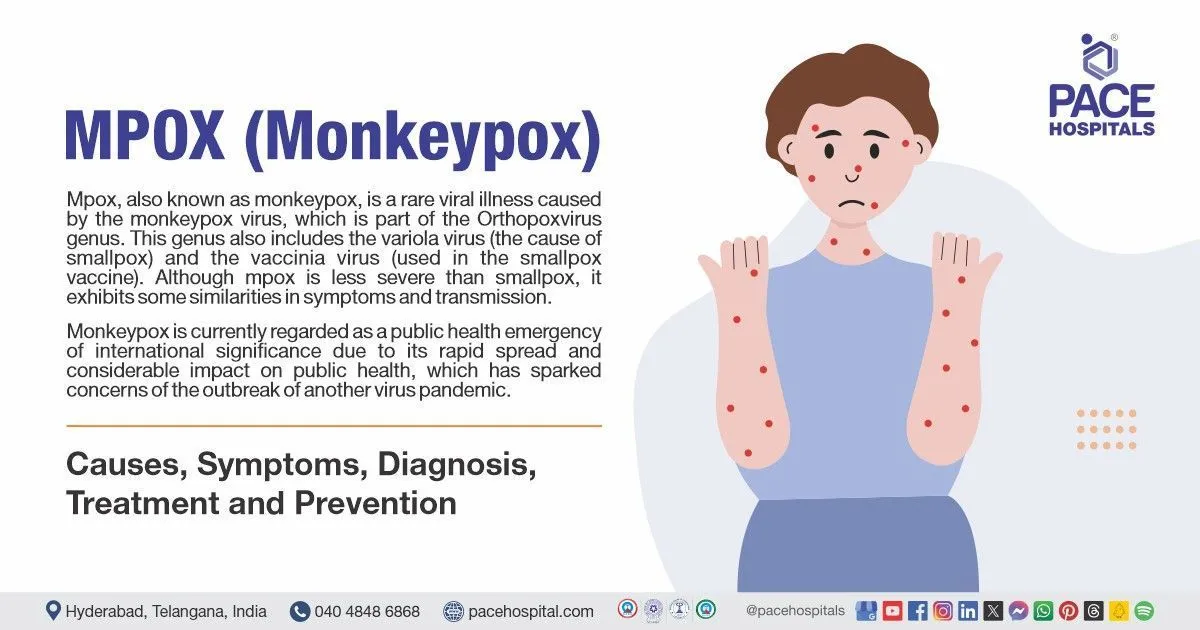
In May 2022, healthcare workers worldwide began noticing something unusual—cases of a rare viral disease called monkeypox appearing in countries where it had never been seen before. What started as isolated cases quickly spread across more than 100 countries, prompting the World Health Organization to declare a public health emergency. This disease, now called mpox, had been largely confined to Central and West Africa for decades. Its sudden global spread reminded the world that infectious diseases don’t respect borders and that emerging threats require rapid, coordinated responses.
Mpox is a viral illness caused by the mpox virus, a member of the Orthopoxvirus genus that also includes the variola virus (which causes smallpox), vaccinia virus (used in smallpox vaccines), and cowpox virus. According to the World Health Organization, mpox causes a painful rash, swollen lymph nodes, fever, and other symptoms that typically last 2-4 weeks. While usually self-limiting, mpox can cause severe disease in certain populations, particularly young children, pregnant women, and people with weakened immune systems.
From Monkeys to Mpox: Understanding the Disease
Despite its former name “monkeypox,” the disease wasn’t discovered in monkeys—it was first identified in laboratory monkeys in 1958, hence the original name. However, the natural reservoirs of the virus are actually African rodents, including rope squirrels, tree squirrels, Gambian pouched rats, and dormice. In November 2022, WHO officially renamed the disease “mpox” to reduce stigma and discrimination associated with the original name.
Two distinct clades (genetic groups) of mpox virus exist:
Clade I (formerly Congo Basin clade):
- Historically found in Central Africa
- Generally causes more severe disease
- Higher mortality rates (up to 10% in some outbreaks)
- More efficient human-to-human transmission
Clade II (formerly West African clade):
- Found in West Africa
- Generally causes milder disease
- Lower mortality rates (less than 1% in recent outbreaks)
- The clade responsible for the 2022-2023 global outbreak
The first human case of mpox was recorded in 1970 in the Democratic Republic of Congo. Since then, mpox has been reported in numerous African countries and occasionally in travelers returning from affected regions.
How Mpox Spreads
Understanding mpox transmission is crucial for prevention. The virus can spread through multiple routes:
Animal-to-human transmission occurs through:
- Direct contact with infected animals’ blood, body fluids, or skin/mucosal lesions
- Bites or scratches from infected animals
- Preparing or consuming inadequately cooked meat from infected animals
- Contact with contaminated materials like bedding used by infected animals
Human-to-human transmission happens through:
- Close, prolonged face-to-face contact (respiratory droplets)
- Direct physical contact with mpox rash, scabs, or body fluids
- Touching contaminated materials like clothing, bedding, or towels
- Sexual contact (which involves prolonged intimate contact)
- From pregnant women to their fetuses through the placenta
- During childbirth through contact with infected skin
- Through close contact between parents and children, including breastfeeding
During the 2022-2023 global outbreak, most transmission occurred through close physical and intimate contact, particularly among networks of men who have sex with men, though mpox can affect anyone regardless of sexual orientation or gender.
Like other infectious diseases including MERS coronavirus and meningitis, understanding transmission pathways helps implement effective prevention strategies.
Recognizing Mpox Symptoms
Mpox symptoms typically appear 6-13 days after exposure but can range from 5-21 days. The illness progresses through distinct stages:
Initial symptoms (1-5 days before rash appears):
- Fever
- Intense headache
- Swollen lymph nodes (a key distinguishing feature from smallpox)
- Back pain and muscle aches
- Profound weakness and fatigue
Rash stage begins 1-3 days after fever onset:
- Rash often starts on the face, then spreads to other body parts
- Commonly affects palms of hands and soles of feet
- Can appear on or inside the mouth, genitals, and eyes
- Progresses through distinct stages: flat spots (macules), raised bumps (papules), fluid-filled blisters (vesicles), pus-filled blisters (pustules), and finally scabs
Rash evolution:
- Lesions develop simultaneously and evolve at the same rate
- Typically very painful, especially in the mouth and genital areas
- Lesions eventually scab over and fall off, completing the illness
- Person remains infectious until all scabs fall off and fresh skin forms underneath
The number of lesions varies from a few to several thousand. In the 2022-2023 outbreak, some people had atypical presentations with only a few lesions in genital or anal areas, sometimes mistaken for sexually transmitted infections.
Most people recover within 2-4 weeks without specific treatment. However, severe cases can occur, particularly in young children, pregnant women, and immunocompromised individuals.
Diagnosis and Treatment
Diagnosis requires laboratory confirmation:
- PCR testing on samples from skin lesions (the preferred method)
- Tests should be performed on lesion material (fluid or crust)
- Blood tests are generally not recommended
- Healthcare workers should collect samples wearing appropriate protective equipment
Treatment focuses on supportive care and managing symptoms:
- Pain relief for the often-painful rash and lesions
- Maintaining hydration and nutrition
- Preventing secondary bacterial infections of lesions
- Isolation to prevent spread to others
- Treating any complications that arise
Antiviral medications may be used in certain cases:
- Tecovirimat (TPOXX®), originally developed for smallpox, may be used for severe mpox
- Vaccinia immune globulin for severe cases or high-risk patients
- These treatments are typically reserved for severe disease or high-risk individuals
Like approaches to treating emerging diseases, mpox management combines supportive care with targeted interventions for severe cases.
Who Is Most at Risk?
Anyone can get mpox through close contact with infected people or animals. However, certain groups face higher risks:
Higher risk populations:
- People with multiple or new sexual partners
- Healthcare workers caring for mpox patients without proper protection
- Household members of infected individuals
- Children in endemic areas with animal exposure
- Pregnant women (risk of complications including fetal loss)
- People with weakened immune systems (including those with advanced HIV)
Risk of severe disease increases with:
- Young age (especially children under 8 years)
- Pregnancy and breastfeeding
- Immunocompromising conditions
- Eczema or other skin conditions
- Malnutrition (particularly in resource-limited settings)
In endemic African countries, children account for most cases and deaths. During the 2022-2023 global outbreak, most cases occurred among adults, primarily men who have sex with men, reflecting the specific transmission networks involved rather than any biological predisposition.
Prevention: Protecting Yourself and Others
Vaccination provides important protection:
- Modified vaccinia Ankara (MVA) vaccine offers protection against mpox
- Originally developed for smallpox but effective against mpox (both are orthopoxviruses)
- Recommended for people at high risk of exposure
- Can be used as post-exposure prophylaxis (given within 4 days of exposure)
- Two-dose regimen provides optimal protection
General prevention measures:
- Avoid close physical contact with people who have mpox rash
- Don’t share bedding, towels, or clothing with infected individuals
- Practice good hand hygiene—wash hands frequently
- Use condoms and dental dams during sexual activity (though these don’t provide complete protection since mpox spreads through skin contact)
- Avoid contact with wild animals, especially sick or dead animals
- Ensure meat is thoroughly cooked before eating
- Healthcare workers should use appropriate PPE when caring for mpox patients
If you have mpox:
- Isolate at home until all scabs fall off and fresh skin forms
- Cover lesions when around others
- Wear a well-fitting mask if you must be around people
- Avoid physical contact, including sexual contact
- Don’t share items that touched your rash
- Clean and disinfect frequently touched surfaces
- Inform sexual partners and close contacts about potential exposure
Similar to preventing measles and other infectious diseases, vaccination combined with behavioral precautions provides the best protection.
The 2022-2023 Global Outbreak
The multi-country mpox outbreak beginning in May 2022 represented an unprecedented spread of the disease:
Outbreak characteristics:
- Over 87,000 confirmed cases across 110+ countries
- Most cases in countries where mpox was not previously endemic
- Predominantly affected gay, bisexual, and other men who have sex with men
- Primarily spread through sexual and intimate contact networks
- Lower mortality than endemic outbreaks (less than 0.1%)
Global response included:
- WHO declaring a Public Health Emergency of International Concern (July 2022)
- Accelerated vaccine deployment in affected countries
- Targeted communication and prevention campaigns
- Enhanced surveillance and case detection
- Research into transmission patterns and effective interventions
By mid-2023, cases declined significantly in most countries, demonstrating that focused public health interventions, community engagement, and vaccination can control outbreaks.
Mpox in Africa: The Ongoing Endemic Challenge
While global attention focused on the 2022-2023 outbreak, mpox has caused ongoing illness and death in Africa for decades. According to WHO’s mpox surveillance, African countries continue experiencing cases, with periodic outbreaks causing significant morbidity and mortality.
Challenges in endemic countries:
- Limited healthcare infrastructure and diagnostic capacity
- Insufficient access to vaccines and treatments
- Poverty and food insecurity driving bushmeat consumption
- Weak surveillance systems underreporting cases
- Competing health priorities including malaria, HIV, and tuberculosis
- Limited research funding and attention
The global outbreak highlighted vast inequities—wealthy countries rapidly accessed vaccines while African nations, living with mpox for decades, received minimal vaccine supplies. Like disparities in maternal health and micronutrient deficiency, mpox control requires addressing underlying inequalities.
The Path Forward
Controlling mpox globally requires comprehensive approaches:
Strengthening surveillance: Improving detection, reporting, and monitoring in all countries, particularly endemic African nations.
Ensuring equitable access: Making vaccines and treatments available to all countries based on need, not wealth.
Supporting research: Studying transmission dynamics, developing better diagnostics and treatments, and understanding long-term outcomes.
Community engagement: Working with affected communities to develop culturally appropriate prevention messages and interventions.
Reducing stigma: Ensuring public health messaging doesn’t stigmatize particular communities while effectively communicating risk reduction strategies.
Addressing root causes: In endemic regions, addressing poverty, improving food security, and providing alternatives to bushmeat can reduce animal-to-human transmission.
Understanding Mpox in Context
Mpox reminds us that infectious diseases can emerge or re-emerge unexpectedly, spreading rapidly in our interconnected world. It demonstrates that diseases affecting marginalized or distant populations eventually concern everyone, and that health equity isn’t just morally right—it’s strategically necessary for global health security.
The disease also shows that with scientific knowledge, public health tools, and community cooperation, we can control outbreaks. Vaccines developed for smallpox proved effective against mpox. Public health interventions reduced transmission. Communities adapted behaviors to protect themselves and others.
As mpox transitions from global emergency to ongoing management, maintaining vigilance, supporting endemic countries, ensuring equitable access to medical countermeasures, and learning lessons for future outbreaks remain essential priorities.
Frequently Asked Questions (FAQs)
Brief, casual contact like handshakes, sitting near someone on public transport, or passing someone in a hallway poses very low mpox transmission risk. The virus requires prolonged, close contact for transmission—such as hugging, kissing, prolonged face-to-face interaction, sexual contact, or sharing bedding. However, touching contaminated materials (towels, bedding, clothing) that contacted someone’s rash could theoretically transmit the virus. The 2022-2023 outbreak confirmed that mpox doesn’t spread easily through casual contact, which is why it didn’t cause widespread community transmission like COVID-19.
The MVA vaccine is approximately 85% effective against mpox when the two-dose series is completed, though one dose provides substantial protection. WHO recommends vaccination for: (1) people at high risk including those with multiple sexual partners in areas with active transmission; (2) healthcare workers who might care for mpox patients; (3) laboratory workers handling specimens; (4) people exposed to mpox cases (post-exposure prophylaxis within 4 days). Not everyone needs mpox vaccination—recommendations depend on local epidemiology, individual risk factors, and vaccine availability.
Despite causing similar-looking rashes, mpox, chickenpox, and smallpox are caused by completely different viruses. Chickenpox (caused by varicella-zoster virus) is much more contagious, affects mainly children, and causes itchy rather than painful lesions that appear in successive waves. Smallpox (eradicated in 1980) was far more contagious and deadly than mpox but didn’t cause swollen lymph nodes, which mpox typically does. Mpox lesions evolve simultaneously and uniformly, while chickenpox lesions appear in different stages simultaneously. These differences help doctors distinguish between these diseases.
Possibly, but protection depends on when you were vaccinated. Smallpox vaccination ended in most countries by the 1980s after smallpox was eradicated. Studies suggest old smallpox vaccines provided about 85% cross-protection against mpox, but this immunity likely wanes over time. People vaccinated before 1980 may have some residual protection, but it’s probably not complete after 40+ years. Additionally, many people believe they received smallpox vaccines but actually received other childhood vaccines. If you’re at high risk of mpox exposure, consult healthcare providers about vaccination regardless of possible prior smallpox vaccination.
Several factors likely contributed to the 2022-2023 global outbreak: (1) Declining population immunity to orthopoxviruses as smallpox vaccination stopped decades ago; (2) A single introduction of the virus into highly connected international sexual networks enabling rapid global spread; (3) Possible viral mutations making transmission slightly more efficient, though this remains under investigation; (4) Increased international travel facilitating disease spread; (5) Improved diagnostic capacity detecting cases that might previously have been missed. The outbreak demonstrated that even known diseases can cause unexpected patterns when epidemiological conditions change.
References
- World Health Organization. (2024). Mpox. Retrieved from https://www.who.int/health-topics/mpox
- World Health Organization. (2024). Mpox (monkeypox) – Fact Sheet. Retrieved from https://www.who.int/news-room/fact-sheets/detail/mpox
- World Health Organization. (2024). Mpox Disease Outbreak News. Retrieved from https://www.who.int/emergencies/disease-outbreak-news
- World Health Organization. (2024). Mpox vaccination. Retrieved from https://www.who.int/news-room/questions-and-answers/item/mpox-vaccines
- Observer Voice. Middle East Respiratory Syndrome Coronavirus (MERS). Retrieved from https://observervoice.com/mers-coronavirus-symptoms-transmission-prevention/
Disclaimer: This article is an adaptation of publicly available information from WHO’s Mpox
health topic page (WHO, Geneva. Licence: CC BYNC-SA 3.0 IGO). WHO is not responsible for the
content or accuracy of this adaptation. This content is for informational and educational purposes
only and does not constitute medical advice. ObserverVoice.com is a news and information platform
— not a healthcare provider.
Observer Voice is the one stop site for National, International news, Sports, Editor’s Choice, Art/culture contents, Quotes and much more. We also cover historical contents. Historical contents includes World History, Indian History, and what happened today. The website also covers Entertainment across the India and World.

