

Can AI Transform Customer Care as Consumers Demand Immediate Support?

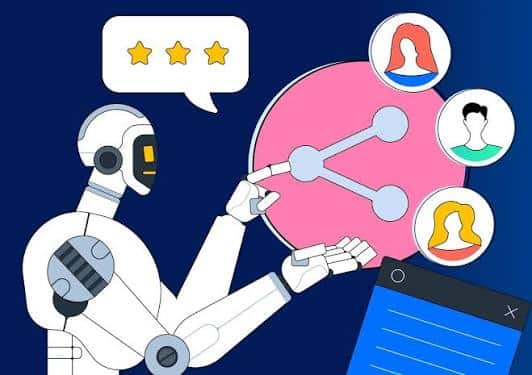
There has been a significant transformation in customer service, with AI-powered chatbots and voice assistants increasingly handling routine inquiries. This shift allows businesses to provide quicker responses and 24/7 support while reducing operational costs. As AI takes over repetitive tasks, it is reshaping India’s business process outsourcing (BPO) sector, prompting discussions about job roles, skills, and data privacy.
AI is already answering before humans do
The integration of AI in customer service is already a reality. Customers are often greeted by chatbots or AI voice assistants before reaching a human agent. These AI systems can direct inquiries, create support tickets, summarize past interactions, and automate documentation. Data scientist Vishnu Prasad Sharma explains that AI decides whether to continue a conversation or involve a human based on its confidence in the answer and the nature of the inquiry. This transition results in shorter wait times and faster responses for customers.
Research from Gartner indicates that 85% of customer service leaders are exploring or deploying AI chatbots, with 71% of CRM leaders planning to increase AI investments. By 2029, Gartner estimates that AI could autonomously resolve nearly 80% of common customer service issues. However, the role of human agents is evolving to focus on more complex issues that require judgment and empathy.
The biggest shift isn’t fewer calls — it’s different calls
The nature of customer service inquiries is changing. Many routine tasks, such as answering FAQs and processing refunds, are increasingly managed by AI. Consequently, human agents are now dealing with more complex situations that often involve frustrated customers seeking understanding and reassurance. Research from Harvard Business Review shows that positive emotional experiences with a company significantly increase customer loyalty and recommendations.
A former customer service executive noted that while many customers prefer AI for simple queries, they still seek human support for complex issues. The challenge lies not just in whether customers interact with AI or humans, but in ensuring that someone takes ownership of their problems.
India’s BPO industry is standing at a turning point
India has long been a leader in customer support and BPO services, employing around 1.65 million people in various roles. Major cities like Bengaluru and Hyderabad have become outsourcing hubs. However, the rise of AI is slowing hiring in parts of the industry as companies experiment with AI agents for routine queries. This shift is prompting a redesign of customer service teams to focus on specialized roles that require problem-solving and oversight of AI systems.
The transition does not signal the end of India’s BPO industry but indicates a change in the type of work required. As the demand for communication skills remains, adaptability and digital literacy are becoming increasingly important for the workforce.
New skills are becoming as important as communication skills
Success in customer service has traditionally relied on communication and patience. With AI’s integration, expectations are shifting. Agents are now required to work with AI tools, verify information, and handle escalated cases. Many are focusing on problem-solving and delivering personalized support during complex interactions.
Experienced agents are also tasked with monitoring automated interactions and ensuring quality standards. The role of human agents is evolving from executing routine tasks to supervising and complementing AI processes. While communication remains vital, skills such as digital literacy and adaptability are now equally essential.
AI still has limits
Despite advancements, AI has limitations. It excels in handling structured queries but struggles with ambiguity and emotional contexts. AI can generate incorrect responses and may misinterpret nuances like humor or sarcasm. Language diversity in India adds complexity to speech recognition, and privacy concerns arise as customers may inadvertently share personal information with AI.
Probir Roy Chowdhury, a partner at JSA Advocates and Solicitors, emphasizes that accountability for data privacy typically lies with the company deploying the chatbot. Sharma notes that AI often lacks the context needed for complex conversations, reinforcing the necessity of human agents for sensitive interactions.
So…will AI replace call centres?
The traditional customer service model is evolving. AI is increasingly the first point of contact, managing routine inquiries before human agents step in for more complex issues. This does not mean call centers will disappear; rather, the nature of the work is changing. Human agents will handle a smaller but more intricate share of interactions, necessitating investment in employee upskilling alongside AI deployment.
The future of customer service is likely to be defined by collaboration between humans and AI, with technology handling routine tasks while humans provide the expertise and empathy that AI cannot replicate.
Observer Voice is the one stop site for National, International news, Sports, Editor’s Choice, Art/culture contents, Quotes and much more. We also cover historical contents. Historical contents includes World History, Indian History, and what happened today. The website also covers Entertainment across the India and World.

