

Health budget: Turning allocations into healthcare that reaches people
Health budget: Many countries waste 20%—better systems save lives

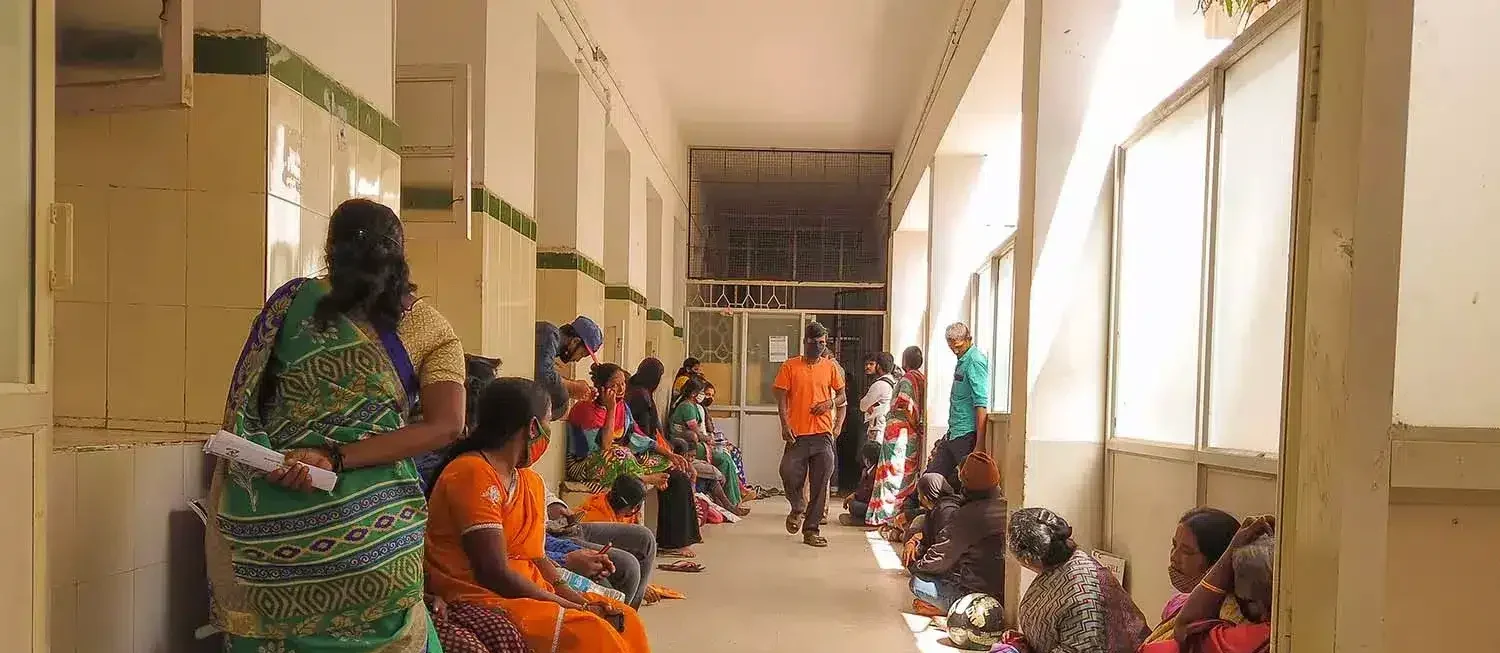
Dr. Emmanuel Mensah stared at the clinic’s empty shelves in frustration. Ghana’s parliament had approved a 15% increase in the health budget six months ago. The money was supposed to buy medicines, repair equipment, and hire nurses for rural clinics like his.
“Where is it?” he asked the district health director during her visit. “The budget says the money exists. Parliament approved it. But we haven’t received anything. No medicines arrived. No new staff. Nothing changed.”
The director sighed. “The money is stuck somewhere in the system. Finance ministry says they released it to health ministry. Health ministry says they sent it to regional offices. Regional offices say they’re waiting for procurement approvals. Meanwhile, patients suffer and die from preventable diseases because we can’t access medicines that were supposedly budgeted for months ago.”
This scenario—the gap between budget allocations on paper and actual healthcare delivery—plagues health systems worldwide. According to WHO’s work on health budget, raising domestic public funds is essential for universal health coverage (UHC). No country has made significant progress toward UHC without increasing reliance on public revenues. Therefore, domestic tax systems that are essential to support country’s fiscal space expansion are central to the UHC agenda.
For more on health system financing, see our articles on healthcare funding and universal health coverage at ObserverVoice.com.
Beyond the Numbers: Making Budgets Work
While the level of revenues matter, the allocation and use of these revenues are two crucial elements in supporting effective progress toward UHC. Public Financial Management (PFM) systems are key enabling factors to support appropriate formulation, execution and accounting of government expenditure.
In health, countries face challenges at all stages of the PFM cycle. Key questions include: How to align budget allocations with sector needs? How to ensure effective disbursement? How to make the budget system more accountable and transparent?
The stark reality: many countries spend less than 80% of their annual budget allocation for health. This means that even when money is allocated, bureaucratic bottlenecks, corruption, poor planning, and weak management systems prevent it from reaching hospitals, clinics, and patients.
WHO published Budget matters for health: key formulation and classification issues in June 2018, explaining that robust public budgeting in the health sector is a necessary condition to enable the effective implementation of health financing reforms towards universal health coverage.
WHO also published case studies documenting reform experiences: Health financing and budgeting reforms in Gabon in August 2020, Budgeting for results in health: key features, achievements and challenges in Peru in August 2020, and Transition to programme budgeting in Uganda in September 2021.
For more on health system challenges, see our articles on healthcare efficiency at ObserverVoice.com.
The Montreux Collaborative: Finance Meets Health
As part of the Montreux Collaborative Agenda on Fiscal Space, PFM and Health Financing, WHO is supporting countries and partners in fostering dialogue between health and finance authorities, with the aim to strengthen domestic PFM systems and make budget practices more effective toward UHC.
This collaboration addresses a fundamental problem: finance ministries and health ministries often speak different languages. Finance officials focus on fiscal discipline, macroeconomic stability, and standardized budget categories. Health officials focus on patient needs, disease burdens, and service delivery. Without effective dialogue, budgets become disconnected from health realities.
WHO’s activities include Fostering fiscal dialogue between finance and health, Leveraging public financial management for better health, Assessing country progress in health financing for UHC, Implementing health financing reform, Pooling revenues and reducing fragmentation, and Promoting strategic purchasing.
WHO produced a video Geert van Maanen on finance and health dialogue in June 2018, explaining how to bridge this gap. WHO also published Public Spending on Health: A Closer Look at Global Trends in December 2018.
Key Features of Good Budget Systems
Generally, the key features of a well-functioning budgeting system typically include: Multi-year planning and budgeting, Policy or output-oriented allocation, Realistic and credible estimates of costs, and Open and transparent consultation processes.
In health, proactive engagement of health ministries in the budgeting process can facilitate alignment of budget allocations with sector priorities, as laid out in national health strategies and plans. The development of multi-year plans and budgets is likely to improve predictability in the sector’s resources.
If the health budget is formulated according to sector goals or outputs and the execution rules align with this logic, it will make budgets more responsive to sector needs than if the formulation follows an input-based approach. A quality performance framework of budgets will also facilitate financial and operational accountability in health.
WHO published guidance including Aligning Public Financial Management and Health Financing, Process guide for identifying issues and fostering dialogue in public financial management, and Developing a national health financing strategy: a reference guide.
WHO maintains a repository of health budgets and country mapping of health budget classifications. The Global Health Expenditure Database provides comprehensive spending data.
For more on health policy implementation, see our articles on health governance at ObserverVoice.com.
Africa’s Budget Reform Success
Progress is happening. Nearly 50% of African countries introduced programme budgets in health, enhancing accountability and transparency. Programme budgets organize spending around health objectives—maternal health, infectious disease control, primary care—rather than just line items like “salaries” or “supplies.”
This shift transforms accountability. Instead of tracking whether money was spent on the right category, governments can now ask: Did maternal mortality decrease? Did more people access primary care? Did vaccination coverage improve? The budget becomes a tool for achieving health outcomes, not just managing expenses.
Global Commitments
The World Health Assembly passed two key resolutions: WHA64.9 on Sustainable health financing structures and universal coverage (2011) and WHA58.33 on Sustainable health financing, universal coverage and social health insurance (2005).
WHO’s fact sheet on Universal health coverage (UHC) explains the connections between budgeting and health coverage. WHO’s Health Financing team coordinates technical work. Related topics include health accounts, health financing, universal health coverage, and common goods for health.
Dr. Mensah’s clinic eventually received its medicines—eight months late. “The delay cost lives,” he said quietly. “Two pregnant women died from complications we could have treated if we’d had the medicines. But the finance minister can report that 100% of the budget was executed. The numbers look perfect. Reality tells a different story.”
With WHO’s comprehensive approach to health budgeting, countries can transform budget systems—ensuring money allocated actually reaches patients, closing the gap between promises and reality, and making universal health coverage more than words on paper.
For more information, visit WHO’s health budget topic page or explore related content at ObserverVoice.com.
Frequently Asked Questions (FAQs)
According to WHO’s work on health budget, raising domestic public funds is essential for universal health coverage (UHC). No country has made significant progress toward UHC without increasing reliance on public revenues. Domestic tax systems that support fiscal space expansion are central to the UHC agenda. While revenue levels matter, the allocation and use of revenues are crucial elements in supporting effective progress toward UHC. Public Financial Management (PFM) systems are key enabling factors to support appropriate formulation, execution and accounting of government expenditure.
Countries face challenges at all stages of the PFM cycle. Key questions include: How to align budget allocations with sector needs? How to ensure effective disbursement? How to make the budget system more accountable and transparent? The stark reality is that many countries spend less than 80% of their annual budget allocation for health, meaning bureaucratic bottlenecks, corruption, poor planning, and weak management systems prevent money from reaching hospitals, clinics, and patients even when allocated.
Key features of a well-functioning budgeting system include: Multi-year planning and budgeting, Policy or output-oriented allocation, Realistic and credible estimates of costs, and Open and transparent consultation processes. Proactive engagement of health ministries in the budgeting process can facilitate alignment of budget allocations with sector priorities. Multi-year plans and budgets improve predictability. If health budgets are formulated according to sector goals or outputs rather than input-based approaches, budgets become more responsive to sector needs. WHO published Budget matters for health: key formulation and classification issues June 2018.
As part of the Montreux Collaborative Agenda on Fiscal Space, PFM and Health Financing, WHO supports countries and partners in fostering dialogue between health and finance authorities to strengthen domestic PFM systems and make budget practices more effective toward UHC. WHO’s activities include Fostering fiscal dialogue between finance and health, Leveraging public financial management for better health, Assessing country progress in health financing for UHC, and Promoting strategic purchasing. WHO maintains a repository of health budgets and published guidance on Aligning Public Financial Management and Health Financing.
Significant progress is occurring. Nearly 50% of African countries introduced programme budgets in health, enhancing accountability and transparency. Programme budgets organize spending around health objectives—maternal health, infectious disease control, primary care—rather than just line items. WHO documented reform experiences: Health financing and budgeting reforms in Gabon August 2020, Budgeting for results in Peru August 2020, and Transition to programme budgeting in Uganda September 2021. The World Health Assembly passed resolutions WHA64.9 (2011) and WHA58.33 (2005) on sustainable health financing.
- WHO Health Budget Topic Page
- Budget Matters for Health: Key Formulation and Classification Issues (June 2018)
- Global Health Expenditure Database
- WHO Repository of Health Budgets
- WHA Resolution 64.9: Sustainable Health Financing Structures and Universal Coverage (2011)
Disclaimer: This article is an adaptation of publicly available information from WHO’s Health budget
health topic page (WHO, Geneva. Licence: CC BYNC-SA 3.0 IGO). WHO is not responsible for the
content or accuracy of this adaptation. This content is for informational and educational purposes
only and does not constitute medical advice. ObserverVoice.com is a news and information platform
— not a healthcare provider.
Observer Voice is the one stop site for National, International news, Sports, Editor’s Choice, Art/culture contents, Quotes and much more. We also cover historical contents. Historical contents includes World History, Indian History, and what happened today. The website also covers Entertainment across the India and World.

