

Guillain-Barré Syndrome: The Sudden Paralysis That Often Follows Infection

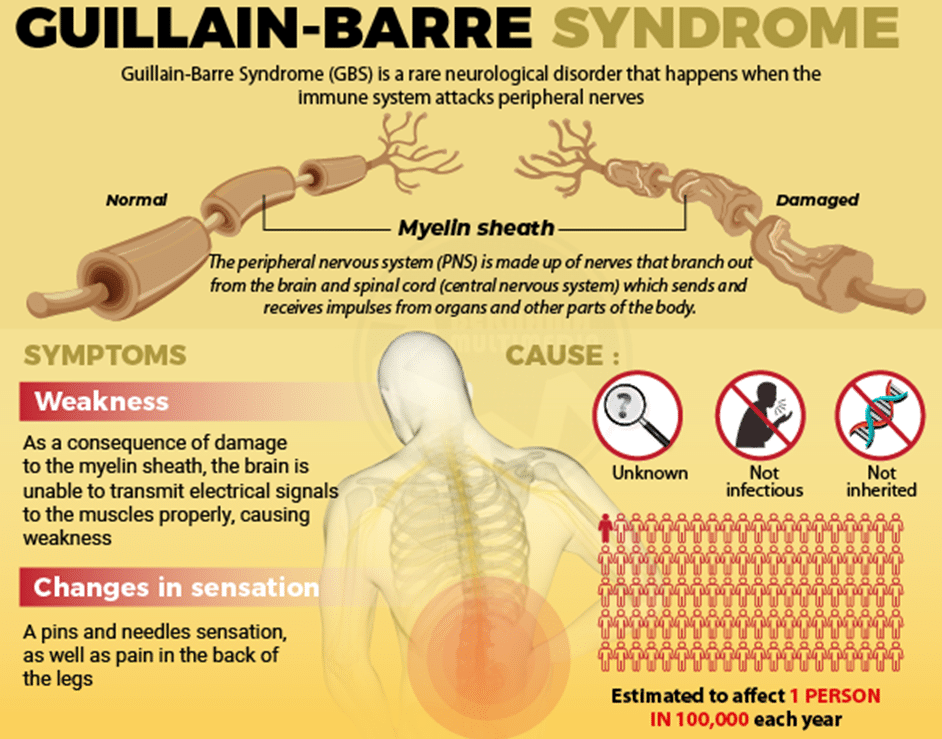
Imagine feeling fine one week, then developing tingling in your feet. Within days, the tingling progresses to weakness. Your legs become weak and gradually paralyzed. The paralysis climbs upward—your thighs weaken, your trunk weakens, your arms weaken. You progress from walking to needing a wheelchair within days. Then your facial muscles weaken. Your breathing becomes difficult. You require a breathing machine. The rapid progression from health to life-threatening paralysis occurs over days to weeks. This is Guillain-Barré syndrome—a rare but serious autoimmune condition causing sudden paralysis that often follows infection. Guillain-Barré syndrome, commonly abbreviated as GBS, is a rare but serious autoimmune condition affecting peripheral nerves. The immune system mistakenly attacks nerve fibers. The attacked nerves become damaged and inflamed. The damaged nerves cannot transmit motor signals. Paralysis develops. The paralysis is ascending—starting in the legs and climbing toward the head. The condition can progress rapidly—causing complete paralysis within days. The paralysis can affect respiratory muscles—requiring mechanical ventilation. Guillain-Barré syndrome affects approximately 1 to 2 people per 100,000 per year. The disease is rare. The disease is serious—approximately 5 percent mortality rate even with modern treatment. Approximately 20 percent of patients require mechanical ventilation. Permanent disability occurs in approximately 15 to 20 percent of survivors. What makes Guillain-Barré syndrome particularly important is the post-infection trigger. GBS often develops following bacterial or viral infection. The infection triggers abnormal immune response. The immune system produces antibodies attacking nerve fibers. The attack damages myelin—the insulation on nerve fibers. The damaged nerves function abnormally or cease functioning. Paralysis results. The infection most commonly preceding GBS is Campylobacter jejuni—a foodborne bacterium. However, respiratory infections, cytomegalovirus, and other infections trigger GBS. More recently, Zika virus infection has been associated with GBS epidemics. The connection between infection and GBS is crucial because it explains disease development and offers potential prevention through infection prevention. In this comprehensive article, we will explore what Guillain-Barré syndrome is, understand why it causes paralysis, recognize early symptoms and progression patterns, explore diagnostic methods, learn about modern treatments improving outcomes, and understand recovery and long-term prognosis.
Understanding Peripheral Nerve Structure and Function
Before we explore Guillain-Barré syndrome, we need to understand peripheral nerve anatomy and how myelin damage causes paralysis. Peripheral nerves extend from the spinal cord to muscles and sensory organs. Peripheral nerves contain motor fibers carrying motor commands to muscles. Peripheral nerves contain sensory fibers carrying sensory information from body. Motor neurons extend from spinal cord to muscles. The motor neuron has a cell body in spinal cord. The axon extends from spinal cord through peripheral nerve to muscle. The axon is very long—can be over a meter in length. Myelin sheath insulates the axon. Myelin is produced by Schwann cells—specialized support cells. Myelin wraps around axon like insulation on electrical wire. Myelin allows rapid action potentials. The action potential jumps between gaps in myelin—nodes of Ranvier. The jumping conduction is fast. Without myelin, conduction is slow. Nodes of Ranvier are gaps in myelin. The nodes are spaced regularly along axon. Action potentials regenerate at nodes. The regular spacing allows rapid conduction. Neuromuscular junction is where motor neuron meets muscle. The axon terminal releases acetylcholine—a neurotransmitter. The acetylcholine activates muscle. The muscle contracts. In Guillain-Barré syndrome, myelin is damaged. The damaged myelin cannot insulate the axon. The action potentials cannot jump efficiently. Conduction is slowed or blocked. Motor signals cannot reach muscles. The muscles do not contract. Weakness or paralysis results. The damage to myelin is from immune attack. The immune system produces antibodies. The antibodies bind to myelin. Complement activation occurs. Inflammation develops. Myelin is destroyed—demyelination. Additionally, the axons can be damaged—axonal damage. In severe GBS, extensive axonal damage causes severe paralysis and slow recovery. In mild GBS, primarily myelin damage causes less severe paralysis and faster recovery. The immune system damage to myelin explains the paralysis in Guillain-Barré syndrome.
What is Guillain-Barré Syndrome?
Guillain-Barré syndrome is an acute autoimmune neuropathy causing rapid-onset paralysis. The disease is characterized by ascending paralysis—paralysis starting in legs and progressing upward. The ascending pattern is distinctive. The disease has acute onset. Symptoms begin suddenly. Progression is rapid—days to weeks. The rapid progression distinguishes GBS from other neuropathies developing over months or years. GBS has inflammatory demyelination. Myelin is attacked and damaged. Inflammation develops around nerves. The inflammation contributes to dysfunction. GBS is subdivided into variants based on pathology and clinical presentation. Acute inflammatory demyelinating polyneuropathy (AIDP) is the most common form—approximately 80 to 90 percent of GBS cases in developed countries. AIDP is primarily demyelinating—myelin is destroyed. Axons are relatively spared. The prognosis is generally good. Most patients recover well. Motor axonal neuropathy (AMAN) and sensorimotor axonal neuropathy (AMSAN) are more common in developing countries. These are axonal forms. Axons are damaged and destroyed. Myelin might be relatively spared. Axonal damage causes more severe paralysis. Recovery is slower. Prognosis is less favorable. Miller Fisher syndrome is a variant affecting cranial nerves. Ophthalmoplegia—paralysis of eye muscles. Ataxia—loss of coordination. Areflexia—loss of reflexes. Facial and bulbar weakness. Descending paralysis rather than ascending. The classic triad of ophthalmoplegia, ataxia, areflexia. Miller Fisher accounts for approximately 5 percent of GBS. Pharyngeal-cervical-brachial variant affects upper body. Facial, throat, and arm paralysis. Ascending from upper body downward rather than typical ascending from legs. Pandysautonomia variant includes autonomic symptoms. Heart rhythm abnormalities. Blood pressure fluctuations. Sweating abnormalities. GBS can be triggered by infections. Campylobacter jejuni is the most common trigger. Respiratory infections. Cytomegalovirus. Epstein-Barr virus. Zika virus. Other viral and bacterial infections. The infection precedes GBS by one to three weeks typically. The infection triggers immune response. The immune response mistakenly attacks nerve myelin. Molecular mimicry is thought to cause this. The bacteria or virus have antigens similar to nerve antigens. The immune system produces antibodies against infection. The antibodies cross-react with nerve antigens. The cross-reaction damages nerves. Other triggers include vaccination—particularly older vaccines. Recent Zika virus infection associated with GBS epidemic. However, benefits of vaccination far outweigh GBS risk. GBS can occur without identifiable trigger. Approximately 30 percent of GBS cases have no preceding infection. The cause in these cases is unknown.
Recognizing Guillain-Barré Syndrome Symptoms: The Progressive Paralysis
Guillain-Barré syndrome has distinctive symptoms and progression pattern. Initial symptoms. Paresthesias—tingling or numbness. Usually in feet and lower legs. Progresses upward. Weakness develops. Usually starting in legs. Proximal muscles affected first—thigh, hip muscles. Distal muscles affected subsequently—calf, foot muscles. Weakness progresses over hours to days. Ascending paralysis pattern. The paralysis typically starts in feet. Feet become weak then paralyzed. The paralysis progresses upward—legs, thighs, trunk. Arm weakness develops. Facial weakness develops. Bulbar symptoms develop—difficulty swallowing, speaking. Respiratory muscle weakness develops. The ascending pattern is characteristic. However, some patients have non-ascending presentations. Some have distal predominant weakness. Some have focal presentations initially. The ascending pattern is most common. Leg weakness is the most common initial symptom. Approximately 80 to 90 percent of patients have leg weakness at onset. Sensory symptoms accompany weakness. Paresthesias in feet and hands. Numbness in extremities. Back pain occurs in approximately 50 percent of patients. The back pain can be severe. Back pain might precede weakness. Pain in legs and arms. The sensory symptoms accompany motor symptoms. Autonomic symptoms develop. Heart rhythm abnormalities—arrhythmias. Blood pressure changes—hypertension or hypotension. Excessive sweating. Facial flushing. Urinary symptoms—difficulty urinating or urinary retention. The autonomic symptoms indicate broader nervous system involvement. Cranial nerve involvement. Facial weakness. Difficulty with facial expressions. Ptosis—drooping eyelid. Eye movements affected. Difficulty chewing. Difficulty swallowing—dysphagia. Speech difficulty—dysarthria. Difficulty speaking clearly. Gag reflex changes. Bulbar involvement can be life-threatening. Respiratory involvement. Weakness of intercostal muscles—muscles between ribs. Weakness of diaphragm. Breathing becomes difficult. Shortness of breath develops. Oxygen saturation drops. Respiratory failure can occur—requiring mechanical ventilation. Approximately 20 to 30 percent of GBS patients require mechanical ventilation. Respiratory involvement indicates severe disease. Pain in GBS is common but often underrecognized. Back pain in 50 percent. Neck pain. Arm and leg pain. The pain can be severe. Pain treatment is important. Psychological symptoms. Anxiety from rapid paralysis. Fear of respiratory failure. Depression from paralysis and hospitalization. The psychological burden is significant. Peak paralysis typically occurs within 2 to 4 weeks. The peak marks the maximum weakness. After peak, gradual recovery begins. The progression to peak paralysis can be frightening. The rapid onset and progression is distinctive.
Understanding Guillain-Barré Syndrome Pathophysiology: Why Paralysis Occurs
Understanding the immune mechanisms causing paralysis explains the disease process. Infection triggers immune response. Bacteria or virus infects patient. Immune system produces antibodies against pathogen. Antibodies target specific antigens on bacteria or virus. Molecular mimicry occurs. The pathogenic antigens resemble nerve antigens. The antibodies against pathogenic antigens also recognize nerve antigens. Cross-reactive antibodies attack nerve. The cross-reaction is the likely mechanism of GBS development. Antibodies attack myelin. The antibodies bind to myelin antigens. Common targets include GM1, GD1a, GD1b gangliosides. The antibodies are IgG and IgM antibodies. Complement activation. The antibody-myelin complex activates complement. Complement components C3 and C5 are activated. Complement fragments are chemotactic—attract immune cells. Immune cells infiltrate nerves. Macrophages and T cells infiltrate. The immune cells destroy myelin. Myelin is stripped from axons—demyelination. Inflammation develops. Inflammatory mediators accumulate. Cytokines—TNF-alpha, IL-1, IL-6. The inflammation causes swelling of nerve roots and nerves. The inflammation contributes to conduction block. Conduction block occurs. The inflamed, demyelinated nerve cannot conduct action potentials. Motor signals cannot be transmitted. Muscles do not receive motor commands. Muscles do not contract. Paralysis results. Axonal damage. In severe cases, axons are damaged. The damage is from complement activation and inflammatory cell infiltration. Axons degenerate. Axonal degeneration causes more severe paralysis. Recovery is slower because axons must regenerate. Dorsal root ganglion involvement. The dorsal root ganglia are inflamed. The inflammation can cause sensory and autonomic symptoms. Cranial nerve involvement. CN VII (facial nerve) commonly affected. CN IX and X (glossopharyngeal and vagus) causing swallowing and speech difficulty. CN II (optic) in Miller Fisher syndrome. The widespread nerve involvement explains diverse symptoms. Autonomic involvement. Autonomic nerves are affected. Parasympathetic and sympathetic dysfunction. Cardiac autonomic involvement causes arrhythmias and blood pressure changes. The multisystem involvement makes GBS serious and requiring intensive care in severe cases. Understanding the immune mechanisms explains the disease and guides treatment targeting immune dysfunction.
Diagnosis: Recognizing Guillain-Barré Syndrome
Diagnosing Guillain-Barré syndrome requires clinical recognition of ascending paralysis pattern and supportive diagnostic testing. Clinical history is crucial. Doctors ask about initial symptoms. Tingling in feet. Weakness in legs. Progression pattern—how quickly did weakness spread. Duration of symptoms. Timeline—how long from symptom onset. Prior infection. Recent respiratory or gastrointestinal infection. Recent vaccination. Physical examination documents paralysis. Motor strength testing. Weakness severity graded 0 to 5. Ascending pattern documented. Distal versus proximal weakness assessed. Facial weakness assessed. Bulbar weakness assessed. Respiratory assessment. Vital capacity measurement. Breath sounds. Difficulty breathing. Autonomic assessment. Heart rate and rhythm. Blood pressure sitting and supine. Sweating. Sensory examination. Paresthesias documented. Sensory level assessed. Reflexes. Areflexia—absent reflexes. Hyporeflexia—decreased reflexes. Reflex loss is characteristic. Cranial nerve examination. Testing all cranial nerves. Documentation of weakness. Lumbar puncture (spinal tap) is diagnostic. CSF analysis. Elevated protein in CSF—typically 100-1000 mg/dL. Normal or mildly elevated cell count—albuminocytologic dissociation. The dissociation of high protein with normal cells is characteristic of GBS. The CSF finding helps confirm diagnosis. CSF is normal in some early cases. Repeat lumbar puncture might be necessary. Electrodiagnostic testing. Nerve conduction studies. Slowed conduction velocity. Conduction blocks. Prolonged latencies. The findings depend on demyelinating versus axonal pathology. Electromyography (EMG). Denervation—signs of nerve damage. Reduced recruitment. The findings indicate motor neuron dysfunction. Antibody testing. Anti-GM1 antibodies. Anti-GD1a antibodies. Anti-GD1b antibodies. Positive in approximately 50 percent of GBS cases. Negative does not exclude GBS. Brain imaging. MRI or CT usually normal. Imaging rules out other causes. Nerve root enhancement might be seen on MRI. The diagnosis of GBS is clinical based on: acute ascending paralysis plus areflexia plus CSF albuminocytologic dissociation plus electrodiagnostic findings supporting demyelination or axonal damage. The diagnosis is made on clinical grounds. Confirmatory testing supports diagnosis. Early diagnosis is crucial because prompt treatment improves outcomes.
Treatment: Modern Interventions Saving Lives
Guillain-Barré syndrome treatment focuses on stopping immune attack and supporting paralyzed patients. Immunoglobulin (IVIG) therapy is first-line treatment. High-dose intravenous immunoglobulin. Typical dose 2 grams per kilogram body weight. Delivered over 3 to 5 days. Mechanism unclear but likely involves immune modulation. IVIG binds to autoreactive antibodies. IVIG neutralizes antibodies. IVIG suppresses immune cell activation. IVIG modulates complement. IVIG reduces inflammation. IVIG is effective in approximately 60 to 80 percent of patients. IVIG shortens disease course by approximately 50 percent. Recovery is faster with IVIG than without. IVIG reduces mortality. IVIG is safe with minimal side effects. Allergic reactions rare. Thromboembolic events rare. IVIG is expensive but highly effective. Plasma exchange is alternative immunotherapy. Blood is removed. Plasma is separated from blood cells. Plasma is discarded. Fresh frozen plasma or albumin replaces plasma. Blood cells are returned to patient. The exchange removes antibodies. The exchange removes complement components. The exchange removes inflammatory mediators. Plasma exchange is effective in approximately 60 to 80 percent. Plasma exchange shortens disease course. Plasma exchange requires vascular access—central line. Plasma exchange requires multiple procedures—4 to 6 over 1 to 2 weeks. Plasma exchange has more risks than IVIG—infection from central line, electrolyte abnormalities. IVIG and plasma exchange are equivalent in efficacy. Both are acceptable first-line treatments. IVIG is often preferred—easier administration, fewer complications. Supportive care is crucial. Respiratory support. Mechanical ventilation for respiratory failure. Tracheostomy if prolonged ventilation needed. Cardiac monitoring. Arrhythmias. Blood pressure management. Hypertension or hypotension treatment. Fluid management. Preventing dehydration. Preventing overhydration. Nutritional support. Nasogastric tube if swallowing difficult. Total parenteral nutrition if needed. Physical therapy. Passive range of motion. Preventing contractures. Positioning. Preventing pressure ulcers. Pain management. Analgesics for pain. Gabapentin or pregabalin for neuropathic pain. Psychological support. Counseling for anxiety and depression. Mental health assessment. Suicide risk assessment if indicated. Family support. Education about GBS. Reassurance about recovery expectations. Thromboembolic prophylaxis. Anticoagulation to prevent blood clots. Paralyzed patients at high risk for clots. DVT and PE prevention important. Infection prevention. Careful catheter care. Hand washing. Preventing aspiration. Speech and swallowing therapy. Swallowing assessment. Adaptive feeding techniques. Communication support. Corticosteroids are not effective. Corticosteroids do not improve outcomes. Corticosteroids are not recommended. Antibiotics. Antibiotics only if infection present. Not routinely given. The combination of IVIG or plasma exchange plus intensive supportive care provides optimal outcomes. Most patients survive with modern treatment. Most patients eventually recover function. However, recovery can take months to years. Some patients have long-term disability. The early aggressive treatment significantly improves outcomes.
Recovery and Prognosis: Long-Term Outcomes
Recovery from Guillain-Barré syndrome varies widely. Disease course phases. Acute phase—first days to weeks. Maximum paralysis reached. Plateau phase—paralysis stable. Recovery phase—gradual improvement. Can last months to years. Recovery pattern. Most patients recover completely. Approximately 80 to 85 percent achieve full functional recovery. Some recovery occurs quickly. Some recovery takes months to years. Initial recovery is faster. Later recovery plateaus. Most improvement occurs in first 6 months. Continued improvement can occur for years. Factors influencing recovery. Age—older patients recover more slowly. Severity—severe paralysis has longer recovery. Requirement for mechanical ventilation—prolonged recovery. Axonal versus demyelinating. Demyelinating disease recovers faster. Axonal disease recovers slower. Type of GBS—AIDP recovers better than AMAN or AMSAN. Residual symptoms. Fatigue—most common residual symptom. Approximately 60 percent report fatigue. The fatigue can be debilitating. Weakness. Residual weakness in some patients. Approximately 15 to 20 percent have persistent weakness. Sensory symptoms. Residual paresthesias. Sensory abnormalities. Pain. Residual pain in some patients. The pain can be chronic and debilitating. Autonomic dysfunction. Persistent heart rate abnormalities. Blood pressure fluctuations. Sweating abnormalities. Psychological effects. Post-traumatic stress from severe illness. Depression. Anxiety. The psychological effects can persist long-term. Return to function. Return to work. Return to school. Return to pre-illness activities. The timeline varies. Some patients return within months. Others take years. Return depends on residual symptoms and fatigue. Relapse. GBS typically does not relapse. However, recurrent GBS occurs in approximately 3 to 5 percent. CIDP (chronic inflammatory demyelinating polyneuropathy) develops in approximately 5 percent. CIDP is a chronic relapsing-remitting variant. Mortality. In-hospital mortality approximately 3 to 5 percent in modern treatment era. Mortality primarily from respiratory failure or cardiac complications. Mortality was higher historically without modern treatment and mechanical ventilation. With modern care, mortality is low. However, severe cases still carry mortality risk. Prognosis has dramatically improved. Modern IVIG and plasma exchange treatment. Modern mechanical ventilation. Modern intensive care. Mortality reduced. Disability reduced. Recovery improved. Long-term outcomes are generally favorable with modern treatment. However, severe cases can have significant residual disability. The variation in outcomes makes individual prognosis uncertain early in disease.
Frequently Asked Questions (FAQs)
Q1: Is Guillain-Barré syndrome preventable?
Guillain-Barré syndrome cannot be completely prevented. However, infection prevention can reduce risk. Practicing good hygiene to prevent bacterial and viral infections. Food safety to prevent foodborne infections like Campylobacter. Vaccination protects against some infections that trigger GBS. The benefit of vaccination far outweighs the small GBS risk. Most GBS cases occur after infection, not vaccination. However, extremely rare GBS has occurred after some vaccines. Current vaccines have very low GBS risk. The decision to vaccinate should consider infection risk versus vaccine risk.
Q2: How quickly does Guillain-Barré syndrome develop?
GBS typically develops over days to weeks. Initial symptoms occur—tingling, weakness. Symptoms progress over hours to days. Peak paralysis is reached within 2 to 4 weeks typically. Most rapid progression occurs in first week. After peak, recovery begins. The rapid development distinguishes GBS from other neuropathies developing over months. The rapid progression makes early diagnosis and treatment urgent.
Q3: Can Guillain-Barré syndrome affect the heart?
Yes, GBS can affect the heart. Autonomic nerve involvement affects heart function. Arrhythmias occur in approximately 10 to 20 percent. Abnormal heart rhythms can be serious. Cardiac monitoring is essential. Blood pressure fluctuations occur from autonomic involvement. Hypertension or hypotension. Sudden cardiac death has occurred in severe GBS. However, with modern cardiac monitoring and management, cardiac complications are survivable.
Q4: Will I fully recover from Guillain-Barré syndrome?
Approximately 80 to 85 percent achieve full functional recovery. Full recovery can take months to years. Approximately 15 to 20 percent have residual symptoms. Residual weakness, fatigue, or sensory symptoms. The residual effects can persist. Individual prognosis varies. Age, severity, and disease variant influence recovery. Early aggressive treatment improves recovery outcomes. Most patients eventually regain function and return to work or school.
Q5: What is the difference between GBS and CIDP?
GBS is acute—develops over days to weeks. Reaches maximum disability then recovers. CIDP is chronic—develops over months. Causes progressive disability. CIDP is relapsing-remitting—disability fluctuates. CIDP develops in approximately 5 percent of GBS patients. CIDP is rare—affects approximately 2 to 3 per 100,000. GBS is more common acutely. Both are immune-mediated neuropathies. Both respond to IVIG and plasma exchange. However, GBS is acute and self-limited. CIDP requires long-term treatment.
Key Takeaways
Guillain-Barré syndrome is a rare but serious autoimmune neuropathy causing acute ascending paralysis. GBS affects approximately 1 to 2 per 100,000 per year. GBS typically follows infection—most commonly Campylobacter jejuni. Molecular mimicry—immune response to infection cross-reacts with nerve antigens. Myelin is attacked and damaged by antibodies and complement. Demyelination causes conduction block. Motor signals cannot reach muscles. Ascending paralysis develops—starting in legs, progressing upward. Paralysis reaches peak within 2 to 4 weeks. Respiratory muscle weakness occurs in 20 to 30 percent—requiring mechanical ventilation. Cranial nerve involvement causes facial weakness, difficulty swallowing, difficulty speaking. Autonomic involvement causes heart arrhythmias and blood pressure changes. Diagnosis is clinical—ascending paralysis plus areflexia. CSF shows albuminocytologic dissociation—high protein, normal cells. Electrodiagnostic testing shows demyelination or axonal damage. IVIG (intravenous immunoglobulin) is first-line treatment. Plasma exchange is alternative first-line treatment. Both reduce disease duration and disability. Supportive care crucial—mechanical ventilation, cardiac monitoring, physical therapy. Pain management important—pain is common but underrecognized. Approximately 80 to 85 percent achieve full recovery. Recovery can take months to years. Approximately 15 to 20 percent have residual symptoms—fatigue, weakness, sensory symptoms. Mortality approximately 3 to 5 percent in modern treatment era. Historically higher—modern IVIG and mechanical ventilation dramatically improved outcomes. Early diagnosis and prompt treatment crucial—improves outcomes. Recurrence rare—approximately 3 to 5 percent. CIDP develops in approximately 5 percent. Modern treatment has transformed GBS from often fatal to highly survivable condition.
References
- World Health Organization (WHO). “Guillain-Barré Syndrome: Autoimmune Neuropathy.” Retrieved from https://www.who.int/
- American Academy of Neurology. “Guillain-Barré Syndrome: Clinical Guidelines.” Retrieved from https://www.aan.com/
- Mayo Clinic. “Guillain-Barré Syndrome: Causes and Treatment.” Retrieved from https://www.mayoclinic.org/
- Cleveland Clinic. “Guillain-Barré Syndrome: Complete Information.” Retrieved from https://my.clevelandclinic.org/
- National Institute of Neurological Disorders and Stroke. “Guillain-Barré Syndrome.” Retrieved from https://www.ninds.nih.gov/
- GBS/CIDP Foundation International. “Patient Resources and Support.” Retrieved from https://www.gbs-cidp.org/
Related Articles on ObserverVoice.com
Explore more health and science topics on our platform:
- Autoimmune Diseases: Understanding Immune System Dysfunction
- Neuropathies: Understanding Nerve Damage and Dysfunction
- Post-Infectious Complications: Understanding Infection Sequelae
- The Brain and Spinal Cord: Neurological Structure and Function
- Respiratory Failure: Understanding Mechanical Ventilation
- Living with Acute Neurological Illness: Recovery and Rehabilitation
Disclaimer
This article adapts publicly available information from WHO sources. This content is for informational and educational purposes only and does not constitute medical advice. [ObserverVoice.com] is a news and information platform — not a healthcare provider. If you experience sudden weakness, tingling, or paralysis, especially with ascending pattern, seek emergency medical evaluation immediately. Guillain-Barré syndrome is a medical emergency requiring hospitalization. Early diagnosis and treatment significantly improve outcomes. Modern treatment with IVIG or plasma exchange plus supportive care has dramatically improved survival and disability outcomes. Always seek guidance from licensed healthcare specialists for diagnosis and treatment.
Observer Voice is the one stop site for National, International news, Sports, Editor’s Choice, Art/culture contents, Quotes and much more. We also cover historical contents. Historical contents includes World History, Indian History, and what happened today. The website also covers Entertainment across the India and World.

