

India-UK Trade Deal Takes Effect on July 15: Benefits for Indian Companies and Consumers

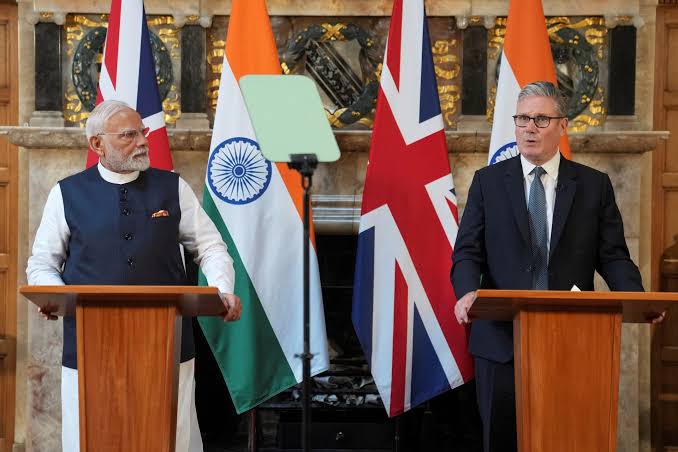
The India-UK Comprehensive Economic and Trade Agreement (CETA) will take effect on July 15, 2026, marking a significant milestone in trade relations between the two nations. This landmark deal is expected to provide duty-free market access for nearly 99% of Indian exports, benefiting both Indian exporters and consumers. With its implementation, CETA will become the sixth free trade agreement established during Prime Minister Narendra Modi’s administration.
Trade between India and the UK saw an increase of 8.62% in 2025-26, reaching $25.12 billion, compared to $23.13 billion in the previous year. However, India’s exports to the UK fell by 7.6% to $13.44 billion, while imports surged by 36.11% to $11.68 billion. Additionally, India attracted foreign direct investment (FDI) of $1 billion during 2025-26, up from $795 million in 2024-25.
Benefits for Both Nations
Agneshwar Sen, Trade Policy Leader at EY India, stated that the CETA will enhance market access, reduce trade costs, and provide greater certainty for businesses on both sides. Key sectors expected to benefit include textiles, leather, gems, engineering goods, and IT services. The agreement also represents one of India’s first major trade deals with a developed economy, allowing Indian businesses to adapt to advanced regulatory standards and compliance requirements.
The realization of these benefits will depend on effective implementation and adherence to rules of origin requirements. The agreement reflects India’s proactive trade strategy and its goal to strengthen economic partnerships with key markets.
Sectoral Impacts
Under the CETA, India will significantly reduce import duties on fully built cars and trucks from the UK, with tariffs decreasing from 110% to 10% over time. The agreement allows for immediate concessional treatment for petrol and diesel vehicles, while electric and hybrid vehicles will receive preferential access starting in the sixth year. India will also permit the import of 3.78 lakh fully built passenger vehicles from the UK at reduced customs duties.
The agreement will lower tariffs on a range of premium alcoholic beverages, including Scotch whisky, with duties decreasing from 150% to 75% over ten years. Additionally, India has opened its government procurement market to UK suppliers, allowing access to around 40,000 high-value contracts across various sectors.
Intellectual Property and Social Security
India has agreed to stronger commitments on intellectual property enforcement but did not concede to patent-term extensions or pharmaceutical data exclusivity. The agreement allows for compulsory licensing, ensuring access to essential technologies during emergencies.
Furthermore, Indian companies operating in the UK will be exempt from social security contributions for up to five years for employees sent from India, benefiting major IT firms like Tata Consultancy Services and Infosys.
India exported steel and steel products worth approximately $900 million to the UK in FY2026, which accounted for nearly 7% of its total merchandise exports to the country. However, these exports may face challenges as the UK plans to implement a stricter steel import regime starting July 1, 2026.
Observer Voice is the one stop site for National, International news, Sports, Editor’s Choice, Art/culture contents, Quotes and much more. We also cover historical contents. Historical contents includes World History, Indian History, and what happened today. The website also covers Entertainment across the India and World.
Follow Us on Twitter, Instagram, Facebook, & LinkedIn

