

Railways Enhances Regulations for Project Contractors, Introduces Covered Fly Ash Transport, and Launches Unified License

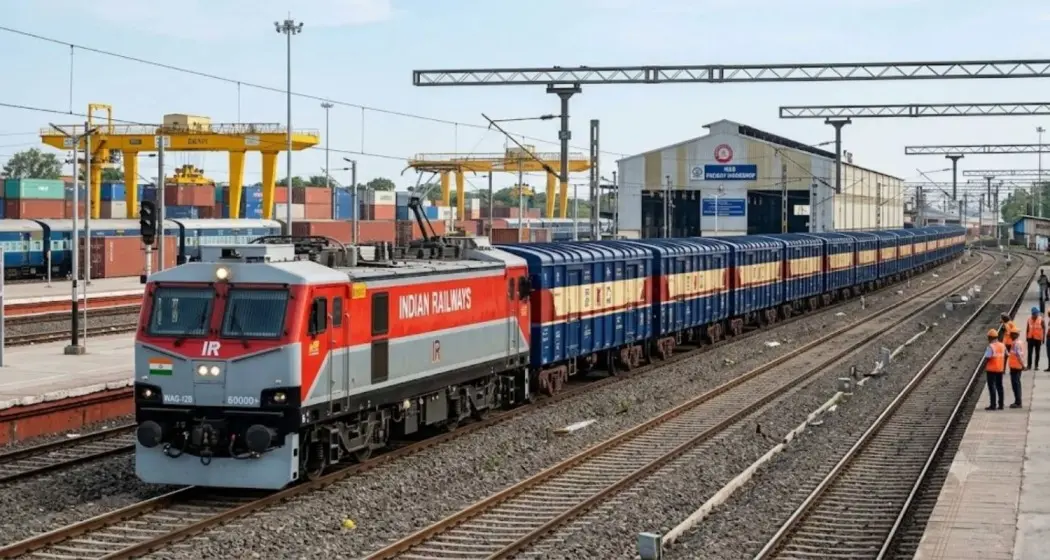
Indian Railways has unveiled a comprehensive set of freight and logistics reforms aimed at enhancing efficiency and encouraging private sector participation. Key initiatives include the introduction of specialized covered containers for transporting fly ash and a unified all-India licence regime for container train operators. Railway Minister Ashwini Vaishnaw announced these changes during a press conference, emphasizing their role in addressing environmental concerns linked to fly ash from thermal power plants.
The new covered containers are designed to mitigate dust pollution associated with the current practice of transporting fly ash in open wagons. Vaishnaw explained that the fine, powdery nature of fly ash creates significant dust clouds during loading and transit, contributing to environmental issues. The shift to specialized containers with top-loading capabilities aims to create a more efficient and environmentally friendly transportation system.
India generates approximately 340 million metric tonnes of fly ash annually, with only 4% currently transported by rail. The railway ministry stated that containerized transport will not only reduce pollution during loading, storage, and unloading but also facilitate easier handling with equipment like reach stackers.
Unified Licence Regime for Operators
In addition to the container reforms, Indian Railways has introduced a unified all-India licence regime for container train operators. This new framework allows operators to obtain a single licence for nationwide operations, with a standard registration fee of Rs 25 crore applicable to all routes. The ministry has also eliminated renewal fees after 20 years of successful operations.
The reforms extend to promoting containerized transportation of petroleum products, fertilizers, and agricultural produce, aiming to enhance handling efficiency and reduce logistics costs. Furthermore, industries are now permitted to develop freight wagon designs tailored to their operational needs, subject to evaluation and approval by the Research Designs and Standards Organisation (RDSO).
Stricter Contractor Norms
Indian Railways has tightened eligibility criteria for contractors involved in railway projects. Contractors must now provide an upfront performance security of 10% before commencing work, rather than having deductions made from running bills. Additionally, those with pending litigation exceeding 50% of their net worth will be barred from bidding on contracts. New requirements for professional indemnity insurance and all-risk insurance have also been introduced.
Vaishnaw stated that these measures are intended to attract more serious participants in railway projects, thereby improving construction quality and reducing the focus on arbitration and litigation. The ministry has also launched a skill certification framework for workers in critical trades, aiming to enhance workforce capabilities in support of India’s infrastructure expansion.
Streamlined Land Acquisition
To further support project execution, the ministry has introduced the Rail Bhoomi portal, designed to streamline land acquisition for railway projects. This initiative is expected to reduce land acquisition timelines by 30-40%, depending on the state. These announcements are part of a broader roadmap that includes 52 reforms aimed at modernizing freight logistics and enhancing operational efficiency within Indian Railways.
Observer Voice is the one stop site for National, International news, Sports, Editor’s Choice, Art/culture contents, Quotes and much more. We also cover historical contents. Historical contents includes World History, Indian History, and what happened today. The website also covers Entertainment across the India and World.

