

E20 Controversy Unveiled: Revisiting an Old Roadmap in the Corporate Spotlight

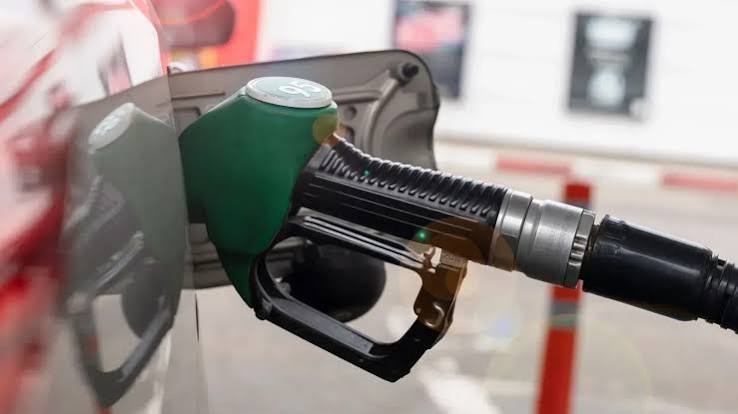
The Indian government’s initiative to implement mandatory 20% ethanol-blended petrol, known as E20, has sparked a political controversy. Opposition leaders are questioning the decision, citing a 2021 NITI Aayog report that recommended a phased transition and specific safeguards before rolling out E20 as the standard fuel by April 2025. The debate intensified following a Supreme Court hearing where Attorney General R Venkataramani referred to E20 as an “experiment,” a comment that was later clarified by the government.
Details of the NITI Aayog Report
The 2021 NITI Aayog report outlined a strategy for increasing ethanol blending in petrol. It emphasized that higher ethanol blending could reduce crude oil imports, enhance energy security, and lower emissions. The report proposed a gradual rollout, allowing E10 to remain available until 2025 as a protective measure for existing vehicles, while E20 was to be introduced incrementally starting in April 2023.
The report also highlighted potential impacts on fuel efficiency, estimating declines of 6-7% in four-wheelers designed for E0 and calibrated for E10. It noted that older vehicles might not perform optimally on E20, and recommended that manufacturers produce E20-compatible vehicles in phases, with full compliance expected by April 2025.
Concerns Among Vehicle Owners
Many vehicle owners have expressed concerns about reduced mileage since E20 became available. Studies from the Automotive Research Association of India (ARAI) and others suggest that fuel efficiency may decline by 3-4%, with some vehicles experiencing up to a 6% increase in fuel consumption. However, consumers report that the actual impact on mileage is more significant.
The ARAI study indicated that while metallic engine components showed no significant damage, certain rubber parts in fuel systems could deteriorate faster with E20. The study also recorded mixed results in engine durability tests, with some engines performing well while others faced issues. Overall, it concluded that E20 could lead to a 2-6% rise in fuel consumption compared to E10.
Supreme Court Hearing Developments
The Supreme Court’s hearing on petitions challenging the E20 rollout drew national attention. Petitioners raised concerns about the policy’s impact on consumers and called for an independent evaluation. During the hearing, Attorney General R Venkataramani’s characterization of E20 as an “experiment” sparked widespread discussion.
The government later clarified that Venkataramani’s comments were misunderstood and pertained to ethanol supply volumes rather than the E20 policy itself.
Political Opposition to E20
Opposition leaders have criticized the government’s decision to implement E20 without addressing concerns about mileage and compatibility with older vehicles. They argue that the rollout contradicts the NITI Aayog report’s recommendations for a gradual transition. Complaints from motorists about increased fuel costs due to reduced mileage have fueled the political backlash.
Congress leader Priyank Kharge accused the government of treating motorists as “guinea pigs,” demanding a rollback of the E20 policy until its impacts are proven. NCP (SP) MLA Rohit Pawar also raised concerns about potential damage to older vehicles, advocating for the introduction of flex-fuel vehicles before increasing ethanol blends.
Government’s Defense of E20
The Centre has staunchly defended the E20 program, asserting that it reduces dependence on imported crude oil and enhances energy security. The government claims that India achieved 20% ethanol blending five years ahead of its original target of 2030. It argues that the initiative aligns with global trends towards higher ethanol blending.
The government has cited examples from countries like the United States and Brazil, where higher ethanol blends are becoming standard. It maintains that E20 is supported by scientific studies and that any future increases in ethanol blending will be preceded by further research and stakeholder consultations. The current debate centers on whether the nationwide rollout of E20 aligns with the phased approach recommended in the NITI Aayog roadmap.
Observer Voice is the one stop site for National, International news, Sports, Editor’s Choice, Art/culture contents, Quotes and much more. We also cover historical contents. Historical contents includes World History, Indian History, and what happened today. The website also covers Entertainment across the India and World.

