

Why You Think Everyone’s Watching You (But They’re Really Not)

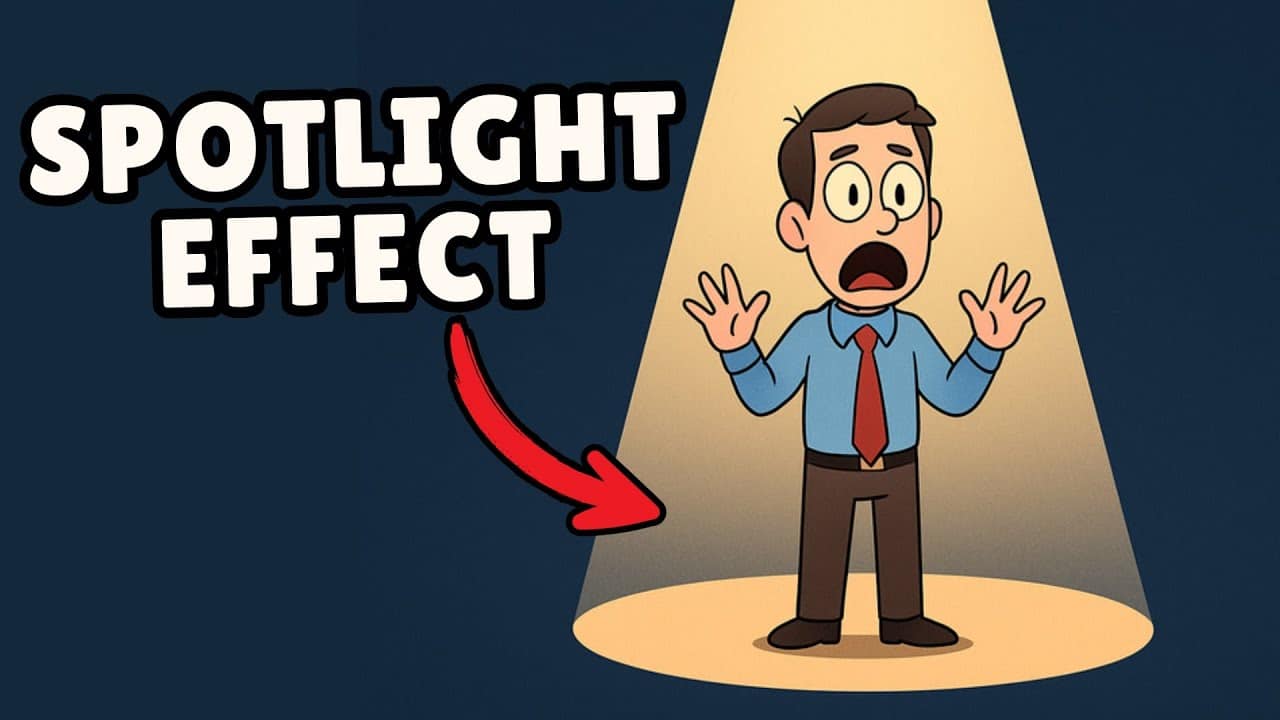
Eighteen-year-old Arjun from Mumbai was running late for his Class 10 physics exam. In his rush, he grabbed what he thought was his school uniform shirt from the closet. Only when he reached school and sat down in the examination hall did he realize his terrible mistake: he was wearing his bright yellow T-shirt with a large cartoon character printed on the front—completely against school uniform rules and totally embarrassing for a formal exam setting.
His heart sank. He felt his face burn with embarrassment. “Everyone is staring at me,” he thought. “The entire class has noticed. They’re all judging me. My teacher definitely sees it. How could I be so stupid? This is mortifying. Everyone will remember this forever—Arjun, the guy who wore a cartoon T-shirt to the final exam.”
The exam lasted two hours. Throughout those 120 minutes, Arjun was convinced that every single person in the 40-student classroom was constantly noticing and mentally commenting on his inappropriate clothing. He imagined whispers, suppressed laughter, and judgmental looks. His embarrassment was so intense he could barely focus on the physics questions.
After the exam, Arjun’s best friend Rohan approached him. Arjun braced himself for the teasing that would surely come. But Rohan said: “That physics exam was brutal! Question 7 was impossible. How did you find it?”
Arjun waited. No mention of the T-shirt.
“Um, did you notice anything… unusual about me today?” Arjun finally asked.
Rohan looked confused. “Unusual? No, why?”
“My T-shirt? I’m not in uniform?”
Rohan glanced down, seeing the yellow cartoon character for the first time. “Oh! I honestly didn’t even notice until you just pointed it out. I was too stressed about the exam to look at what anyone was wearing.”
Over the next few days, Arjun nervously asked several other classmates about the exam. Not one of them mentioned his T-shirt. Most hadn’t noticed at all. The two who had noticed only remembered when Arjun specifically asked, and neither had given it much thought—they’d been focused on their own exam performance and anxiety.
Arjun had spent two hours in agonizing embarrassment, absolutely certain that 40 people were intensely focused on his clothing mistake. In reality, maybe 2-3 people had noticed for a few seconds, and none of them cared or remembered.
When Arjun shared this experience with his school counselor, she explained: “You experienced the spotlight effect—the tendency to dramatically overestimate how much other people notice and pay attention to your appearance, behavior, and mistakes. You felt like you were under a bright spotlight with everyone watching, but in reality, you were barely on anyone’s radar. People are far less attentive to you than you think because they’re busy being spotlights to themselves—worried about their own appearance, behavior, and mistakes. Your two hours of imagined judgment were almost entirely in your own mind.”
She continued: “This is why public speaking feels terrifying—you think everyone is intensely scrutinizing every word and gesture. This is why you agonize over a pimple or bad hair day, imagining everyone is staring. This is why a small social mistake feels catastrophic. The spotlight effect makes you think you’re the center of everyone’s attention when you’re actually barely in their peripheral vision. Understanding this is liberating: most embarrassing moments you think everyone will remember? They didn’t even notice. The harsh judgment you imagine from others? It’s mostly your own harsh self-judgment reflected back. You’re not performing under a spotlight—you’re just one person in a room full of people who are all worried about their own spotlights.”
This cognitive bias—where people significantly overestimate how much others notice their appearance, actions, and mistakes—affects social anxiety, self-consciousness, public performance, and everyday confidence. Understanding the spotlight effect reveals why social fears are often exaggerated, why people are less judgmental than you think, why your mistakes matter less to others than to you, and why freeing yourself from imagined scrutiny requires recognizing how little others actually notice.
What Is the Spotlight Effect?
The spotlight effect is the cognitive bias where people overestimate the extent to which their appearance, actions, mistakes, and characteristics are noticed and remembered by others. People feel as if they are performing under a bright spotlight that draws everyone’s attention to them, when in reality, others are paying far less attention than the person imagines. The effect makes people think they are more socially conspicuous than they actually are, causing inflated estimates of how much others notice, care about, and remember their behavior.
The phenomenon was systematically documented by psychologists Thomas Gilovich, Victoria Medvec, and Kenneth Savitsky. Research at Cornell University demonstrated the effect through a famous experiment where participants wore embarrassing T-shirts (featuring singer Barry Manilow’s face) into a room of observers. Participants estimated that approximately 50% of observers would notice and remember their embarrassing shirt. In reality, only 23% of observers noticed—less than half the participants’ estimate. The spotlight effect made people dramatically overestimate their social conspicuousness.
According to studies from Northwestern University, the spotlight effect operates through egocentric bias—people are the center of their own attention and experience, making them assume they’re similarly central to others’ attention. When you make a mistake or notice something about your appearance, it dominates your own awareness, and you project this heightened self-focus onto others, assuming they must be equally focused on you. In reality, others are experiencing the same egocentric perspective—focused on themselves, not on you.
Research from University of Chicago demonstrates that the spotlight effect is particularly strong for: (1) negative or embarrassing events (people overestimate notice of mistakes more than successes), (2) appearance-related concerns (clothing, hair, physical features receive inflated attention estimates), (3) public performance situations (speaking, performing, or standing out in groups), and (4) people high in self-consciousness (those who self-monitor heavily show stronger effects). These conditions make the spotlight effect a major contributor to social anxiety and performance fear.
The Parable of the Actors on Different Stages
A teaching tale illustrates the spotlight effect through the metaphor of a town with many small theaters.
In a town, there were 50 small theaters, each running simultaneously. Every person in town was both an actor on their own stage and an audience member in their own theater. Each actor performed constantly—walking, talking, working, interacting—while simultaneously watching their own performance with intense attention.
One actor made a mistake during their performance—they tripped while walking across their stage. From their perspective as both actor and audience of their own show, this mistake was catastrophic. The stumble dominated their attention. They replayed it mentally. They imagined harsh reviews. They were certain this mistake would be remembered forever.
But here’s what the actor didn’t understand: the other 49 people in town weren’t watching this actor’s performance. Each was absorbed in their own theater, watching their own performance on their own stage. A few might have glanced briefly at the stumbling actor (their stages were sort of visible to each other), but their attention immediately returned to their own performances where they were the star.
The stumbling actor spent hours agonizing: “Everyone saw my humiliating mistake. The whole town witnessed it. They’re all judging me.” In reality, maybe 3-4 people had noticed for 2-3 seconds before returning to their own stages, and none of them cared or remembered because they were too busy with their own performances.
A wise observer explained: “You think you’re performing under a spotlight with a captive audience, but everyone else has their own spotlight, their own stage, their own performance consuming their attention. Your mistake feels enormous because it’s on YOUR stage under YOUR spotlight, but it’s barely visible to others who are absorbed in their own spotlights. The harsh judgment you fear from the audience? The audience isn’t watching. They’re on their own stages.”
The observer continued: “This is the spotlight effect: everyone thinks they’re the center of attention, but everyone is actually the center only of their own attention. The liberation comes from realizing that the intense scrutiny you fear from others is mostly the intense scrutiny you direct at yourself. Others are too busy with their own performances to watch yours closely. Your stumble, your embarrassment, your mistake—these dominate YOUR theater but barely register in theirs.”
Buddhist teachings on self-consciousness and the illusion of self-importance address the spotlight effect directly. The Buddha taught that much suffering comes from excessive self-focus and the belief that others are as focused on you as you are on yourself. The teaching emphasizes that this is delusion—others are experiencing their own realities, not watching yours. Recognizing that you are not the center of others’ attention (despite being the center of your own) reduces the suffering of self-consciousness.
Hindu teachings through the Bhagavad Gita address this in Krishna’s instruction to Arjuna about performing action without excessive concern for others’ judgment. Krishna teaches that Arjuna’s anxious focus on what others think (what will people say about my choices?) is a form of bondage. The teaching to act according to dharma (duty/right action) without attachment to others’ opinions implicitly recognizes the spotlight effect—the intense imagined scrutiny from others exists mainly in one’s own mind.
How Imagined Attention Creates Real Anxiety
In social anxiety and public speaking fear, the spotlight effect amplifies anxiety by making people believe they’re under intense scrutiny. Research shows that socially anxious individuals dramatically overestimate how much others notice their anxiety symptoms (trembling, blushing, sweating), and this overestimation itself increases anxiety. The belief “everyone can see I’m nervous” makes nervousness worse, creating a self-fulfilling cycle.
Studies from University of Texas found that socially anxious participants estimated that 70% of observers could detect their anxiety symptoms, when actually only 25% could. The spotlight effect made invisible internal experiences feel visible externally, increasing anxiety about being judged for nervousness. When researchers corrected this overestimation (teaching participants how little others notice), anxiety decreased significantly.
In appearance concerns and body image, the spotlight effect makes people overestimate how much others notice and judge their physical appearance. Research shows that people believe others scrutinize their appearance far more than actually occurs. Bad hair days, weight fluctuations, clothing choices, and physical flaws feel highly visible to the person experiencing them but are rarely noticed by others who are focused on their own appearance concerns.
Studies from Northeastern University examining appearance anxiety found that participants estimated others would notice appearance changes (new hairstyle, weight change, clothing mistake) 60-70% of the time, when observers actually noticed only 30-40% of the time. The spotlight effect made self-noticed appearance issues feel universally obvious when they were actually frequently invisible to others.
In performance situations and stage fright, the spotlight effect makes performers believe audiences notice every mistake, pause, or imperfection. Research shows that performers dramatically overestimate how much audiences detect errors. Small mistakes that feel catastrophic to performers often go completely unnoticed by audiences who don’t know what the “perfect” performance would have been.
Studies from Juilliard School examining music performance found that musicians estimated audiences noticed approximately 60% of their mistakes, when audiences (including trained musicians in the audience) noticed only 20% of mistakes. The spotlight effect made internal awareness of errors feel like external visibility, increasing performance anxiety unnecessarily.
In everyday mistakes and embarrassment, the spotlight effect makes minor social errors feel like major events that everyone will notice and remember. Research shows that embarrassing moments (spilling drinks, saying wrong words, tripping) feel far more noticeable and memorable to the person experiencing them than to observers. What feels like a spotlight moment to you is barely a flicker to others.
Studies from Ohio State University examining memory for embarrassing events found that people remembered their own embarrassing moments vividly weeks later, while observers who were present during the same events remembered only 10-20% of those moments when asked. The spotlight effect made people overestimate both initial notice (others didn’t notice as much as believed) and lasting memory (others forgot quickly what little they noticed).
In social media and online presentation, the spotlight effect amplifies anxiety about posts, photos, and online presence. Research shows that people overestimate how much others scrutinize their social media content. Posts that feel embarrassing or imperfect to the poster receive far less attention than the poster imagines, because everyone’s attention is focused on their own content.
Studies demonstrate that social media users estimated their posts would be noticed and scrutinized by 50-60% of their followers, when analytics showed actual engagement from only 5-10% of followers. The spotlight effect made people imagine intense audience attention to their content when most followers scrolled past without close examination.
Escaping The Imaginary Spotlight
The most important practice for overcoming the spotlight effect is regularly reminding yourself that others are far less focused on you than you think because they’re focused on themselves. When you feel embarrassed or self-conscious, consciously recognize: “I think everyone noticed, but they probably didn’t. And if they did, they’ve already forgotten because they’re worried about their own issues.”
Test your spotlight effect estimates by actually asking people what they noticed. Like Arjun asking classmates about his T-shirt, you’ll often find people didn’t notice what you thought was obvious. These reality checks recalibrate your estimates of how conspicuous you are, reducing future spotlight effect anxiety.
Remember that when you notice others’ mistakes or appearance issues, you typically forget them quickly because you’re focused on yourself. Apply this same reality to yourself: just as you don’t intensely scrutinize or remember others’ minor mistakes, they don’t intensely scrutinize or remember yours. You’re applying a double standard—harsh spotlight assumptions about yourself, but realistic inattention toward others.
In performance situations, remind yourself that audiences don’t know what you intended to do, so many “mistakes” are invisible to them. What feels like an obvious error from your internal perspective is often undetectable from the audience’s external perspective. Their standards are lower than yours because they lack the comparison to your ideal performance.
Use the spotlight effect knowledge to take more social risks and worry less about judgment. Since others notice and remember far less than you think, the social cost of trying new things, making mistakes, or standing out is much lower than the spotlight effect makes you believe. Most embarrassing moments you fear will be remembered forever are forgotten by others within hours.
Remember Arjun who endured two hours of imagined judgment from 40 people when only 2-3 people noticed his shirt for seconds, and the actors each absorbed in their own stages too busy to watch others’ performances. Both illustrate how the spotlight effect creates imagined scrutiny from others who are actually too self-focused to scrutinize you.
The spotlight effect can’t be completely eliminated because you can’t escape your own egocentric perspective—you’ll always be the center of your own attention and experience. But recognizing the effect allows correction: when you feel intensely self-conscious, remember that others aren’t experiencing that same intense focus on you. They’re experiencing intense focus on themselves. The spotlight you feel isn’t shining from others onto you—it’s shining from you onto you, and you’re mistakenly assuming others are shining it too. They’re not. They’re too busy with their own spotlights.
Frequently Asked Questions
Does the spotlight effect mean people never notice anything about me?
No—people notice some things, just far less than you think. The effect is about overestimation, not claiming zero attention. People notice obvious, extreme, or personally relevant things, but they notice far less than you imagine, they don’t scrutinize what they notice, and they forget quickly. You’re somewhat visible, just not nearly as much as you feel.
Are some people more affected by the spotlight effect than others?
Yes—people high in self-consciousness, social anxiety, or public self-awareness show stronger effects. They overestimate notice more dramatically because they’re more focused on themselves and more concerned about others’ judgments. However, the basic effect occurs in everyone to some degree—it’s a general cognitive bias, though severity varies.
If people aren’t paying attention to me, does that mean I don’t matter?
The spotlight effect is about attention to appearance and minor behaviors, not about your significance to others. People who care about you do notice and remember things about you—but not in the intense, scrutinizing, constantly judgmental way the spotlight effect makes you imagine. The effect reduces imagined harsh judgment, not actual caring relationships.
Can the spotlight effect make me too careless about my behavior?
Potentially, if overcorrected—but most people err far more in the direction of excessive self-consciousness than insufficient concern. The useful correction is from “everyone is intensely scrutinizing everything I do” to “people notice some things casually but are mostly focused on themselves.” This is realistic, not carelessly dismissive of all social norms.
How can I tell if my worry about being noticed is spotlight effect versus real attention?
Ask: Are you the center of attention by design (giving a presentation, wearing a costume) or by accident (made a mistake, normal social situation)? Designed attention is real; accidental conspicuousness is usually overestimated. Also, reality-test by asking others what they noticed—their answers typically reveal massive overestimation, confirming spotlight effect.
Observer Voice is the one stop site for National, International news, Sports, Editor’s Choice, Art/culture contents, Quotes and much more. We also cover historical contents. Historical contents includes World History, Indian History, and what happened today. The website also covers Entertainment across the India and World.

