

Why Horoscopes Always Seem Accurate Even When They’re Not: Subjective Validation

During a psychology class at Mumbai’s St. Xavier’s School, the teacher gave each of the thirty students a sealed envelope containing a “personalized personality assessment” based on a questionnaire they’d completed the previous week. The teacher claimed these assessments were created by analyzing each student’s unique responses.
“Open your envelopes and read your personal assessment,” the teacher instructed. “Then rate on a scale of 1 to 10 how accurate it is.”
Seventeen-year-old Priya opened her envelope and read: “You have a great need for other people to like and admire you. You have a tendency to be critical of yourself. While you have some personality weaknesses, you are generally able to compensate for them. You have considerable unused capacity that you have not turned to your advantage. At times you have serious doubts about whether you have made the right decision or done the right thing.”
Priya was amazed. “This is incredibly accurate!” she thought. “How did the teacher know I worry about decisions and care what people think of me? This assessment really understands me.” She rated it 9 out of 10 for accuracy.
Around the classroom, students were similarly impressed. Most rated their assessments between 7 and 10 for accuracy. “Mine is spot-on,” Rohan said. “Mine describes me perfectly,” Kavya agreed.
Then the teacher revealed the truth: “Everyone received the exact same assessment. There was no personalized analysis. Every envelope contained identical generic statements that could apply to almost anyone. You all believed these vague general statements were specifically about you because of subjective validation—the tendency to perceive information as true and meaningful when it matches your beliefs, desires, or self-image. You wanted the assessment to be accurate and personal, so you interpreted general statements as specific insights.”
The class sat in stunned silence. Each had been absolutely convinced the assessment was uniquely describing them, not recognizing they were reading the same generic statements everyone else received. This demonstration revealed how easily subjective validation makes us believe in the accuracy of horoscopes, personality tests, fortune-tellers, and countless other sources of vague general information.
What Is Subjective Validation?
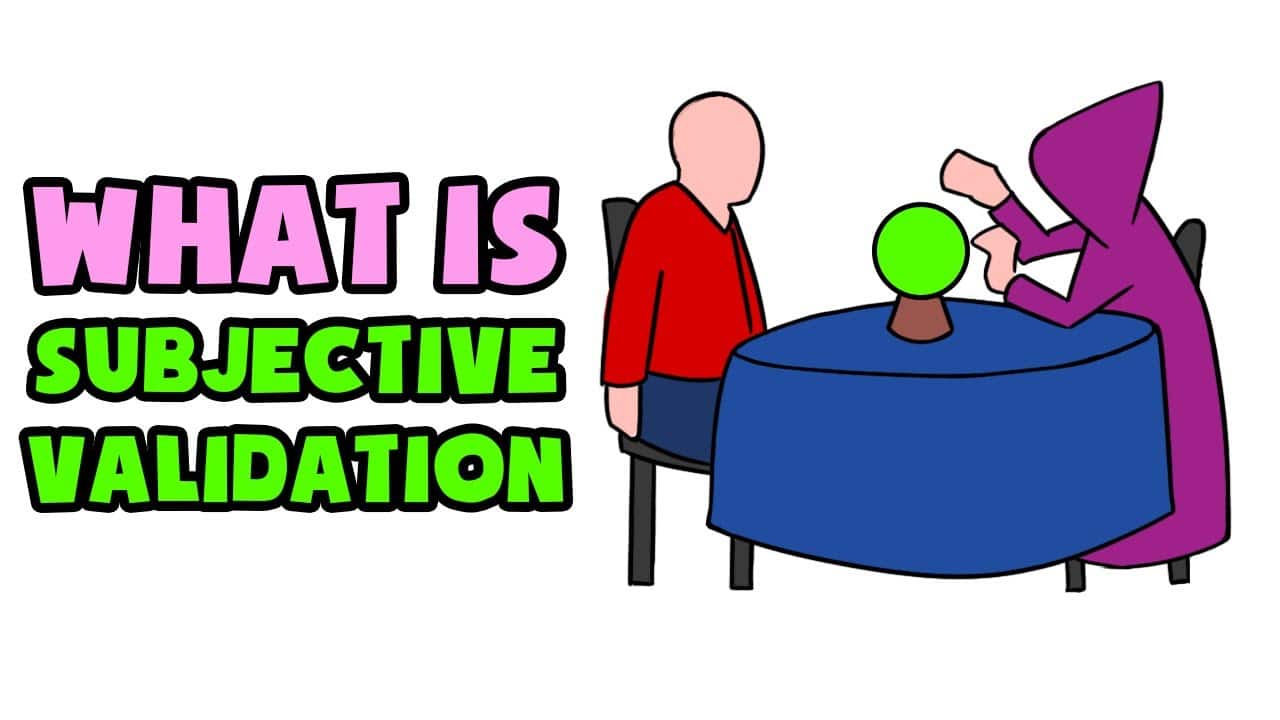
Subjective validation, also called the Forer effect or Barnum effect, is the tendency to perceive vague, general statements as highly accurate and personally meaningful, especially when those statements are presented as being specifically tailored to you. It also refers to the tendency to find meaningful connections between coincidental events when you believe such connections should exist. People interpret ambiguous information to confirm what they already believe or want to believe.
The phenomenon was famously demonstrated by psychologist Bertram Forer in 1948. Research at University of California, Los Angeles replicated Forer’s classic experiment showing that people rate generic personality descriptions as highly accurate self-assessments. Forer compiled statements from newspaper astrology columns (designed to apply to almost anyone) and presented them as personalized assessments. Students rated them as 85% accurate on average—even though everyone received identical descriptions.
According to studies from Cornell University, subjective validation operates through several mechanisms: confirmation bias (noticing and remembering hits while ignoring misses), self-serving bias (accepting flattering interpretations), ambiguity (vague statements can be interpreted multiple ways), and motivated reasoning (wanting statements to be true and finding ways to make them fit). These combine to create the illusion that general statements are specifically accurate.
Research from University of Oregon demonstrates that subjective validation is stronger when: (1) statements are positive or flattering, (2) the person believes the source has authority or special insight, (3) statements address topics important to the person’s self-concept, and (4) the person wants to believe the information is true. These conditions make people particularly vulnerable to interpreting vague general statements as profound personal insights.
The Fortune-Teller and the Five Seekers
A teaching tale tells of a renowned fortune-teller who attracted seekers from across the region. Five people from different villages came on the same day, each seeking guidance about their troubles.
The fortune-teller met with each privately. To the first, she said: “I see that you have faced challenges recently, but there is hope ahead. Someone from your past will return with an important message. Be open to unexpected opportunities.” The first seeker was amazed: “She knew about my struggles! And yes, I have been hoping to hear from an old friend. This is incredibly accurate!”
To the second seeker, she said identical words: “I see that you have faced challenges recently, but there is hope ahead. Someone from your past will return with an important message. Be open to unexpected opportunities.” The second seeker was equally impressed: “She’s describing exactly what I’m going through! My brother moved away years ago—perhaps he’ll return. This fortune-teller has real insight!”
The fortune-teller gave the same reading to all five seekers. Each interpreted it differently based on their own circumstances, and each left convinced the fortune-teller had supernatural knowledge of their specific situation. They told others about the fortune-teller’s amazing accuracy, never realizing they’d all received identical vague statements.
A skeptical observer who spoke with all five seekers afterward noticed they’d been told the same things but had interpreted them completely differently. He explained: “The fortune-teller is clever, not psychic. She gave you statements so general they could apply to anyone—’you’ve faced challenges’ (everyone has), ‘someone from your past’ (everyone knows many people from their past), ‘unexpected opportunities’ (these constantly occur). Each of you interpreted these vague statements through the lens of your own life, finding personal meaning in generic words. You validated the fortune-teller’s accuracy yourselves by filling in specifics she never actually provided. You heard what you wanted to hear and found confirmation of what you wanted to believe.”
Buddhist philosophy addresses subjective validation in teachings about projection and the mind’s tendency to see what it expects. The Buddha taught that humans project their beliefs, desires, and fears onto ambiguous reality, then experience their projections as objective truth. Subjective validation represents this projection—taking vague general statements and filling them with personal meaning that confirms existing beliefs.
The Bhagavad Gita discusses this through Krishna’s teaching about how the mind creates illusions that align with its desires. Krishna teaches that people see what their vasanas (deep impressions and desires) lead them to see, interpreting ambiguous information to match their wishes and beliefs. Subjective validation exemplifies this—vague statements become “true” because desire for truth makes us interpret them in confirming ways.
How Subjective Validation Creates False Beliefs
In astrology and horoscopes, subjective validation explains why people believe horoscope readings are accurate despite their vague generality. Horoscopes use statements that apply broadly (“you’ll face a challenge this week,” “a friend will need your help,” “financial opportunities may arise”), and readers interpret these through their specific circumstances, finding matches and forgetting misses. Research shows horoscope accuracy ratings remain high even when people receive horoscopes written for different zodiac signs.
Studies from Harvard University testing horoscope belief found that people rated randomly assigned horoscopes as personally accurate as horoscopes supposedly matched to their birth dates. The source of perceived accuracy isn’t the astrological system but subjective validation—readers make vague statements fit their lives through selective attention and creative interpretation.
In personality assessments and pseudoscientific tests, subjective validation makes invalid tests seem accurate. Online personality quizzes, Myers-Briggs type descriptions, and similar assessments use Barnum statements that most people endorse as self-descriptive. People receive results and think “this is so accurate!”—not recognizing that the descriptions are deliberately crafted to apply widely while seeming specific.
Research demonstrates that people rate personality feedback as accurate when it contains positive generalities (“you have unused potential,” “you care what others think,” “you sometimes doubt yourself”) regardless of actual personality. The feedback seems insightful because subjective validation makes readers connect general statements to specific personal examples, creating the illusion of accurate assessment.
In psychic readings and cold reading techniques, subjective validation allows “psychics” to appear to have supernatural knowledge using no special ability—just clever use of general statements, fishing questions, and observation of client reactions. The psychic makes vague general statements (“I sense someone with the letter M,” “I see health concerns,” “there’s been loss in your family”), and clients validate by providing specific details the psychic then reflects back.
Studies show that people receiving deliberately vague “psychic readings” rate them as highly accurate, revealing personal information to explain the readings, not realizing they’re doing the psychic’s work through subjective validation. The psychic provides the vague framework; the client fills in specific meaning through projection.
In conspiracy theories and pattern recognition, subjective validation makes random coincidences seem meaningful when people believe hidden patterns exist. If you believe powerful groups control world events, you’ll find “evidence” everywhere—dates, numbers, events that seem connected when you look for connections. Random coincidences get interpreted as proof of conspiracy through subjective validation connecting events that believers want to believe are connected.
Research demonstrates that conspiracy believers show enhanced subjective validation—they see meaningful patterns in random data, find connections between unrelated events, and interpret ambiguous information as confirming their theories. The stronger the prior belief, the more easily random coincidences get validated as meaningful patterns.
In health claims and alternative medicine, subjective validation makes ineffective treatments seem effective. Someone using a health product wants to believe it works, so they notice any improvements (even placebo effects or natural healing) and attribute them to the product, while ignoring lack of improvement or deterioration. Vague health claims (“improves energy,” “supports immune function,” “promotes wellness”) get validated through selective attention to any positive experiences.
Studies show that alternative medicine testimonials reveal classic subjective validation—users report dramatic benefits from treatments with no demonstrated efficacy beyond placebo. The mechanism is subjective validation: wanting treatment to work, noticing any improvements, attributing improvements to treatment, and ignoring contrary evidence. Combined with natural healing and regression to the mean, subjective validation creates powerful illusions of treatment efficacy.
Seeing Reality Clearly Without Projecting Belief
The most important practice for avoiding subjective validation is recognizing when you’re making vague general statements fit your specific circumstances through interpretation rather than receiving genuinely specific accurate information. When something seems “amazingly accurate,” ask: “Is this actually specific to me, or is it general enough to fit almost anyone with creative interpretation?”
Test claims by applying them to other people. Could this horoscope apply to your friends? Could this personality assessment describe your classmates? If vague statements seem accurate for you AND for multiple others, you’re experiencing subjective validation—the statements are general, and you’re making them seem specific through interpretation. True specificity means statements apply to you but not to others.
Keep track of both hits and misses systematically. Subjective validation works partly through selective attention—you remember when vague predictions seemed to come true and forget the many times they didn’t. Keeping a record shows the actual hit rate is often no better than chance, even though memory creates the impression of high accuracy through remembering hits and forgetting misses.
Demand specific, falsifiable predictions rather than accepting vague generalities. “You will face a challenge” is unfalsifiable—everyone faces challenges constantly. “You will receive a job offer from a technology company on March 15th” is specific and falsifiable. Vague statements enable subjective validation; specific statements don’t. Requiring specificity prevents the creative interpretation that subjective validation relies on.
Recognize your own desires and how they bias interpretation. If you want to believe something is true (that you have psychic abilities, that astrology works, that conspiracy exists), you’ll interpret ambiguous information to confirm it through subjective validation. Awareness of what you want to believe helps you recognize when you’re making information fit your desires rather than objectively evaluating its accuracy.
Learn common Barnum statements and cold reading techniques so you recognize them when used. Statements like “you have unused potential,” “you sometimes worry about decisions,” “you care what others think,” “someone from your past will resurface”—these apply to virtually everyone but seem personally insightful. Knowing these techniques makes you less vulnerable to them.
Remember Priya’s class where everyone believed identical generic statements were personalized insights, and the five seekers who each interpreted the same fortune as uniquely accurate to their situations. Both illustrate how subjective validation makes us find personal meaning and accuracy in vague general information by projecting our own experiences, beliefs, and desires onto ambiguous statements.
Subjective validation isn’t stupidity or gullibility—it’s natural psychological tendency to find meaning and patterns, to confirm beliefs, and to make ambiguous information align with what we know and want to believe. The bias serves the psychological need for understanding and validation. But it creates false beliefs by making us think vague general statements are specific accurate insights, random coincidences are meaningful patterns, and ineffective treatments work. Breaking subjective validation requires epistemic discipline: demanding specificity, tracking hits and misses objectively, testing whether “personal insights” apply equally to others, and recognizing your own desires that bias interpretation. The statement that seems amazingly accurate might just be amazingly general, and you’re doing the work of making it seem specific through projection and selective attention.
Frequently Asked Questions
If subjective validation makes people believe false things, why does it exist?
Because finding patterns and meaning in ambiguous information was evolutionarily adaptive—better to see false patterns occasionally than to miss real patterns that matter for survival. Humans evolved to be pattern-seekers, and subjective validation is a side effect: the pattern-seeking tendency sometimes finds patterns that aren’t there, especially when we want to believe they exist. The benefits historically outweighed the costs, though modern exploitation of this bias creates problems.
How can astrology seem so accurate if it’s just subjective validation?
Horoscopes and astrological readings are deliberately crafted using Barnum statements—general claims that apply to most people but seem specific. Combine this with confirmation bias (remembering hits, forgetting misses), flattering statements (people accept positive descriptions), and ambiguous wording (can be interpreted multiple ways), and readings seem accurate even when they’re vague generalities. The accuracy is created by the reader interpreting general statements through their specific life, not by astrological systems having predictive validity.
Does subjective validation mean personality tests like Myers-Briggs are completely useless?
It means caution is needed. Research shows many popular personality assessments lack strong validity, and their apparent accuracy partly reflects subjective validation—descriptions contain enough Barnum statements that most people in any category rate them as accurate. This doesn’t mean personality has no structure or that all assessment is useless, but it means self-report instruments and general type descriptions should be viewed skeptically, and accuracy claims should be tested against whether descriptions apply equally well to people in different categories.
Can subjective validation make someone believe they’re psychic when they’re not?
Absolutely—this is a common path to false psychic belief. Someone makes a vague prediction (“someone close to you has health concerns”), something matching happens (friend gets a cold), and through subjective validation they interpret this as evidence of psychic ability rather than recognizing the prediction was so general it was bound to match something. Repeating this process, selectively remembering hits and forgetting misses, they become convinced they have psychic abilities when they’re experiencing combination of subjective validation, confirmation bias, and probability.
How can I tell if something is genuinely insightful versus just using subjective validation?
Test specificity and falsifiability. Genuine insights are specific, make predictions that could be wrong, and apply to you but not to everyone. “You specifically fear public speaking because of an embarrassing incident in 7th grade” is specific and testable. “You sometimes doubt yourself” is Barnum statement relying on subjective validation. Also test against others: if your “accurate personal insight” seems equally accurate when you show it to friends, it’s probably general enough that subjective validation is creating the illusion of specificity.
Observer Voice is the one stop site for National, International news, Sports, Editor’s Choice, Art/culture contents, Quotes and much more. We also cover historical contents. Historical contents includes World History, Indian History, and what happened today. The website also covers Entertainment across the India and World.

