

Why One Face Moves Us More Than a Thousand Statistics: The Identifiable Victim Effect

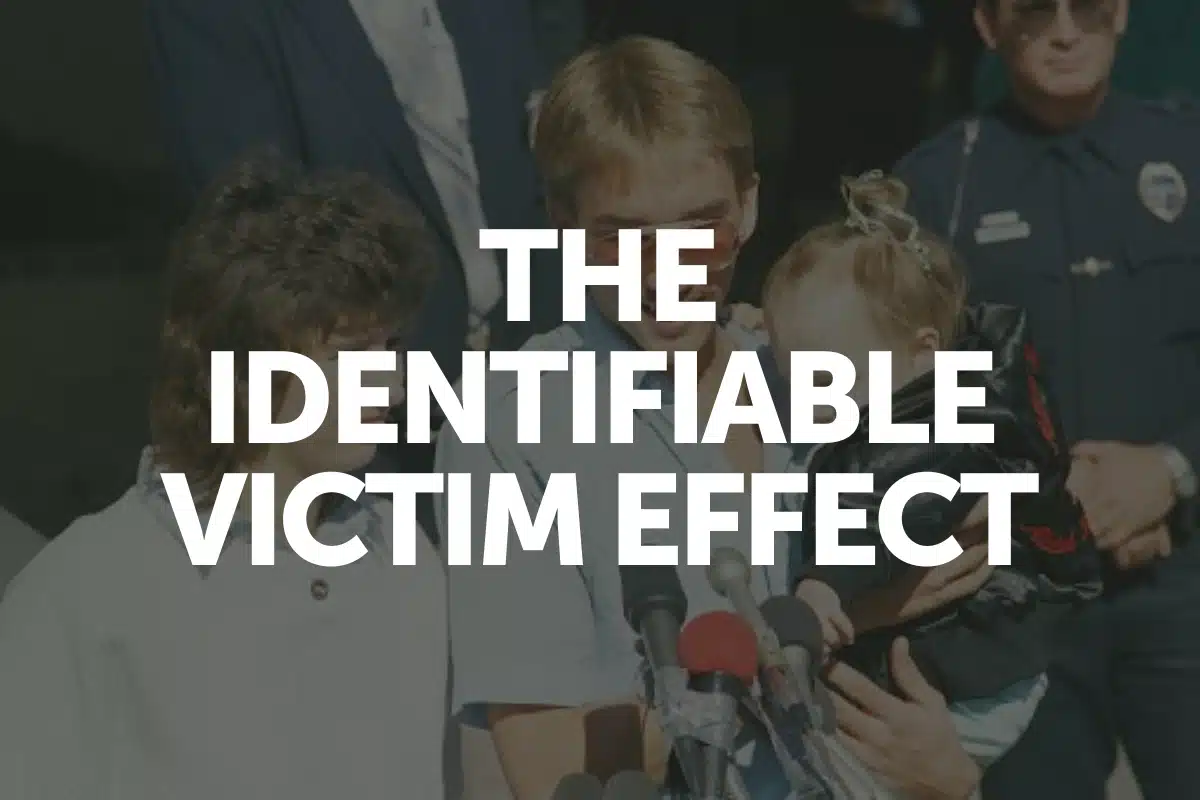
In 2006, all of India stopped to watch the rescue of a five-year-old girl named Prince who had fallen into a fifty-foot deep borehole in a village near Kurukshetra. For fifty hours, the nation held its breath. Television channels broadcast live coverage continuously. The army was deployed. Mining experts flew in from across the country. Millions of rupees were spent on rescue equipment. When Prince was finally pulled out alive, the entire country celebrated as if she were their own child.
That same year, according to UNICEF reports, over one million Indian children under five died from preventable diseases like diarrhea, pneumonia, and malnutrition—conditions that could be addressed with basic medical care costing just a few hundred rupees per child. These deaths received no emergency response, no live television coverage, no national mobilization. Most people never even knew these children existed, let alone that they died.
Why did one girl in a well command infinitely more attention, emotion, and resources than a million children dying from preventable causes? The answer reveals one of the most powerful and troubling biases in human psychology: the identifiable victim effect. We respond with overwhelming emotion and generosity to specific, identified individuals in distress while remaining largely unmoved by statistical victims—even when those statistics represent vastly greater suffering affecting vastly more people.
This bias doesn’t make us cruel or irrational. It makes us human. But understanding it is crucial because it shapes which problems we solve and which we ignore, often in ways that cause the greatest suffering to continue unaddressed while we pour resources into more visible but less significant tragedies.
What Is the Identifiable Victim Effect?
The identifiable victim effect describes our tendency to offer greater aid and feel stronger emotions toward a specific, identifiable person suffering or at risk compared to anonymous statistical victims, even when the anonymous group is much larger and faces equal or greater suffering. A single named child with a photograph moves us to donate generously. A report that “40,000 children die daily from poverty-related causes” leaves us unmoved despite representing catastrophically greater suffering.
The phenomenon was formally identified by economist Thomas Schelling in his 1968 essay “The Life You Save May Be Your Own.” Research from Carnegie Mellon University later demonstrated this effect experimentally. Psychologist Deborah Small and her colleagues asked people to donate to fight hunger in Africa. One group received statistics: “Food shortages in Malawi affect more than three million children.” Another group received a story about one girl: “Rokia, a seven-year-old from Mali, is desperately poor and faces starvation.”
The results were striking. People who read about Rokia donated more than twice as much as those who received statistics about millions of children. When researchers combined the individual story with the statistics, donations didn’t increase—they actually decreased. The statistical context somehow reduced the emotional power of Rokia’s individual story. Our hearts open wide for one identified person but remain surprisingly closed to masses of anonymous sufferers.
According to research from Stanford University, this effect occurs because individual victims trigger emotional responses while statistical victims trigger analytical thinking. When we see a photo of a specific hungry child with a name and story, our emotional brain activates, generating empathy, compassion, and urgency. When we see statistics about millions dying, our analytical brain tries to comprehend the numbers, fails to emotionally grasp the magnitude, and we feel comparatively little.
Studies from Yale University using brain imaging confirm this pattern. Images of identified individuals in distress activate emotional processing regions like the amygdala and insula. Statistical information about large-scale suffering activates reasoning regions like the prefrontal cortex but not emotional centers. We literally feel one person’s pain but only think about masses of people’s suffering—and feeling drives action far more powerfully than thinking.
The Monk’s Parable of the Drowning Children
Philosopher Peter Singer tells a modern parable that reveals the identifiable victim effect’s moral implications. Imagine you’re walking past a shallow pond and see a small child drowning. You could easily wade in and save the child, though you’d ruin your expensive shoes. Most people agree you’re morally obligated to save the child regardless of the shoe cost.
Now imagine you receive a letter asking for a donation to provide mosquito nets that would save children dying from malaria in distant countries. The cost is the same as your ruined shoes, and the children’s lives are equally valuable. Yet most people who would definitely save the drowning child they can see would not donate to save the distant child they can’t see. The only difference? One child is identifiable and visible; the other is statistical and distant.
Buddhist philosophy addresses this bias in teachings about equal compassion for all beings. The Buddha taught that attachment to near, visible, or personally known individuals while ignoring distant strangers represents an imperfect compassion that needs expansion. True compassion, the teachings emphasize, extends equally to all who suffer, regardless of whether we know their names or see their faces. The identifiable victim effect shows how far most of us fall short of this ideal.
In the Mahabharata, there’s a story about a generous king who would give lavishly to any beggar who approached his palace but ignored reports about famine in distant provinces affecting thousands. A wise advisor challenged him: “You call yourself compassionate, yet your compassion extends only as far as you can see. Those dying unseen are no less dead, their children no less hungry.” This ancient story recognized that true moral thinking requires looking beyond the visible and identifiable to consider the invisible and statistical.
How the Identifiable Victim Effect Distorts Our Priorities
In charitable giving, the effect creates massive inefficiencies in how we allocate resources. Organizations raising money for sick children learn that featuring one named child with a photo raises far more money than explaining that donations could help thousands of anonymous children. So charities optimize for identifying victims even though this might not represent the most effective use of resources. Money pours in for high-profile individual cases while evidence-based programs that could help vastly more people struggle for funding because they can’t put a specific face on their impact.
A heart-wrenching story about one child needing expensive surgery might raise millions, enough to fund that surgery fifty times over. Meanwhile, vaccination programs that could prevent thousands of deaths receive inadequate funding because you can’t show photos of the specific children who won’t die thanks to prevention. We save identifiable lives at the cost of many more statistical lives because our emotions respond to faces and names, not to effectiveness or numbers helped.
In news coverage, the effect determines which stories dominate headlines. A single kidnapping of a girl from a middle-class family receives weeks of continuous coverage, while systematic violence affecting thousands in distant regions barely makes the news. Research from Harvard University shows that media coverage correlates strongly with victim identifiability rather than with the scale or severity of suffering. One trapped miner with a name gets round-the-clock coverage; thousands dying in a distant famine get a brief mention.
This creates dangerous distortions in public awareness and policy. Politicians respond to issues that generate public pressure, which means they respond to identifiable victim cases that dominate media coverage. They might allocate enormous resources to prevent rare but visible tragedies like stranger kidnappings while underfunding programs addressing common but statistical threats like traffic accidents or preventable diseases that kill far more children.
In disaster response, the effect explains why some emergencies receive overwhelming aid while others are ignored. Disasters with identifiable victims—earthquake survivors pulled from rubble with names and stories—generate massive donations. Slow-moving crises with statistical victims—chronic malnutrition affecting millions of anonymous children—struggle to attract attention or resources despite causing far more suffering over time.
Expanding Our Circle of Compassion
The first step to overcoming the identifiable victim effect is recognizing it in yourself. Notice when you feel moved to help a specific identified person but remain unmoved by statistics representing far greater suffering. This awareness doesn’t eliminate the emotional response, but it allows your reasoning to correct for the bias when making decisions about where to direct help and resources.
Practice translating statistics into individual stories. When you read “10,000 people affected by floods,” pause and imagine one specific person—their name, their family, their lost home, their fear. Multiply that individual story by 10,000. This mental exercise doesn’t perfectly overcome the bias, but it helps activate emotional responses to statistical suffering that would otherwise remain abstract numbers.
Use effectiveness thinking to counteract emotional biases. Ask not “Which cause has the most compelling identified victim?” but “Where will my resources help the most people or prevent the most suffering?” Organizations like GiveWell research charitable effectiveness rigorously, helping donors direct resources where they’ll do the most good rather than where they trigger the strongest emotional response. Following evidence rather than emotion can dramatically increase your positive impact.
Deliberately expose yourself to statistical suffering through compelling narratives. Books, documentaries, and in-depth journalism that tell systemic stories—not just individual victim stories but explanations of how preventable diseases, poverty, or violence affect millions—can help make statistical suffering feel more real and urgent without requiring individual identification.
Support systemic solutions over individual interventions. While it feels less emotionally satisfying, funding programs that improve water systems, expand vaccination coverage, or provide mosquito nets affects vastly more people than funding one child’s surgery. The identifiable victim effect makes systemic solutions feel less compelling, but recognizing the bias allows you to deliberately choose effectiveness over emotional satisfaction.
Remember Prince in the well and the million children who died that same year. Prince’s rescue was beautiful—nobody suggests we should have left her to die. But the massive resources devoted to one identified child while millions of statistical children died from easily preventable causes reveals how dramatically the identifiable victim effect distorts our priorities. Every one of those million children was equally real, equally loved by their families, equally valuable. They died invisible not because their deaths mattered less but because our emotional wiring responds to faces and names rather than to numbers and statistics.
The deepest moral challenge is learning to care about people we’ll never meet, whose names we’ll never know, whose faces we’ll never see. Our emotions don’t naturally extend to statistical strangers the way they spontaneously flow toward identified individuals. But our moral thinking can recognize that suffering is suffering regardless of whether we know the sufferer’s name, and our actions can follow our moral reasoning even when our emotions lag behind. That gap between emotional response and moral reasoning is where true compassion—the kind that actually reduces the most suffering—must live.
Frequently Asked Questions
Does the identifiable victim effect mean we shouldn’t help individual people we hear about?
Not at all. Helping identified individuals is good and natural. The problem is when this bias prevents us from helping many more people suffering anonymously. The ideal is recognizing the bias so you don’t exclusively help identified victims while ignoring statistical victims representing far greater suffering. Help both when you can, but don’t let the emotional power of one face blind you to thousands of faceless people who need help just as much.
Why don’t charities just show statistics if they’re more important than individual stories?
Because they’d raise far less money. Charities face a cruel dilemma—they know intellectually that effective programs helping many anonymous people do more good, but they also know that featuring individual identified victims raises far more donations. Some ethically-minded organizations try to balance individual stories with effectiveness data. Others optimize purely for donations through identified victims even when this might not represent the best use of resources. Donors who understand the effect can seek out effectiveness-focused organizations.
Can the identifiable victim effect ever be useful rather than harmful?
The emotional power of identified victims can effectively draw attention to broader issues when used responsibly. A single compelling story can make people aware of systematic problems affecting many, serving as an entry point to understanding larger patterns. The effect becomes harmful when the individual story displaces rather than illuminates the broader pattern, or when resources flow exclusively to dramatic individual cases while systematic solutions remain underfunded. Used to raise awareness that then translates into effective action, it can be positive.
How is this different from just caring more about people we know personally?
Those are related but distinct phenomena. Caring more about family and friends than strangers is natural nepotism based on relationship proximity. The identifiable victim effect specifically describes caring more about a complete stranger we’ve never met simply because we know their name and see their photo compared to equally deserving strangers who remain anonymous statistics. Both biases can distort moral priorities, but identifiable victim effect operates even with total strangers—identification alone, without relationship, triggers the emotional response.
Does this mean we should ignore our emotions and only use cold statistics?
No—emotions are valuable and drive much good action. The solution isn’t eliminating emotion but expanding it through imagination and reasoning. Use individual stories to trigger emotional engagement, but then let your reasoning extend that compassion to the broader population of statistical victims that the individual represents. Feel for the one named child, then deliberately think about the million unnamed children in similar situations and let your actions address the broader problem, not just the one visible case.
Observer Voice is the one stop site for National, International news, Sports, Editor’s Choice, Art/culture contents, Quotes and much more. We also cover historical contents. Historical contents includes World History, Indian History, and what happened today. The website also covers Entertainment across the India and World.

