

Why Everyone Thinks They’re the Only Rational Person: The Bias Blind Spot

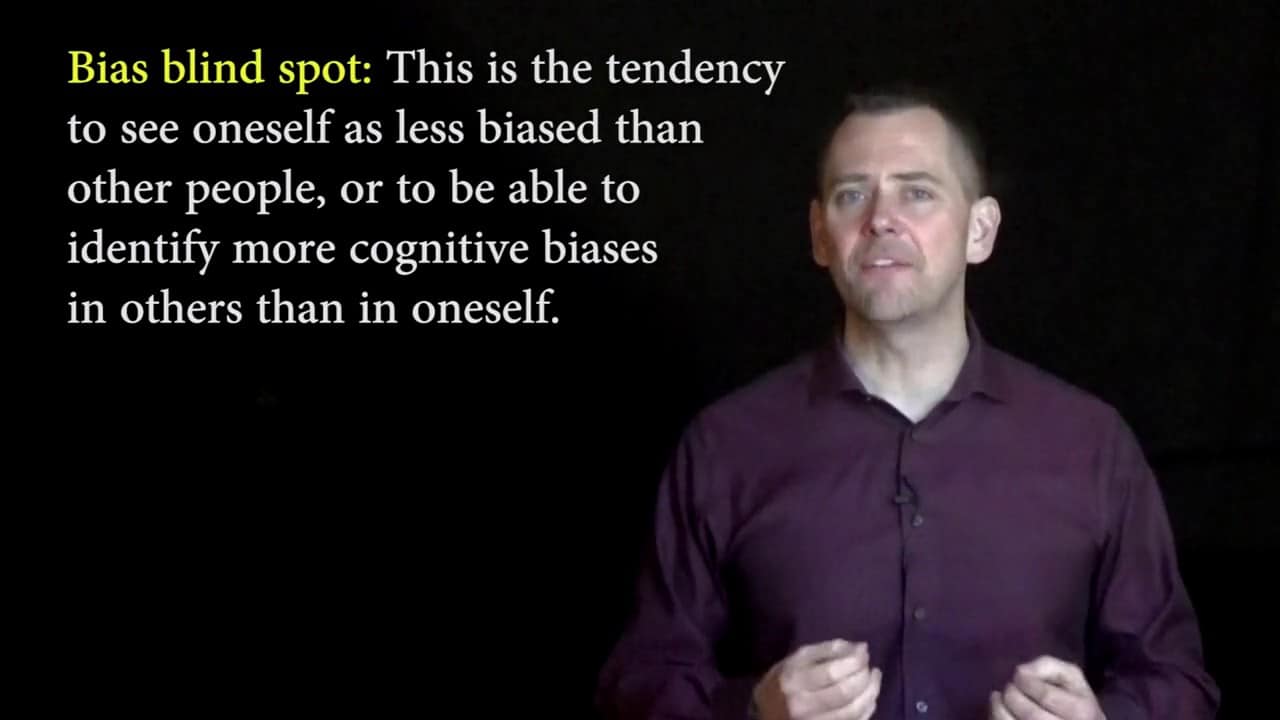
Have you ever watched someone make an obviously biased decision and thought, “How can they not see their own bias?” Maybe your friend bought an expensive phone just because their favorite celebrity endorsed it, or your uncle rejected scientific evidence because it contradicted his political views. You saw their bias clearly. But here’s the uncomfortable truth: while you were spotting their biases, you were probably blind to your own. This is the bias blind spot—the tendency to recognize cognitive biases in everyone except yourself. It’s the meta-bias, the bias about biases, and ironically, it might be the most universal bias of all.
The bias blind spot was extensively documented by psychologist Emily Pronin and her colleagues at Princeton University. In a series of clever experiments, they showed people descriptions of various cognitive biases—confirmation bias, self-serving bias, availability heuristic—and asked them to rate how much these biases affected themselves versus others. The results were striking and consistent. Almost everyone rated themselves as less biased than the average person. They could easily identify biases influencing their friends, family, and strangers, but insisted they themselves were relatively immune. The researchers called this the “introspection illusion”—the mistaken belief that we have special insight into our own minds that allows us to spot and correct our biases, while others remain trapped in theirs.
Think about the inherent absurdity. If everyone genuinely were less biased than average, that would be mathematically impossible. Yet study after study confirms that most people sincerely believe exactly this. We’re like drivers who all insist we’re better than average (another well-documented bias called illusory superiority), except this time we’re claiming superior rationality and objectivity. The bias blind spot doesn’t just affect average people or the poorly educated. Research from Yale University’s reasoning lab demonstrates that intelligence, education, and even training in psychology provide little protection. Smart people show bias blind spots just as large as everyone else—they’re just more sophisticated in explaining why their reasoning is objective while others are biased.
The Introspection Illusion: Why We Trust Our Own Minds Too Much
The bias blind spot emerges from how we evaluate our own thinking versus others’ thinking. When judging others, we observe their behavior and outcomes. We see your friend buy the celebrity-endorsed phone, and the connection seems obvious: they were influenced by celebrity endorsement bias. But when judging ourselves, we rely on introspection—examining our own thought processes. This feels more reliable because we have direct access to our reasoning. The problem is that introspection is actually a terrible tool for detecting bias. Our biases operate largely unconsciously. We genuinely believe our decisions stem from rational analysis, even when they’re heavily influenced by emotions, social pressure, or mental shortcuts.
Consider Anjali, a brilliant medical student who could identify cognitive biases in case studies instantly. When presented with a doctor who continued a failing treatment because of sunk cost bias, she spotted it immediately. But when her own research project wasn’t working after months of effort, she insisted on continuing “because the approach is scientifically sound,” not recognizing her own sunk cost reasoning. She had access to her thought process—”I’m continuing because the science is good”—which felt like rational justification. She couldn’t observe that emotional investment and sunk cost bias were actually driving the decision. Her introspection showed her only the surface-level rationalization, not the underlying bias.
There’s an old Nasruddin story that captures this perfectly. Nasruddin saw a friend searching for something under a streetlamp. “What did you lose?” he asked. “My keys,” the friend replied. “They’re in my house.” “Then why are you looking here?” Nasruddin asked. “Because the light is better here,” the friend explained. We laugh at the friend’s illogic, but that’s exactly what the bias blind spot is. We look for biases where the light is good—in other people’s visible behavior—while ignoring the dark areas of our own unconscious reasoning where biases actually hide. The light of introspection illuminates only our conscious justifications, not our unconscious motivations.
Why Being Smart Makes It Worse
You might think that intelligent, educated people would show smaller bias blind spots. After all, they understand cognitive biases, they’ve studied psychology, they know about irrational thinking. Surprisingly, research suggests the opposite. Studies published by researchers at Stanford’s Department of Psychology found that people with higher cognitive ability actually showed larger bias blind spots in some domains. The reason is both simple and depressing: smart people are better at constructing convincing rationalizations for their biased decisions. They use their intelligence not to overcome bias, but to justify it more sophisticatedly.
When a less educated person makes a biased decision, they might say, “I just feel this is right.” When a highly educated person makes the same biased decision, they construct an elaborate logical framework explaining why their position is objectively correct. The bias is identical; the justification is more impressive. Intelligence provides better tools for motivated reasoning—the process of selectively using evidence and logic to support conclusions you’ve already reached emotionally. Smart people aren’t less biased; they’re better at convincing themselves and others that their biases are actually rationality.
This explains why political polarization affects educated people as much as anyone else. You might expect that people with more education would be less tribal, less susceptible to partisan bias. Instead, research shows that political polarization often increases with education level. Educated Democrats and Republicans aren’t less biased than their less-educated counterparts—they’re just better at generating sophisticated-sounding arguments for positions their tribal identity already dictated. The bias blind spot allows them to see opposing partisans as hopelessly biased while viewing their own positions as based purely on facts and logic.
Think of Rajesh and Priya, two brilliant law students on opposite sides of a political debate. Each could identify logical fallacies and cognitive biases in the other’s arguments within seconds. Rajesh pointed out Priya’s confirmation bias, showing how she only cited studies supporting her view. Priya identified Rajesh’s motivated reasoning, demonstrating how he dismissed contradicting evidence. Both were absolutely right about the other and absolutely blind to the same biases in themselves. When pressed, each insisted their own position was based on careful, objective analysis of all available evidence. Neither could see that they were equally selective, equally biased, and equally certain of their own objectivity.
Real-World Damage: From Relationships to Global Politics
The bias blind spot damages relationships, organizations, and societies. In personal relationships, it creates the classic dynamic where everyone feels like the reasonable one surrounded by irrational people. Partners in a conflict each see themselves as balanced and fair while viewing the other as biased and unreasonable. Parents and teenagers each think the other is being irrational. Friends on opposite sides of an argument each feel like they’re the only one thinking clearly. This mutual blind spot makes resolution nearly impossible because both parties genuinely believe they’re already being objective while the other needs to overcome their bias.
In workplaces, the bias blind spot prevents improvement. Managers who complain that employees resist change can’t see their own resistance to feedback. Employees who criticize leadership for poor decisions don’t recognize similar reasoning flaws in their own work. Everyone agrees that bias is a problem—in other people. Nobody thinks they personally need to work on objectivity. According to research on organizational behavior, this creates environments where everyone identifies problems in others while remaining blind to their own contributions to dysfunction.
In science and medicine, the bias blind spot has delayed progress and harmed patients. Researchers who understand publication bias, p-hacking, and motivated reasoning can spot these problems in others’ work while remaining blind to them in their own. Doctors aware of diagnostic biases identify them in colleagues’ cases but not in their own decision-making. The scientific method exists precisely because scientists recognized they couldn’t trust their own objectivity, yet many scientists still believe they personally are less susceptible to bias than their peers. This overconfidence undermines the very safeguards designed to prevent bias.
At the societal level, the bias blind spot fuels polarization and gridlock. Each political tribe sees itself as rational, evidence-based, and fair while viewing opposing tribes as hopelessly biased, emotional, and tribal. Neither side recognizes that this very perception—”we’re objective, they’re biased”—is itself evidence of bias. The result is mutual contempt, breakdown of dialogue, and inability to find common ground. When everyone believes they’re the only ones thinking clearly, productive disagreement becomes impossible.
Breaking Through the Blind Spot: A Path to Genuine Self-Awareness
Overcoming the bias blind spot requires radical intellectual humility and specific strategies. Start with the assumption that you are biased. Not “might be” or “could be” but definitely are biased, probably right now, in ways you can’t directly perceive. This isn’t pessimism; it’s statistical reality. Cognitive biases are universal human tendencies. The question isn’t whether you have biases but which ones are influencing you at this moment. Accept that introspection won’t reveal them. Looking inward feels like it should show you truth, but it mostly shows you rationalizations. Your mind is designed to feel rational regardless of whether your reasoning actually is rational.
Look at your behavior and outcomes instead of your intentions. Don’t ask “Did I reason objectively?” Ask “What would an objective observer conclude about my decision-making based on my actions?” If you consistently hire people who remind you of yourself, you probably have affinity bias, even if you feel your decisions are merit-based. If your political views align perfectly with your peer group, you’re probably conforming to social pressure, even if you feel you arrived at each position independently. Behavior reveals bias more honestly than introspection.
Actively seek out people who disagree with you and genuinely consider the possibility that they’re right and you’re wrong. This is psychologically painful because it threatens your sense of being rational. But it’s necessary. The people who disagree with you see your biases more clearly than you do, just as you see theirs more clearly than they do. Trading perspectives—really trying to understand why intelligent people reach different conclusions—can reveal blind spots on both sides. Create environments where others can challenge your reasoning without social cost. If people around you never question your judgments, you’re probably surrounded by yes-men, and your biases are running unchecked.
Use formal decision-making processes that reduce reliance on intuition. Pre-commitment strategies, where you decide criteria before evaluating options, reduce bias. Blind evaluation, where identifying information is hidden, limits unconscious preferences. Devil’s advocate roles, where someone is assigned to argue against prevailing views, surface overlooked concerns. These processes exist because smart people recognized they couldn’t trust their own objectivity. They’re admitting the bias blind spot and building external scaffolding to compensate.
There’s a Birbal tale where Akbar asked each courtier to rate their own wisdom compared to others. Every courtier rated themselves above average. Birbal rated himself exactly average. When Akbar asked why, Birbal explained, “Your Majesty, I know I’m probably biased in my own favor, so I assume my perception of being above average reflects bias rather than reality. Therefore I rate myself average.” Akbar named Birbal the wisest for recognizing that true wisdom begins with acknowledging your own blindness.
Frequently Asked Questions
Q1: If we can’t see our own biases through introspection, how can we ever reduce them? Through external feedback, structured processes, and statistical thinking. Get feedback from people who see your behavior objectively. Use decision frameworks that don’t rely on intuition. Track your decisions over time to identify patterns. You can’t see individual biases as they operate, but you can use data and outside perspectives to spot them.
Q2: Doesn’t believing I’m biased become a form of false humility or reverse bias? Potentially, but it’s the lesser danger. Overconfidence in your objectivity causes more harm than moderate skepticism about it. The goal isn’t to believe you’re hopelessly irrational, but to maintain appropriate uncertainty about your reasoning and remain open to correction.
Q3: Are some people genuinely less biased than others? Yes, but the differences are smaller than most people think. Some individuals are slightly better at statistical reasoning, perspective-taking, or emotional regulation—all of which can reduce certain biases. But everyone has biases, and ironically, people least affected by bias are often most aware of their susceptibility to it.
Q4: Why would evolution give us such a problematic bias? The bias blind spot might have been adaptive in ancestral environments. Confidence in your own judgment might have been socially advantageous, helping you persuade others and maintain status. Being able to spot others’ biases while defending your own might have helped in strategic social competition. Unfortunately, what helped our ancestors compete in small tribes doesn’t help us reason accurately in complex modern environments.
Q5: Can groups have collective bias blind spots? Absolutely. Organizations, communities, and entire societies can develop shared beliefs that they’re more objective than other groups. This collective blind spot is particularly dangerous because it’s mutually reinforcing—everyone around you confirms that your group is the rational one, strengthening the illusion.
The bias blind spot reveals a profound humility about human cognition. We are not the rational, objective observers we imagine ourselves to be. Our introspection shows us flattering illusions rather than accurate self-knowledge. This doesn’t mean abandoning reason or descending into relativism where all views are equally valid. It means recognizing that genuine rationality requires constant vigilance, external checks, and deep humility about our own thinking. The first step toward overcoming bias is accepting that you probably can’t see your own. Only then can you build systems and seek perspectives that reveal what your introspection hides.
Observer Voice is the one stop site for National, International news, Sports, Editor’s Choice, Art/culture contents, Quotes and much more. We also cover historical contents. Historical contents includes World History, Indian History, and what happened today. The website also covers Entertainment across the India and World.

