

The Strange Psychology Trick Benjamin Franklin Used to Turn Enemies Into Friends

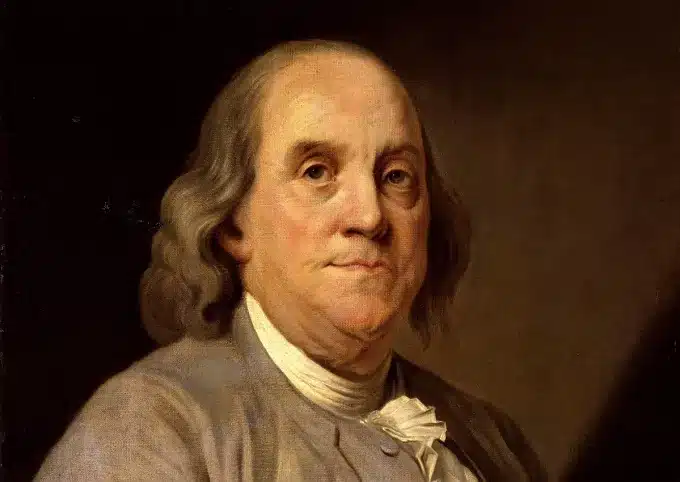
Benjamin Franklin had a problem. A powerful rival in the Pennsylvania legislature publicly criticized him at every opportunity, making Franklin’s political work nearly impossible. Most people would have fought back, launched a counter-attack, or simply avoided the enemy. Franklin did something completely counterintuitive. He asked his rival for a favor. Specifically, Franklin heard that his enemy owned a rare book. He wrote a polite letter asking if he could borrow it for a few days. The rival, flattered by Franklin’s interest, sent the book immediately. When they next met, instead of the usual cold hostility, the man spoke to Franklin with civility and respect. They eventually became lifelong friends.
This wasn’t luck or charm. Franklin had stumbled upon a profound psychological truth that now bears his name: the Ben Franklin effect. The principle sounds backwards at first—people who do you favors end up liking you more, not less. It contradicts common sense, which says we like people who help us, not people we help. Yet research consistently confirms Franklin’s observation. When you do someone a favor, your brain needs to justify why you’d help this person, and the easiest explanation is “I must like them.” Your actions shape your feelings, not just the other way around.
The Psychology Behind the Paradox
The Ben Franklin effect operates through cognitive dissonance, a concept extensively studied at Stanford University’s psychology department. Cognitive dissonance is the mental discomfort we feel when our actions contradict our beliefs. When you help someone, especially someone you previously disliked or felt neutral about, your brain experiences a conflict. “Why am I helping this person if I don’t like them?” it asks. Rather than admitting you made an irrational choice, your mind resolves the dissonance by adjusting your attitude. “I must help them because I actually do like them,” becomes the subconscious conclusion. Your opinion of the person improves to match your helpful behavior.
Research from Yale University’s psychology researchers demonstrates this effect in controlled experiments. Participants who were asked to do small favors for strangers—lending a pen, sharing notes, holding a door—consistently rated those strangers more favorably afterward compared to strangers they hadn’t helped. The act of helping created liking, not the other way around. The effect strengthens when the favor requires some effort or sacrifice. Trivial actions produce weak effects, but meaningful assistance—lending something valuable, investing time, sharing expertise—produces strong shifts in attitude.
There’s an ancient tale from the Panchatantra that unknowingly illustrates this principle. A crow repeatedly stole food from a hermit’s hut. The hermit, instead of chasing the crow away, one day asked the crow to fetch him a specific herb from the forest. The crow, puzzled but curious, did so. The hermit thanked him warmly. The crow returned the next day, and the hermit asked for another small favor. Soon the crow was visiting daily, bringing items without being asked. The hermit had transformed a thief into a helper by first making the crow a helper. The crow’s self-perception changed—”I am someone who helps this hermit”—and behavior followed belief.
Why Asking for Favors Builds Deeper Bonds Than Giving Them
Common wisdom tells us that generosity creates friendship. Do favors for others and they’ll like you, we’re told. This is partly true, but the Ben Franklin effect reveals an even more powerful dynamic. When you do someone a favor, you invest in them. You spend time, energy, or resources. Your brain interprets this investment as evidence that the person must be worth it. Nobody wants to believe they waste effort on worthless causes, so you mentally elevate the person’s value to justify your investment. This process is called effort justification, and it’s remarkably powerful.
Consider two scenarios. In the first, you constantly help a classmate with homework, never asking anything in return. You might feel good about being generous, but you may also start feeling resentful or superior, seeing them as dependent. In the second scenario, you occasionally ask that classmate for help with subjects they excel in, while also helping them with your strengths. The mutual exchange creates equality and respect. When they help you, they convince themselves you’re worth helping. When you help them, you convince yourself they’re worth your effort. Both of you become more invested in the relationship through reciprocal giving. Research on relationship dynamics published by researchers at the University of California confirms that reciprocal favor-exchange creates stronger bonds than one-directional generosity.
Think about Priya, a new employee who wanted to build relationships with her team. Her first instinct was to bring coffee for everyone, volunteer for extra work, and constantly offer help. People were polite but distant. Then she changed strategy. She started asking colleagues for advice, requesting their expertise on projects, and inviting them to teach her skills they had mastered. Suddenly, relationships deepened. Her coworkers became invested in her success because they had contributed to it. They liked her more after helping her than they had when she was helping them.
Practical Applications: From Classrooms to Boardrooms
The Ben Franklin effect has practical applications across all areas of life. In education, teachers who ask struggling students to help with small tasks—organizing materials, assisting classmates, contributing ideas—often see those students become more engaged. The student thinks, “I’m someone who contributes here,” and their attitude toward class improves. In workplaces, managers who appropriately ask employees for input, advice, or assistance build more loyal teams than managers who only give orders or help. Employees who feel their expertise is valued and utilized become more committed to organizational success.
In personal relationships, the effect explains why asking vulnerable favors often strengthens friendships more than always being the helper. When you show someone you trust them enough to need them, you invite them to invest in you. Their investment creates commitment. This doesn’t mean exploiting people’s kindness, but rather allowing reciprocal vulnerability and mutual support. One-sided relationships where one person always gives and the other always receives often breed resentment. Balanced relationships where both parties give and receive favors create lasting bonds.
During conflicts or when trying to build bridges with someone you’ve had tension with, the Ben Franklin approach offers a path forward. Instead of trying to win them over with favors or gifts, ask them for something small. Make it genuine, not manipulative. Ask for their opinion on something, their help with a minor task, or their expertise in an area they know well. The act of fulfilling your request subtly shifts their perception. They begin seeing you as someone worth helping rather than an adversary, and attitudes often follow from there. This strategy has been documented in conflict resolution research, showing particular effectiveness in de-escalating workplace tensions and interpersonal disputes.
The Ethics of Influence: Using Psychology Responsibly
Understanding the Ben Franklin effect raises ethical questions. Is it manipulative to ask someone for a favor specifically to make them like you? The answer depends on your intentions and authenticity. If you ask for favors you don’t actually need, purely to manipulate someone’s feelings, that crosses into deception. But if you genuinely need help and recognize that asking might also improve the relationship, that’s simply being psychologically informed. The key is authentic need and genuine appreciation. Franklin’s book request wasn’t a trick—he genuinely wanted to read the book. The relationship improvement was a welcome side effect of authentic interaction.
The effect works best when favors are genuine, specific, and acknowledged. Generic requests feel like impositions. Specific requests that acknowledge someone’s unique capability feel like compliments. “Could someone help me?” is less effective than “I noticed you’re really good at graphic design. Would you be willing to give me feedback on this poster?” The latter recognizes their expertise, making the favor feel meaningful rather than burdensome. Always express sincere gratitude. The Ben Franklin effect requires that the helper feels good about helping. Appreciation reinforces their positive feelings and willingness to help again.
There’s a Tenali Raman story where a merchant wanted to befriend the king’s treasurer to secure better trade terms. Instead of offering bribes or gifts, Tenali advised him to ask the treasurer’s advice about managing accounts. The treasurer, flattered, spent hours sharing his expertise. Soon he was voluntarily advocating for the merchant’s interests at court, having convinced himself through his investment that the merchant was worthy of support. The merchant’s genuine interest in learning and authentic appreciation made the connection ethical rather than manipulative.
Frequently Asked Questions
Q1: Won’t people think I’m weak or incompetent if I keep asking for favors? Not if you ask appropriately. Request favors that acknowledge their expertise or unique capabilities. “You’re really good at this—could you help me?” is very different from “I can’t do anything myself.” Also, balance is key. Ask for help sometimes, and offer help other times. Reciprocal exchange creates equality, not dependence.
Q2: Does this work with everyone, or only certain personalities? The effect is universal but varies in strength. People who derive self-worth from being helpful show stronger effects. Those who are naturally suspicious or cynical may resist. The favor must also be reasonable—asking for something too large or too frequent can backfire, creating resentment instead of liking.
Q3: How is this different from manipulation? Manipulation involves deception and disregard for the other person’s wellbeing. The Ben Franklin effect becomes manipulation if you fake needing help or exploit someone’s kindness without genuine appreciation. Used ethically, it’s simply understanding how human psychology works and structuring interactions in mutually beneficial ways.
Q4: Can asking for too many favors ruin the effect? Absolutely. The effect works for reasonable, occasional requests. Constant favor-asking creates burden and resentment. The helper’s brain can only justify so much effort before concluding “I’m being used” rather than “I like this person.” Balance and reciprocity are essential.
Q5: Does this mean I should never do favors for people I want to like me? Not at all. Both giving and receiving favors build relationships, just through different mechanisms. The point is that asking for favors is also a valid relationship-building tool, sometimes even more powerful than only giving. The strongest relationships involve mutual exchange—both parties giving and receiving.
Observer Voice is the one stop site for National, International news, Sports, Editor’s Choice, Art/culture contents, Quotes and much more. We also cover historical contents. Historical contents includes World History, Indian History, and what happened today. The website also covers Entertainment across the India and World.
Follow Us on Twitter, Instagram, Facebook, & LinkedIn

