

Supreme Court Ruling on Trump Tariffs: Dissent Emphasizes India’s Role in Russia Oil Discussion

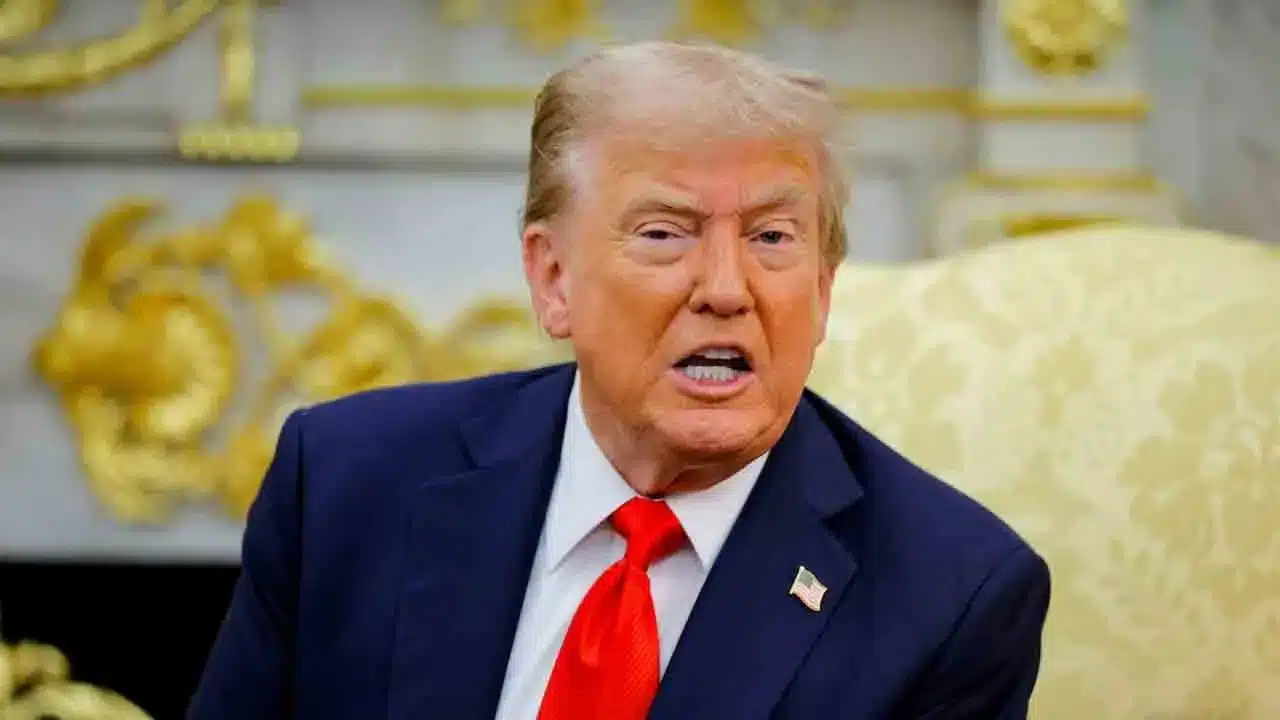
India has been prominently mentioned in a significant ruling by the US Supreme Court, which has curtailed the presidential authority to impose tariffs under emergency powers. The case, Learning Resources, Inc. v. Trump, examined the use of tariffs as instruments of foreign policy, particularly in relation to Russian oil imports. The ruling has implications for how the US government can leverage tariffs in diplomatic negotiations, with India cited as a key example in the dissenting opinion.
Supreme Court Ruling on Tariff Authority
In a landmark decision, the US Supreme Court ruled that the International Emergency Economic Powers Act (IEEPA) does not grant the president the authority to impose tariffs. This judgment significantly limits executive power over trade policy, especially when such measures are linked to diplomatic efforts. The case arose from the Trump administration’s use of tariffs as a tool in foreign relations, particularly concerning negotiations with major trading partners. The majority opinion emphasized that tariffs are fundamentally a form of taxation, which falls under Congress’s exclusive powers as outlined in Article I of the Constitution. The justices concluded that even in emergencies, the president cannot assume taxing authority without explicit congressional approval.
India’s Role in Tariff Diplomacy
The dissenting opinion, authored by Justice Brett Kavanaugh, highlighted India’s involvement in the context of US tariffs linked to the Russia-Ukraine conflict. The dissent noted that the US administration had imposed tariffs on India for allegedly importing Russian oil. Specifically, it stated that on August 6, 2025, the President enacted tariffs on India for “directly or indirectly importing Russian Federation oil.” However, these tariffs were later eased on February 6, 2026, after the US government indicated that India had committed to ceasing such imports. This example illustrates how tariffs have been utilized as diplomatic tools in international relations, particularly in sensitive geopolitical situations.
Debate Over Foreign Policy and Constitutional Limits
The dissenting justices argued that tariffs have historically served as instruments of diplomacy and national security. They cautioned against restricting presidential authority in foreign affairs by applying doctrines typically reserved for domestic regulation. Justice Kavanaugh contended that the application of the “major questions doctrine,” which necessitates clear congressional approval for significant executive actions, represents an unprecedented judicial intervention in foreign policy. The dissent emphasized that presidential actions related to foreign affairs often have a long-standing historical basis and should be interpreted in a manner that does not undermine the executive’s role.
Majority Opinion on Tariff Authority
In contrast, the Supreme Court’s majority firmly rejected the notion that foreign policy considerations could expand the president’s tariff authority. Chief Justice John Roberts articulated that tariffs are essentially a form of taxation, which is constitutionally reserved for Congress. The majority opinion reinforced the idea that even emergency statutes addressing international threats cannot transfer core taxing powers to the president without explicit legislative language. The justices pointed out that no president had previously utilized the IEEPA to impose tariffs in its nearly fifty-year history, underscoring their conclusion that Congress never intended to delegate such extensive authority to the executive branch.
Observer Voice is the one stop site for National, International news, Sports, Editor’s Choice, Art/culture contents, Quotes and much more. We also cover historical contents. Historical contents includes World History, Indian History, and what happened today. The website also covers Entertainment across the India and World.
Follow Us on Twitter, Instagram, Facebook, & LinkedIn

