

Lymphatic Filariasis: Understanding the Disease That Causes Elephant-Like Swelling
What is Lymphatic Filariasis and Why Should We Care About It?

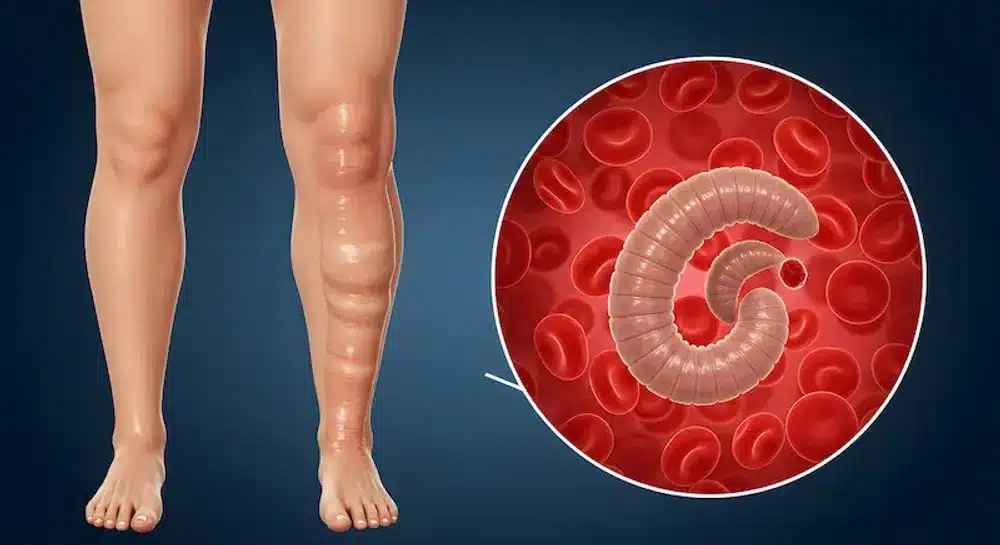
Imagine waking up one day to find your leg has swollen to twice its normal size, becoming so heavy that walking feels like dragging a sack of cement. This isn’t a scene from a science fiction movie—it’s the reality for millions of people suffering from lymphatic filariasis, also known as elephantiasis.
Lymphatic filariasis is a painful and disfiguring disease caused by tiny parasitic worms that live inside the human body. These microscopic invaders attack the lymphatic system, which is like the body’s drainage network that helps fight infections and keeps us healthy. When these worms block this drainage system, body parts can swell to enormous sizes, resembling an elephant’s leg—hence the name elephantiasis.
The Tiny Culprits Behind a Big Problem
The disease is caused by thread-like worms called filarial worms. There are three types of these parasites that can infect humans: Wuchereria bancrofti, Brugia malayi, and Brugia timori. Among these, Wuchereria bancrofti is responsible for about 90% of all cases worldwide, according to the World Health Organization.
These worms are not something you can catch from touching an infected person or sharing their belongings. Instead, they spread through mosquito bites. When a mosquito bites someone who already has the infection, it picks up microscopic baby worms called microfilariae. These baby worms develop inside the mosquito for about two weeks. Then, when that mosquito bites another person, it transfers the worms into their bloodstream, starting a new infection.
Once inside the human body, these worms can live for 6-8 years, growing up to 10 centimeters long. During this time, adult female worms produce millions of microfilariae that circulate in the blood, waiting for the next mosquito bite to continue the cycle.
A Global Health Challenge Affecting Millions
Lymphatic filariasis is found in tropical and subtropical regions of Asia, Africa, the Western Pacific, and parts of the Caribbean and South America. Currently, more than 882 million people in 44 countries live in areas where they risk getting infected. About 120 million people are already infected, and approximately 40 million of them suffer from visible symptoms and disability caused by the disease.
This disease particularly affects people living in poor communities with limited access to clean water, proper sanitation, and healthcare facilities. It thrives in areas where mosquitoes breed easily, such as places with stagnant water and poor drainage systems. Like many neglected tropical diseases, lymphatic filariasis disproportionately impacts the world’s poorest populations.
How the Disease Affects the Human Body
Most people infected with lymphatic filariasis don’t show any obvious symptoms, but the worms are still causing hidden damage inside their bodies. This silent damage weakens the immune system and harms the lymphatic system over time.
When symptoms do appear, they can be devastating. The most visible sign is lymphoedema—abnormal swelling of body parts, usually the legs, arms, or genitals. This swelling happens because the worms block the lymphatic vessels, preventing fluid from draining properly. The affected body part gradually becomes larger, and the skin becomes thick and hard, resembling an elephant’s skin.
People with lymphatic filariasis also suffer from repeated bacterial infections in the affected areas, causing painful episodes of fever, chills, and increased swelling. Some men develop a condition called hydrocele, where fluid collects around the testicles, causing painful swelling in the scrotum.
Beyond physical suffering, the disease causes severe social and economic problems. Many people with visible symptoms face discrimination and social exclusion. They may lose their jobs because of their disability, struggle to get married, or be excluded from community activities. This emotional burden is often as painful as the physical symptoms.
Fighting Back: Prevention and Treatment
The good news is that lymphatic filariasis can be prevented and controlled. The World Health Organization launched a global program in 2000 to eliminate this disease as a public health problem. The strategy involves two main approaches:
Mass Drug Administration (MDA): In areas where the disease is common, entire communities receive free preventive medicines once a year. These medicines kill the microfilariae in the blood, stopping the spread of infection. Two drug combinations are used: albendazole with ivermectin, or albendazole with diethylcarbamazine citrate (DEC). A single dose of these medicines can protect people for an entire year.
Managing Disability: For people who already have swelling and other symptoms, proper care can prevent the condition from getting worse and improve their quality of life. This includes simple but effective measures like washing the affected limbs daily with soap and water, elevating swollen legs while resting, exercising regularly, and treating any wounds or infections promptly.
Vector control is also important. Reducing mosquito populations through insecticide-treated bed nets, indoor spraying, and eliminating mosquito breeding sites helps break the transmission cycle. These vector control measures are similar to those used in combating other mosquito-borne diseases.
Progress Toward Elimination
Thanks to global efforts, significant progress has been made. Since 2000, more than 9.5 billion doses of preventive medicines have been given to over 940 million people. Seventeen countries have successfully eliminated lymphatic filariasis as a public health problem, as verified by WHO’s validation process.
However, challenges remain. COVID-19 disrupted treatment programs in many countries. Climate change is expanding mosquito habitats, potentially increasing the risk of transmission. Reaching remote communities and ensuring everyone receives treatment continues to be difficult.
A Future Free from Elephantiasis
Eliminating lymphatic filariasis is an achievable goal. With continued political commitment, adequate funding, and community participation, we can stop this ancient disease from affecting future generations. Every year of mass drug administration brings us closer to breaking the transmission cycle.
For those already affected, compassionate care and social support can dramatically improve their lives. By combining medical treatment with efforts to reduce stigma and discrimination, we can ensure that people with lymphatic filariasis are not left behind.
The fight against lymphatic filariasis is not just about eliminating a disease—it’s about restoring dignity, hope, and opportunity to millions of people worldwide. As research continues and global cooperation strengthens, a world free from elephantiasis is within our reach.
Frequently Asked Questions (FAQs)
No, you cannot catch lymphatic filariasis through casual contact. The disease only spreads through mosquito bites. When a mosquito carrying the parasitic worms bites you, it can transmit the infection. The disease is not contagious through touching, sharing food, or being near an infected person.
While the swelling (lymphoedema) caused by lymphatic filariasis cannot be completely reversed, it can be managed and prevented from getting worse. Daily hygiene practices like washing the affected area with soap and water, elevating the limb, gentle exercises, and treating infections promptly can significantly improve the condition and quality of life.
Lymphatic filariasis has a long incubation period. Most people infected with the worms don’t show visible symptoms for many years. The worms can live in the body for 6-8 years, causing hidden damage to the lymphatic system before obvious swelling appears. This is why preventive treatment for entire communities is important.
Yes, children can get infected with lymphatic filariasis if they are bitten by infected mosquitoes. In fact, infections often begin in childhood, though symptoms may not appear until adulthood. This is why mass drug administration programs include children above certain ages (depending on the specific medicines used) to prevent them from becoming infected.
As of recent reports, 17 countries have been validated by WHO as having eliminated lymphatic filariasis as a public health problem. These include Cambodia, Egypt, Maldives, Sri Lanka, Thailand, Togo, Yemen, Malawi, Bangladesh, Kiribati, Vanuatu, Nepal, Myanmar, Gambia, Niue, Lao PDR, and Rwanda. Their success shows that elimination is possible with sustained effort and community participation.
References
- World Health Organization. (2024). Lymphatic filariasis. Retrieved from https://www.who.int/health-topics/lymphatic-filariasis
- World Health Organization. (2024). Lymphatic filariasis – Fact Sheet. Retrieved from https://www.who.int/news-room/fact-sheets/detail/lymphatic-filariasis
- World Health Organization. (2024). Lymphatic Filariasis Elimination Programme. Retrieved from https://www.who.int/teams/control-of-neglected-tropical-diseases/lymphatic-filariasis
- Observer Voice. Neglected Tropical Diseases (NTDs). Retrieved from https://observervoice.com/neglected-tropical-diseases-ntds/
- Observer Voice. Dengue and Severe Dengue. Retrieved from https://observervoice.com/dengue-and-severe-dengue/
Disclaimer: This article is an adaptation of publicly available information from WHO’s Lymphatic Filariasis
health topic page (WHO, Geneva. Licence: CC BYNC-SA 3.0 IGO). WHO is not responsible for the
content or accuracy of this adaptation. This content is for informational and educational purposes
only and does not constitute medical advice. ObserverVoice.com is a news and information platform
— not a healthcare provider.
Observer Voice is the one stop site for National, International news, Sports, Editor’s Choice, Art/culture contents, Quotes and much more. We also cover historical contents. Historical contents includes World History, Indian History, and what happened today. The website also covers Entertainment across the India and World.

