

India and EU Prepare for Landmark Trade Agreement Amidst Impact of Trump’s Tariffs

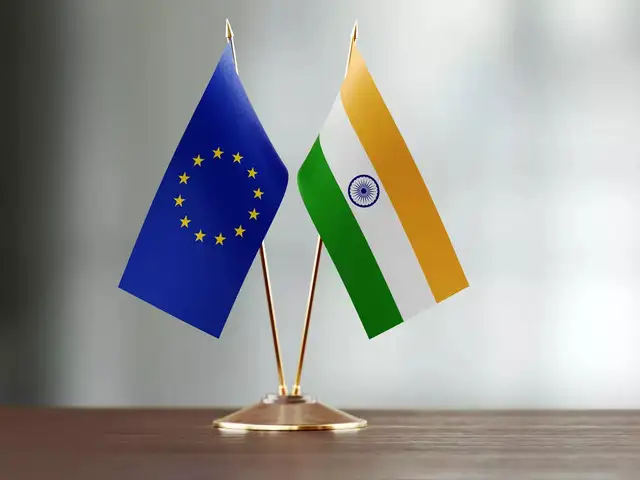
European Council President Antonio Luis Santos da Costa and European Commission President Ursula von der Leyen are set to be the chief guests at India’s Republic Day celebrations next Monday. Their visit comes at a crucial time as both leaders aim to advance free trade negotiations with India, a country that is becoming increasingly significant on the global economic stage. This diplomatic engagement signals India’s intent to strengthen its strategic and trade relationships amid ongoing tensions with the United States over tariffs.
Significance of the Visit
The presence of the European leaders at India’s Republic Day celebrations is more than just ceremonial. It underscores a strategic pivot by India to enhance its global trade ties, particularly as it navigates the complexities of U.S. trade policies. With President Donald Trump previously threatening to escalate trade tensions, the invitation to European leaders reflects India’s desire to diversify its foreign policy and reduce reliance on the U.S. market. Chietigj Bajpaee from Chatham House noted that this move sends a clear message about India’s commitment to a diversified approach in international relations.
The upcoming high-level summit on January 27 could potentially see the announcement of a significant free trade agreement (FTA) between India and the European Union (EU). Both von der Leyen and India’s Trade Minister Piyush Goyal have referred to this deal as the “mother of all deals,” emphasizing its importance after nearly two decades of negotiations. This agreement would mark India’s ninth FTA in four years, following recent deals with countries like the UK and New Zealand, and it represents a crucial step in India’s efforts to integrate more deeply into the global economy.
Economic Implications for Both Sides
The potential FTA holds substantial economic implications for both India and the EU. For the EU, strengthening trade ties with India is vital as the latter is projected to become the world’s fourth-largest economy, with a GDP expected to surpass $4 trillion this year. Ursula von der Leyen highlighted that a partnership between the EU and India could create a free market encompassing two billion people, accounting for a quarter of global GDP.
For India, the EU is already its largest trading bloc. The FTA could restore the Generalised System of Preferences (GSP), which previously allowed Indian products to enter the EU market with reduced tariffs. Ajay Srivastava from the Global Trade Research Initiative noted that the restoration of GSP benefits is crucial for Indian exporters, particularly in sectors like garments, pharmaceuticals, and machinery. However, India is likely to protect sensitive sectors such as agriculture and dairy from tariff reductions, while gradually lowering tariffs on products like cars and wines.
Challenges Ahead
Despite the optimistic outlook, significant challenges remain in finalizing the trade agreement. One of the primary concerns for Europe is the protection of intellectual property rights, with calls for stricter data protection and patent regulations. Conversely, India is wary of the new Carbon Border Adjustment Mechanism (CBAM) introduced by the EU, which could impose additional costs on Indian exports despite the elimination of import duties under the FTA. This mechanism could disproportionately affect micro, small, and medium-sized enterprises in India, which may struggle with compliance costs and reporting requirements.
The resolution of these issues will be critical in determining whether the agreement becomes a mutually beneficial partnership or a strategically imbalanced deal. Analysts suggest that while political friction with the U.S. may make the EU more amenable to the trade deal, India’s human rights record and environmental concerns could still pose hurdles in the EU parliament.
Long-Term Prospects
In the long run, experts believe that the FTA could facilitate a shift away from reliance on the U.S. and China, reducing vulnerabilities associated with fluctuating tariffs and export controls. Alex Capri from the National University of Singapore emphasized that the agreement could help India navigate the complexities of global trade dynamics, particularly in light of the geopolitical landscape.
As India continues to reduce its dependence on Russian oil and navigate its relationship with the U.S., the potential trade agreement with the EU could pave the way for a more stable and diversified economic future. The upcoming negotiations will be closely watched, as they may set the tone for India’s role in the global economy in the years to come.
Observer Voice is the one stop site for National, International news, Sports, Editor’s Choice, Art/culture contents, Quotes and much more. We also cover historical contents. Historical contents includes World History, Indian History, and what happened today. The website also covers Entertainment across the India and World.
Follow Us on Twitter, Instagram, Facebook, & LinkedIn

