

US Supreme Court Ruling: Key Decision Affects Certain Trump Tariffs

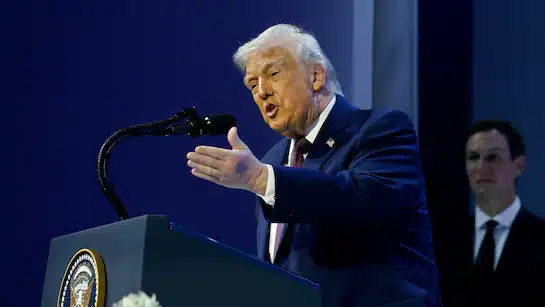
The U.S. Supreme Court delivered a significant ruling on Friday, invalidating a series of tariffs imposed by former President Donald Trump, citing an overreach of authority under the International Emergency Economic Powers Act (IEEPA). In a decisive 6-3 vote, the conservative-majority court concluded that the president does not possess the power to impose tariffs under this law. While the ruling nullifies broad tariffs, it does not affect several sector-specific duties that remain in place, raising questions about the future of U.S. trade policy.
Supreme Court’s Ruling on Tariffs
The Supreme Court’s ruling centers on Trump’s invocation of the IEEPA, a law enacted in 1977 that allows the president to regulate trade during a declared national emergency. Trump first utilized this law in February 2025 to impose tariffs on imports from China, Mexico, and Canada, citing drug trafficking as a national emergency. Subsequently, in April, he expanded these tariffs to include a wide range of goods from nearly all U.S. trading partners, arguing that the trade deficit constituted an “extraordinary and unusual threat.” A lower court had previously determined that Trump exceeded his authority with these tariffs, blocking most of them, but that decision was on hold pending appeal. The Supreme Court’s ruling effectively upholds the lower court’s decision, rendering the nationwide tariffs under IEEPA invalid.
Impact on Specific Tariffs
While the Supreme Court’s decision strikes down broad tariffs, it does not affect industry-specific tariffs imposed under Section 232 of the Trade Expansion Act of 1962. These tariffs, justified on national security grounds, include duties on steel, aluminum, lumber, and automotive imports. Ongoing government investigations may lead to additional sectoral tariffs in the future. Economists have noted that the ruling could significantly lower the overall U.S. tariff burden. Before the decision, Gregory Daco, chief economist at EY-Parthenon, indicated that eliminating the emergency tariffs could reduce the average U.S. tariff rate from 16.8% to approximately 9.5%. However, he warned that this relief might be short-lived if the administration seeks alternative legal methods to reimpose broad tariffs.
Market Reactions
Financial markets responded positively to the Supreme Court’s ruling. Following the announcement, the Dow Jones Industrial Average rose by 207.03 points, or 0.42%, reaching 49,602.19. Similarly, the S&P 500 gained 33.44 points, or 0.52%, climbing to 6,895.33. The market’s reaction reflects investor optimism regarding the potential reduction in tariffs and the implications for U.S. trade relations. As the ruling unfolds, stakeholders will be closely monitoring how the administration navigates its trade policies in light of this significant legal decision.
Future of U.S. Trade Policy
The Supreme Court’s ruling marks a pivotal moment in U.S. trade policy, emphasizing the need for congressional authority in tariff imposition. The court’s opinion highlighted that if Congress intended to grant the president the power to impose tariffs through the IEEPA, it would have done so explicitly, as it has in other tariff-related legislation. This ruling may prompt lawmakers to reassess their approach to trade policy and the delegation of powers to the executive branch. As the landscape of U.S. trade continues to evolve, the implications of this decision will likely resonate across various sectors and influence future negotiations with trading partners.
Observer Voice is the one stop site for National, International news, Sports, Editor’s Choice, Art/culture contents, Quotes and much more. We also cover historical contents. Historical contents includes World History, Indian History, and what happened today. The website also covers Entertainment across the India and World.
Follow Us on Twitter, Instagram, Facebook, & LinkedIn

