

Understanding Direct-to-Cell Technology: Functionality and Applications Explained

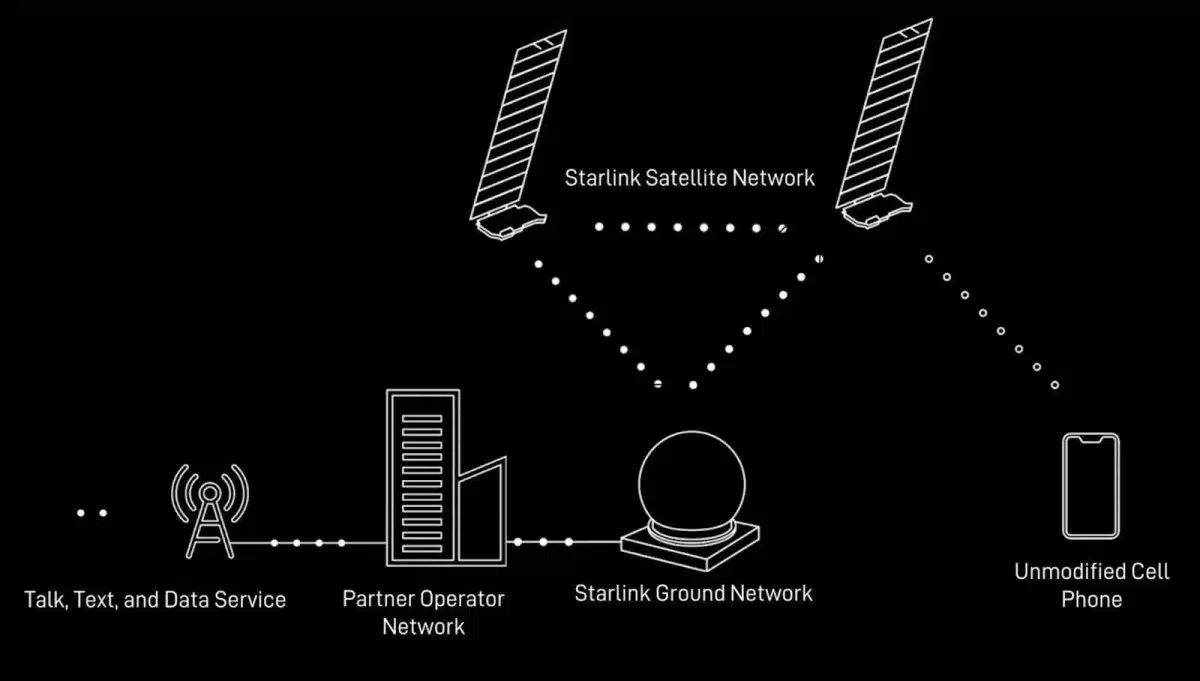
Direct-to-Cell (D2C) technology is revolutionizing the way we communicate by enabling smartphones to connect directly to satellites instead of relying solely on mobile towers. This innovative approach allows users to maintain connectivity even in remote areas where traditional cellular networks are unavailable. With no need for specialized devices or additional antennas, D2C technology is making communication more accessible and reliable than ever before.
How Direct-to-Cell Works
Direct-to-Cell technology transforms satellites into floating mobile towers. These satellites are equipped with advanced antennas that create extensive coverage areas on Earth. Inside each satellite, there is sophisticated equipment similar to that found in traditional mobile towers, but it is designed to handle the challenges of distance and movement. The remarkable aspect of this technology is that users do not need to upgrade their phones. All the complex tasks, such as managing signal delays and adjusting for the satellite’s speed, are handled by the satellite itself.
When a satellite passes overhead, a user’s phone attempts to connect using standard cellular power. Despite the satellite being hundreds of kilometers away, it can still receive the signal. Data is then transmitted globally through satellite-to-satellite laser links, ensuring rapid communication. The final step occurs when the signal reaches ground stations, which are equipped with large antennas. These ground gateways facilitate the entry of data into the mobile operator’s network, effectively filling the gaps left by traditional towers.
Where Direct-to-Cell Is Used
Direct-to-Cell technology proves invaluable in emergency and disaster situations. During significant events such as hurricanes, floods, and wildfires in 2024-2025, over a million individuals utilized Starlink’s D2C service when conventional towers were rendered inoperable. Additionally, Apple’s Emergency SOS via Satellite feature has played a crucial role in saving lives by allowing users to send messages without any signal. A notable instance occurred in New Zealand, where D2C technology assisted rescuers in locating an injured woman in a remote area.
In mid-2025, T-Mobile launched its satellite messaging service, T-Satellite, which operates across the United States and New Zealand. This service enables users to send texts, photos, and short audio clips from the most isolated locations. By late 2025, T-Mobile expanded its offerings to include basic data services. Beyond emergencies, D2C technology is also a game-changer for the Internet of Things (IoT). It allows farmers to monitor crops from distant fields, wildlife trackers to follow animals in dense forests, and shipping companies to keep tabs on containers in the open ocean, all thanks to continuous satellite coverage.
Limitations and Challenges
Despite its advantages, Direct-to-Cell technology is not without limitations. It performs best outdoors, as a clear view of the sky is essential for optimal connectivity. Currently, the data speeds are relatively slow, typically below 1 Mbps, which may hinder user experience. Additionally, the technology can drain phone batteries more quickly since devices must exert extra effort to establish a connection. The system still relies on ground gateways, meaning it is not entirely independent. Furthermore, the availability of radio spectrum for satellite services is limited, which poses challenges for global deployment.
Current Status and the Future
As of late 2025, Direct-to-Cell services are operational in the United States and New Zealand, with Starlink already deploying over 650 D2C satellites and plans to expand to approximately 15,000. Other companies, including AST SpaceMobile and Lynk Global, are also entering the market, intensifying competition in this emerging field. Currently, D2C primarily supports messaging and basic data services. However, advancements in technology are expected to enable voice calls and faster satellite internet on standard phones in the coming years. Direct-to-Cell technology is poised to enhance global connectivity, particularly in remote areas and during critical situations when traditional mobile towers fail.
Observer Voice is the one stop site for National, International news, Sports, Editor’s Choice, Art/culture contents, Quotes and much more. We also cover historical contents. Historical contents includes World History, Indian History, and what happened today. The website also covers Entertainment across the India and World.

