

Taxpayer Opts for New Tax Regime, Consultant Files Incorrect Form Leading to Old Regime Demand

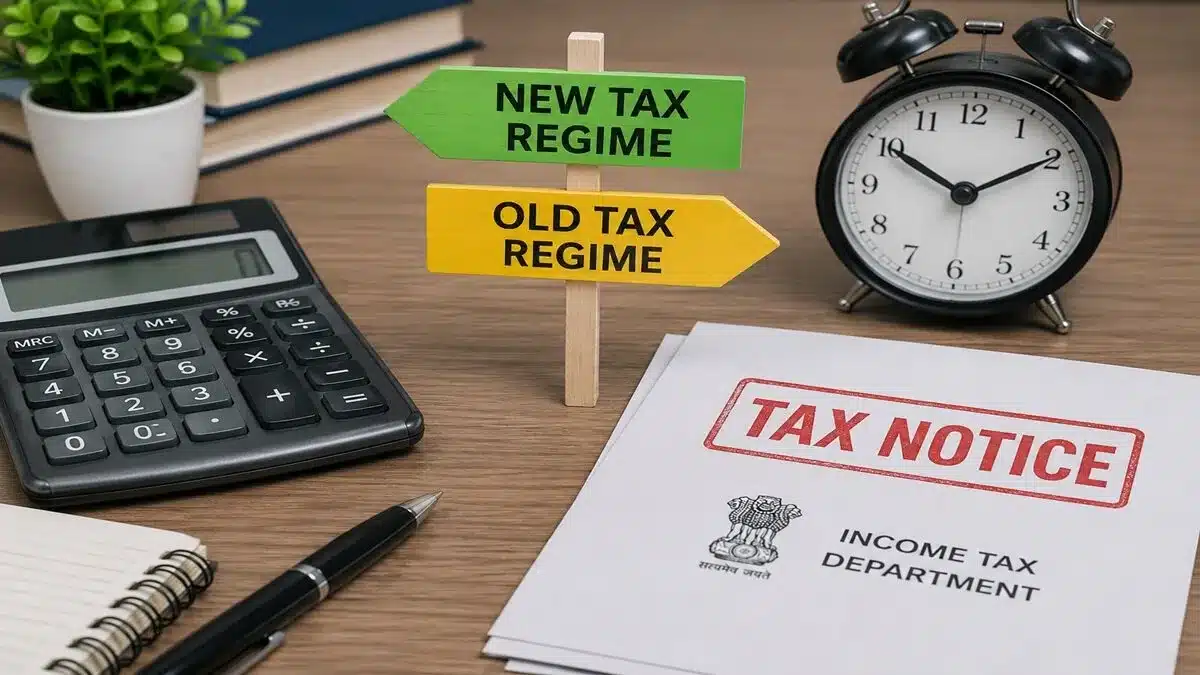
A Bengaluru resident, Mr. Shah, faced an unexpected tax liability of Rs 1.23 lakh due to a mistake made by his tax consultant. Shah had filed his income tax return (ITR) under the new tax regime, reporting an income of Rs 32.55 lakh. However, his consultant inadvertently filed Form No. 10-IEA, which switched his tax assessment to the old regime, resulting in a higher tax obligation.
Tax Notice Due to Consultant Error
Shah informed the tax authorities that the filing of Form 10-IEA was a mistake made during routine compliance work. He argued that the form did not reflect his actual choice, as his ITR clearly indicated his intention to remain under the new tax regime. Despite his explanation, the Centralised Processing Centre (CPC) in Bengaluru processed his ITR under the old regime on January 29, 2026, based on the incorrectly filed form.
The CPC’s reliance on Form 10-IEA led to an additional tax demand for Shah. The Commissioner of Appeals (CIT A) rejected his arguments, prompting Shah to appeal to the Income Tax Appellate Tribunal (ITAT) in Bangalore, where he was represented by Mr. Varun S. The tribunal ruled in his favor on August 17, 2026.
ITAT’s Ruling in Favor of the Taxpayer
Chartered Accountant Suresh Surana noted that Shah’s subsequent actions supported his claim. After the erroneous filing, Shah submitted his ITR on October 24, 2025, calculating his tax liability under the new tax regime in accordance with Section 115BAC(1A). The ITAT considered both the subsequent filing and the original ITR to determine Shah’s true intent regarding the tax regime.
The tribunal emphasized that the ITR serves as a statutory document for declaring income and determining tax liability. Since Shah’s later ITR clearly indicated his choice of the new regime, the ITAT held that this expression of intent should not be disregarded due to the earlier mistake. The tribunal also noted that Shah did not attempt to exploit benefits from both tax regimes, as he did not claim deductions or exemptions available only under the old regime.
The ITAT referenced a similar case from the Pune Tribunal, which established that the choice indicated in a subsequently filed return should take precedence. The tribunal concluded that Shah’s procedural error in filing Form 10-IEA should not subject him to a tax regime contrary to his clear choice reflected in his ITR. Consequently, the CIT(A)’s order was set aside, directing the CPC to process Shah’s return under the new tax regime and recalculate his tax liability accordingly.
Form 10-IEA will no longer be required from April 1, 2026, for tax years 2026-2027 and onwards.
Observer Voice is the one stop site for National, International news, Sports, Editor’s Choice, Art/culture contents, Quotes and much more. We also cover historical contents. Historical contents includes World History, Indian History, and what happened today. The website also covers Entertainment across the India and World.

