

Singapore Carries Out Execution of Three Men for Drug Offenses in Two-Day Span

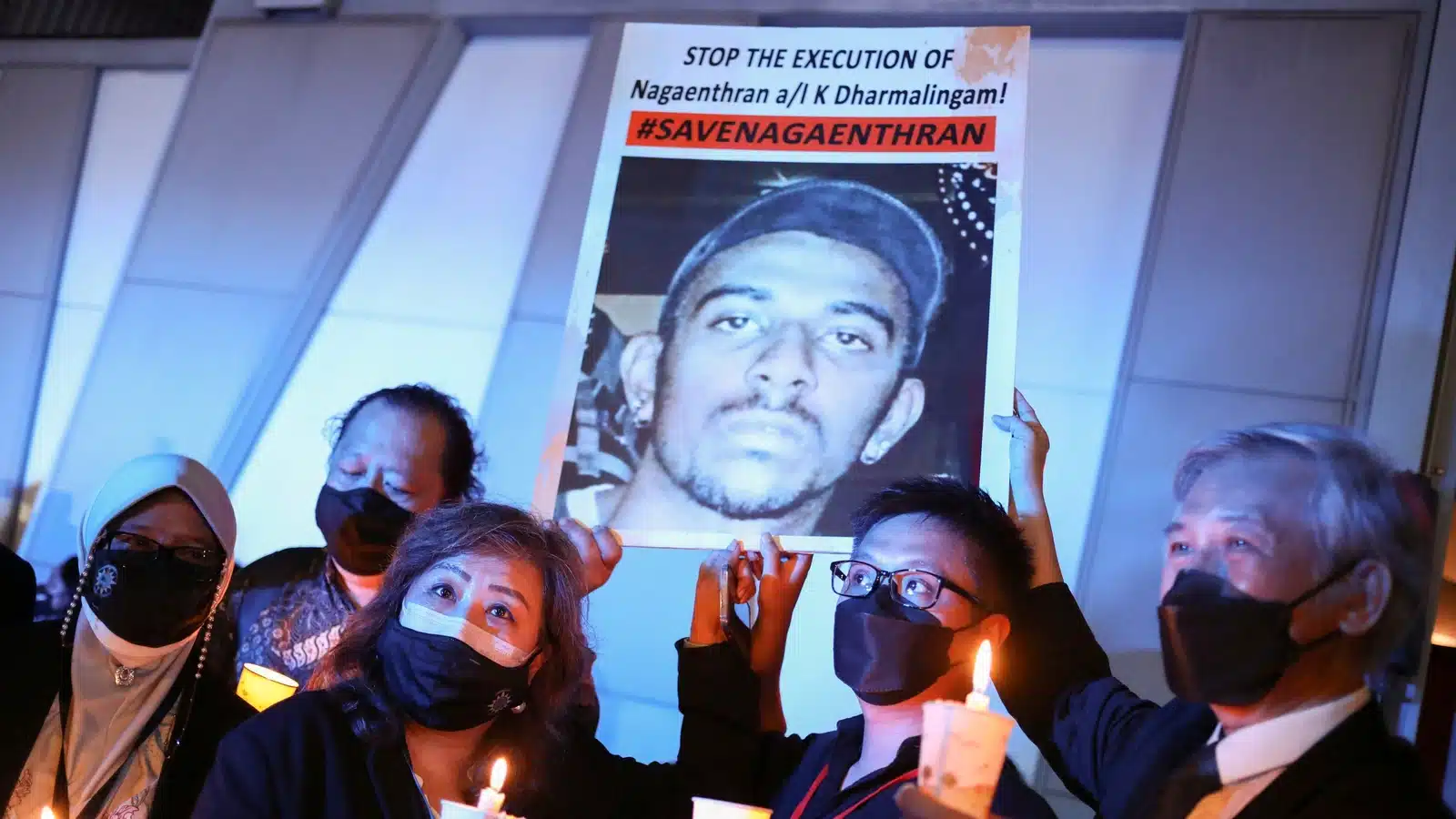
Singapore executed three individuals for drug-related offenses last week, marking a significant rise in capital punishment cases in the city-state. With a total of 17 executions this year, the numbers have reached their highest level since 2003. These executions come just days before a constitutional challenge against the mandatory death penalty for drug offenses is set to be heard, raising questions about the legality and morality of such harsh penalties in Singapore’s legal system.
Harsh Drug Laws and Execution Statistics
Singapore is known for its stringent anti-drug laws, which the government argues are essential for deterring drug-related crime. The country imposes the death penalty on individuals convicted of trafficking specific quantities of drugs, including 15 grams of diamorphine, 30 grams of cocaine, 250 grams of methamphetamine, and 500 grams of cannabis. The recent executions have drawn attention to the severity of these laws, particularly as they coincide with a growing debate over the death penalty’s role in addressing drug offenses. Activist groups have criticized Singapore’s approach, claiming it disproportionately affects low-level offenders rather than targeting major drug traffickers.
The Transformative Justice Collective, a local activist organization, has highlighted that Singapore’s drug control policies are increasingly isolated globally, as many countries have moved away from capital punishment for drug offenses. The government, however, maintains that abolishing the death penalty could lead to increased crime and violence, as well as more drug-related deaths, including among innocent children. Home Affairs Minister K. Shanmugam has emphasized the need for strict measures to protect the public, arguing that policymakers must prioritize the safety of the majority.
Constitutional Challenge Against the Death Penalty
A group of seven activists has filed a constitutional challenge against Singapore’s mandatory death penalty, arguing that it violates the rights to life and equal protection under the law. They contend that the constitution prohibits depriving individuals of their life or personal liberty except in accordance with the law. The activists’ challenge is set to be heard soon, and they hope to bring attention to the implications of the death penalty on human rights in Singapore.
Critics of the death penalty argue that the laws are unjust and disproportionately punish marginalized individuals, including those from lower-income backgrounds. They point out that the legal framework presumes guilt for individuals found with drugs above certain thresholds, placing the burden of proof on the accused. This has raised concerns about the fairness of trials and the potential for wrongful convictions. Despite these arguments, Singapore’s highest court has upheld the existing laws, stating they are designed to combat a significant societal issue.
Recent Executions and Legal Proceedings
Among those executed last week was Saminathan Selvaraju, a logistics driver convicted of transporting over 300 grams of diamorphine from Malaysia to Singapore. Saminathan maintained that he was not responsible for the drugs, arguing that multiple drivers used the same vehicle. However, the court found evidence linking him to the crime, including pre-written immigration cards with his signature. His defense was ultimately rejected, leading to his execution.
Saminathan had previously engaged in legal actions against the death penalty, including a constitutional challenge filed in 2022. He and three others on death row argued against certain presumptions in Singapore’s drug laws, which they claimed unfairly targeted individuals without sufficient evidence. Despite their efforts, clemency pleas were denied, and the executions proceeded as scheduled. The application of the death penalty in drug-related cases continues to draw criticism, particularly as it appears to target low-level offenders rather than the masterminds behind drug trafficking operations.
International Reactions and Public Opinion
The recent executions have sparked international condemnation, with the European Union’s delegation to Singapore stating that the use of capital punishment for drug offenses contradicts international law. They argue that such offenses do not meet the threshold of “most serious crimes” and that the death penalty hinders rehabilitation efforts. Critics also highlight the inconsistency in sentencing, noting that individuals guilty of severe international crimes often do not face the same penalties.
Despite the backlash, a 2023 survey commissioned by Singapore’s Ministry of Home Affairs revealed that a significant majority of citizens—approximately 69%—support the death penalty for serious drug trafficking offenses. This public sentiment reflects a complex societal view on crime and punishment in Singapore, where safety and security remain paramount concerns. The ongoing debate surrounding the death penalty and drug laws in Singapore is likely to intensify as the constitutional challenge progresses, potentially reshaping the future of capital punishment in the city-state.
Observer Voice is the one stop site for National, International news, Sports, Editor’s Choice, Art/culture contents, Quotes and much more. We also cover historical contents. Historical contents includes World History, Indian History, and what happened today. The website also covers Entertainment across the India and World.
Follow Us on Twitter, Instagram, Facebook, & LinkedIn

