

Radon: The Invisible Gas Causing Thousands of Lung Cancer Deaths
Why Testing Your Home for This Natural Radioactive Gas Could Save Your Life

Jennifer and her family lived in their beautiful basement apartment in Denver, Colorado for five years before she developed a persistent cough. Initially dismissing it as allergies, Jennifer eventually visited her doctor when the cough worsened and she began experiencing chest pain. A chest X-ray revealed a troubling shadow, and subsequent tests confirmed the devastating diagnosis: lung cancer. Jennifer was 42 years old, had never smoked a cigarette in her life, exercised regularly, and ate healthily. “How could I have lung cancer?” she asked her oncologist in disbelief. “I’ve never smoked. I don’t work around chemicals. I live a healthy lifestyle.”
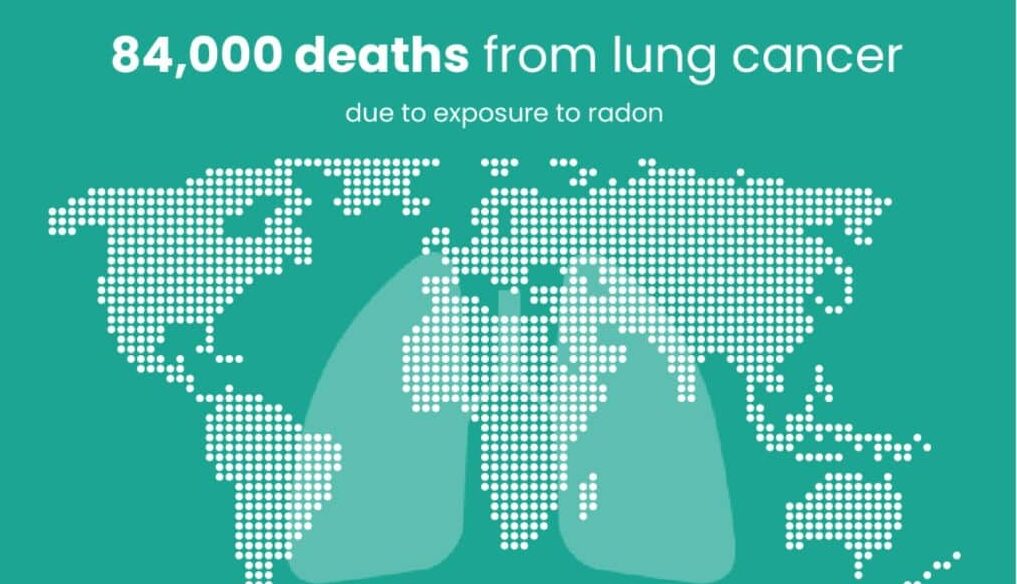
Her oncologist asked a critical question: “Have you ever tested your home for radon?” Jennifer had never heard of radon. Testing revealed her basement apartment had radon levels more than four times the EPA action level—dangerous concentrations of this invisible, odorless, tasteless radioactive gas had been seeping up from the soil beneath her home for years, silently damaging her lung cells and ultimately causing cancer. Jennifer’s story is far from unique. Radon exposure causes an estimated 21,000 lung cancer deaths annually in the United States alone and tens of thousands more globally, making it the second leading cause of lung cancer after smoking and the leading cause among non-smokers.
According to the World Health Organization, radon is a naturally occurring radioactive gas that forms from the decay of uranium present in rocks and soil. It’s colorless, odorless, and tasteless, making it completely undetectable without specialized testing equipment. Radon seeps from the ground into buildings through cracks in floors and walls, construction joints, gaps around pipes, and other openings. WHO estimates that radon causes 3-14% of all lung cancers globally, depending on average radon levels and smoking prevalence in different countries. The only way to know if your home has dangerous radon levels is testing—simple, inexpensive tests that can identify problems enabling mitigation to reduce exposure and prevent lung cancer.
Understanding Radon
Radon is a radioactive noble gas produced continuously as uranium naturally present in Earth’s crust decays into radium, which then decays into radon. This process occurs everywhere—all soil and rocks contain varying amounts of uranium releasing radon gas constantly. Radon itself is radioactive and unstable, decaying into radioactive particles called radon progeny or radon daughters that can attach to dust and other airborne particles. When people breathe air containing radon and its radioactive decay products, these particles can deposit in lungs where radiation they emit damages lung tissue cells.
Outdoor radon concentrations are generally low because the gas disperses rapidly in open air, posing minimal health risk. However, radon accumulating in enclosed spaces—particularly homes, schools, and workplaces—can reach dangerous concentrations. Radon enters buildings through cracks in solid floors and walls, construction joints, gaps in suspended floors, gaps around service pipes, cavities inside walls, and water supply (particularly from wells, though this represents a smaller risk than radon from soil).
Several factors influence indoor radon levels. Uranium concentration in underlying soil and rocks varies geographically—some areas have naturally higher uranium levels producing more radon. Building construction characteristics affect radon entry—foundation types, cracks and gaps, ventilation rates, and air pressure differences between indoors and outdoors influence how much radon accumulates. Seasonal and weather factors cause radon levels to vary—levels typically higher in winter when buildings are sealed and ventilation reduced, and atmospheric pressure changes can increase or decrease radon entry.
Like carbon monoxide, another invisible danger requiring detection equipment, radon’s undetectable nature makes testing essential for protection.
Radon and Lung Cancer
Radon exposure represents a major lung cancer cause globally. WHO estimates radon causes 3-14% of all lung cancers, with variation depending on countries’ average radon concentrations and smoking prevalence. In the United States, EPA estimates radon causes approximately 21,000 lung cancer deaths annually—more than drunk driving, falls, drownings, or home fires. In Europe, radon causes an estimated 20,000 lung cancer deaths yearly.
Radon causes lung cancer through radiation damage to lung cells. When radon decay products are inhaled and deposit in lung airways, the alpha radiation they emit directly damages DNA in lung tissue cells. Over years of exposure, this cumulative damage can cause mutations leading to cancer. Unlike acute radiation exposure causing immediate symptoms, radon’s effects are cumulative and delayed—lung cancer typically develops 10-30 years after exposure begins.
Cancer risk increases with radon concentration and exposure duration—higher levels and longer exposure create greater cancer risk. The relationship is linear without threshold—any radon exposure carries some cancer risk, though risk increases proportionally with concentration. Smokers face dramatically higher risk from radon than non-smokers. Radon and smoking synergistically increase lung cancer risk—smokers exposed to radon have lung cancer risk approximately 10 times higher than non-smokers with similar radon exposure. For perspective, non-smokers exposed to 4 pCi/L (the EPA action level) have approximately 0.7% lifetime lung cancer risk, while smokers with identical exposure have approximately 7% risk.
Children may be more vulnerable to radon than adults because they breathe faster relative to body size, inhaling more radon per kilogram of body weight, have more rapidly dividing lung cells potentially more susceptible to radiation damage, and have more years to develop cancer from early-life exposure. Like pneumonia and other threats, radon disproportionately harms the most vulnerable.
Testing and Radon Levels
The only way to determine indoor radon levels is testing—radon is invisible, odorless, and tasteless, making detection without specialized equipment impossible. WHO recommends testing all ground-contact dwellings including homes (particularly basements and ground floors), schools, and workplaces. Testing methods include short-term tests lasting 2-7 days providing quick screening results, useful for initial assessment but subject to daily and seasonal variations, and long-term tests lasting 3-12 months providing more accurate average radon concentrations reflecting typical exposure.
Test devices include passive detectors—small devices placed in homes collecting radon or its decay products over time then sent to laboratories for analysis (inexpensive, simple to use), and active detectors—electronic devices continuously measuring radon levels providing real-time results (more expensive but provide detailed information about radon level variations).
Radon is measured in picocuries per liter of air (pCi/L) in the United States or becquerels per cubic meter (Bq/m³) internationally. WHO recommends 2.7 pCi/L (100 Bq/m³) as a reference level—if this cannot be achieved under country-specific conditions, the level should not exceed 8 pCi/L (300 Bq/m³). The U.S. EPA recommends action when radon levels reach or exceed 4 pCi/L (148 Bq/m³) and encourages mitigation at 2-4 pCi/L. No safe radon level exists—any exposure carries some cancer risk—but mitigation becomes increasingly important as levels rise.
Geographic radon potential varies considerably. Some regions have high natural uranium concentrations in soil and rocks creating elevated radon risk—parts of the U.S. including Appalachian region, upper Midwest, and Rocky Mountain states, areas of Europe including parts of Scandinavia, UK, and Central Europe, and areas worldwide with uranium-rich geology. However, radon levels vary significantly even within high-risk areas—neighboring homes can have dramatically different levels depending on construction characteristics and soil conditions.
Like radiation exposure generally, radon risk requires understanding cumulative effects over time.
Radon Mitigation
Discovering elevated radon levels isn’t cause for panic—effective mitigation techniques can reduce indoor radon concentrations dramatically, often to levels near outdoor air. Common mitigation approaches include active soil depressurization (the most effective and reliable method)—installing a vent pipe system and fan pulling radon from beneath the house and venting it outside before it enters. This typically reduces radon levels 50-99%.
Sealing cracks and openings in floors and walls reduces radon entry though is rarely effective alone—should supplement rather than replace active mitigation systems. Improving ventilation through natural ventilation (opening windows and vents) or mechanical ventilation systems dilutes indoor radon concentrations. However, ventilation alone often proves insufficient and increases energy costs. Sub-slab depressurization installs pipes beneath basement floors or foundations creating negative pressure pulling radon away from building and venting outside.
Mitigation costs vary but typically range $800-2,500 in the United States for professionally installed active soil depressurization systems—a modest investment considering lung cancer prevention benefits. After mitigation, retesting confirms systems work effectively and radon levels have decreased. Periodic retesting every 2-5 years ensures systems continue functioning properly.
For new construction, radon-resistant construction techniques incorporated during building prevent radon accumulation more cost-effectively than retrofitting existing buildings. Techniques include gas-permeable layers beneath slabs allowing radon to escape, plastic sheeting preventing radon entry, sealing and caulking entry routes, and vent pipes enabling radon escape if needed.
Like primary health care emphasizing prevention, radon protection works best through proactive testing and mitigation before health problems develop.
Jennifer’s Message
Following her lung cancer diagnosis, Jennifer underwent surgery, chemotherapy, and radiation therapy. She survived, though treatment was grueling and life-altering. Her family immediately tested their home, discovered the dangerous radon levels, and installed a mitigation system reducing radon to safe levels. They also became passionate advocates for radon awareness.
“I had never heard of radon before my cancer diagnosis,” Jennifer explains during community radon awareness presentations. “I wish someone had told me to test my home. A simple, inexpensive test could have identified the problem years earlier. Mitigation would have cost maybe $1,500—a fraction of my medical expenses and infinitely less than the physical and emotional cost of cancer treatment. Now I tell everyone: test your home for radon. If you have children, test. If you’re buying a home, test before purchasing. If you’re building, use radon-resistant construction. This invisible gas is the second-leading cause of lung cancer, yet most people have never heard of it.”
Dr. Martinez, a public health physician specializing in environmental health, emphasizes broader implications: “Radon represents a significant but underappreciated lung cancer cause globally. Unlike smoking, which receives extensive public health attention, radon remains largely unknown despite causing tens of thousands of lung cancer deaths annually. The tragedy is radon’s preventability—testing costs $20-150, mitigation typically costs $800-2,500, yet prevents a cancer that costs hundreds of thousands to treat and often proves fatal. Countries with successful radon programs like those in Scandinavia and parts of the U.S. have increased testing rates through public awareness campaigns, requiring radon testing in real estate transactions, building code requirements for radon-resistant new construction, and subsidizing mitigation for low-income families. Globally, we need WHO and national governments prioritizing radon awareness and mitigation, including radon in national cancer control programs, educating healthcare providers about radon risks, establishing radon testing and mitigation standards, requiring disclosure in real estate sales, and ensuring schools and workplaces are tested. Radon is preventable. When we make testing standard practice and mitigation accessible, we prevent thousands of lung cancer deaths annually. Every family deserves to know their home’s radon level and have access to mitigation if needed.”
Frequently Asked Questions (FAQs)
Radon is a naturally occurring radioactive gas produced continuously as uranium in rocks and soil decays. It’s colorless, odorless, and tasteless—completely undetectable without specialized testing. Radon seeps from ground into buildings through cracks, gaps, and openings. When radon and its radioactive decay products are inhaled, they deposit in lungs where radiation damages lung tissue cells, potentially causing lung cancer after years of exposure. Radon is the second-leading cause of lung cancer after smoking (leading cause among non-smokers), causing an estimated 21,000 deaths annually in the U.S. and tens of thousands globally. Risk increases with concentration and exposure duration. Smokers exposed to radon have approximately 10 times higher lung cancer risk than non-smokers with similar exposure. Unlike acute radiation causing immediate symptoms, radon’s effects are cumulative over years/decades.
Testing is the only way to know—radon is invisible, odorless, tasteless, and undetectable without specialized equipment. WHO recommends testing all ground-contact dwellings (homes, schools, workplaces). Testing methods include short-term tests (2-7 days) providing quick screening and long-term tests (3-12 months) providing more accurate average levels. Test kits are inexpensive ($20-150) and simple to use—place in lowest lived-in level of home, follow instructions, send to laboratory for analysis. WHO recommends action at 2.7 pCi/L (100 Bq/m³), U.S. EPA at 4 pCi/L (148 Bq/m³). Test regardless of geographic location—neighboring homes can have dramatically different levels. Test when buying/selling homes, periodically (every 2-5 years), and after renovations affecting building structure.
Yes, effective mitigation techniques reduce radon dramatically, often to near-outdoor levels. Most common method is active soil depressurization—installing vent pipe system and fan pulling radon from beneath house and venting outside before it enters, typically reducing levels 50-99%. Other approaches include sealing cracks/openings (supplements but rarely sufficient alone), improving ventilation (though often insufficient and increases energy costs), and sub-slab depressurization. Professional mitigation typically costs $800-2,500 in U.S.—modest investment preventing lung cancer. After mitigation, retest confirms effectiveness. New construction can incorporate radon-resistant techniques during building preventing problems more cost-effectively than retrofitting. Mitigation is highly effective—no home has radon levels too high to reduce to safe concentrations. Like quality healthcare, radon mitigation requires expert installation for optimal results.
Everyone exposed to elevated radon concentrations faces lung cancer risk, but certain groups face higher vulnerability: (1) Smokers—radon and smoking synergistically increase risk; smokers with radon exposure have ~10 times higher lung cancer risk than non-smokers with identical exposure; (2) Long-duration residents—risk increases with years of exposure; people living in high-radon homes for decades face higher risk than recent residents; (3) Children—potentially more vulnerable due to faster breathing rates, rapidly dividing lung cells, and more years to develop cancer from early exposure; (4) People spending extensive time in basements or ground floors where radon concentrations typically highest; (5) Residents of geographic areas with high natural uranium concentrations in soil. However, any radon exposure carries some cancer risk—no safe level exists, making testing important for all homes regardless of location or occupant characteristics.
No, radon levels vary significantly within homes. Typically, concentrations are highest in basements and ground-floor rooms with direct soil contact, decreasing on upper floors. However, distribution depends on home construction, foundation type, ventilation patterns, and radon entry points. Radon levels also vary by time—typically higher in winter when buildings sealed with reduced ventilation, lower in summer with more air exchange; daily variations from atmospheric pressure changes, wind, and temperature differences; and seasonal patterns. This variability is why long-term testing (3-12 months) provides more accurate average exposure estimates than short-term tests (2-7 days). Testing should occur in lowest lived-in level of home—if you regularly use basement for bedrooms, offices, or recreation, test there. Test multiple floors if extensively using different levels. After mitigation, test all levels ensuring effectiveness throughout home.
References
- World Health Organization. (2024). Radon. Retrieved from https://www.who.int/health-topics/radon
- World Health Organization. (2021). Radon and health – Fact Sheet. Retrieved from https://www.who.int/news-room/fact-sheets/detail/radon-and-health
- U.S. Environmental Protection Agency. (2024). A Citizen’s Guide to Radon. Retrieved from https://www.epa.gov/radon
- Observer Voice. Pneumonia: The Infectious Lung Disease. Retrieved from https://observervoice.com/pneumonia-symptoms-treatment-prevention-children-vaccination/
- Observer Voice. Radiation: Understanding Invisible Energy’s Health Effects. Retrieved from https://observervoice.com/radiation-health-effects-medical-imaging-xray-ct-scan-safety/
Disclaimer: This article is an adaptation of publicly available information from WHO’s Radon
health topic page (WHO, Geneva. Licence: CC BYNC-SA 3.0 IGO). WHO is not responsible for the
content or accuracy of this adaptation. This content is for informational and educational purposes
only and does not constitute medical advice. ObserverVoice.com is a news and information platform
— not a healthcare provider.
Observer Voice is the one stop site for National, International news, Sports, Editor’s Choice, Art/culture contents, Quotes and much more. We also cover historical contents. Historical contents includes World History, Indian History, and what happened today. The website also covers Entertainment across the India and World.

