

Impact of Trump Sanctions on China’s Private Refiners Amid Iran Conflict: Potential Collateral Damage Beyond Oil

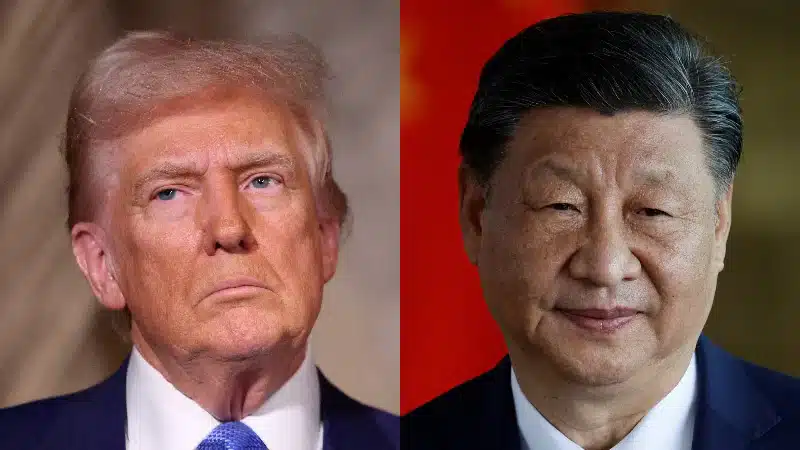
The recent decision by the Trump administration to impose sanctions on Hengli Petrochemical, one of China’s largest privately owned refiners, is set to have far-reaching implications beyond the oil industry. This move highlights the ongoing tensions between the United States and Iran, as China has been a significant buyer of Iranian crude oil. The sanctions come at a critical time, just weeks before a highly anticipated meeting between President Trump and Chinese President Xi Jinping, and are expected to challenge China’s already strained petrochemical sector.
Significance of the Sanctions
The U.S. Treasury Department’s inclusion of Hengli Petrochemical on its sanctions list marks a significant escalation in Washington’s efforts to curb Iran’s oil revenues. Previously, the U.S. had focused on smaller Chinese companies, aiming to limit the economic fallout that broader sanctions could provoke. Hengli, however, represents a major player in China’s refining landscape, operating a sophisticated integrated refining and petrochemicals complex in Liaoning province. This facility is crucial to China’s energy security, as private refiners like Hengli now account for about one-third of the nation’s total refining capacity. Analysts suggest that this move could serve as a bargaining chip for the U.S. in upcoming diplomatic discussions with China.
Hengli’s Response and Operational Impact
In response to the sanctions, Hengli Petrochemical has firmly rejected the U.S. allegations, asserting that it has never engaged in business involving Iranian oil. The company claims that all its crude suppliers are contractually obligated to ensure their shipments do not originate from sanctioned jurisdictions. Despite the sanctions, Hengli maintains that it has sufficient crude oil inventory to meet its processing needs for over three months. Looking ahead, the company plans to conduct future crude purchases in Chinese yuan, signaling a shift in its operational strategy to mitigate the impact of U.S. sanctions.
Broader Economic Consequences
The expansion of U.S. sanctions to include trading partners like Hengli is expected to disrupt supply chains across Asia and beyond. Reports indicate that at least two of Hengli’s petrochemical customers in Asia have already canceled their orders in light of the sanctions. Hengli is a leading producer of purified terephthalic acid and one of the world’s largest petrochemical suppliers, making its operational stability vital for numerous industries. The sanctions could lead to immediate disruptions in the supply of critical raw materials for chemical, synthetic fiber, and textile manufacturers across East Asia. While this situation may benefit rival producers in China, Japan, and South Korea, it could also exacerbate inflationary pressures already heightened by ongoing conflicts in the Middle East.
Future Outlook for China’s Refining Sector
Hengli operates with a crude refining capacity of 400,000 barrels per day, positioning it among the largest private refiners in China. Alongside other major players like Yulong Petrochemical Co., which faced sanctions from the European Union last year, Hengli is part of a group of “mega” private refiners that collectively account for about 10 percent of China’s refining capacity. The sanctions could hinder Hengli’s operations and its ability to engage in international trade, particularly in dollar-denominated transactions. As the geopolitical landscape continues to evolve, the future of China’s refining sector remains uncertain, with potential shifts in market dynamics and investment patterns on the horizon.
Observer Voice is the one stop site for National, International news, Sports, Editor’s Choice, Art/culture contents, Quotes and much more. We also cover historical contents. Historical contents includes World History, Indian History, and what happened today. The website also covers Entertainment across the India and World.
Follow Us on Twitter, Instagram, Facebook, & LinkedIn

