

“I Knew It All Along!” Why We Think We Predicted Things We Never Saw Coming

Your favorite cricket team just lost a crucial match. Suddenly, everyone around you becomes an expert: “I knew they would lose! Their strategy was obviously flawed from the beginning!” But wait—weren’t these same people confident about victory just yesterday?
Welcome to hindsight bias, the mental trick that makes the past look far more predictable than it ever actually was. It’s the reason why Monday morning quarterbacks always know exactly what the team should have done, and why we’re all geniuses after the stock market crashes.
Hindsight bias is the tendency, upon learning the outcome of an event, to overestimate one’s ability to have foreseen that outcome Encyclopedia Britannica. It’s colloquially known as the “I knew it all along” phenomenon.
The Experiment That Revealed Our Crystal Ball Illusion
In the 1970s, psychologists investigating errors in human decision-making first described and studied hindsight bias Encyclopedia Britannica. They asked people to predict outcomes of events—like political elections or answers to trivia questions. Later, after revealing the actual outcomes, they asked participants to recall their original predictions.
The results were stunning: people consistently remembered being more accurate than they actually were. If they initially thought a political candidate had a 40% chance of winning, but that candidate won, they later “remembered” predicting a 60% or 70% chance. Their brains had quietly rewritten history.
According to research from Northwestern University’s Kellogg School of Management and the University of Minnesota’s Carlson School of Management Psychological Science, this isn’t deliberate lying—it’s an unconscious mental process that happens automatically.
The Three Layers of “I Told You So”
Researchers have identified three levels of hindsight bias that stack on top of each other Psychological Science:
Level 1 – Memory Distortion: “I said it would happen.” You genuinely misremember your earlier prediction. Your brain has overwritten the original memory with the new information.
Level 2 – Inevitability: “It had to happen.” Once you know the outcome, it feels like it was always meant to be. Alternative possibilities fade from your mind.
Level 3 – Foreseeability: “I knew it would happen.” You become convinced you personally could have—and did—predict the outcome.
These three layers work together to create a powerful illusion that the past was obvious all along.
The Ancient Parable of the Clever Fool
There’s a Panchatantra story about a crow who dropped pebbles into a pitcher to raise the water level and drink. When other animals saw this, they all claimed, “Of course! I would have thought of that too. It’s so obvious!”
The jackal replied, “Yes, everything is obvious after someone else shows you. But where were your brilliant ideas when the crow was thirsty and you were all complaining?”
This ancient wisdom captures hindsight bias perfectly: solutions appear obvious only after someone discovers them.
Why Your Brain Plays This Trick
Our brains aren’t trying to deceive us. Research shows we selectively recall information that confirms what we now know to be true, and we create narratives that make sense of the information we have Psychological Science. When these narratives come together easily, we mistakenly interpret that fluency as evidence that the outcome was always predictable.
Think of it like watching a mystery movie for the second time. The first viewing, you’re surprised by the twist. The second viewing, you notice all the “obvious” clues. But those clues weren’t obvious initially—they only became obvious because you now know the ending.
At least two motivations underlie hindsight bias: the desire for a predictable world, and ego-enhancement Encyclopedia Britannica. We feel safer believing the world is predictable rather than random. And we feel smarter believing we’re good at predicting outcomes.
The Real-World Dangers of Hindsight
Hindsight bias isn’t just an interesting quirk—it has serious consequences:
In Medicine: Doctors might be unfairly blamed for missing “obvious” warning signs that only became obvious after a patient’s condition worsened. This can lead to defensive medicine where doctors order unnecessary tests just to avoid hindsight criticism.
In Law: After the September 11, 2001 attacks, counterterrorism agencies and the U.S. military were heavily criticized for missing “obvious” warning signs Encyclopedia Britannica. But those signs only appeared obvious in hindsight.
In Education: Teachers might harshly judge students who fail exams, thinking “I knew you weren’t studying!” forgetting that many students they predicted would fail actually succeeded.
In Sports: The “Monday morning quarterback” phenomenon—fans who criticize coaches’ decisions after knowing the game’s outcome, convinced they would have made better calls.
Even Children Fall for It
Research shows that hindsight bias affects children as young as 3 to 5 years old PubMed Central. This isn’t something we learn—it appears to be built into how human memory works.
Interestingly, studies found that the greater a child’s hindsight bias, the worse their performance on theory of mind tasks (understanding that others have different knowledge than they do). This suggests hindsight bias is linked to our fundamental challenge in separating what we know now from what we knew then.
Can We Escape This Mental Trap?
Research has shown that hindsight bias is widespread and difficult to avoid Encyclopedia Britannica. It occurs across individuals regardless of age, gender, or culture, happening in situations ranging from mild to world-changing.
But there are strategies that help:
The “Consider-the-Opposite” Strategy: Before judging a past decision, actively think about why the opposite outcome could have occurred. Force yourself to remember the uncertainty that existed before the outcome was known.
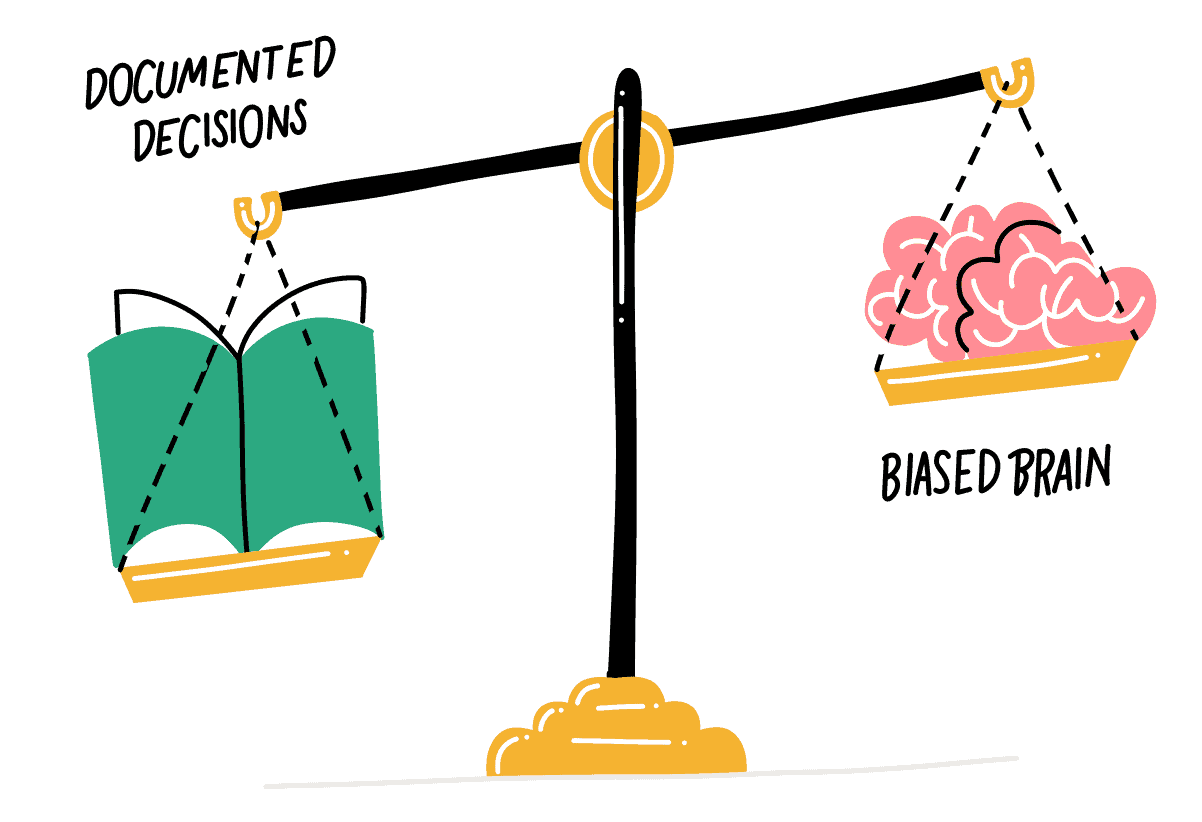
Document Your Predictions: Write down your predictions before events happen. This creates evidence that your memory can’t rewrite.
Remember the Alternatives: When an outcome occurs, deliberately recall the other possibilities you considered. “I predicted X, but I also thought Y and Z were possible.”
Practice Humility: Remind yourself that if the past was so predictable, why didn’t you predict it accurately beforehand?
The Wisdom in Accepting Uncertainty
The Bhagavad Gita teaches that attachment to outcomes causes suffering. Hindsight bias is a form of false attachment—attachment to the illusion that we could have controlled the past by better predicting it.
The truth is more liberating: the future is genuinely uncertain. Most outcomes have multiple possible causes. And our ability to predict complex events is far more limited than we like to believe.
When someone says “I knew it all along,” the wise response isn’t anger—it’s compassion. They’re not lying. Their brain is simply doing what all human brains do: rewriting history to make it seem more predictable than it ever was.
The next time you catch yourself thinking, “I knew that would happen,” pause and ask: “Did I really know? Or do I just know now?”
Frequently Asked Questions
Q1: Is hindsight bias the same as being overconfident?
Not exactly. Hindsight bias is specifically about believing the past was more predictable than it was. Overconfidence is believing you’re better at predictions generally. However, hindsight bias can fuel overconfidence by making you think you’re better at predicting than you actually are.
Q2: Can hindsight bias be useful in any way?
Some researchers suggest it’s a byproduct of adaptive learning. By creating simplified narratives about why events happened, we can extract lessons and apply them to future situations. The problem is when we overestimate how predictable those events actually were.
Q3: How can teachers avoid hindsight bias when grading students?
Teachers should document their expectations before seeing results, use rubrics consistently, and consciously remember that a student’s poor performance doesn’t mean failure was “obvious” beforehand. Many students who seem to struggle actually succeed.
Q4: Does expertise protect against hindsight bias?
Partially. Research shows experts are somewhat less vulnerable to hindsight bias, but only in their specific domain of expertise. A chess master shows less hindsight bias analyzing chess games but remains vulnerable when analyzing medical decisions.
Q5: Can journaling help reduce hindsight bias?
Yes! Writing down your predictions, thoughts, and reasoning before outcomes occur creates a record your memory can’t retroactively edit. This makes it easier to accurately evaluate your actual prediction skills rather than the ones hindsight creates.
Observer Voice is the one stop site for National, International news, Sports, Editor’s Choice, Art/culture contents, Quotes and much more. We also cover historical contents. Historical contents includes World History, Indian History, and what happened today. The website also covers Entertainment across the India and World.

